Tech companies want to own copper, not just buy it. Anglo says the talks are real and nobody has signed.
Anglo American's chief executive told an FT summit on 15 October that technology groups have shown "deep expressions of interest" in equity stakes to lock in metal for data centres. Washington is already lending into the same gap through Project Vault. In Brazil, Vale says a listing of its copper unit is not imminent, and Anglo's ferronickel has one credible buyer, from China.


So far the technology sector has secured metal the way any large buyer does: it signs contracts. On 15 October Anglo American’s chief executive said some of those buyers now want more. Technology companies have held talks about buying equity in the miner to secure the metals that go into data centres, Duncan Wanblad told the Financial Times Metals and Mining Summit in London, and the discussions are “absolutely being had” [MINING.COM, 15 October 2026]. No stake has been taken. There have been “deep expressions of interest” [MINING.COM, 15 October 2026]. That is the shift worth tracking: from buying the tonne to owning a slice of the mine that produces it.
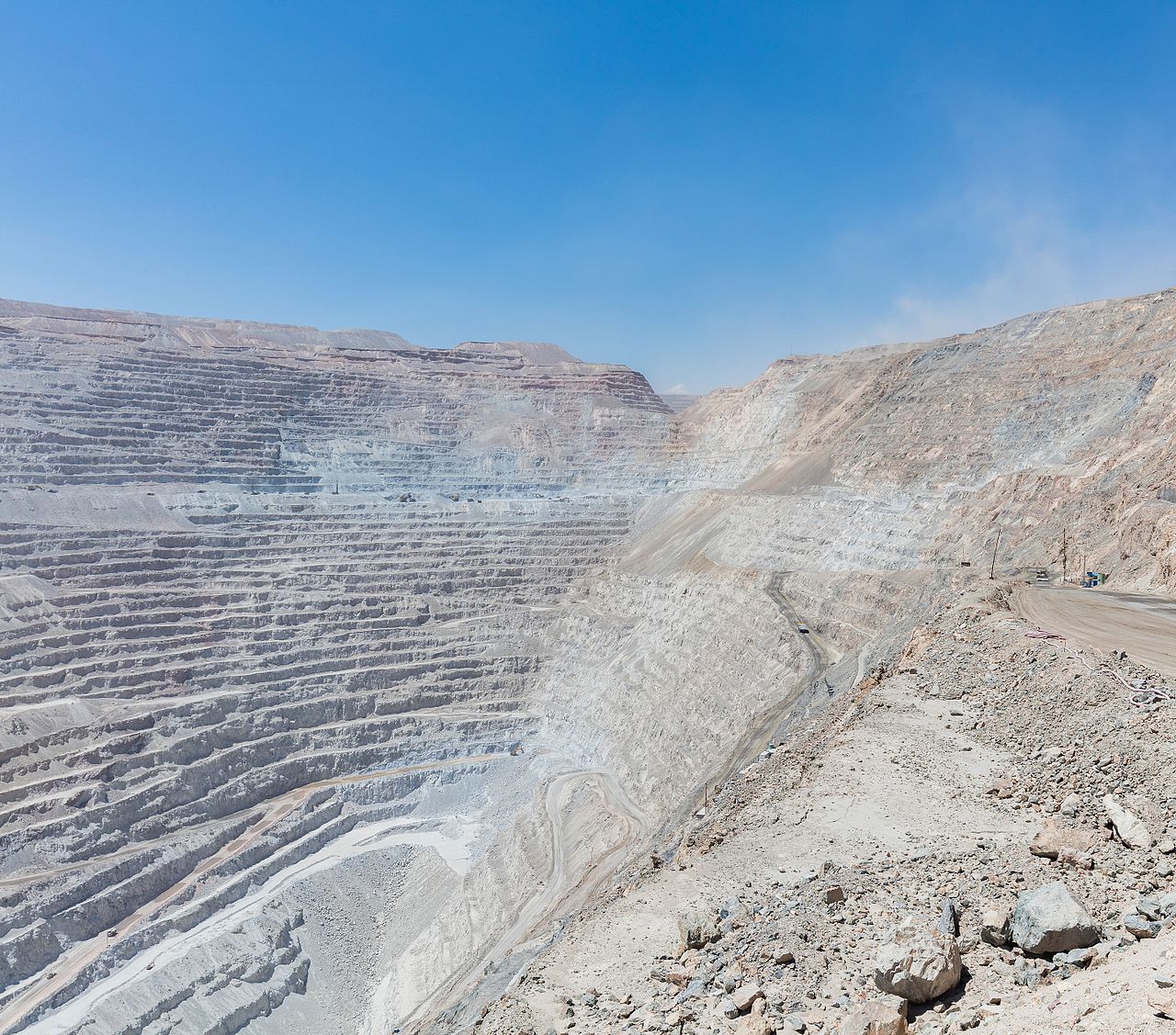
Photo: the Collahuasi copper mine in Chile’s Tarapacá region, in February 2016. Anglo American and Glencore each held 44 percent of it as of 2021 reporting, with Mitsui & Co. holding 12 percent [MINING.COM, 24 March 2021]. It is shown as an example of a mine part-owned by a metal buyer, not as the subject of any of the talks.
What’s happening
- The ask. For the technology side, Wanblad said, the question comes down to whether to lock in long-term offtake directly or take equity for a claim on future supply. “Given the scarcity issue that we’ve been speaking about, a lot of people are looking for ways to secure supply” [MINING.COM, 15 October 2026]. He also warned that the buyers find mining unfamiliar: its “capital intensity and the fact that it’s inherently cyclical” [The Oregon Group, 16 October 2026].
- Not only Anglo. BHP’s chief financial officer Vandita Pant said the miner has held discussions with hyperscale cloud providers, while separating supply arrangements from direct equity [Mining.com.au, 16 October 2026]. BHP estimates that every additional US$200 billion of annual data centre investment needs copper equal to the output of a new 150,000 tonne a year mine [same source].
- What tech has bought so far is metal and paperwork. Apple committed US$500 million in July 2025 to buy US-made rare earth magnets from MP Materials, including a US$200 million prepayment, and Amazon Web Services became the first customer for Rio Tinto’s Nuton copper from the Johnson Camp mine in Arizona in January 2026 under a two-year agreement [The Oregon Group, 16 October 2026]. In September, BHP and Amazon set up a pilot under which Amazon can buy and retire lower-emissions certificates against copper from Escondida in Chile [Securities.io, September 2026]. None of these puts a technology company on a mine’s share register.
- The price backdrop. LME cash copper settled at a record US$14,822 a tonne on 12 October [MINING.COM, 15 October 2026]. The Oregon Group, citing S&P Global, puts copper used in data centres and their power infrastructure at 1.1 million tonnes in 2025, rising to 2.5 million tonnes by 2040 [The Oregon Group, 16 October 2026]. Desk arithmetic: the 1.4 million tonne increase is larger than the roughly 1.2 million tonnes a year a merged Anglo Teck would produce [MINING.COM, 15 October 2026].
Why this sits in the AI lane
The mechanism is price insensitivity. The Oregon Group argues that data centre developers are largely indifferent to copper prices, so a buyer that cannot slow its build-out has reason to own a share of the tonnes rather than bid for them on the open market [The Oregon Group, 16 October 2026]. Wanblad framed the model as one China already runs: in nickel, he said, “the mine and the processing facility are just part of a much bigger value chain, and the financial viability equation is calculated over the whole rather than the sum of the parts” [The Oregon Group, 16 October 2026]. In this desk’s reading, a technology company that buys into a miner is valuing the mine by what it protects downstream, not by its own margin. That is a different buyer from a pension fund, and it does not mind a cycle as long as the campus gets built.
Brazil angle
The same summit produced two Brazilian data points, and neither shows a Brazilian asset in front of these buyers. Vale’s chief executive Gustavo Pimenta said a listing of Vale Base Metals is not imminent and would depend on whether the group needs capital for copper and nickel growth [Mining.com.au, 16 October 2026]. Vale targets about 700,000 tonnes of copper a year by 2035, from about 380,000 tonnes in 2025, with much of the growth from Brazil, including Carajás [same source]. Desk arithmetic: an 84 percent increase. The unit already has an outside shareholder. Saudi Arabia’s Manara Minerals, a joint venture of Ma’aden and the Public Investment Fund, completed the purchase of 10 percent for about US$2.5 billion in 2024, when the plan spoke of growth toward 900,000 tonnes a year over the following decade [Global Mining Review, 2 May 2024]. Desk arithmetic: that price implied about US$25 billion for the whole unit at the time. A Gulf sovereign found the door. This desk has seen no report of a technology company walking through it.
The second data point runs the other way. Wanblad told the summit Anglo is likely to shut its nickel business in Brazil if the European Union blocks the planned US$500 million sale to Hong Kong listed MMG [MINING.COM, 15 October 2026]. Anglo’s Brazil chief operating officer Ruben Fernandes told regulators that MMG is “the only credible buyer that we identified” and that a prohibition would leave “care and maintenance” as “the pathway to closure” [MINING.COM, 7 October 2026]. Barro Alto and Codemin produced 39,400 tonnes of nickel in 2024 [Investing News Network, 8 October 2026]. Capital is queuing for copper. For Goiás ferronickel, the queue is one Chinese company long.
US angle
Washington is not waiting for Silicon Valley’s balance sheets. Project Vault, launched in February with a US$10 billion loan from the US Export-Import Bank and nearly US$2 billion of private money, is preparing up to US$1 billion in loans to American manufacturers, with VaultCo talking to more than 70 companies [MINING.COM, 16 October 2026]. Recipients will not be named at first [same source]. Glencore and Mercuria have each committed US$500 million [same source]. Vault is a stockpile built to manufacturers’ specifications, not an equity play, but it answers the same question Wanblad’s callers are asking: how to get metal when the open market will not deliver it on time.
China angle
China holds the key to Anglo’s biggest copper move. Beijing’s market regulator has asked Anglo to commit to a steady flow of copper concentrate to Chinese smelters as a condition for clearing the Teck merger, Reuters reported on 2 October; Canada, the EU, the US, Japan, Chile and South Korea have signed off and the parties expect to close by March 2027 [MINING.COM, 15 October 2026]. This desk covered that condition at the time (China’s copper veto is a purchase order). The new point is the collision: a technology company that buys into Anglo would be buying into a group whose concentrate flows Beijing is trying to reserve. In nickel, Anglo’s only credible exit is a Chinese buyer.
Africa angle
The US side of the contest is already drawing on African tonnes. Mercuria has delivered 12,000 tonnes of copper from the Democratic Republic of Congo into Project Vault, and US imports of Congolese copper hit a record 53,290 tonnes in July [MINING.COM, 16 October 2026]. MMG, the buyer for Anglo’s Brazilian nickel, itself runs operations in the Congo, Australia and Peru [MMG, accessed 17 October 2026].
What it means
Offtake contracts and emissions certificates let a buyer secure tonnes or claims on tonnes without owning risk. Equity is a bet that contracts will not be enough when supply tightens. If a hyperscaler takes even a minority stake in a major miner, the copper market gains a shareholder that values a mine by the data centre it protects, as Chinese state groups already value theirs. For Brazil the lesson is uncomfortable. Its largest copper growth vehicle has no listing date and one Saudi partner, and its ferronickel has one Chinese bidder. The capital Wanblad describes will go where a seat is offered.
What to watch
- The first signed stake. Any technology company equity in Anglo, BHP or another major miner would be the first. Watch Anglo’s results and any update ahead of the Teck closing, which the parties expect by March 2027 [MINING.COM, 15 October 2026].
- The Brussels ruling on MMG. A prohibition would, on Anglo’s own account, put Barro Alto and Codemin on a path to care and maintenance [MINING.COM, 7 October 2026].
- Project Vault’s first tranche. VaultCo expects to announce loans to more than a dozen manufacturers, with the types of minerals disclosed [MINING.COM, 16 October 2026]. Copper or magnet requests tied to data centre equipment would show Washington funding the same gap the hyperscalers are circling.