China's Copper Veto Has Nothing to Do With Competition. It Is a Purchase Order.
Reuters reports Beijing's antitrust regulator has asked Anglo American to guarantee concentrate flows as a condition of clearing the $54 billion Teck merger. The combined company would hold about 5 percent of global supply. Read as competition policy the demand is incoherent. Read as procurement it is the clearest statement yet of what China's smelter overbuild actually costs it.

China’s State Administration for Market Regulation has asked Anglo American to commit to supplying the country with a steady flow of copper concentrate, including volumes sold through traders, as it negotiates remedies for approving the company’s merger with Teck Resources [Reuters, 2 October 2026]. The combined company would control around 5 percent of global copper supply, well below the 10 to 15 percent thresholds at which competition authorities normally start asking questions [Reuters, 2 October 2026]. That gap between the remedy and the stated rationale is the story. SAMR is not protecting Chinese buyers from a dominant seller. It is using the leverage it has over a British and Canadian transaction to lock in physical feedstock for furnaces that do not have enough.
What’s happening
- SAMR has sought assurances on copper concentrate supply, including trader volumes, and developed the remedies after consulting Chinese smelters. The remedies sought do not include asset sales at this stage [Reuters, 2 October 2026].
- The merger is valued at $54 billion, was announced in 2025, and both companies expect to close by March 2027, within 18 months of announcement [Reuters, 2 October 2026].
- An Anglo American spokesperson said the company is “making good progress towards completion and are working constructively with the Chinese regulator, SAMR, through its structured review process.” Teck declined to comment and SAMR did not respond to a request for comment [Reuters, 2 October 2026].
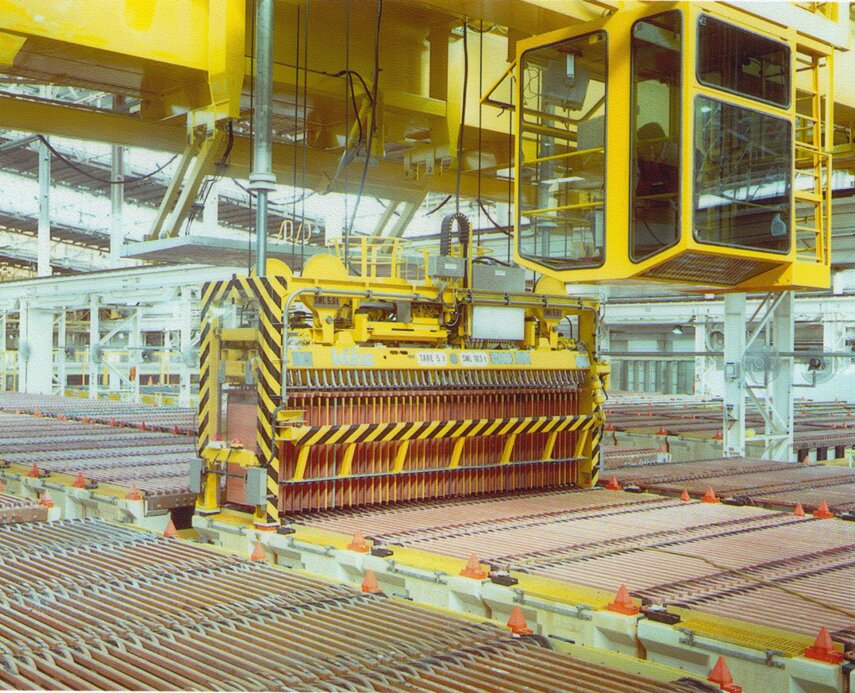
- China’s smelting industry refines up to 60 percent of the world’s copper cathodes [Reuters, 2 October 2026]. It mined about 8 percent of global copper concentrate in 2024 while producing 48 percent of smelting output, and held 12 of the 20 largest smelters by capacity, roughly 75 percent of it built since 2000 [Center on Global Energy Policy, Columbia SIPA, 5 May 2026].
The number the remedy is actually about
Put the two Chinese figures next to each other and the merger review stops looking like antitrust. Eight percent of the world’s concentrate, roughly half the world’s smelting output. That spread is not a market position. It is a structural import requirement, filled every month from mines China does not own.
For two decades filling it was easy, because smelters were scarce relative to mines and miners paid them to process ore. That relationship has inverted. The 2026 benchmark treatment and refining charge, agreed between Antofagasta and a Chinese smelter on 19 December 2025, was set at zero dollars per tonne and zero cents per pound, against $21.25 per tonne and 2.125 cents per pound for 2025 [Reuters via Kitco, 19 December 2025]. Spot terms went further below the line, with the monthly average spot treatment charge for 25 percent clean concentrate falling from minus $46.78 per dry metric tonne in January 2026 to minus $120.03 in June and minus $127.20 in early July [Mysteel, 10 July 2026]. Chinese smelters now pay for the privilege of running.
The volume response follows. China’s refined copper output grew 4.73 percent in the first half of 2026 against 12.3 percent in 2025, with second-half growth estimated at around 1 percent, and the analysis forecast the tightest raw material conditions arriving between September and October [Mysteel, 10 July 2026]. That forecast was published in July. The SAMR demand surfaced on 2 October, inside the window it named. Coincidence or sequencing, the regulator is asking for concentrate at the moment its domestic industry is least able to source it commercially.
This is the inversion worth marking. This desk has written repeatedly about Chinese control of copper smelting as leverage over everyone else. The more accurate reading now is that the leverage runs both ways. Capacity built faster than the mines feeding it becomes a standing obligation, and a country carrying that obligation reaches for whatever instrument will discharge it. A merger consent is one of those instruments.
Brazil angle
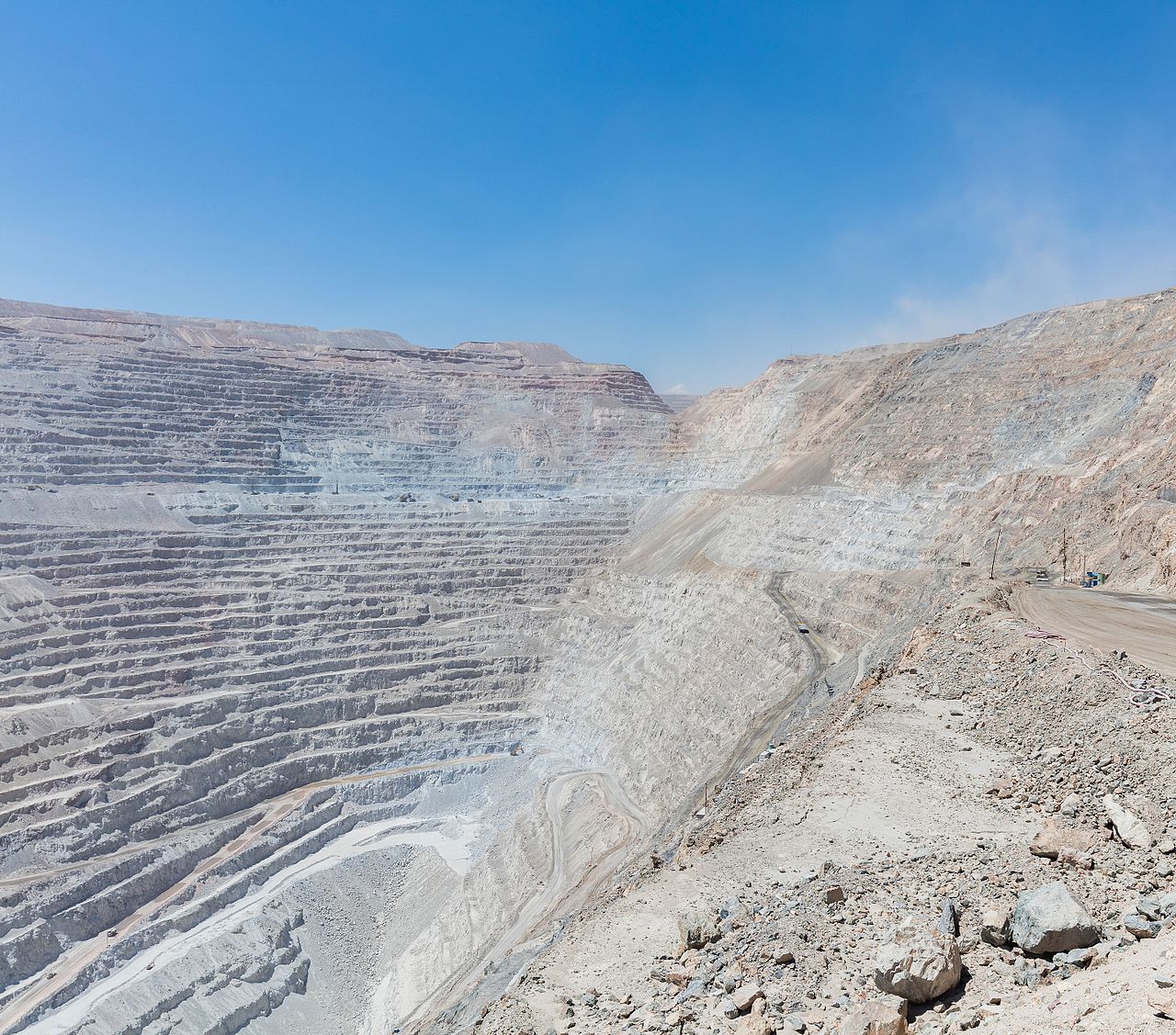
Brazil is not party to this transaction, which is exactly why the precedent matters to it. The product SAMR wants guaranteed is concentrate, and concentrate is what Brazil sells.
Vale produced 98.4 thousand tonnes of copper in the second quarter of 2026, up 6 percent from 92.6 thousand tonnes a year earlier, with Salobo at 52.4 thousand tonnes and Sossego at 25.9 thousand tonnes, the latter its best second quarter since 2017 [Vale, production and sales in 2Q26, 21 July 2026]. Vale’s report does not break out destination markets, so no claim is made here about where those tonnes land.
The structural point stands regardless. A producer whose output is growing, whose product is concentrate rather than cathode, and whose domestic smelting capacity is marginal has little say over the terms on which that concentrate is processed. If supply guarantees to China become a routine condition of copper transactions, the negotiating position of every unintegrated concentrate producer gets written in a jurisdiction where it has no standing. Brazilian industrial policy has spent two years arguing the country should process more of what it digs. The clearest argument for that case in months was just made in Beijing.
US angle
Washington’s answer to this problem has a staffing constraint before it has a capital one. The United States has two active copper smelters, Rio Tinto’s Garfield facility in Utah and Freeport-McMoRan’s Miami smelter in Arizona [Columbia SIPA, 5 May 2026].
On the same day the SAMR story broke, Audrey Robertson, US Assistant Secretary of Energy for Critical Minerals and Energy Innovation, said that “if we do not control our supply chain, we do not control our destiny,” and that departmental focus has been “not just new mines and new operations and new businesses but really what kind of innovation can we bring to existing feed stocks.” She noted about 160 mining engineers graduated in the United States over the past year against about 3,000 in China, that “for the last 30 years we have outsourced our supply chain and with it we’ve lost a generation of talent,” and that the DOE estimates the country needs roughly 6,000 new mining engineers over the next decade [Audrey Robertson, The Northern Miner Podcast, via MINING.COM, 2 October 2026].
Six thousand engineers over ten years against 160 graduates a year is, as desk arithmetic, a shortfall that does not close on the schedule the AI buildout runs on. The capital for a smelter can be raised in a quarter. The people who design one cannot.
China angle
Note what SAMR did not ask for. No divestitures, no asset sales at this stage, no structural remedy of the kind a genuine competition concern would produce [Reuters, 2 October 2026]. Behavioural remedies developed in consultation with the domestic industry that benefits from them are procurement conducted through a regulatory channel.
It is also a reusable template. Any copper transaction large enough to require Chinese clearance now carries an implied feedstock negotiation, and the counterparty discovers the price of consent late, with a closing date approaching. Anglo and Teck have roughly five months to their stated March 2027 close, by desk arithmetic from the 2 October reporting date. That is not a comfortable amount of time in which to refuse.
What it means
The AI buildout’s copper problem is usually framed as tonnes in the ground and permits to dig them. This moves the constraint one step along the chain and one step sideways into corporate law. The binding question for a hyperscaler sizing a campus is not only whether the concentrate exists, but whether the refining step that turns it into busbar and winding wire is subject to claims made in a merger review it is not party to.
Tantalum’s indexes read TAI at 99.7, with materials at 97.0 and power at 107.9, SOV50 at 107.5 and SDX at 94.4, as of 26 September 2026. The materials leg sitting three points below its January base while the power leg runs nearly eight above it fits what this story describes. The physical inputs are not repricing on scarcity so much as on who controls the step after extraction.
What to watch
- Whether SAMR’s remedy becomes public and binding at approval. Behavioural commitments are sometimes published in the decision. If concentrate volumes and duration appear in writing when SAMR clears the deal, every future copper transaction has a reference price for consent. Watch the window to the March 2027 close.
- The 2027 benchmark TC/RC settlement, normally agreed in the fourth quarter. The 2026 benchmark was zero. A second consecutive settlement at or below zero confirms the feedstock deficit is structural rather than cyclical, and strengthens the reading that SAMR is buying tonnes rather than policing competition.
- Whether Brazil’s response is industrial or rhetorical. Watch for any MME or BNDES instrument attaching smelting or refining conditions to copper project financing. Absent that, Vale’s growing concentrate output keeps being processed on terms set elsewhere.