Escondida loses up to a fifth of its copper before anyone walks out
BHP has guided the world's largest copper mine to 1.0 to 1.1 million tonnes in FY27 on a 0.70 percent grade, down from 1.26 million. A 95 percent strike vote on 1 October sits on top of that. Vale's Salobo upgrade in Brazil fills between a tenth and a fifth of the gap, starting in 2028.

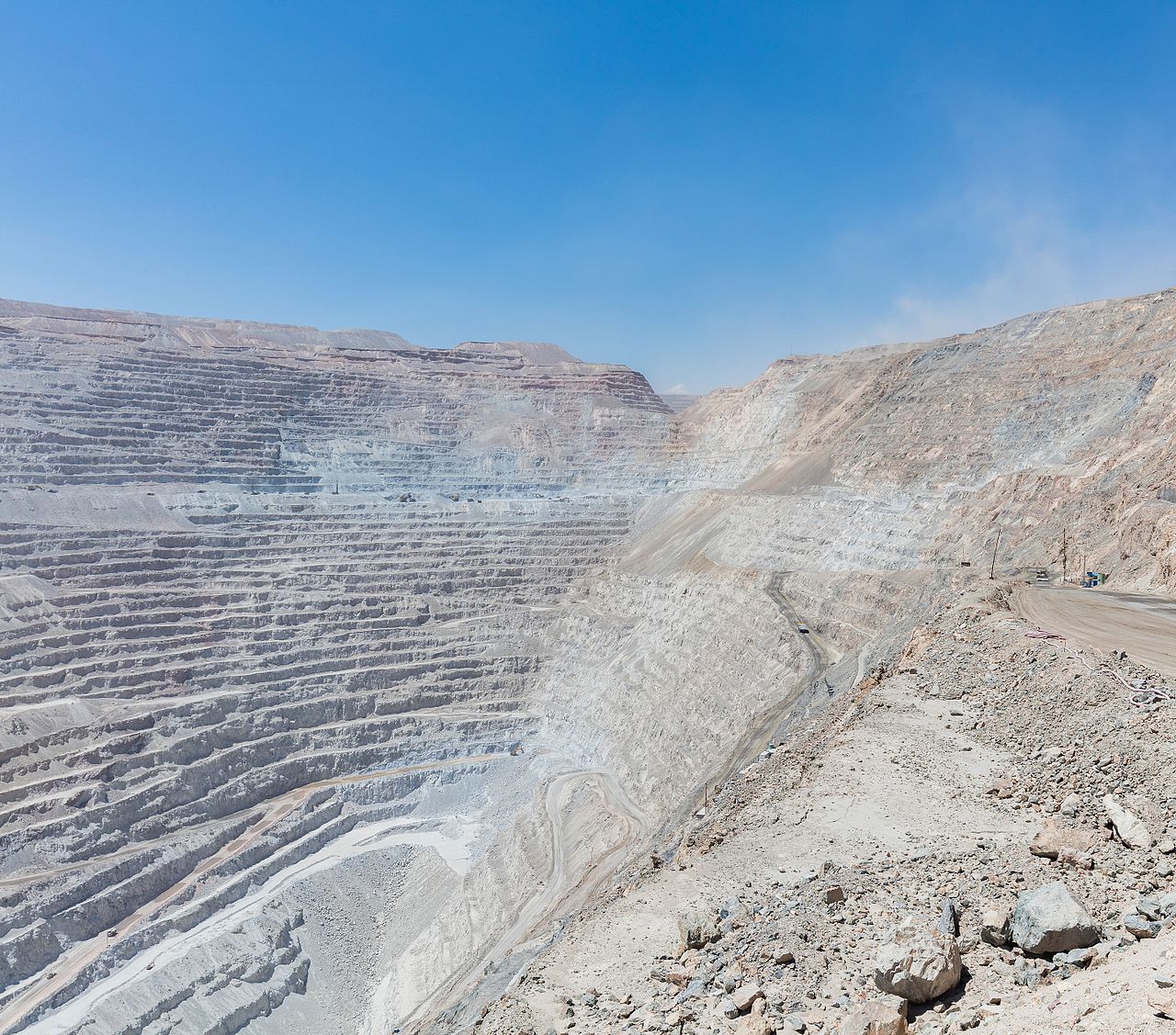
The headline risk at Escondida this week is a strike. The bigger number was already in BHP’s results. On 18 August, BHP told the market that the world’s largest copper mine produced 1,261 kilotonnes in FY26 and would produce between 1,000 and 1,100 kilotonnes in FY27, as concentrator feed grade falls to about 0.70 percent from 0.90 percent [BHP FY2026 Results, 18 Aug 2026]. That cut happens whether or not a single supervisor walks out. The strike vote of 1 October is an additional risk stacked on a mine that is already shrinking, in a market where BHP’s own outlook says data center copper demand could grow about sixfold between 2024 and 2050, to around 3 million tonnes a year [BHP FY2026 Results, 18 Aug 2026].
What’s happening
- The vote. On 1 October, Sindicato N°2 de Supervisores y Staff, the roughly 1,020-member supervisors’ union at Escondida, rejected BHP’s final offer, with 95 percent of participating members voting to authorize a strike [SMM, 1 Oct 2026]. The union objected to limited pay improvements, multi-tasking requirements and training in plant operations, including truck driving [SMM, 1 Oct 2026]. Chilean law requires at least five days of government mediation, extendable to ten, before a legal walkout [SMM, 1 Oct 2026]. No production impact from the dispute had been reported as of that date [SMM, 1 Oct 2026].
- The accident before the vote. Operations at Escondida were suspended on 23 September after a worker was killed during maintenance [Crux Investor, 24 Sept 2026]. At FY26 output, the mine produces about 3,455 tonnes of copper a day. Crux Investor puts available LME warehouse stock on 21 September at 133,725 tonnes, or roughly 39 days of Escondida’s output [Crux Investor, 24 Sept 2026]. Desk arithmetic confirms both figures: 1,261,000 divided by 365 is 3,455, and 133,725 divided by 3,455 is 38.7.
- It is not one mine. In the same window, two unions representing 708 workers at Antofagasta’s Centinela voted 98.73 percent in favor of a strike. Centinela produced about 70,000 tonnes of copper in concentrate in the first half of 2026. In the Philippines, Philex’s Padcal union filed strike vote results on 1 October [Fastmarkets, Oct 2026].
- Grasberg is still at two thirds. Freeport’s 2 October update put Grasberg mill throughput at about 140,000 tonnes of ore a day in the third quarter, about 67 percent of pre-incident rates. Freeport expects about 80 percent by mid-2027 and near full capacity by the end of 2027 [Freeport-McMoRan 8-K, 2 Oct 2026].
- The price went the other way. LME copper fell to $14,253.50 a tonne on 1 October, a two-week low, during a base-metals selloff, with the Shanghai Futures Exchange closed for Golden Week [Rio Times, Oct 2026].
The arithmetic that matters
Desk arithmetic on BHP’s guidance: moving from 1,261 kilotonnes to a range of 1,000 to 1,100 kilotonnes removes 161 to 261 kilotonnes of copper in a single fiscal year. That is a decline of 12.8 to 20.7 percent, before any strike.
Set that against BHP’s own data center line. If data center demand reaches about 3 million tonnes a year by 2050 after a sixfold rise, the implied 2024 base is about 500,000 tonnes. On that desk arithmetic, the Escondida grade decline alone equals roughly a third to a half of a year of data center copper demand at 2024 levels. This is a ratio for scale, not a claim that the two volumes trade against each other directly.
Brazil angle
Brazil’s most recent concrete addition to copper supply is metallurgical, not geological. On 12 August, Vale Base Metals said it would proceed with coarse particle flotation at the Salobo complex in Pará, adding up to about 30,000 tonnes of copper a year and 6 million tonnes of ore capacity, with start-up brought forward to the first half of 2028 [Vale Base Metals, 12 Aug 2026]. Vale’s share of the capex is about $175 million after a $40 million contribution from Wheaton Precious Metals, and IBAMA has issued the construction license [Vale Base Metals, 12 Aug 2026]. This desk covered the project on 16 August. The point here is scale.
Desk arithmetic: 30,000 tonnes covers 11.5 to 18.6 percent of Escondida’s FY27 grade decline, and it arrives more than a year after FY27 ends. Brazil is building the right kind of copper, the kind that comes quickly and cheaply. It is not building it at the size that Chile’s largest mine is losing. For Brazilian data center developers ordering transformers, busways and cabling, the price they pay is set in Antofagasta and London, not in Pará.
US angle
BHP’s results say plainly that “AI-related investment is supporting US growth” [BHP FY2026 Results, 18 Aug 2026]. The supply side of the US copper chain moved the other way last quarter. Freeport said its US operations ran at lower than planned rates in the third quarter because of more frequent localized flooding, power outages and strong winds [Freeport-McMoRan 8-K, 2 Oct 2026]. The US data center buildout is drawing on a global concentrate pool that is losing grade in Chile and is still rebuilding throughput in Indonesia.
China angle
The concentrate problem is sharpest in China. On 2 October, Reuters reported that China’s State Administration for Market Regulation has asked Anglo American for commitments to supply steady volumes of copper concentrate to Chinese smelters as a condition of approving its $54 billion merger with Teck [Reuters via CP24, 2 Oct 2026]. According to Reuters, China’s smelters process about 60 percent of the world’s refined copper and face acute feedstock shortages [Reuters via CP24, 2 Oct 2026]. This desk analyzed that demand on 2 October. What Escondida adds is volume. A 161 to 261 kilotonne decline in concentrate from the largest single mine lands on the same smelters that Beijing is now trying to protect through merger review.
What it means
Copper fell on the day Escondida stopped and fell again on the day of the strike vote. That reaction is consistent with a market pricing the macro selloff and treating the labor dispute as headline risk. The structural fact is grade. At 0.70 percent, Escondida produces less copper from every tonne it moves, and no settlement changes that. Data center demand is rising into a supply base where the largest mine is shrinking by guidance, Grasberg is still at 67 percent of its pre-incident rate, and the Salobo upgrade in Brazil covers a fraction of the gap.
Tantalum’s own AI Materials Index (TAI) stood at 97.3 as of 3 October, down 2.7 percent year to date. The Southern Diversification Index (SDX) was at 94.7. The weakness in the index matches the price action, not the supply picture.
What to watch
- End of Escondida mediation. The five-day mediation period that followed the 1 October vote can be extended once by five days. If it closes without a deal, a legal strike becomes possible. Watch whether BHP and the union agree to extend.
- Shanghai’s reopening. The Shanghai Futures Exchange returns from Golden Week on 8 October. Watch whether Chinese buyers step in at two-week lows, and whether spot treatment charges for concentrate move after a week of Chilean strike votes.
- BHP’s next quarterly production report. The September quarter numbers are the first test of whether the 23 September suspension and the labor dispute push Escondida toward the low end of its 1,000 to 1,100 kilotonne range.