Alcoa is selling a New York smelter site to the data center trade. Its aluminum bet is in São Luís.
On 15 October Alcoa disclosed a sale of part of its idle Massena East site for up to US$315 million, priced on approved data center capacity, in the same release that said its Alumar smelter restart in Brazil is complete. In the US, idle smelter sites are turning into compute campuses. In Brazil and South Africa, Alcoa is buying more of the metal.

An aluminum smelter is a power contract with a factory attached. For most of the last decade, an idle American smelter was a liability: a site, a substation and a cleanup bill. The AI buildout has changed its price. What the data center trade is buying in Kentucky and New York is not the potlines. It is the megawatts and the wires that used to feed them. The question this desk is asking is where the aluminum goes when the power does.
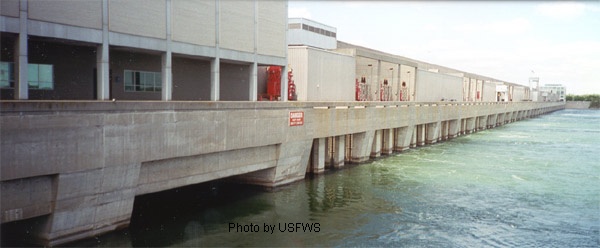
Photo: the Moses-Saunders Power Dam on the St. Lawrence River, the hydropower plant whose output local reporting uses to size the Massena data center plan. It is not a photo of the Alcoa site itself.
What’s happening
- On 15 October Alcoa reported third quarter 2026 results and disclosed definitive agreements to sell portions of its Massena East site in New York. It expects about US$50 million to US$65 million at closing, “depending on the amount of approved data center capacity,” plus about US$60 million to US$250 million more for capacity expansions and capacity-based installments over seven years, for potential proceeds of up to US$315 million. Closing is expected within six months and is subject to permitting, regulatory approvals and the conditions required to begin construction [Alcoa 3Q26 release, SEC 8-K, 15 October 2026].
- Alcoa did not name the buyer. The Massena East site has been idle since 2014, and CEO William Oplinger told analysts a data center would be built on the property. The deal is the first under Alcoa’s goal of raising US$500 million to US$1 billion from “asset monetization” by 2030 [Manufacturing Dive via Yahoo Finance, 16 October 2026].
- North Country Public Radio reports that New York Digital Investment Group (NYDIG) and its affiliate North Country Colocation Services are behind a 1.5 million square foot, 635 MW project at the shuttered Alcoa East and Reynolds site, a load equal to about 70 percent of the power produced at the nearby Moses-Saunders hydroelectric dam [North Country Public Radio, 7 October 2026].
- The same release said Alcoa “completed the restart of the Alumar, Brazil smelter” in the third quarter, raised aluminum production for a sixth consecutive quarter to 649,000 tonnes, and earned US$483 million [Alcoa 3Q26 release, 15 October 2026].
- Also on 15 October, South32 shareholders approved, with 99.18 percent of votes, the sale to Alcoa of South32’s stakes in Worsley Alumina, Hillside Aluminium in Richards Bay, the MRN bauxite mine, and the Alumar refinery and smelter, for up to US$5.6 billion [BusinessDay, 15 October 2026].
The Kentucky template
Massena follows a template set earlier this year in Kentucky. Century Aluminum closed the sale of its idle Hawesville, Kentucky smelter on 2 February to an affiliate of TeraWulf for US$200 million in cash plus a 6.8 percent stake in the venture building an AI data center there. Century can require the majority holder to buy that stake for US$300 million, starting a year after the site delivers at least 375 MW of critical IT load [Century Aluminum 10-Q, SEC, filed for the quarter to 30 June 2026].
The tenant is now known. Anthropic signed a 20-year lease on 6 July for about 401 MW of critical IT capacity at Hawesville. On 21 August Kentucky regulators approved a 482 MW electric service agreement with Big Rivers Electric and Kenergy, matching the roughly 482 MW of transmission capability the commission found still available at the site. TeraWulf puts site development and the first data halls at US$4 billion to US$4.5 billion and expects to start delivering capacity in late 2027 [ENR, 25 August 2026].
The structure is the same in both deals. Alcoa’s Massena payment scales with approved data center capacity, and Century’s put option is triggered by delivered IT load. The sellers are being paid in megawatts, desk reading of the two filings.
Brazil angle
The same quarter that Alcoa put a New York site on the data center market, it finished bringing a Brazilian smelter back. Alumar, in São Luís, Maranhão, has three potlines and 447,000 tonnes a year of operating capacity. When Alcoa announced the restart in 2021, it cited “competitive, renewable power arrangements” and a plan to run the smelter on 100 percent renewable energy by 2024 [Light Metal Age, 4 October 2021]. The restart took until the third quarter of 2026 to complete [Alcoa 3Q26 release, 15 October 2026].
Alcoa’s share of Alumar’s capacity in 2021 was 268,000 tonnes, about 60 percent of the total, desk arithmetic on the Light Metal Age figures. Adding South32’s 40 percent stake in the smelter would take Alcoa to the whole of it, desk arithmetic, along with 36 percent of the Alumar refinery and 33 percent of the MRN bauxite mine, subject to the MRN partners’ pre-emptive rights. Completion is expected in the first half of 2027 [South32 transaction memorandum, SEC filing, 10 September 2026].
That is the Brazilian side of the trade. Brazil is building data centers too: JLL counted 106 MW delivered in the first half of 2026, another 134 MW expected by December and a 4 percent national vacancy rate [JLL, 14 August 2026]. Those are small numbers next to a single 635 MW proposal in Massena, desk arithmetic. At Alumar, at least, Brazilian power is still going into metal.
US angle
The American constraint is permission, not demand. Governor Kathy Hochul’s executive order temporarily restricts new hyperscale data centers above 50 MW by halting new discretionary state permits. Massena officials say the NYDIG affiliate applied for its permits in 2020 and needs no new ones, which could exempt it, though state officials have not confirmed that and the project still faces a state environmental review [North Country Public Radio, 7 October 2026]. The Massena area is weighing ten data center proposals; the local development agency’s chief warned that does not mean all will go forward [WWNY, 27 May 2026].
That is why a former smelter is worth paying for. It arrives with power already allocated, transmission already built and, in Massena’s case, permits already filed. Every one of those is a queue an AI developer would otherwise wait in.
China angle
China cannot do the same trade, because its smelters are capped. Chinese aluminum output hit a monthly record of 3.98 million tonnes in August, up 4.7 percent year on year, and 31.12 million tonnes for January to August. Mysteel puts the annualized pace at about 46.7 million tonnes against a 45 million tonne capacity ceiling enforced since 2017, driven by strong margins after Middle East supply disruptions [Mysteel, 22 September 2026]. The world’s largest producer is already running above its own ceiling, so new primary supply has to come from somewhere else, desk reading.
Africa angle
Power decides African aluminum too. South32’s Mozal smelter in Mozambique was placed on care and maintenance in March because it could not secure “sufficient and affordable long-term power supply” [BusinessDay, 15 October 2026], and it is excluded from the Alcoa deal [South32 transaction memorandum, 10 September 2026]. Hillside in Richards Bay, South Africa, is included. Alcoa is buying the African smelter that still has power and leaving the one that lost it.
What it means
The binding input for a smelter and a data center is the same: cheap, firm power with a connection already in place. In the US, that power now earns more as compute. Hawesville’s 482 MW service agreement and Massena’s 635 MW proposal together come to more than a gigawatt of data center load planned on two former smelter sites, desk arithmetic, with neither campus yet operating.
Alcoa’s own capital is pointed the other way: a completed restart in Maranhão, a US$5.6 billion purchase of stakes in Brazilian, Australian and South African assets, and an exit from an American site that had been idle since 2014. For Brazil, the opportunity is to be the place where the aluminum is made while the US turns its smelter sites into compute. The risk is that Brazil’s own data center queue eventually bids for the same renewable megawatts.
The desk’s TAI index, which tracks the physical inputs of the AI buildout, stood at 92.1 as of its 17 October recompute.
What to watch
- Massena closing, due by about April 2027. Alcoa said on 15 October it expects closing within six months. The cash at closing, US$50 million to US$65 million, tells you how much data center capacity regulators approved.
- Whether Hochul’s moratorium reaches Massena. A state ruling that the 635 MW project needs new permits would stall the template in New York.
- Alcoa and South32 completion in the first half of 2027. Watch the MRN partners’ pre-emptive rights and the foreign regulatory approvals, and whether Alcoa names more sites in its US$500 million to US$1 billion monetization plan.