America broke ground on enrichment. The first new SWU arrives in 2032.
Urenco USA started building 2.1 million SWU at Eunice on August 18 with the Energy Secretary in attendance. Between now and 2032 the country adds 700,000 SWU and nothing else. Brazil's INB has the centrifuges and one customer.
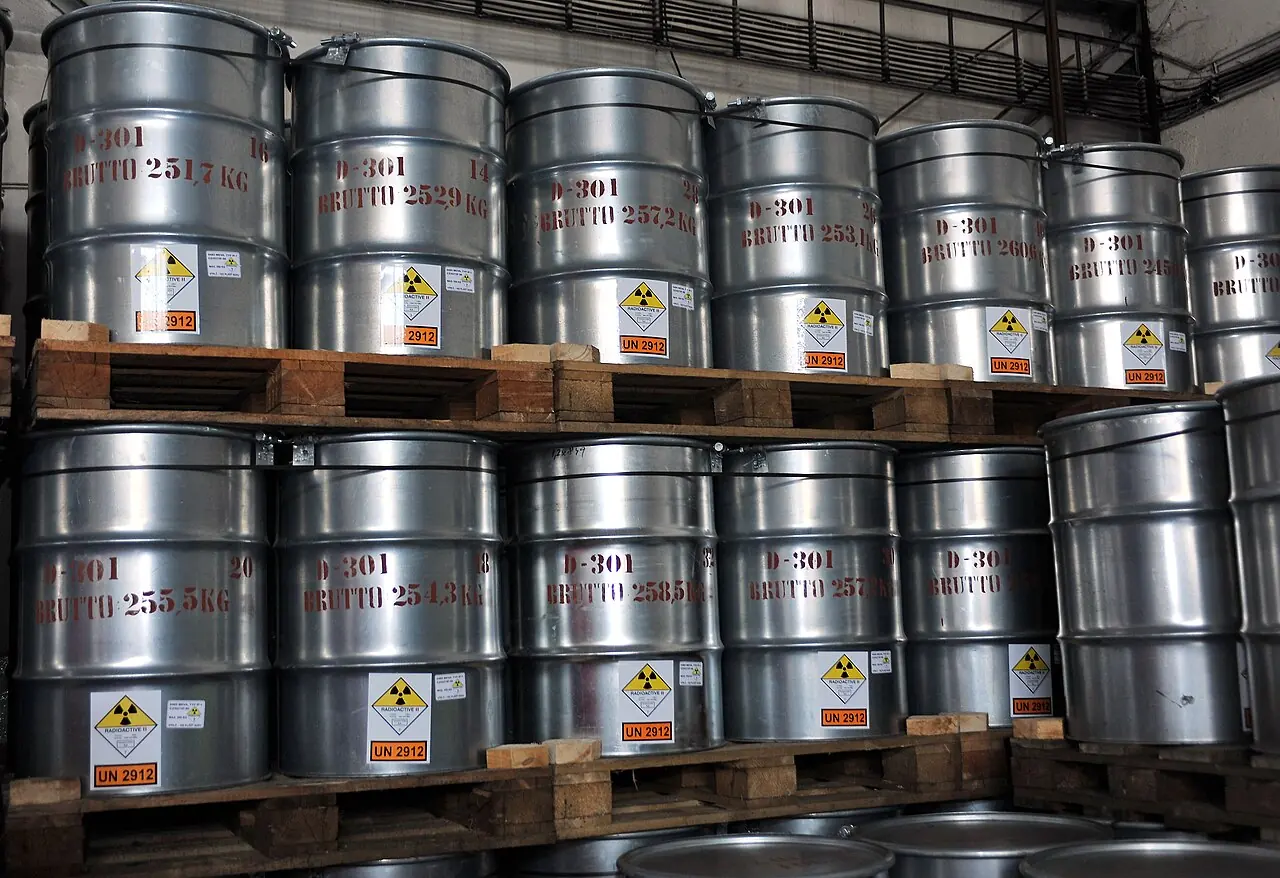
Urenco USA put a shovel in the ground at Eunice, New Mexico on August 18, with US Energy Secretary Chris Wright and Urenco Global CEO Boris Schucht standing over it. The plant being started is 2.1 million separative work units of new low enriched uranium capacity at the only commercial enrichment facility in the United States. The first cascades produce in 2032. The last go in through 2036.
That schedule is the story. Not the bottleneck, which this desk covered on June 7. The fix has now been priced, contracted and physically begun, and its calendar tells you the shortage is locked in for another six years.
What’s happening
- Urenco will install 2.1 million SWU across up to 24 centrifuge cascades at the National Enrichment Facility. Initial cascades start production in 2032, with additional cascades installed through 2036 [Urenco, August 18 2026].
- The investment decision itself was announced on June 2, framed as a capacity increase of nearly 50 percent at the site. The August 18 event was the groundbreaking, not the decision [Urenco, June 2 2026].
- Eunice runs 4.3 million SWU a year today, which Urenco describes as approximately one third of current US demand. A separate expansion adding 700,000 SWU completes in 2027. Total installed capacity at the site grows to more than 7 million SWU over the next decade [Urenco, August 18 2026].
- Site investment rises to substantially more than $8 billion. Schucht was specific about where it came from: “It is a commercial, world-class facility developed without any public funding. Our investment will now increase to substantially more than $8 billion at the site.” He added that “we built this plant at our customers’ request, and they backed it with long-term contracts” [Urenco, August 18 2026].
- Low enriched uranium is the fuel for the existing US light water reactor fleet, which generates nearly 20 percent of American electricity, and it is the feedstock from which high assay low enriched uranium is made for the advanced reactors planned for the 2030s [Urenco, June 2 2026].
Take Urenco at its word that 4.3 million SWU is one third of US demand and the arithmetic is unforgiving. Annual US requirement runs near 13 million SWU, so roughly 8.6 million SWU a year is met from outside the country (desk arithmetic from Urenco’s own figure). The 2.1 million SWU now under construction closes about a quarter of that gap, and not until the middle of the next decade. Between today and 2032, the only new commercial LEU capacity coming online in the country is that 700,000 SWU tranche.
Brazil angle
Brazil has the opposite problem. It owns enrichment technology and cannot fill it.
Celso Cunha, president of Abdan, told CNN Brasil that INB reaches full economic viability only if the country gets to at least four operating nuclear plants or consolidates uranium exports. About 95 percent of INB revenue comes from supplying fuel to Eletronuclear for Angra 1 and Angra 2, which together consume roughly 470 tonnes of uranium concentrate every 16 months. Brazilian yellowcake output is around 100 tonnes a year against the 800 to 1,200 tonnes Cunha puts at the break even line [CNN Brasil, July 6 2026].
Two things would change that. Santa Quitéria in Ceará, the INB and Galvani consortium project where uranium sits with phosphate, is projected at 800 tonnes of uranium a year plus 120,000 tonnes of fertiliser phosphate, and is waiting on environmental licensing and regulator authorisation. Angra 3, with roughly two thirds of civil works complete, is parked at the CNPE [CNN Brasil, July 6 2026].
The comparison with Eunice is exact and it is not about centrifuges. Urenco expanded because utilities signed long-term offtake first. INB cannot expand because it has one customer at 95 percent of revenue and a second plant stalled in a council chamber. Demand certainty is the input that builds enrichment capacity, and Brazil is the country that has everything except that.
Worth noting for this desk specifically: INB’s Pró-Urânio leasing programme has mapped uranium areas at Rio Preto in Goiás, where the uranium sits with copper, gold, rare earths, tin and tantalum, and at Amorinópolis, where it sits with gold, rare earths and diamonds [CNN Brasil, July 6 2026]. Brazilian uranium is rarely just uranium.
US angle
Washington now has two enrichment models running side by side. Piketon is the public one, built on a Department of Energy task order to Centrus for commercial HALEU. Eunice is the private one, built on utility contracts with, in Schucht’s telling, no public funding at all. The private model is the one that broke ground this month at multi billion scale. That is a useful signal for anyone reading the AI power buildout: the fuel chain moves when a creditworthy buyer signs a decade-long contract, not when a grant is announced.
Hyperscalers have been contracting the output of the existing reactor fleet. That fleet runs on LEU, and LEU is what Eunice makes.
China angle
Scale context, carefully dated. Hui Zhang’s Belfer Center assessment estimated China’s civilian enrichment capacity at about 4.5 million SWU a year with roughly 2 million more under construction, against a World Nuclear Association figure of 2.2 million SWU for 2014 [Belfer Center, August 20 2015]. That estimate is eleven years old and should be treated as a floor rather than a current reading.
Even so, put the two numbers side by side. Zhang’s 2015 installed estimate plus what he counted under construction comes to roughly 6.5 million SWU. Urenco Global says it will add 4.6 million new SWU across the United States, the Netherlands and Germany over the next decade combined [Urenco, June 2 2026]. The West is expanding. It is expanding toward a position China plausibly held before the AI buildout began.
What it means
Enrichment is the slowest link in the AI power chain, and it is now slow on a published schedule rather than an assumed one. Every hyperscaler nuclear commitment dated 2030 to 2035 is drawing on a fuel supply whose next Western increment lands in 2032 at the earliest. TAI-P closed the latest recompute at 108.3, up 8.3 percent year to date, and SOV50 at 125.7 against a basket concentration score of 0.66 [Tantalum Strategy indexes, August 22 2026]. Neither yet prices a six-year hard floor under Western SWU.
What to watch
- Santa Quitéria licensing. Environmental licence and regulator authorisation are the gate on 800 tonnes of uranium a year. Until it clears, Brazil’s enrichment complex has no second feedstock leg.
- CNPE on Angra 3. Two thirds of civil works are built. A decision either creates INB’s second customer or confirms the stranded asset.
- The 700,000 SWU tranche, completion 2027. This is the only new American enrichment capacity before 2032. Any slip in that date extends the floor rather than the ceiling.