Four reactors critical by July 4. Two on HALEU, two that walked around it.
Antares and Valar burned HALEU TRISO. Deployable and Aalo ran on 4.95 percent LEU. Same week, Centrus signed a $900 million commercial HALEU contract for Piketon. The AI-nuclear fuel line just picked its ceiling.
President Trump’s Executive Order 14301, signed May 23, 2025, gave the Department of Energy a specific mandate: at least three DOE-authorized advanced reactors reaching criticality by July 4, 2026. As of the early morning of July 4, four had. Energy Secretary Chris Wright put it plainly: “President Trump asked for three advanced reactors to be authorized and achieve criticality before the 250th anniversary of our great country. I’m pleased to share that through the dedication and hard work of Aalo, INL and DOE, we have surpassed that ask and delivered four” (Aalo Atomics press release, July 6, 2026). Two of the four ran on HALEU TRISO. Two ran on 4.95 percent LEU because their teams called HALEU “too constrained” and “too expensive.” The fuel column underneath the AI-nuclear thesis has bifurcated in public.
What’s happening
- Antares Nuclear’s Mark-0 sodium heat pipe cooled microreactor achieved zero-power criticality at Idaho National Laboratory on June 4, first of the four. HALEU TRISO. BWX Technologies processed the HALEU feedstock (derived from NNSA scrap material) and fabricated the TRISO fuel compacts at its Lynchburg Specialty Fuels Fabrication facility (per Antares Nuclear release, June 4, 2026; ANS, June 5, 2026).
- Valar Atomics’ Ward 250 helium-cooled, TRISO-fueled, high-temperature gas reactor went critical at the Utah San Rafael Energy Lab in Emery County on June 18. HALEU TRISO. The unit was flown California to Utah on a U.S. Air Force C-17 in February, “Operation Windlord” (World Nuclear News, June 22, 2026; POWER Magazine caption). Valar’s earlier NOVA Core zero-power criticality at LANL’s National Criticality Experiments Research Center was completed November 17, 2025 (WNN, June 22, 2026).
- Deployable Energy’s Unity 1-MWe microreactor completed zero-power fueled criticality at INL late June 30, announced July 1, roughly 150 days from project kickoff, for what CEO Bobby Gallagher called a “single-digit million” dollar investment (POWER, July 1, 2026). The fuel is 4.95 percent enriched LEU UO2, water moderation, helium cooling.
- Aalo Atomics’ 10-MWe Aalo-X Critical Test Reactor achieved criticality in the early morning hours of July 4, 2026 at INL. Sodium-cooled, LEU fueled. Fuel rods fabricated by Global Nuclear Fuel, the GE Vernova alliance with Hitachi, and delivered to Idaho in early April. Aalo has already begun a second reactor at INL for Project Ascension, aimed at powering an on-site data center. Aalo has separately announced a collaboration with Microsoft and Nvidia on an automated co-piloting system for a reactor fleet (Aalo Atomics press release, July 6, 2026).
- Same week, on July 1, Centrus Energy signed a $900 million firm-fixed-price commercial task order with DOE to transition its Piketon, Ohio American Centrifuge Plant HALEU cascade to commercial operation. The award requires delivery of 1 metric tonne of HALEU UF6 by March 2032, and includes options for up to $170 million in additional HALEU purchases. Centrus plans initial build-out of 12 metric tonnes per year of HALEU capacity alongside LEU output (Centrus Energy PR Newswire release, July 1, 2026, as reported by NucNet and Business Wire coverage).
- On June 22 Valar announced Ward 250 had ascended to 10 kilowatts thermal, converted output to electricity, and powered an Nvidia Spark chip as part of a broader announcement that Valar and Nvidia are partnering to develop a 30-megawatt data center in Utah (ANS, July 2, 2026).
The fuel line splits, in one week
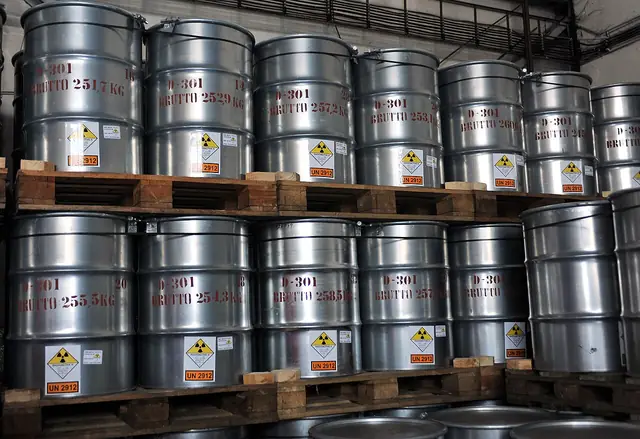
HALEU is the fuel most advanced-reactor designs assume. Enrichment sits between 5 percent and just under 20 percent U-235, per the standard NRC definition. The only U.S. commercial HALEU cascade sits at Centrus’s American Centrifuge Plant in Piketon. The Centrus Phase III demonstration contract wrapped mid-June with roughly 1,900 kilograms of HALEU UF6 produced across the life of the demonstration effort, and on July 1 flipped into a commercial task order at $900 million with a delivery specification of 1 tonne by March 2032 and a planned 12 tonne-per-year initial capacity (Centrus PR Newswire, July 1, 2026, via NucNet coverage). That is the ceiling the U.S. HALEU supply is being sized against for the near-term reactor fleet.
Antares Mark-0 and Valar Ward 250 both burn that fuel. Deployable Energy and Aalo Atomics both chose not to. Deployable co-founder Sanjay Mukhi told POWER on a June 24 INL tour that an earlier Unity concept had been HALEU-fueled, graphite-moderated, and heat-pipe-based, but the company concluded it “would be too expensive and too constrained by fuel and supply chain availability” (POWER, July 1, 2026). The design pivoted to 4.95 percent LEU UO2. Result: 150 days from kickoff to criticality, single-digit-million cost, no HALEU dependency. Aalo went the same direction structurally, taking its LEU-fueled Aalo-X to criticality with GNF fuel rods delivered in early April.
Two HALEU, two LEU. The fuel line is a choice today, not a default.
Brazil angle
Brazil owns a piece of enrichment technology that few Global South countries do. INB’s Resende plant runs domestically developed ultracentrifuges. Phase 1 was completed at the end of 2022 with 10 cascades in operation, enough to meet 70 percent of Angra 1’s demand and cut foreign dependence (World Nuclear News, INB Resende Phase 2 update). Phase 2 is a 2023 to 2037 program aimed at supplying 100 percent of enrichment for Angra 1, Angra 2, and the under-construction Angra 3, at a total investment cost across both stages of roughly BRL 3 billion.
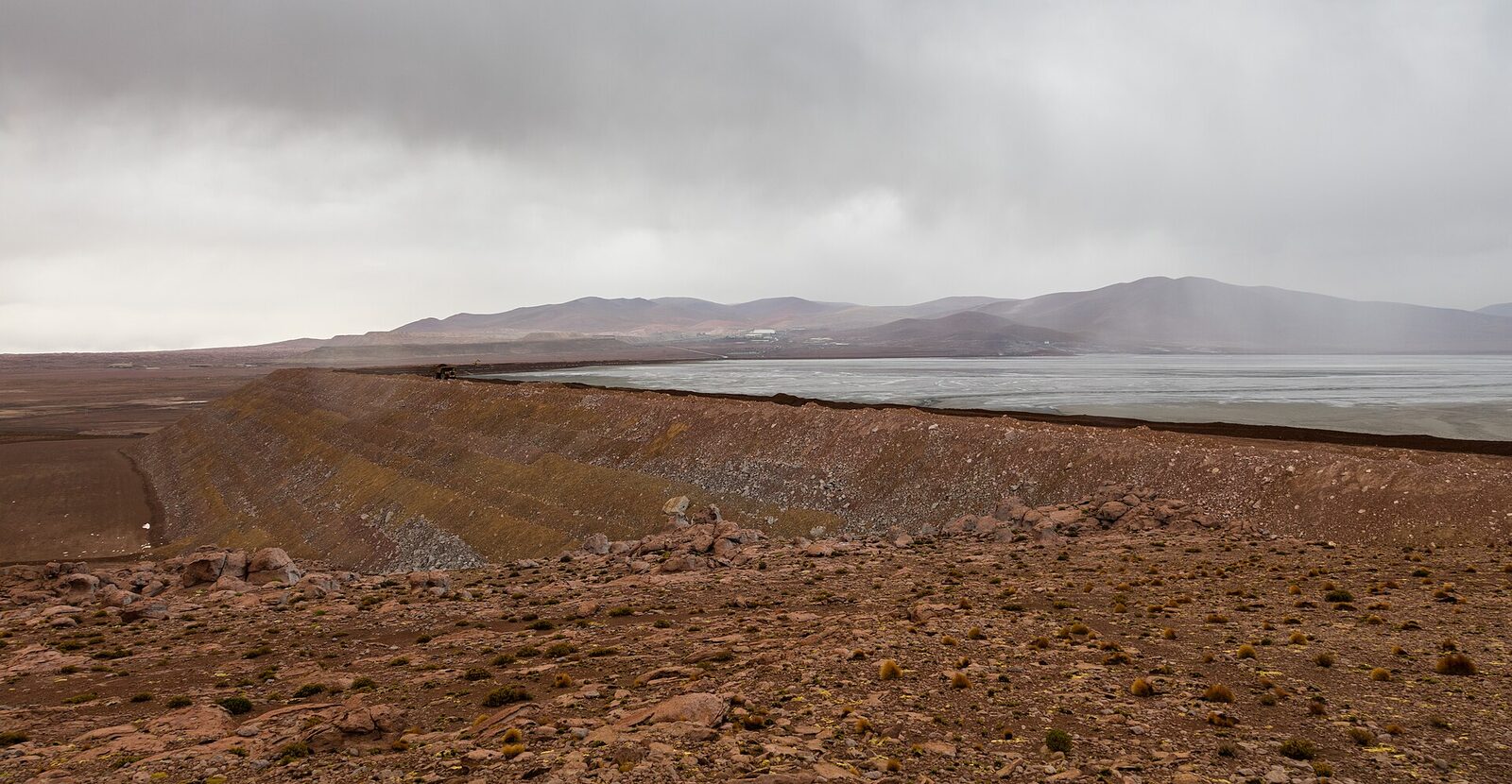
The Resende program is built for Angra-grade LEU. HALEU is not part of the published scope. Publicly, INB has not announced a HALEU pathway. Meanwhile, INB’s Caetité mine in Bahia, currently the only operating uranium mine in Brazil, produces about 400 tonnes of uranium concentrate a year. INB president Tomás Albuquerque said in May 2026 the company needs to multiply Brazilian uranium productive capacity roughly sixfold, across Caetité plus the Santa Quitéria project, to meet projected Brazilian nuclear sector demand (INB press coverage).
The mine gate is a scaling problem. The enrichment specification is where the strategic gap lives. Brazil’s R$15 billion Sovereign Plan for critical minerals continues to fund upstream mineral projects at the mine gate. Enrichment specification is a policy decision the plan does not touch. If Brazil wants any position in the microreactor fuel line that Antares and Valar are drawing on now, and that Centrus is scaling to 12 tonnes per year on the commercial contract, the choice has to be made against Phase 2’s current LEU specification, not after 2037.
US angle
Two industrial reads. First, Deployable’s and Aalo’s LEU choices tell the market that the HALEU pipeline is constrained enough to bend real reactor designs today. The Centrus commercial contract is the answer the DOE is trying to build. Twelve tonnes per year is the planned capacity, but the contract’s delivery specification runs one tonne of HALEU UF6 by March 2032. The gap between planned capacity and contracted delivery is the near-term supply reality that every OEM has to decide against. Two out of four reactor teams already decided.
Second, the Valar-Nvidia 30-megawatt Utah plan and Aalo’s Microsoft-Nvidia co-piloting collaboration are the AI-nuclear connection the reactor buildout has been trying to draw explicitly. Valar’s Ward 250 currently runs at 10 kilowatts thermal, well below the 30 MW site plan; deployment runs through NRC and site permits. Aalo’s Project Ascension second reactor is still in the buildout phase. The intent to co-locate microreactor generation with named hyperscaler compute is now public across at least two of the four teams.
Companies to watch: Centrus Energy (LEU) for HALEU capacity ramp signals off the July 1 commercial contract, Urenco USA at Eunice for parallel commercial LEU expansion, and BWX Technologies plus Standard Nuclear plus Global Nuclear Fuel on fuel fabrication. Oklo Isotopes’ Groves Isotope Test Reactor in Texas received Documented Safety Analysis approval on July 1, with first criticality targeted in July 2026 on LEU fuel (POWER, July 1, 2026).
China angle
China commercially operates the world’s only production-scale high-temperature gas-cooled reactor: the HTR-PM twin-module plant at Shidao Bay in Shandong province, entered commercial operation December 2023 (World Nuclear News; POWER coverage of HTR-PM safety validation). Each of the two 250-MWt reactors drives a shared 210-MWe steam turbine using TRISO pebble fuel loaded with more than 400,000 spherical elements per reactor, each pebble containing about 7 grams of fuel enriched to 8.5 percent. Operator is China Huaneng Group in partnership with Tsinghua University and China National Nuclear Corporation.
That gives China the only operating industrial TRISO fabrication and HTGR operational data set in the world, at a moment when U.S. companies are testing new HTGR designs one at a time. The fuel column that Deployable and Aalo walked around is the same fuel-and-fabrication line already running at commercial scale from Baotou to Shidao Bay. Beijing’s export control tightening in 2026 has focused on downstream materials, including the January 1, 2026 addition of samarium, gadolinium, and lutetium compounds to the Export Licensing Catalogue. Enrichment technology and TRISO fabrication are not on the publicly identified control list. The upstream infrastructure sits outside the export conversation.
What it means
Four reactors, four companies, four designs, one month. The July 4 milestone was real. The fuel column underneath is the story that matters for a materials-and-power desk. HALEU is no longer a policy question. It is a build-or-do-not-build decision each new advanced-reactor OEM has to make against the specific delivery schedule Centrus is now committed to, and against the 12 tonne-per-year capacity target. Two of four Reactor Pilot Program teams already answered “walk around it.”
For Brazil, this is another instance of a Southern producer holding the raw resource and none of the qualified downstream. INB mines at Caetité. INB enriches at Resende. Neither runs at HALEU. When the U.S. reactor pipeline scales, the fuel line draws on Centrus, Urenco USA, and any additional commercial enrichers with production authorizations. If Brazil wants a position inside that pipeline, the decision has to be taken against Phase 2’s current LEU specification.
For the AI capex thesis, the Aalo, Valar, and Nvidia announcements this week are the first named connection between DOE-authorized criticality-tested microreactors and named hyperscaler compute. The site plans remain speculative. The criticality events and the chip-level power demonstration are not.
What to watch
- Centrus commercial cascade ramp toward the 12 tonne-per-year initial HALEU target and the March 2032 first-metric-tonne delivery obligation (Centrus PR, July 1, 2026 via NucNet).
- Aalo Project Ascension second reactor progress toward on-site data center demonstration (Aalo Atomics PR, July 6, 2026).
- Oklo Isotopes Groves criticality attempt in July 2026 on LEU fuel (POWER, July 1, 2026).
- Any INB or MME statement acknowledging Phase 2’s LEU-only scope or authorizing a HALEU pathway.
- Valar-Nvidia 30-megawatt Utah site plan, including NRC engagement and site selection.
- Follow-on U.S. commercial HALEU task orders under DOE’s LEU Production Contract and HALEU Deconversion Contract structures (Centrus June 20, 2025 press release forward-looking commentary).