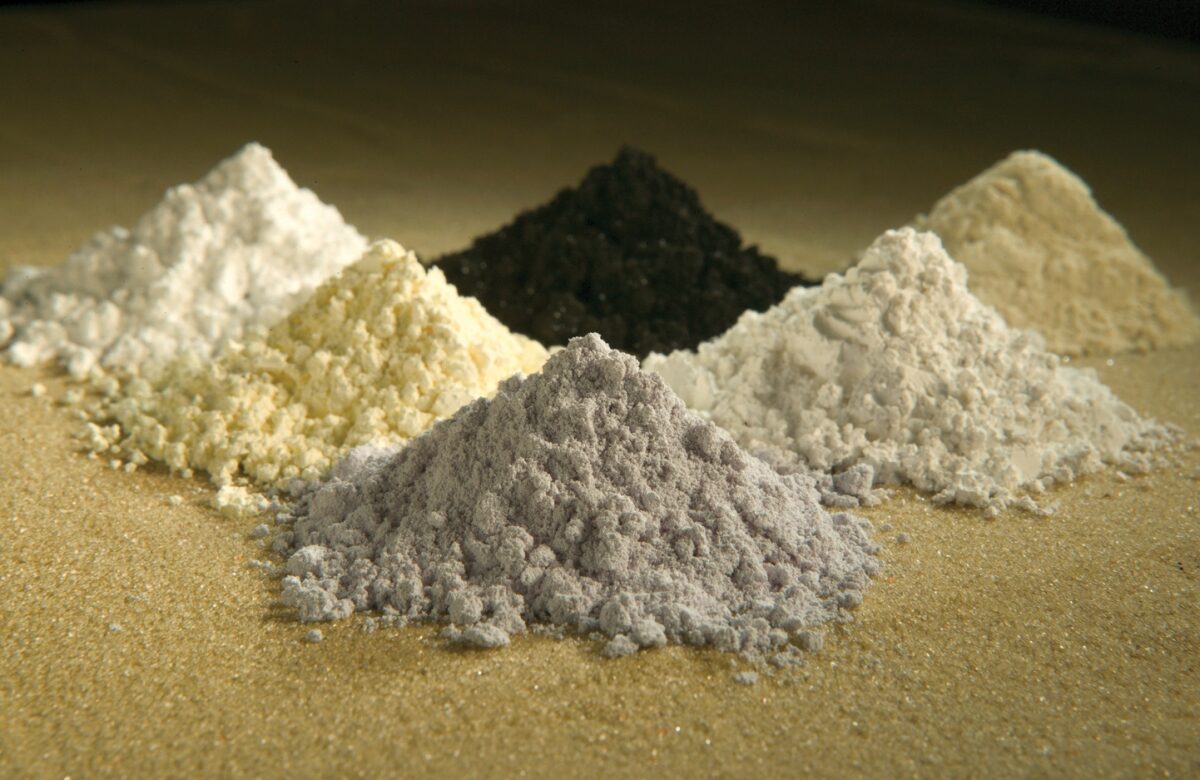
USA Rare Earth expects to sell at least 325 tonnes from Brazil's Serra Verde this quarter. It plans to separate the carbonate in the US from early 2028.
USA Rare Earth expects to sell at least 325 tonnes of rare earth oxide from its Goiás mine this quarter, at a basket value of about US$43 a kilogram at floor prices and US$97 at market. Brazil's new minerals council wants processing done in Brazil; the company plans light separation in the United States and heavy separation at Carester.

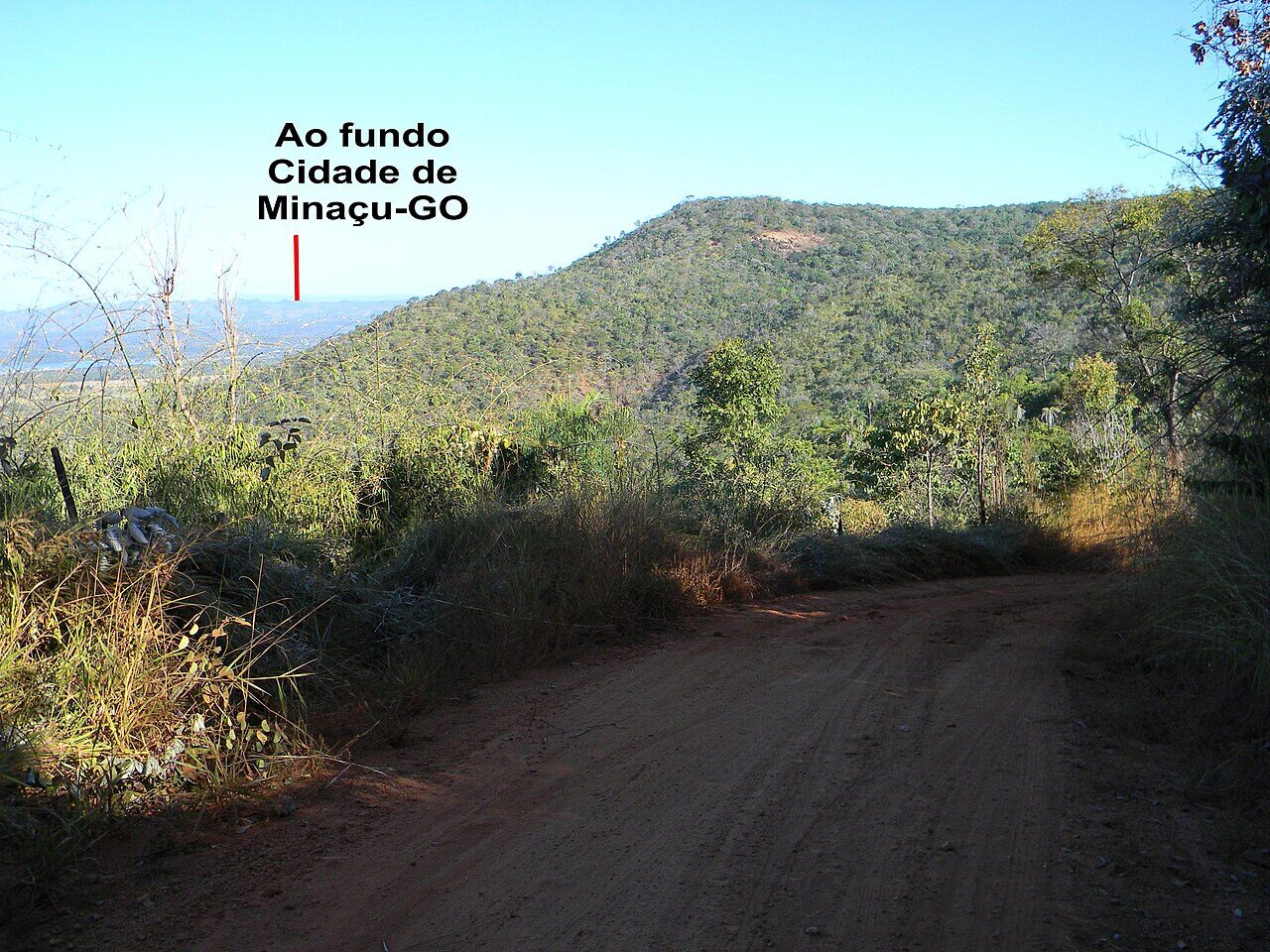
Image: the view down the Serra do Luizão toward Minaçu, Goiás, photographed in 2011 by CHOliverMinacu, CC BY 3.0. It shows the region around the town, not the Serra Verde mine or its plant.
On Monday, 9 November, USA Rare Earth published its first quarterly results since closing its combination with Serra Verde in September. The Brazilian operation, in Goiás, finished Stage 1 of its optimization and commissioning programme and began commercial-scale production of mixed rare earth carbonate, with first shipments in October and sales in November [USA Rare Earth, Q3 2026 results, 9 Nov 2026]. For the fourth quarter the company guides to sales of at least 325 tonnes of total rare earth oxides (TREO) from Serra Verde [same source].
Stage 1 is ramping to 4,000 tonnes a year, which the company expects to reach in the second quarter of 2027 [same source]. This piece follows the desk’s 30 May note on the US$2.8 billion takeover and its 28 September note on Serra Verde’s royalties. Those covered the deal and the tax base. This one covers the first volumes, what they are worth and where they go.
What’s happening
- Who buys. Serra Verde ships its carbonate to US SIIE, LLC, a special purpose vehicle that will buy 100 percent of Phase 1 production under a 15-year, 100 percent take-or-pay offtake [USA Rare Earth, 9 Nov 2026]. Reuters describes the mine as US government-backed and the only rare earth mine operating commercially in Brazil [Reuters via Internazionale, 5 Nov 2026].
- Two prices. USA Rare Earth gives two quarter-to-date basket values, both based on the offtake’s pricing terms: about US$43 a kilogram of TREO at floor prices, after contracted separation costs, and about US$97 a kilogram at market prices, including the company’s share of upside above the floor [USA Rare Earth, 9 Nov 2026]. On a neodymium-praseodymium equivalent basis those are about US$150 and US$340 a kilogram [same source]. CFO Rob Steele told analysts the US$97 represents the company’s share of the upside above the floor prices less separation costs [USA Rare Earth Q3 call via The Motley Fool, 9 Nov 2026].
- What 325 tonnes is worth. At US$43 a kilogram, 325 tonnes comes to about US$14 million; at US$97, about US$31.5 million. That is desk arithmetic, not revenue guidance: the company gives a volume floor and two basket values, and the outlook table contains no revenue figure [USA Rare Earth, 9 Nov 2026]. For scale, USA Rare Earth’s revenue for the whole third quarter was US$3.0 million [same source].
- Four elements paid for. Steele said the company is currently selling carbonate and is only monetizing the four elements that go into neodymium-iron-boron magnets [Motley Fool, 9 Nov 2026]. The release calls Serra Verde the only scaled producer outside Asia of all four key rare earths used in those magnets [USA Rare Earth, 9 Nov 2026].
- Stage 2. A further 2,400 tonnes a year of capacity is due to begin commissioning in the third quarter of 2027, for a run rate of 6,400 tonnes a year of TREO by the end of 2027 [USA Rare Earth, 9 Nov 2026]. These are company targets.
Where the carbonate goes
Asked about Serra Verde and Carester on the call, Steele said the product is bought and paid for by the special purpose vehicle, and needs lanthanum and cerium removed and neodymium-praseodymium separated before it can go to Carester, whose plant he described as primarily a heavy rare earth separation plant. He added: “we expect to do that by early ‘28 when our plant is up and running, and we’ll do that in the U.S.” The heavy fraction would then go to Carester [Motley Fool, 9 Nov 2026]. He said that if there is a way to do the first step somewhere else before then, it would accelerate separation. The desk read the full transcript: it does not say where the carbonate is separated until that plant runs.
Brazil angle
Brazil’s National Council for the Industrialization of Critical and Strategic Minerals plans to prioritize processing rare earths in Brazil over exporting them raw, while still welcoming US investment, Reuters reported on 5 November. Council member Marco Lage said: “What’s most important is to produce more in Brazil” [Reuters via Internazionale, 5 Nov 2026].
Serra Verde’s flow, as the company describes it, runs the other way: carbonate leaves Goiás, light separation is planned for a US plant in early 2028, and heavies go to Carester.
US angle
Downstream of the carbonate, USA Rare Earth sold its first magnets from its 600-tonne-a-year plant at Stillwater, Oklahoma, in the third quarter, and plans to commission Line 1b, adding another 600 tonnes a year, in the second quarter of 2027 [USA Rare Earth, 9 Nov 2026]. The company reported net income of US$11.7 million for the quarter on an operating loss of US$141.4 million; the profit came from US$148.1 million of other income, net [USA Rare Earth, 9 Nov 2026].
The data center link is in the magnets. In June 2025 USA Rare Earth signed an agreement with Moog to supply magnets for cooling pumps in data centers; quantity, price and whether the memorandum was binding were not disclosed. Moog said rare earth magnets are crucial for meeting the growing cooling demands of data centers [SMM, 24 Jun 2025].
China angle
USA Rare Earth’s release says recent non-China prices for dysprosium oxide are 14 to 16 times China prices, and lists the company’s designation on a Chinese export control list among its risks [USA Rare Earth, 9 Nov 2026]. Chief executive Thrasyvoulos Moraitis called the dysprosium oxide market “literally a hand-to-mouth situation” [Motley Fool, 9 Nov 2026]. Steele attributed the gap between the floor and market basket values entirely to record prices for dysprosium and terbium outside China [same source].
What it means
The desk’s reading: more than half of the US$97 market basket value is upside above the floor, by desk arithmetic, and the company ties that upside to dysprosium and terbium prices outside China. If those prices fall, the basket moves toward US$43.
The second reading is about place. Serra Verde is the only rare earth mine operating commercially in Brazil, according to Reuters, and its separation is planned in the US and with Carester. Brasília’s council wants processing at home. The desk’s SDX index, which tracks Southern Hemisphere producers, stood at 85.6 on 7 November.
What to watch
- Fourth-quarter volume. USA Rare Earth’s next results should show whether Serra Verde sold the 325 tonnes it guided, and at which basket value.
- Stage 1 run rate in the second quarter of 2027. The company’s own date for 4,000 tonnes a year. A quarter of 1,000 tonnes or more would mark it.
- The council’s rules. Whether Brazil’s processing priority applies to a mine already contracted to export carbonate for 15 years.
Sources
- USA Rare Earth, “USA Rare Earth Reports Third Quarter 2026 Financial Results,” Form 8-K Exhibit 99.1, 9 November 2026: https://www.sec.gov/Archives/edgar/data/0001970622/000197062226000066/exhibit991-earningsrelease.htm
- USA Rare Earth Q3 2026 earnings call transcript, The Motley Fool, call of 9 November 2026: https://www.fool.com/earnings/call-transcripts/2026/11/10/usa-rare-earth-usar-q3-2026-earnings-call-transcript/
- Reuters, “Analysis: Lula’s election win dashes US hopes of quick access to Brazil’s rare earths,” 5 November 2026, via Internazionale: https://www.internazionale.it/ultime-notizie-reuters/2026/11/06/analysis-lula-s-election-win-dashes-us-hopes-of-quick-access-to-brazil-s-rare-earths
- SMM, “USA Rare Earth Signs Deal with Moog for Data Center Cooling Pump Magnets,” 24 June 2025: https://news.metal.com/newscontent/103390730/USA-Rare-Earth-Signs-Deal-with-Moog-for-Data-Center-Cooling-Pump-Magnets
- Wikimedia Commons, image file page: https://commons.wikimedia.org/wiki/File:Serra_do_Luiz%C3%A3o_-_Descendo_a_serra_em_2011_-_panoramio.jpg