A "48 percent improvement" in Bahia means about 40 percent of the rare earths, excluding cerium, left the clay. That is roughly where Brazil's Carina feasibility study already sits.
Rare Earths Americas says lab leaching at its Alpha project recovered about 40 percent of rare earths excluding cerium, against 27 percent assumed in its technical report. Aclara's Carina feasibility study in Goiás runs on 37.7 percent. US buyers courting Brazilian clay should price that number, not the headline.

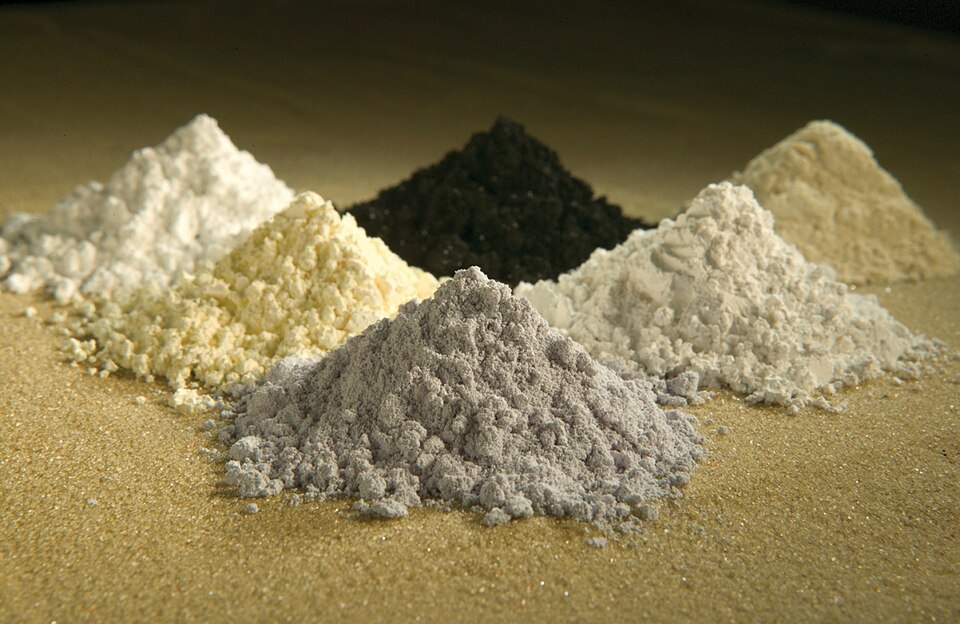
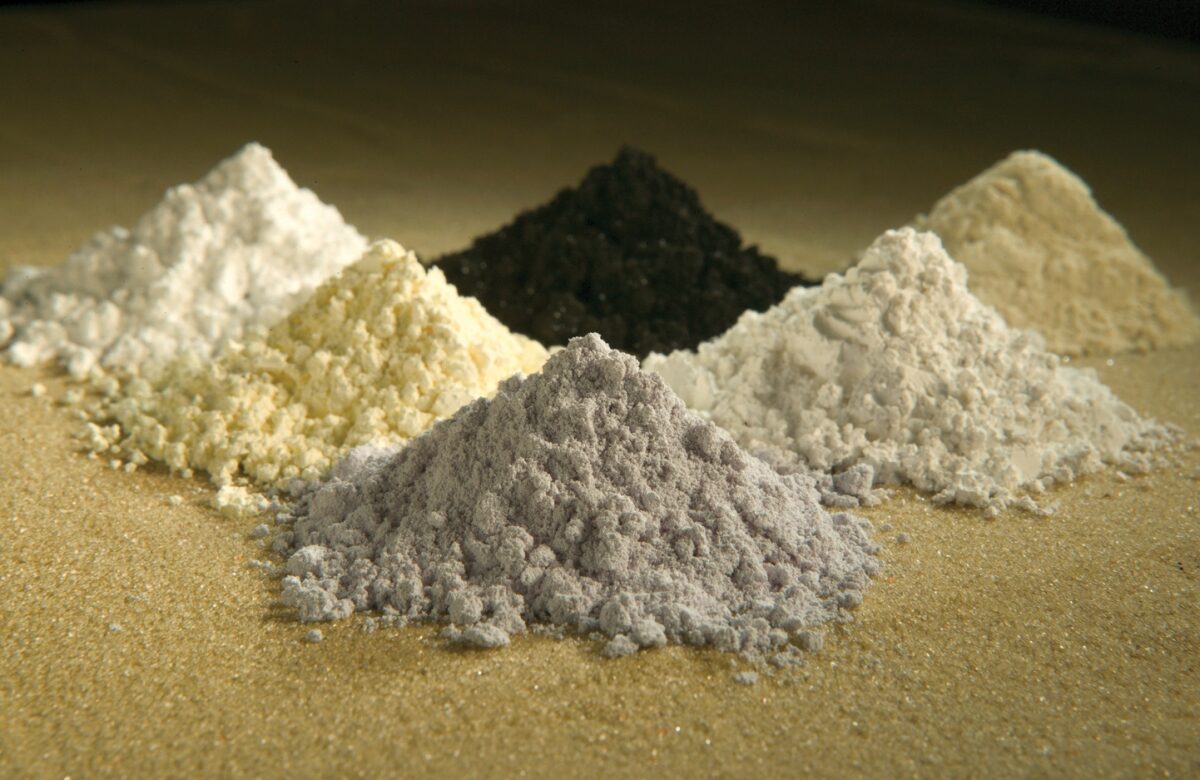
Image: oxides of praseodymium, cerium, lanthanum, neodymium, samarium and gadolinium, photographed by Peggy Greb for the US Department of Agriculture, public domain, resized. It shows the products, not the Alpha project, for which no free photograph was found.
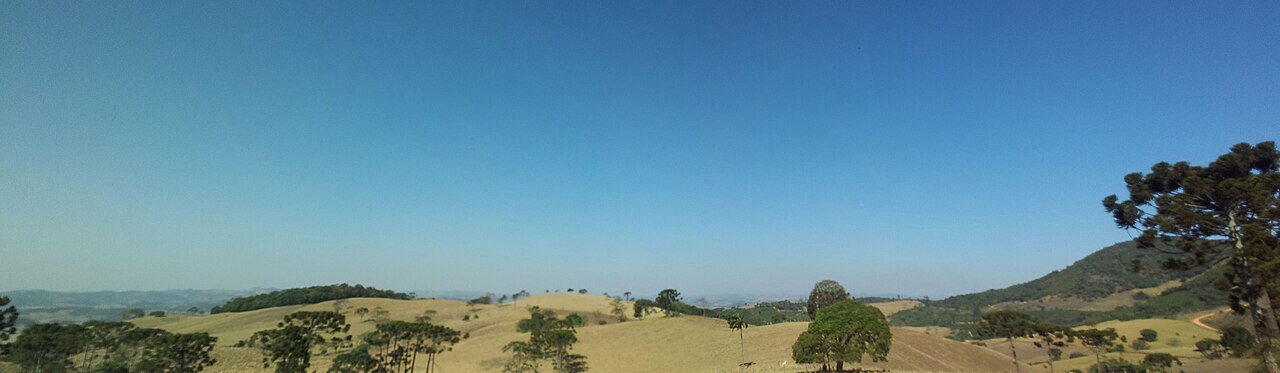
On 2 November Rare Earths Americas (NYSE American: REA) reported that laboratory leach tests on material from its Alpha ionic clay project in Bahia recovered about 40 percent of the rare earths excluding cerium (TREE-Ce). The project’s Technical Report Summary had assumed 27 percent. The company calls that a 48 percent relative improvement [Rare Earths Americas via Business Wire, 2 Nov 2026]. The same morning, chief executive Donald Swartz told Investing.com the company is in “ongoing discussions with a range of parties,” including US government agencies, without naming any of them or saying how advanced the talks are [Investing.com, 2 Nov 2026].
The headline number is the relative one. The number a buyer prices is the absolute one: on this test, about six in ten units of the rare earths excluding cerium stayed in the clay. Counting cerium, the release’s appendix table puts 227.98 ppm of total rare earths in solution against 1,121 ppm in the feed, which by desk arithmetic (times 1.5 for the solids ratio explained below) is about 30 percent leached.
What’s happening
- The test. SGS Geosol Laboratórios ran the work on one composite of 80 samples, 20 each from four deposits: Rio Preto, Sapucaia, Rio das Pombas and Nova Canaã. Feed grade was 1,121 ppm TREE, or 818 ppm TREE-Ce. The preferred conditions were 0.25 M ammonium sulfate at a final pH of 4.0, a 10-minute leach at 40 percent solids. The pregnant solution carried 219.19 ppm TREE-Ce [Rare Earths Americas, 2 Nov 2026].
- What REA itself says the number is not. The company states that the comparison with the 27 percent assumption is not like-for-like because test conditions differ; that 40 percent covers the leach step only, before impurity removal and product losses, so it is not recovery into mixed rare earth carbonate; that it comes from a single laboratory composite; and that the rare earth content of the clay and the mineral resource are unchanged [Rare Earths Americas, 2 Nov 2026].
- The resource behind it. Alpha carries an inferred resource of 202 million tonnes at 1,520 ppm total rare earth oxides (TREO) at a 1,000 ppm cut-off, effective 31 October 2025, with NdPr about 21 percent and DyTb about 3 percent of the TREO basket. Inferred resources have no demonstrated economic viability [Rare Earths Americas, 2 Nov 2026].
- The timetable. The Initial Assessment is more than 80 percent complete and targeted for the first quarter of 2027, and REA says it will not by itself be a development decision [Rare Earths Americas, 2 Nov 2026]. Investing.com reports a construction decision in 2029 at the earliest, no production date, and about US$77 million in cash and short-term investments with no debt at 30 June, which Swartz put at roughly 24 months of runway [Investing.com, 2 Nov 2026].
Desk arithmetic, not a figure REA reports: 40 percent of 818 ppm is about 327 ppm of TREE-Ce leached per unit of feed, leaving about 491 ppm in the clay. The solution figure is consistent with that. At 40 percent solids there is 1.5 units of solution per unit of clay, and 219.19 ppm times 1.5 is about 329 ppm, or about 40 percent of 818, assuming ppm by mass in both phases.
Brazil angle
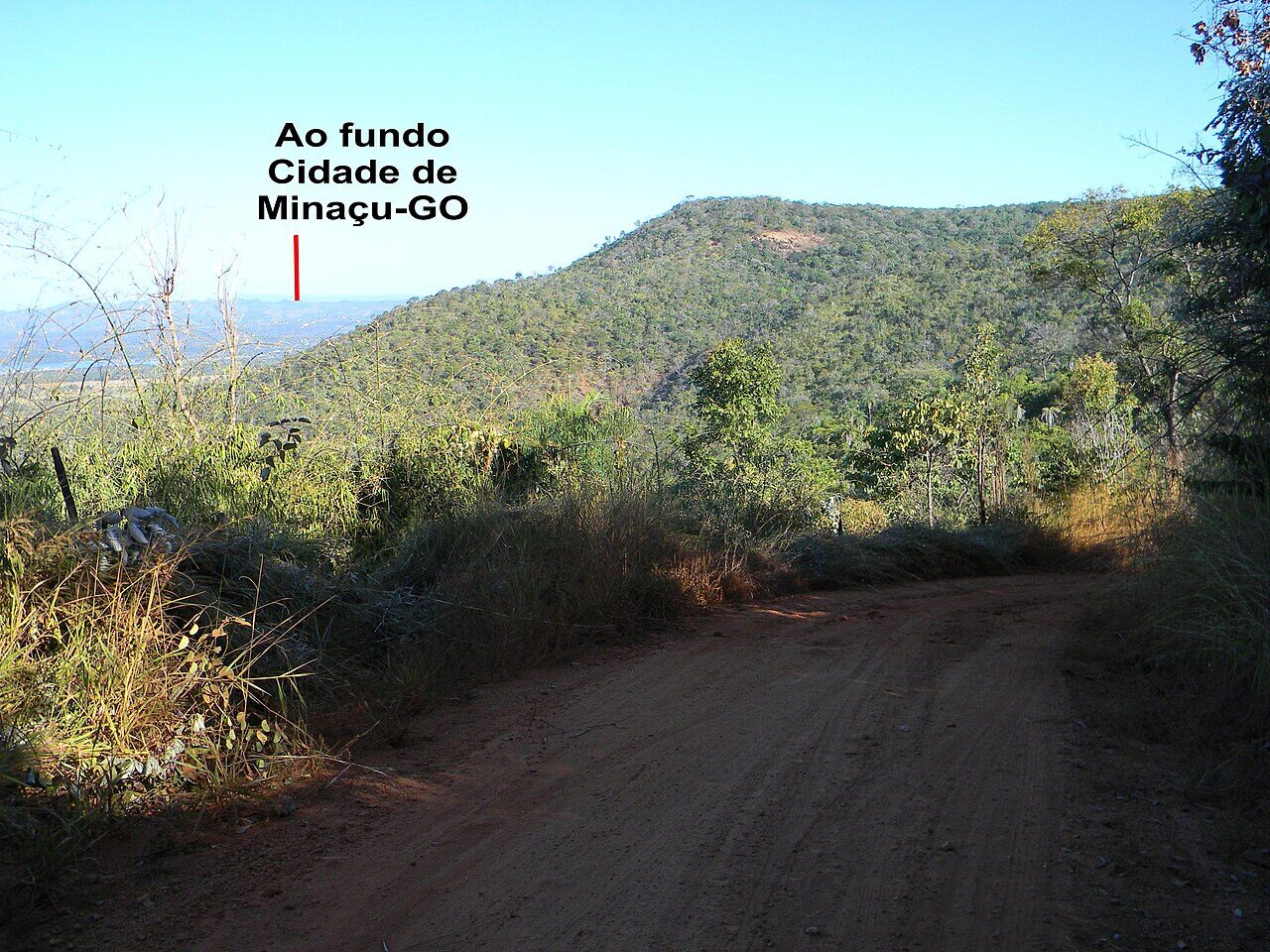
The useful comparison is not with China. It is with Goiás. Aclara’s heavy rare earth ionic clay project, Carina, filed a feasibility study on 13 April. Its mass balance carries desorption of 26.5 percent, 37.7 percent excluding cerium, a plant recovery of 96.1 percent and an overall figure of 25.4 percent [Aclara via Newswire, 13 Apr 2026]. That study still targets about 4,378 tonnes a year of rare earth oxides, including 156 tonnes of dysprosium and 27 tonnes of terbium, with construction in 2027 and commissioning in the first half of 2028 [Aclara via Newswire, 13 Apr 2026].
So Alpha’s 40 percent on a leach step and Carina’s 37.7 percent on desorption excluding cerium sit within a few points of each other. The bases are not identical: one is a single lab composite on a leach step, the other a feasibility mass balance on a desorption step. The desk’s reading, as inference: Brazilian ionic clays are clustering in the high 30s to about 40 percent on the first extraction step, and projects that reach feasibility here may be built on that kind of number.
The composite’s mix matters as much as its recovery. Nd, Pr, Dy and Tb make up about 37 percent of the TREE-Ce in the tested sample, and heavy rare earths about 29 percent, though REA notes this describes the composite, not the whole resource [Rare Earths Americas, 2 Nov 2026].
US angle
The AI link runs through magnets. In June 2025 USA Rare Earth signed a memorandum of understanding for Moog to prototype its neodymium magnets “for use in Moog’s high-performance coolant distribution pumps used in data centers” [USA Rare Earth via GlobeNewswire, 16 Jun 2025]. In this desk’s reading, liquid cooling for dense AI racks is one route by which magnet rare earth demand follows the buildout; Nd, Pr, Dy and Tb are the magnet elements in Alpha’s composite.
REA’s US talks are the second half of its story. The company has not named an agency, an offtaker or a volume [Investing.com, 2 Nov 2026]. With a construction decision no earlier than 2029, any agency engagement now is an option on future concentrate supply, not a supply contract.
China angle
In this desk’s reading, the benchmark many Western investors carry is Chinese ionic clay. A 2020 column-leach study on weathered-crust ore from Fujian reported 86.93 percent leaching efficiency with ammonium chloride at 0.2 mol/L [Zhang et al., Frontiers in Chemistry, 15 Dec 2020]. That figure is not comparable with Alpha’s. The paper measures efficiency against the rare earths in the ore’s ion-exchangeable phase, not against the total in the head assay, and it uses a different lixiviant, a different ore and a lab column. It is context for what Chinese clay leaching is measured against, not a target Alpha missed.
The calendar is the other Chinese variable. MOFCOM and China’s customs administration suspended six export control announcements issued on 9 October 2025, including the rare earth measures, until 10 November 2026 [CIRS Group, on MOFCOM-GAC Announcement No. 70 of 2025]. In the desk’s reading, whatever Beijing does in eight days will shape the price environment in which Alpha’s Initial Assessment will be read.
What it means
The “48 percent” framing is accurate as company arithmetic and REA has caveated it carefully. The read for buyers, as this desk sees it, is narrower: a first laboratory leach of about 40 percent excluding cerium, on one composite, puts Alpha in the same range as a Brazilian project that has already reached feasibility on 37.7 percent. Carina’s feasibility study projects positive economics at those numbers, so a high-30s first extraction step is not disqualifying. But the US agencies and offtakers REA is talking to are buying into a low-extraction flowsheet, and should price the absolute recovery, not the relative headline.
What to watch
- 10 November 2026. The end of China’s suspension of the October 2025 export control announcements. In the desk’s reading, an extension, a partial reinstatement or a lapse would change the urgency of Brazilian clay negotiations.
- Alpha Initial Assessment, first quarter of 2027. Whether the study carries the 40 percent leach figure, the 27 percent assumption or something in between, and what overall recovery to mixed carbonate it assumes after impurity removal.
- Carina early works and 2027 construction. Whether a heavy rare earth ionic clay project with a feasibility study built on a high-30s desorption figure gets financed and built is the test of whether that range finances.
Sources
- Rare Earths Americas, “Rare Earths Americas Reports 48% Improvement in Rare Earth Leach Recovery at Alpha as Initial Assessment Nears Completion,” Business Wire, 2 November 2026: https://www.stocktitan.net/news/REA/rare-earths-americas-reports-48-improvement-in-rare-earth-leach-cinjgjoyoeat.html
- Investing.com, “Exclusive: Rare Earths Americas in U.S. supply talks as Brazil lab results improve,” 2 November 2026: https://www.investing.com/news/stock-market-news/exclusive-rare-earths-americas-in-us-supply-talks-as-brazil-lab-results-improve-4990768
- Aclara Resources, “Aclara Announces Filing and Results of Feasibility Study for Its Flagship Carina Project,” 13 April 2026: https://www.newswire.com/news/aclara-announces-filing-and-results-of-feasibility-study-for-its-flagship
- USA Rare Earth, “USA Rare Earth and Moog Sign Memorandum of Understanding for Delivery of US-Made Neo Magnets for Data Center Cooling Solutions,” 16 June 2025: https://finviz.com/news/81069/usa-rare-earth-and-moog-sign-memorandum-of-understanding-for-delivery-of-us-made-neo-magnets-for-data-center-cooling-solutions
- Zhang, Chi, Chen and Chen, Frontiers in Chemistry, vol. 8, 15 December 2020: https://www.frontiersin.org/articles/10.3389/fchem.2020.605968
- CIRS Group, “China Temporarily Suspends Export Controls on Key Raw Materials, Including Rare Earths, Lithium Batteries, and Diamonds”: https://www.cirs-group.com/en/chemicals/china-temporarily-suspends-export-controls-on-key-raw-materials-including-rare-earths-lithium-batteries-and-diamond