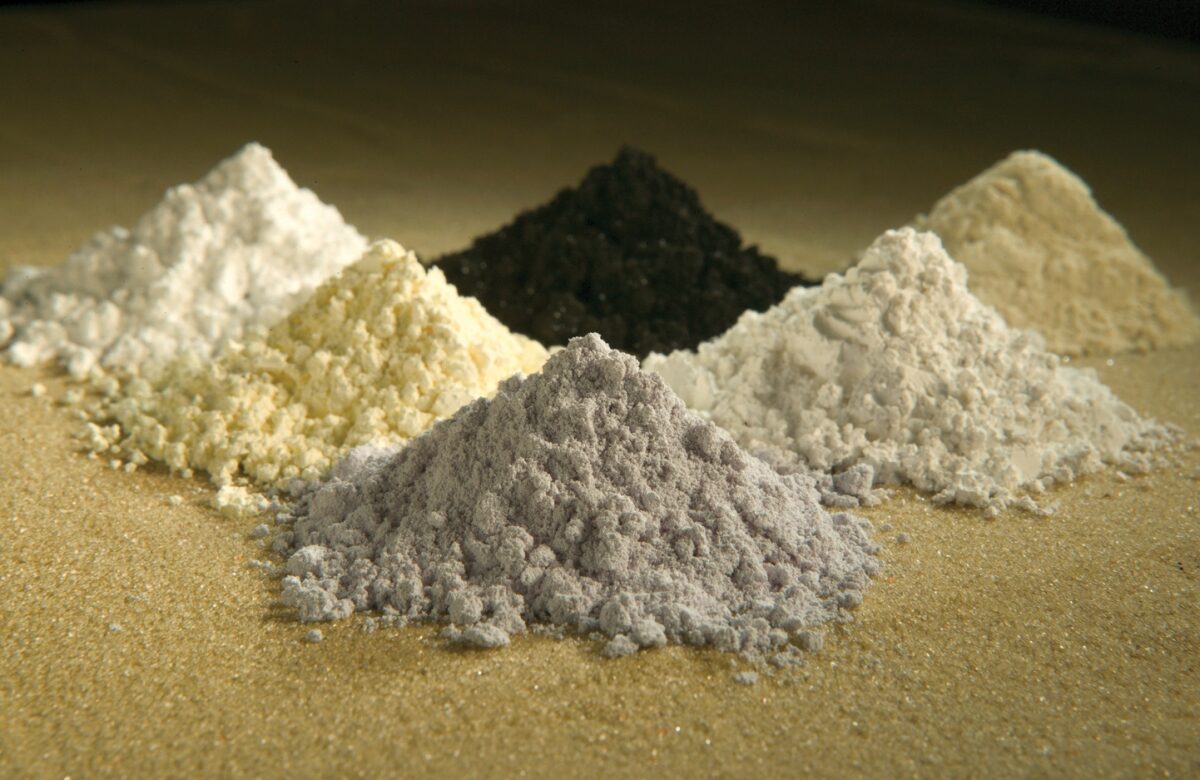
Viridis puts a US$915 million floor under Brazilian rare earth sales. Five of the seven elements in the contract are on China's export control list.
Solvay has signed a binding deal to buy at least about 70 percent of the forecast carbonate output of the Colossus project in Poços de Caldas through 2034, with take-or-pay from 2029 at the latest and price floors on four magnet metals that Viridis does not disclose. The separation into oxides happens in La Rochelle. The licence that would bring carbonate refining, not separation, into Brazil is still only contemplated.
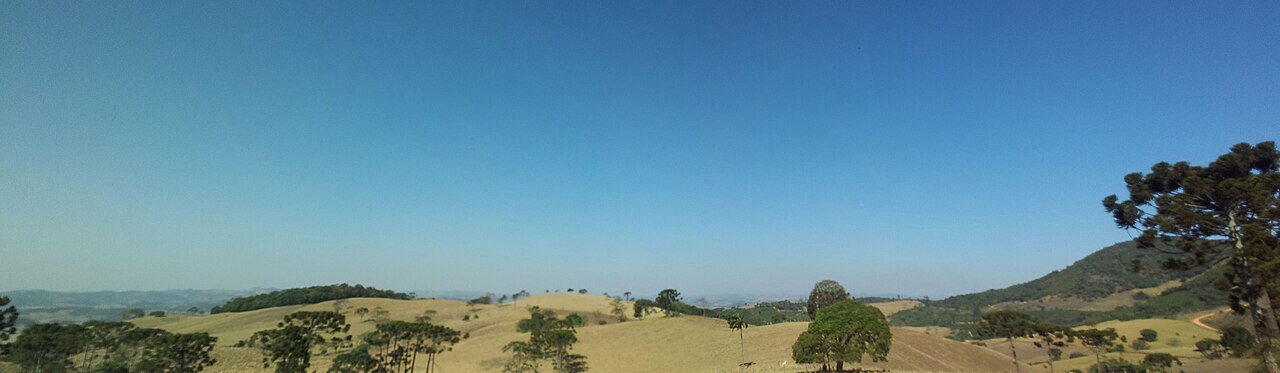
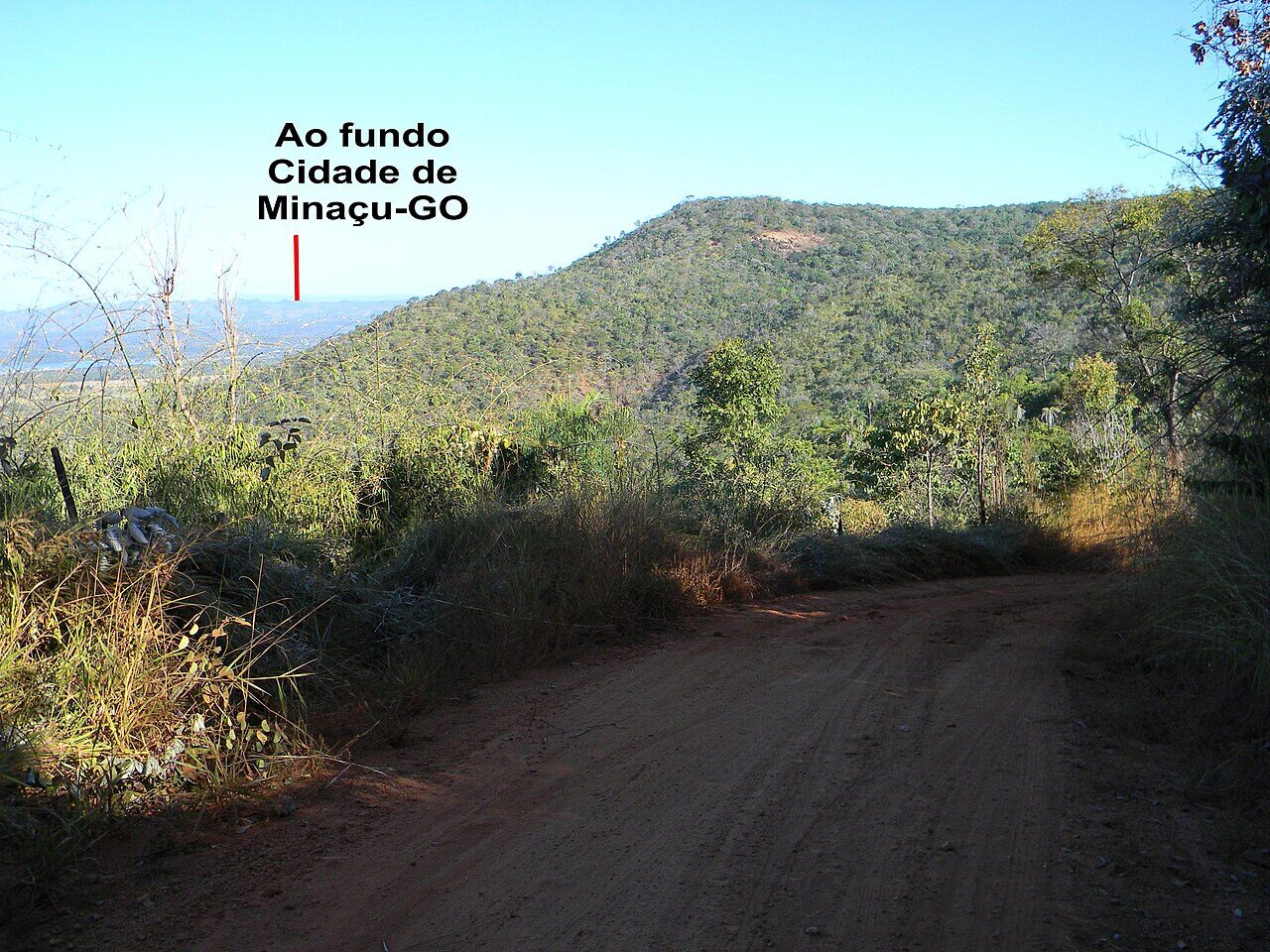
Image: hills near Poços de Caldas, Minas Gerais, photographed by JP Negri in 2011, CC BY-SA 3.0, resized. It shows the region, not the Colossus project site, for which no free photograph was found.
On 5 November Viridis Mining and Minerals (ASX: VMM) said it had executed a binding long-term offtake agreement with Rhodia Operations SAS, a Solvay group company, for the mixed rare earth carbonate (MREC) its Colossus project in Poços de Caldas, Minas Gerais, plans to produce [Viridis, ASX release, 5 Nov 2026]. In June the two companies had signed a letter of intent [Solvay, 1 Jun 2026]. In September this desk listed conversion of that letter into binding offtake as one of the things to watch before Colossus could be financed (Brazil’s biggest rare earth project started detailed engineering before it found the last US$280 million). It has now happened.
What the contract buys is a floor under the revenue a lender can count on. What it does not change is where the magnet metals are separated.
What’s happening
- Volume. Solvay’s minimum volumes equal about 70 percent of Colossus’s forecast MREC production over the initial term, which runs from first production, targeted for 2028, to 31 December 2034. Solvay holds a right of first offer on the rest but is not obliged to buy beyond its minimums [Viridis, 5 Nov 2026].
- Take-or-pay. Binding take-or-pay commitments start on the earlier of the commercial operations date or 1 January 2029. Volumes are lower in the first two years of production. The agreement contemplates a further five-year renewal [Viridis, 5 Nov 2026].
- Seven payable elements. Neodymium, praseodymium, dysprosium, terbium, samarium, yttrium and gadolinium, all in the minimum annual commitments [Viridis, 5 Nov 2026].
- The US$915 million. Minimum volumes of neodymium, praseodymium, dysprosium and terbium, about 64 percent of forecast production of those four over 2029 to 2034 including ramp-up volumes, multiplied by contractual price floors net of payability, “underpin minimum revenue of approximately US$915 million, subject to Viridis delivering the contracted volumes.” Samarium, yttrium and gadolinium are excluded because they have no floors. Viridis says detailed pricing formulas “are not disclosed” [Viridis, 5 Nov 2026].
- Debt. Viridis calls the agreement a milestone “towards finalising debt financing.” Its targeted structure is about 70 percent senior debt and 30 percent equity on a US$449 million development capital estimate, and it says final debt sizing and the overall funding structure will reflect the complete funding requirement, including financing costs, interest during construction, working capital and any required reserve accounts [Viridis, quarterly report, 27 Oct 2026].
By desk arithmetic, 70 percent of US$449 million is about US$314 million of indicative senior debt on the capital estimate alone, so the disclosed revenue floor is roughly 2.9 times that indicative debt. That ratio is the desk’s, not a coverage figure Viridis or any lender reports, and it ignores operating costs, tax and timing.
Brazil angle
The carbonate leaves. Since June, MREC from Viridis’s demonstration plant in Poços de Caldas has gone to Solvay’s La Rochelle separation plant in France for product qualification [Viridis, 5 Nov 2026]. Solvay describes La Rochelle as “one of the largest rare earth separation plants outside China” [Solvay, 1 Jun 2026].
The step that would keep more value in Brazil is a separate Licensing and Technical Services Agreement, which the release calls “separately contemplated.” Under it Solvay “would” license technology so Viridis can make a higher-value refined MREC in Brazil [Viridis, 5 Nov 2026]. Refined MREC is still a carbonate: the Feasibility Study’s refining circuit removes lanthanum to raise neodymium and praseodymium to about 63.9 percent of the product’s oxide content, but it does not separate the elements [Viridis, 27 Oct 2026]. Separation in Brazil sits elsewhere in Viridis’s plans: its 50 percent Viridion joint venture with Ionic Rare Earths has land in Poços de Caldas for an oxide refinery, with preliminary designs and a scoping study still ahead [Viridis, 27 Oct 2026].
Brazilian money is already in. BNDES approved a R$77.5 million facility, about US$15 million, for the demonstration plant and research centre, and Viridis says it is talking to BNDES and FINEP about support for the wider project. Viridis says the roughly US$40 million of additional equity commitments announced in August “included strong participation from Brazilian investors” [Viridis, 27 Oct 2026]. On the lender side, Bpifrance Assurance Export has issued a letter of support for “potential export credit support linked to French offtake and the ultimate senior debt structure.” Like Viridis’s other lender letters, it remains subject to the institution’s assessment, approvals and definitive documentation [Viridis, 27 Oct 2026]. In the desk’s reading, a binding French offtake gives that letter something concrete to attach to.
US angle
Viridis’s Feasibility Study ran an illustrative “Western Floor Price Scenario” at US$110 a kilogram for NdPr, US$575 for dysprosium and US$2,050 for terbium, against a spot case of US$129/kg NdPr at 23 July 2026 [Viridis, 27 Oct 2026]. The US$110 figure matches the 10-year floor the US Department of Defense set for MP Materials’ NdPr products in July 2025 [MP Materials, July 2025]. Because Viridis does not publish Solvay’s floors, the release does not show whether they sit at, above or below that benchmark.
The contract also keeps Viridis’s exposure to “qualifying government price-support mechanisms and incentives received by either party” through the pricing formula [Viridis, 5 Nov 2026]. No mechanism is named. In the desk’s reading, the clause is written so that a future government floor, wherever it comes from, can reach the Brazilian mine.
The AI link runs through magnets. USA Rare Earth and Moog agreed in 2025 to prototype neodymium magnets for Moog’s coolant distribution pumps used in data centers, with Moog citing AI growth and the need for “heat-resistant rare earth magnets” [USA Rare Earth, 16 Jun 2025]. By April 2025, Microsoft’s pilot with Western Digital and partners had processed 50,000 pounds of obsolete drives from its data centers and extracted neodymium, praseodymium and dysprosium [Trellis, 18 Apr 2025].
China angle
Five of the seven payable elements in the Solvay contract, dysprosium, terbium, samarium, gadolinium and yttrium, are on China’s April 2025 export control list, which also covers lutetium and scandium [MOFCOM Announcement 18, 4 Apr 2025]. Those controls were not part of the suspension China announced in November 2025.
That suspension covers the October 2025 package, including Announcement 61, which requires licences for some overseas-made items containing 0.1 percent or more by value of Chinese-origin rare earths, or made with Chinese rare earth mining, separation, metal, magnet or recycling technology. The suspension runs to 10 November 2026 [MOFCOM Announcement 70, 7 Nov 2025; MOFCOM Announcement 61, 9 Oct 2025]. On 28 September MOFCOM said the China-US Kuala Lumpur arrangement, under which each side had suspended some tariff and non-tariff measures until 10 November 2026, would be extended to 10 January 2027. The statement did not name the measures and did not mention rare earths [MOFCOM, 28 Sep 2026].
Chinese prices remain the reference. Shanghai Metals Market put Pr-Nd oxide at 710,000 to 714,000 yuan a tonne on 5 November [SMM, 5 Nov 2026].
What it means
Colossus now has a contracted buyer, a disclosed revenue floor of about US$915 million for four magnet metals, and a separation route that runs through France. That is a stronger case for lenders than a letter of intent. It is not yet a Brazilian separation industry. The refined carbonate is still the export product, the technology licence is still contemplated rather than signed, and the oxide refinery has not yet reached a scoping study.
Every payable element in the contract except neodymium and praseodymium is on China’s April 2025 export list, which the November 2025 suspension did not cover. In the desk’s reading, that basket helps explain why a European separator would commit to take-or-pay on Brazilian carbonate about two years before the mine is due to produce it. Neither company has said so.
The floor is also a disclosure gap. The public release gives a total, not the prices behind it, so outside readers cannot yet compare Solvay’s floors with the US$110 NdPr benchmark the US set for MP Materials.
What to watch
- 10 November 2026. Whether MOFCOM issues a formal notice extending Announcement 70 in line with the 10 January 2027 date of the wider arrangement, or amends it or lets it lapse. On the notice’s own terms, a lapse would end the suspension of Announcement 61’s 0.1 percent and technology rules.
- Senior debt and final investment decision. Viridis says the financing is advanced and the lender data room is open. The test is a signed debt package and an FID, plus the Installation Licence it says construction requires.
- The licensing agreement. Signature of the Solvay technology licence, and whether it brings any element separation, not only carbonate refining, into Brazil.
Sources
- Viridis Mining and Minerals, “Viridis Secures Binding Offtake Agreement with Solvay,” ASX release, 5 November 2026: https://cdn-api.markitdigital.com/apiman-gateway/ASX/asx-research/1.0/file/2924-03158119-6A1353653?access_token=83ff96335c2d45a094df02a206a39ff4
- Viridis Mining and Minerals, “Quarterly Activity Report, 30 September 2026,” ASX release, 27 October 2026: https://cdn-api.markitdigital.com/apiman-gateway/ASX/asx-research/1.0/file/2924-03153533-6A1351587?access_token=83ff96335c2d45a094df02a206a39ff4
- Solvay, “Solvay and Viridis sign letter of intent (LOI) for rare earth materials sourcing,” 1 June 2026: https://solvay.com/en/press-release/solvay-and-viridis-sign-letter-intent-loi-rare-earth-materials-sourcing
- MP Materials, press release on the Department of Defense partnership, July 2025 (Form 8-K Exhibit 99.1): https://www.sec.gov/Archives/edgar/data/1801368/000119312525157310/d43796dex991.htm
- USA Rare Earth, “USA Rare Earth and Moog Sign Memorandum of Understanding for Delivery of U.S.-Made Neo Magnets for Data Center Cooling Solutions,” 16 June 2025: https://finviz.com/news/81069/usa-rare-earth-and-moog-sign-memorandum-of-understanding-for-delivery-of-us-made-neo-magnets-for-data-center-cooling-solutions
- Trellis, “Microsoft is mining hard drives for rare earths and precious metals,” 18 April 2025: https://trellis.net/article/microsoft-mining-hard-drives-for-rare-earths/
- MOFCOM and GAC Announcement No. 18 of 2025, 4 April 2025: https://english.mofcom.gov.cn/Policies/AnnouncementsOrders/art/2025/art_0dd87cbee7b045bf93fabe6ab2faceee.html
- MOFCOM Announcement No. 61 of 2025, 9 October 2025: https://www.mofcom.gov.cn/zwgk/zcfb/art/2025/art_7fc9bff0fb4546ecb02f66ee77d0e5f6.html
- MOFCOM and GAC Announcement No. 70 of 2025, 7 November 2025: https://www.mofcom.gov.cn/zwgk/zcfb/art/2025/art_b1ec77dd3f0d4762952904df7cdaadec.html
- MOFCOM, statement on China-US economic and trade talks, 28 September 2026: https://www.mofcom.gov.cn/xwfb/sjfzrfb/art/2026/art_cd060e0649964da8ae13216c3bb1a645.html
- Shanghai Metals Market, Pr-Nd oxide price, 5 November 2026: https://www.metal.com/rare-earth-oxides/201102250162