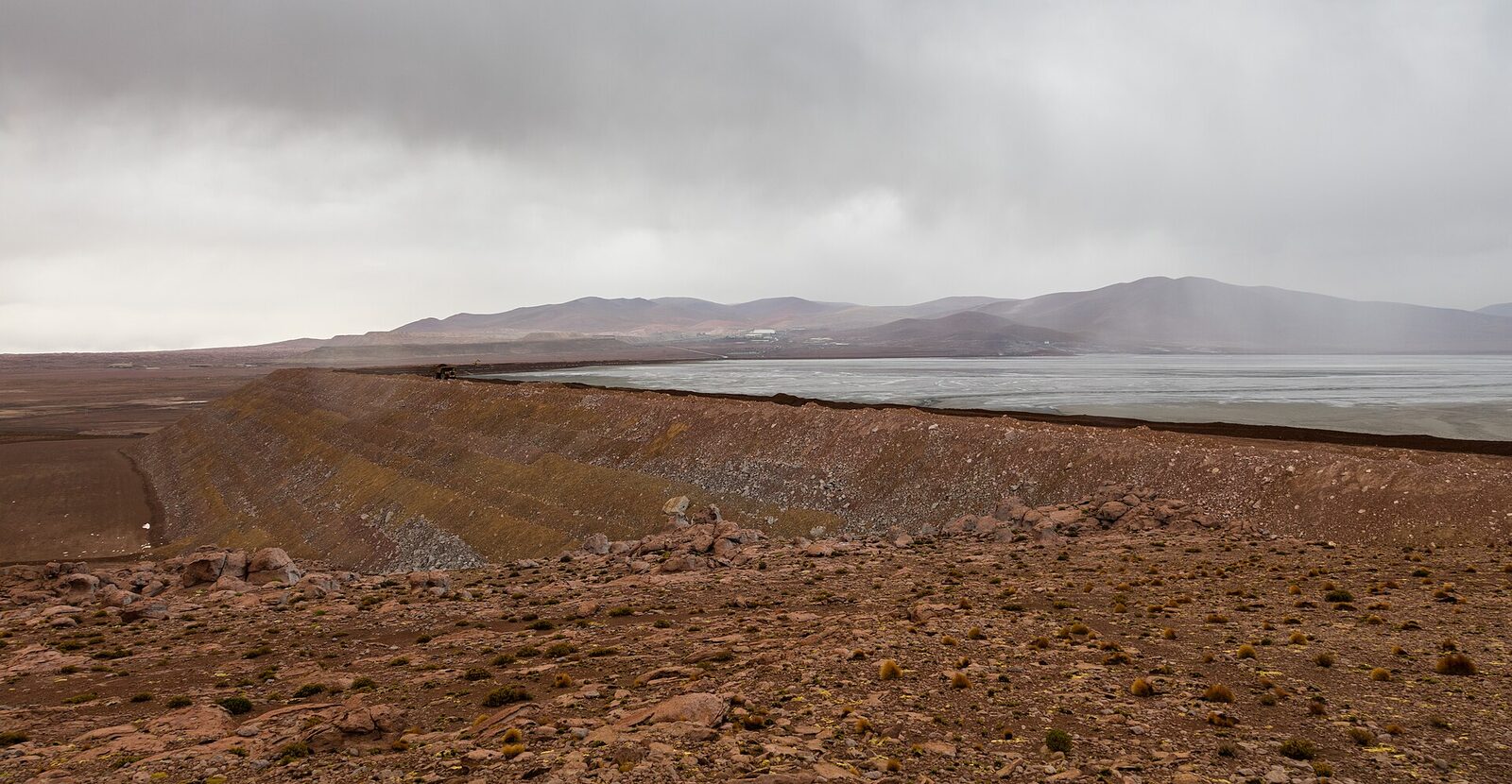
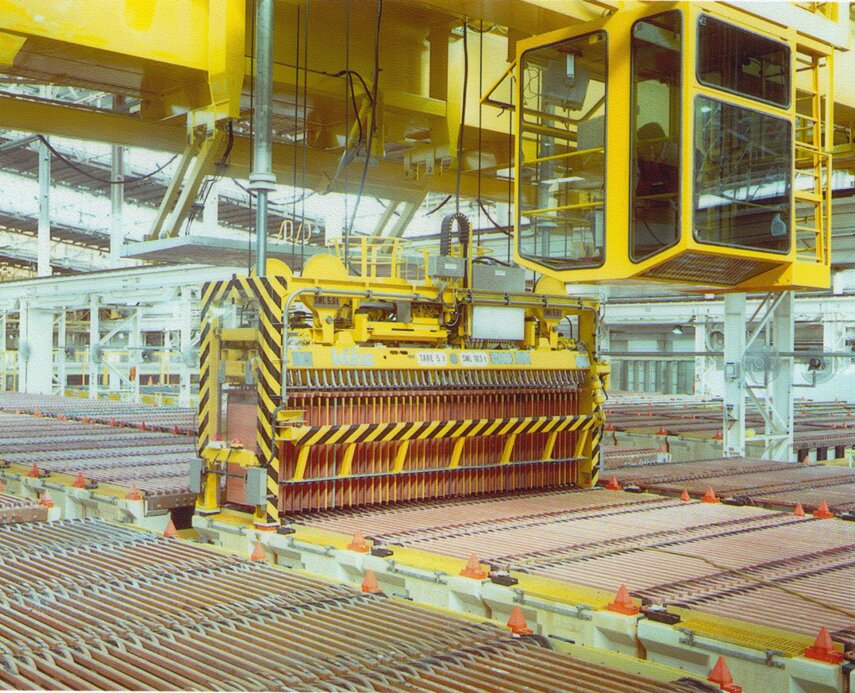
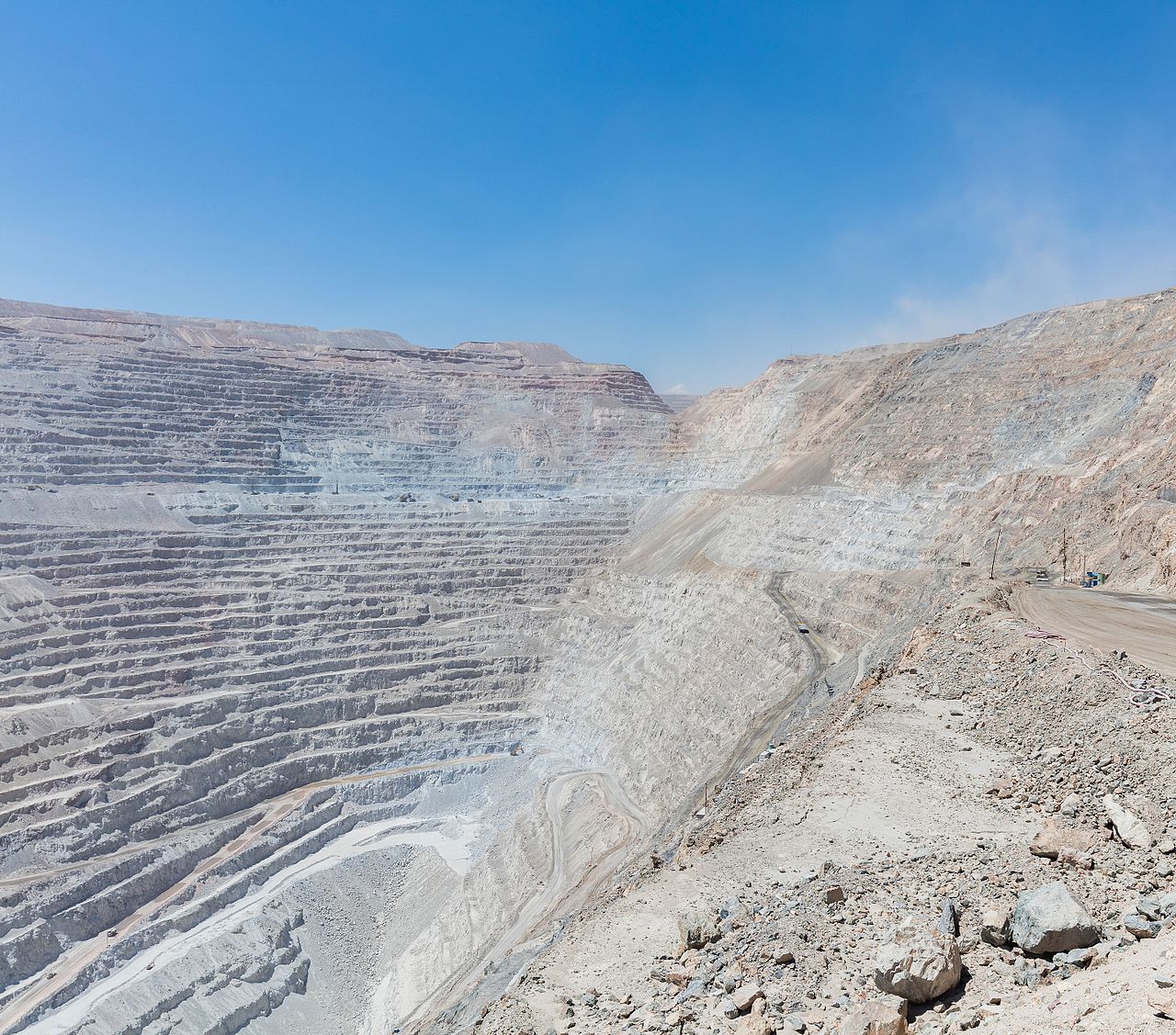
Peru's copper answer is 240 permits. Las Bambas says the constraint is not paperwork
Prime Minister Luis Galarreta told Congress on August 20 that Peru will authorize 240 mining projects this year and expects $33 billion over five years. Two days earlier a fatal accident stopped Las Bambas, the wholly Chinese-owned mine that produced 410,829 tonnes in 2025.

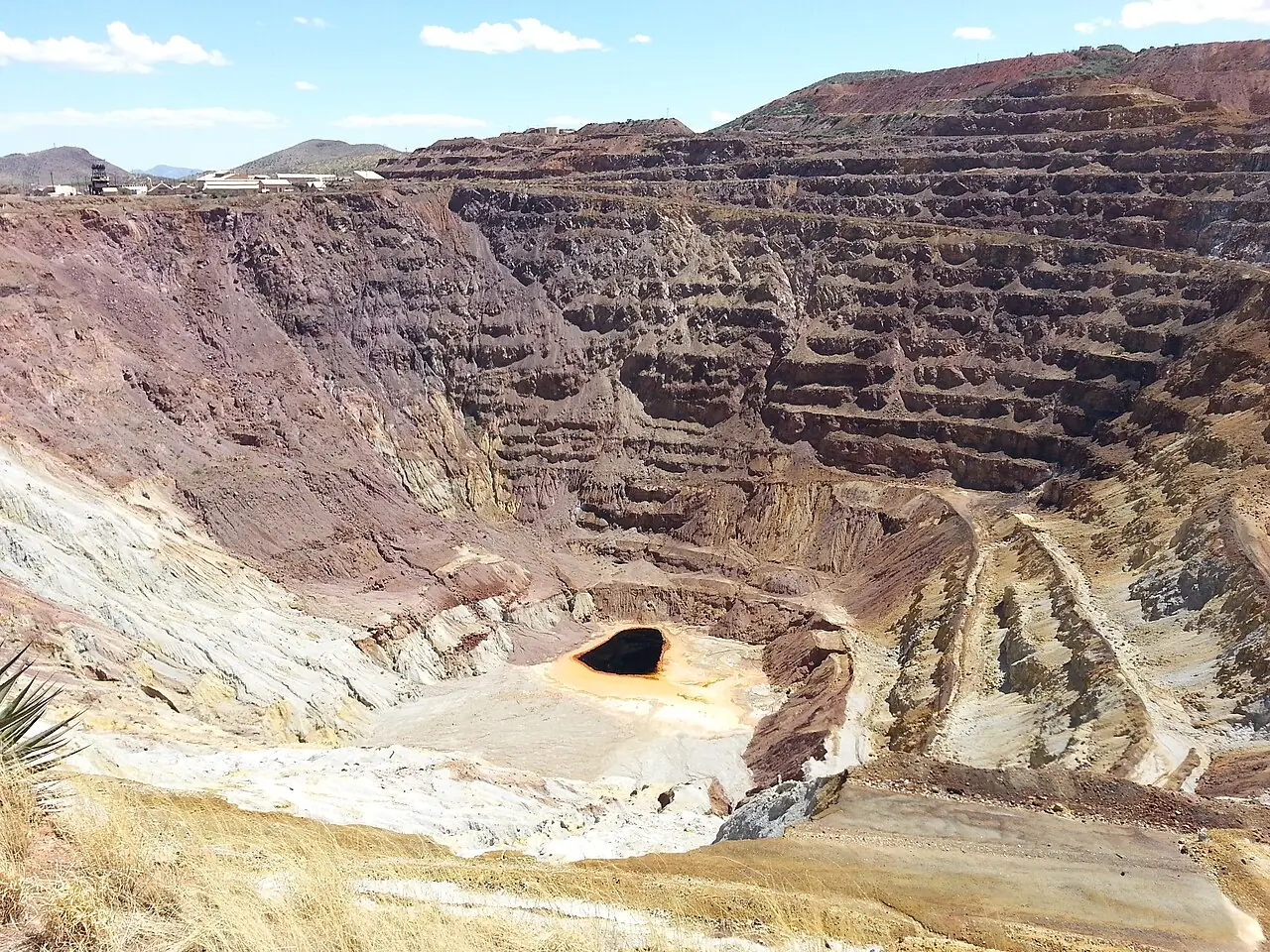
The AI buildout is bidding for copper that is not in the warehouse, and every structural answer to that is slow. On August 20 the country best placed to supply it made a throughput promise, and on that same day one of its largest copper mines was sitting idle for a reason no permitting reform touches.
Peruvian Prime Minister Luis Galarreta told Congress on Thursday, August 20 that President Keiko Fujimori’s government expects mining investment of at least $33 billion over its five-year term and plans to authorize 240 exploration and extraction projects this year [Reuters via MINING.COM, 2026-08-20]. Fujimori took office in July. Galarreta framed the state’s job narrowly: legal certainty, predictable permitting, timely decisions, fewer overlapping procedures, without weakening environmental or social standards.
Two days before that speech, on August 18, two workers were killed and three injured during pump replacement work at a clarification pond roughly 9 km from the Las Bambas processing plant. MMG disclosed the deaths on August 19 and suspended operations. Peru’s labour inspectorate, Sunafil, sent inspectors and opened its own investigation. MMG expects a progressive restart from August 21 and has not changed its 2026 guidance [MINING.COM, 2026-08-20, citing MMG’s August 19 voluntary announcement].
What’s happening
- Las Bambas produced 410,829 tonnes of copper in 2025 per Peru’s Ministry of Energy and Mines, about 28 percent above 2024 and roughly 2 percent of global mined supply [MINING.COM, 2026-08-20]. Peru is the world’s third-largest copper producer.
- The market it feeds is in a physical squeeze. On August 19 the premium for immediate LME delivery over the three-month contract hit $545 per tonne, the largest backwardation since 2021, and cash copper set a record at $14,912 per tonne [Reuters via Mezha, 2026-08-19].
- LME inventories closed the prior week at a six-month low of 207,825 tonnes, of which only 103,075 tonnes were actually available once cancelled warrants are stripped out. At least three participants held front-month longs each equivalent to between 30 and 80 percent of registered stocks [Reuters via Mezha, 2026-08-19].
- Las Bambas is not the only Andean interruption. Lundin cut its Chile copper guidance by 10,000 tonnes on weather, Antofagasta trimmed guidance about 5 percent after July storms halted Los Pelambres, and Codelco said Andes Norte at El Teniente will not reach production until 2029 [MINING.COM, 2026-08-14 and 2026-08-20].
- Chile is making the same bet as Peru. Economy and mining minister Daniel Mas wants approval times cut by up to 70 percent, corporate tax at 23 percent from 27, and 25-year stability contracts for strategic projects. Chilean output was 5.415 million tonnes last year against a 2018 peak of 5.831 million, with permitting averaging 147 approvals per project [MINING.COM, 2026-08-14].
The uncomfortable detail is what stopped Las Bambas. Not a tribunal, not an environmental review, not a queue. A workplace fatality, then a regulator. And the mine’s longer record is worse on exactly the axis permitting reform cannot reach: operations were disrupted for more than 100 days in 2019 and shut for over a month in 2022, both times over communities along the roughly 450 km concentrate road to the Port of Matarani [MINING.COM, 2026-08-20].
Brazil angle
Brasilia is pulling a different lever. The National Policy on Critical and Strategic Minerals, PL 2780/2024, cleared the House of Representatives on May 6, 2026 and moved to the Senate. It creates a National Council that must ratify changes in corporate control of companies holding critical mineral rights and can reach offtake contracts, and it sets up a Mineral Activity Guarantee Fund with federal participation of up to BRL 2 billion. On the bottleneck Peru just addressed, the bill is thin: Mattos Filho reads prioritized environmental permitting as a guiding principle with no instruments, timelines, or concrete procedures, leaving implementation to each agency [Mattos Filho, 2026-05-14]. Brazil is adding governance where Lima is subtracting friction.
The complication for that framing is that Brazilian permitting just moved faster than the reform debate assumes. Vale Base Metals approved coarse particle flotation at Salobo on August 12, adding up to roughly 30,000 tonnes of annual copper and about 15,000 ounces of gold, at $215 million total capex and $175 million net of Wheaton’s $40 million contribution, with an IRR above 50 percent and start-up pulled forward a year to the first half of 2028. VBM received its construction license from IBAMA ahead of schedule [Vale Base Metals, 2026-08-12]. Brazil’s fastest copper this year came from a brownfield retrofit that the environmental regulator cleared early, not from a new statute.
China angle
Here is the part the diversification narrative skips. Las Bambas was wholly acquired by three Chinese companies, with state-owned China Minmetals holding the majority stake through MMG. It received $12.3 billion in loans from six Chinese state-owned banks and companies between 2014 and 2023, the single largest destination for China’s state-directed lending for overseas transition mineral operations anywhere. With Chinalco’s Toromocho, the two mines drew more than $16 billion between 2010 and 2023, roughly 75 percent of Beijing’s entire state-directed lending and grant portfolio to Peru. Across Peru, 97 percent of that transition-mineral lending, $16.1 billion, went to partially or wholly Chinese-owned operations [AidData, 2025-02-27].
Chinese smelters are also the ones short of feedstock. SHFE stocks have fallen more than 80 percent since March to 69,731 tonnes, and the Yangshan import premium, though softening to $90, is up 350 percent since January [ADM Investor Services, 2026-08-17]. Galarreta added that Peru will work this year on the free trade agreement with Hong Kong signed in Lima in 2024 and not yet in force [Reuters via MINING.COM, 2026-08-20].
US angle
The US price signal is currently competing for existing metal rather than new mine supply. At the end of July, CME warehouses held 58 percent of global exchange-traded copper inventories, and US locations accounted for 37 percent of registered LME metal and 79 percent of off-warrant stocks. The CME three-month premium sits at $430 per tonne and the ten-month premium exceeds $1,000, a curve that keeps pulling cathode westward [Reuters via Mezha, 2026-08-19]. The driver is the unresolved tariff decision on refined copper. BMI treats a phased 15 percent from 2027 and 30 percent from 2028 as supportive and another walk-back as bearish given record CME stocks, and it raised its 2026 average forecast to approaching $13,500 per tonne from $12,700 [MINING.COM, 2026-08-14].
What it means
Permitting throughput is a real variable and Peru is right to pull it. But the conversion rate from permit to tonne runs through labour safety, road access, and community consent, and none of those get faster because a ministry eliminated an overlapping procedure. A government can authorize 240 projects and still lose more days to inspections and blockades than it saved in review time.
The second implication is a correction to how this desk and most others frame Southern diversification. Our SOV50 indicator measures country-level supply concentration, built off USGS country-level production data. It does not measure ownership concentration, and on Peruvian copper upstream those two readings diverge sharply. Capital hedging against Chinese control of processing can end up funding mines built with Chinese policy-bank credit and majority Chinese state ownership. That is a limitation of the indicator rather than a footnote to it, and it belongs on the methodology page.
What to watch
- Whether the Las Bambas restart MMG scheduled from August 21 holds, and whether Sunafil’s inspection extends it. A change to MMG’s 2026 guidance is the signal that this stopped being brief.
- A published count against Galarreta’s 240 authorizations. MINEM disclosure by year-end 2026 is the only way to test whether the pledge is throughput or rhetoric.
- Whether Chile turns Mas’s 70 percent permit-time cut and 23 percent corporate tax into an actual bill this year, and whether Codelco moves Andes Norte earlier than 2029.
- PL 2780/2024 in the Brazilian Senate, specifically whether senators attach any instrument or timeline to the permitting prioritization the House left undefined.
- The US refined copper tariff decision, which is currently setting the CME premium that determines where the world’s available cathode physically sits.