Brasília says Lynas will build one of the biggest rare earth separation plants outside China. Caldeira's US$498 million budget does not include it.
Mines and Energy Minister Alexandre Silveira told MINING.COM that Lynas has presented plans for an oxide separation plant in the Poços de Caldas region, and BNDES is weighing finance. Lynas's own filings still call Brazilian processing a possibility. The gap between those two positions is what Brazil's new minerals council will have to price.

On 1 October this desk wrote that Lynas was paying a 68 percent premium for Brazil’s largest ionic clay deposit while the step that turns it into magnet feed was still a study (Lynas pays 68 percent over market). Eleven days later the Brazilian government is speaking as if that step has been decided. The company is not. This piece is about the distance between the two, and who is now being asked to close it.
What’s happening
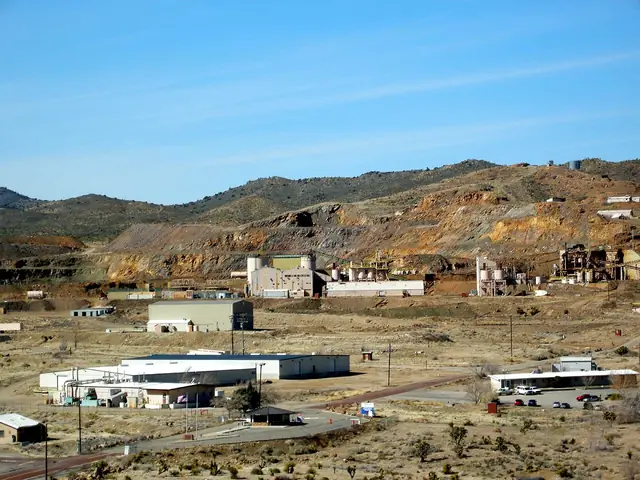
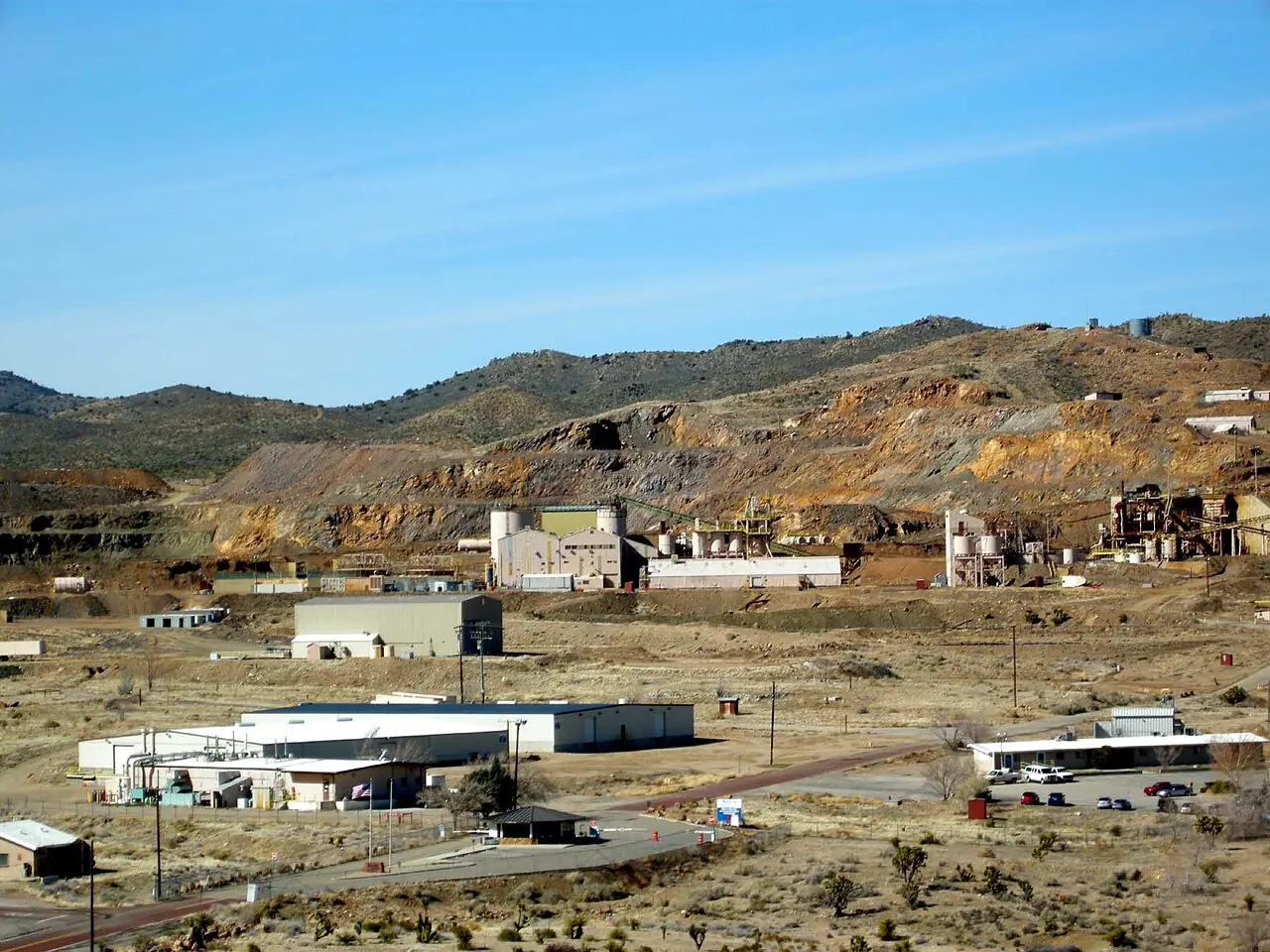
- The minister’s version. Lynas Rare Earths has presented plans to build a rare earth oxide separation plant in Minas Gerais, Mines and Energy Minister Alexandre Silveira told MINING.COM, as the government considers backing a project that could become one of the largest such facilities outside China. “We could have on Brazilian soil one of the largest industrial rare earth plants outside China,” he said in written comments, placing the plant in the Poços de Caldas region [MINING.COM, 12 October 2026].
- The money behind it is not settled. State development bank BNDES is evaluating potential financing, according to people familiar with the discussions, and is expected to make a technical visit to Lynas’s Australian operations before the end of 2026. The financing structure and the final investment decision remain undetermined. Lynas had not responded to MINING.COM’s questions by publication time [MINING.COM, 12 October 2026].
- The company’s version. In its market disclosures Lynas speaks only of the potential for processing in Brazil and has not disclosed an investment value, location, capacity or timeline for such a unit [Convergência Digital, 1 October 2026]. Daniel Havas, Lynas’s vice president for strategy and investor relations, said the acquisition would let the company “avaliar, com o tempo” (assess, over time) the potential for processing in Brazil, and that “não há nada definido de forma imutável” (nothing is set in stone). The same report says Lynas and Meteoric are working so that Caldeira’s carbonate can be refined at Lynas’s plant in Malaysia [O Fator, 1 October 2026].
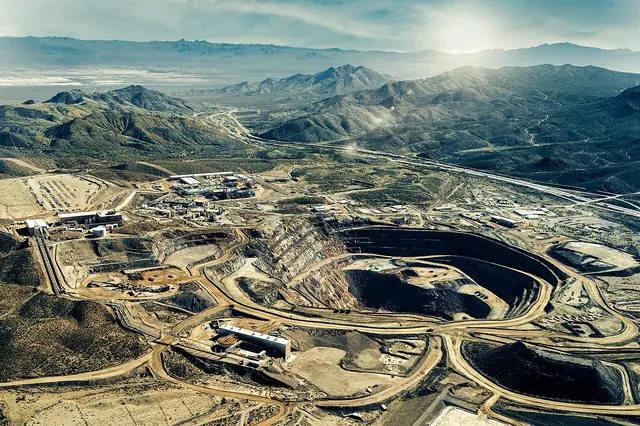
- The budget that exists is for the mine. Meteoric’s definitive feasibility study puts Caldeira at a 1.63 billion tonne resource grading 2,317 ppm total rare earth oxides, with average output of about 12,500 tonnes a year of total rare earth oxides over a 23-year life. Its initial development capital of about US$498 million excludes the cost of a separate large-scale oxide separation facility [MINING.COM, 12 October 2026].
- The deal is still open. Lynas is buying 100 percent of Meteoric in an all-stock deal valued at A$968 million [CNN Brasil, 1 October 2026], about US$672 million [MINING.COM, 12 October 2026]. Meteoric shareholders vote in January 2027. If Brazilian approval is refused or comes with conditions the two sides cannot agree, the deal can be terminated, and Lynas may owe Meteoric a A$8.8 million fee [TV Sim Brasil, 1 October 2026]. Desk arithmetic: that fee is about 0.9 percent of the deal value.
Why this sits in the AI materials lane
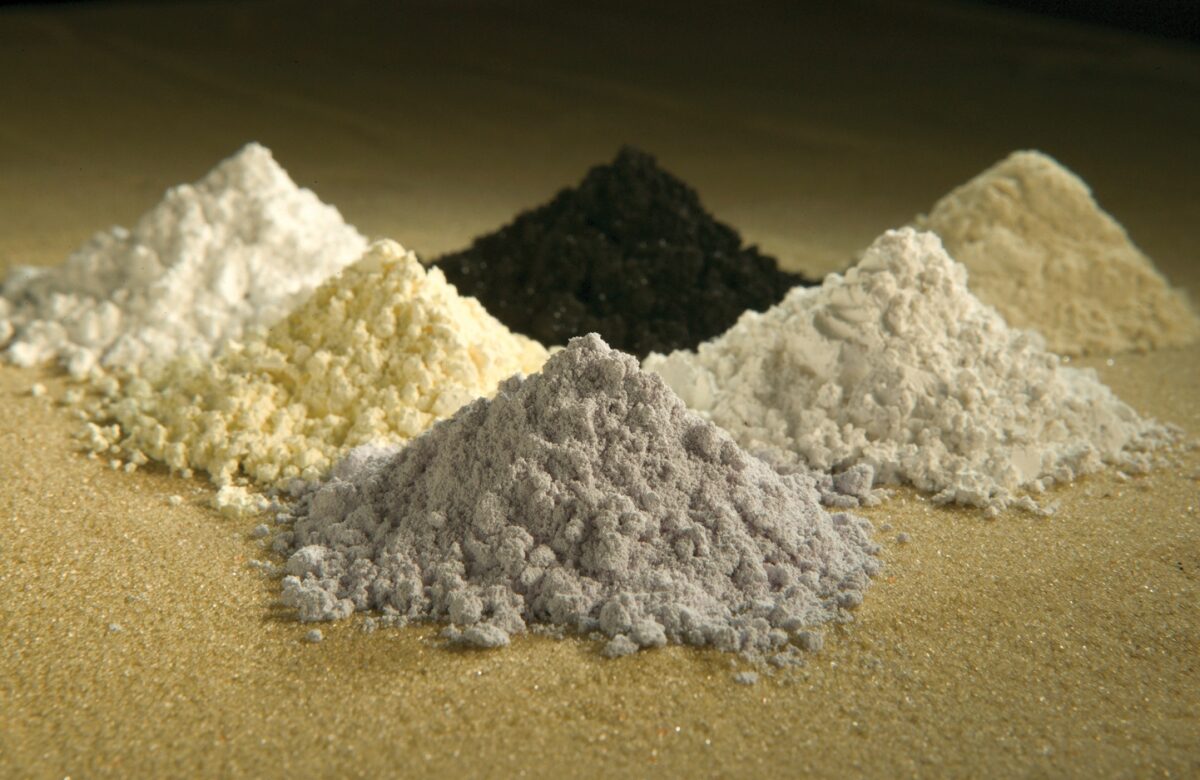
Separation is the step that turns mixed carbonate into neodymium, praseodymium, dysprosium and terbium oxides, the inputs to sintered magnets. Sprott Asset Management now counts AI as a third structural driver of rare earth demand alongside defence and electrification, pointing to US$400 billion pledged for 2025 by the five largest hyperscale operators [SMM, citing Sprott, 24 July 2026]. Sprott notes that rare earth magnets sit inside data center cooling, storage, semiconductor and communications hardware, and the IEA forecasts AI data centers will take about 3 percent of magnet rare earths by 2030 [Geomechanics.io, citing Sprott and the IEA, 18 July 2026]. Three percent is a small share. It is a share of a market where separation is the bottleneck, which is why the location of a separation plant matters more than the location of another clay pit.
Brazil angle
The plant would be the first live test of Lei 15.506, the critical minerals law enacted in September. It created the Conselho Nacional para Industrialização de Minerais Críticos e Estratégicos (CIMCE), which can approve or block changes of control in companies holding rights to critical minerals [TV Sim Brasil, 1 October 2026]. CNN Brasil reported that the council can impose conditions on the Lynas deal, which could include building a separation plant [CNN Brasil, 1 October 2026]. Silveira has now said out loud how he wants the council used: “The CIMCE should have an important role in this strategy, using financing and regulatory mechanisms to encourage companies to expand beneficiation, processing, separation, refining and transformation of critical and strategic minerals in Brazil” [MINING.COM, 12 October 2026].
That is a carrot and a stick held by the same hand. People familiar with the government’s position told MINING.COM that officials have little opposition to the acquisition itself and see it as a model for pairing foreign mining capital with domestic processing commitments. Officials also see Poços de Caldas as a hub that could take material from other ionic clay projects nearby [MINING.COM, 12 October 2026]. One candidate is Viridis Mining’s Colossus project, which produced its first mixed rare earth carbonate at a demonstration plant in Poços de Caldas, holds a letter of intent with Solvay for long-term carbonate offtake, and targets first production in the first half of 2028 [Viridis, ASX quarterly report, 24 July 2026]. A regional separation plant would give the district’s carbonate producers a separation option inside Brazil.
US angle
The US federal financing reported in Brazil so far has gone to mining projects. Serra Verde secured a US$565 million package from the US International Development Finance Corporation, and Aclara secured US$5 million in project development financing from the same agency [AP via BNN Bloomberg, 20 August 2026]. Desk arithmetic: the DFC package for Serra Verde alone is about 13 percent larger than Caldeira’s entire mine budget. In Congress, a four-bill package on permitting and stockpiles is moving, with the Critical Mineral Dominance Act passed by the House 224 to 195 and awaiting the Senate [Tech Times, 6 October 2026]. None of it builds a separation plant in Minas Gerais. If BNDES ends up funding one, Brazil, not the United States, will own the most valuable step of an ex-China supply chain on its own soil.
China angle
China accounts for about 69 percent of global rare earth mine production, up to 91 percent of refining and separation capacity, and 94 percent of sintered permanent magnet production [Tech Times, 6 October 2026]. Beijing suspended its October 2025 export control package until 10 November 2026 as part of a trade truce, and as of 6 October no formal extension of that suspension had been announced. The April 2025 controls on seven elements, including dysprosium and terbium, were never suspended and remain in force [Tech Times, 6 October 2026]. A Caldeira carbonate stream shipped to Malaysia stays outside China. A separated oxide stream produced in Poços de Caldas would put the separation of the heavy oxides that the April controls cover in Brazil rather than in Asia.
What it means
Brazil’s government is doing what governments do with a deal that needs their approval: describing the outcome it wants as if it were already agreed. Lynas is doing what a listed company does before a final investment decision: promising nothing. MINING.COM’s sources say the negotiations are more advanced than Lynas’s disclosures suggest and attribute the caution to pending approvals and disclosure obligations [MINING.COM, 12 October 2026]. Both can be true. What neither side has produced is a capacity figure, a capex figure or a date. Until one of those appears, the plant is a negotiating position, and the US$498 million in the feasibility study still describes a mine that exports carbonate.
The index backdrop shows little appetite for that risk. SOV50, which tracks assets that reprice when concentrated supply tightens, fell 1.82 percent in the latest weekly update to 102.4, and TAI stands at 96.8 (values as of the 11 October 2026 index file).
What to watch
- The CIMCE’s formal installation. The council has until December to be formally set up [TV Sim Brasil, 1 October 2026]. Watch whether its first decision on Lynas attaches a separation condition, and whether it names a capacity or a deadline.
- The BNDES technical visit to Australia before the end of 2026. A visit followed by a mandate or term sheet would be the first hard money behind the plant. A visit with no follow-up keeps it a minister’s quote.
- The scheme booklet ahead of the January 2027 vote. If Lynas’s own document for shareholders names a Brazilian separation site, capacity or capex, the option has become a commitment. If it still points to Malaysia, Brasília’s council will be negotiating against the company’s filing.