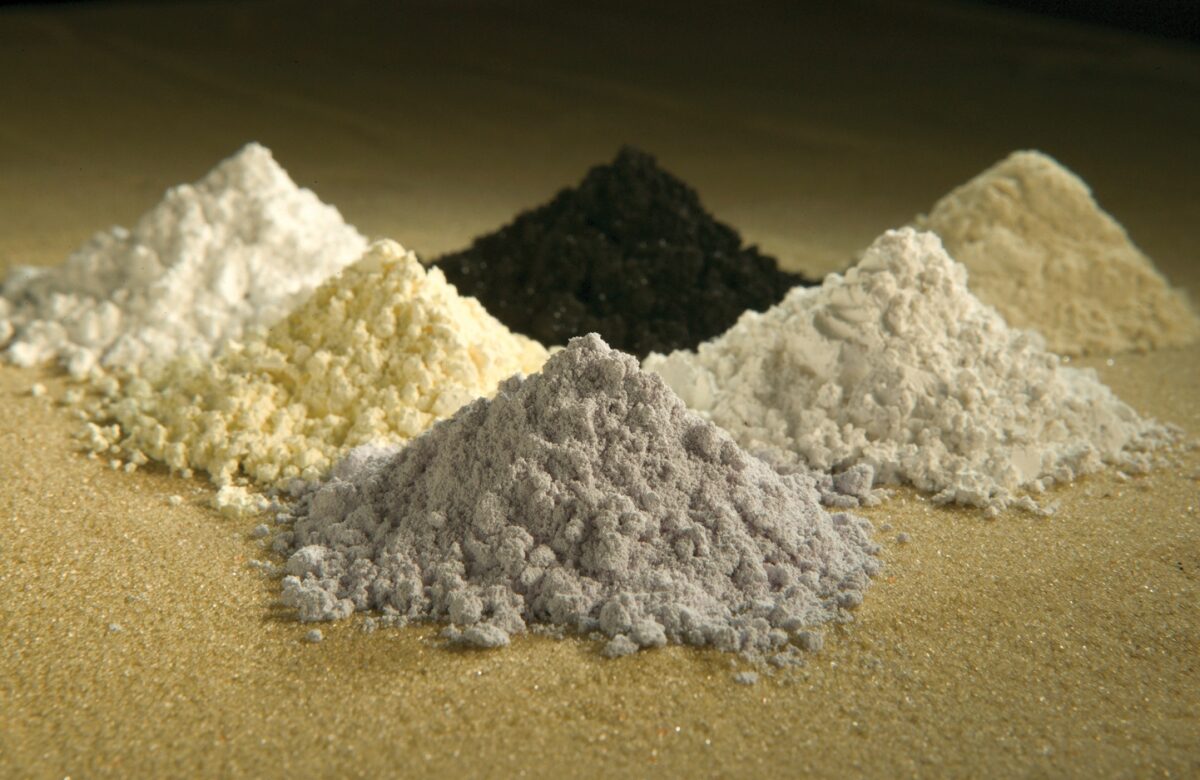
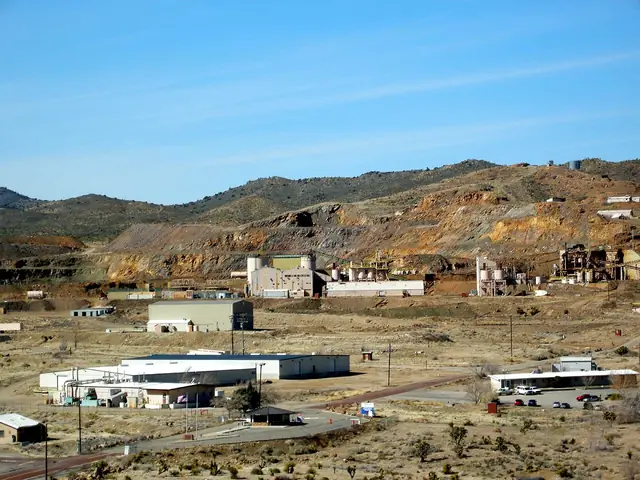
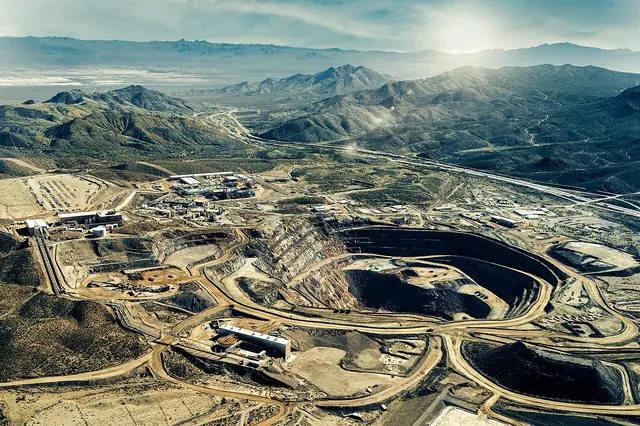
Lynas pays 68 percent over market for Brazil's biggest ionic clay deposit. The step that turns it into magnet feed is still a study.
On October 1 Lynas agreed to buy Meteoric Resources for A$968 million, taking the Caldeira project in Minas Gerais five months after USA Rare Earth took Serra Verde. Brazil now hosts both flagship ionic clay assets outside China and still has no commercial heavy rare earth separation. Brasília is debating whether to tax the export of exactly what these mines will ship.

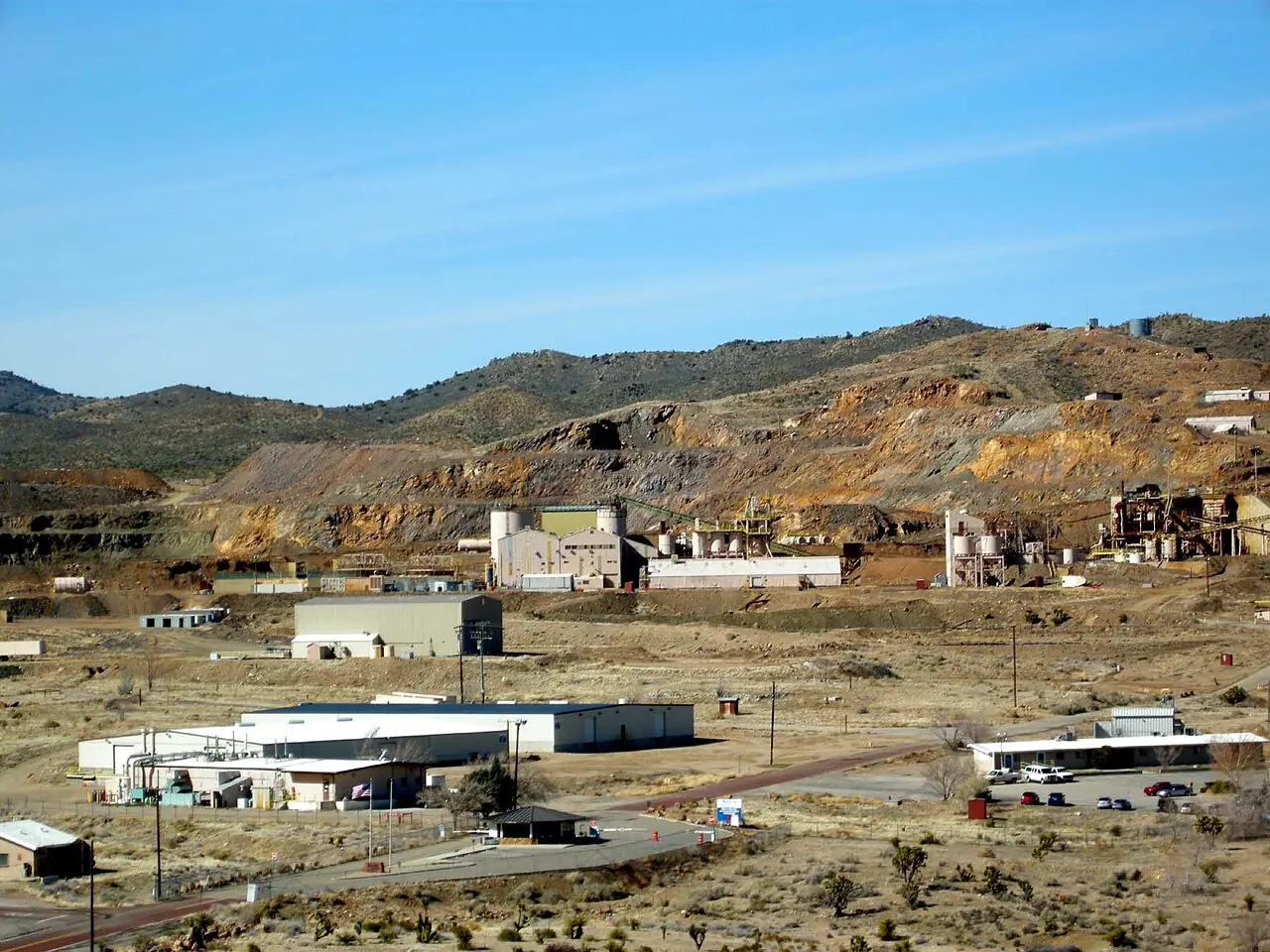
Brazilian press reported on September 15 that USA Rare Earth, having closed on Serra Verde, would not rule out building later-stage capacity in the country. Two weeks later the other flagship Brazilian ionic clay asset found a foreign owner too. The pattern is now a pattern, and it has a hole in the middle of it.
What’s happening
- Lynas Rare Earths agreed on October 1 to acquire Meteoric Resources in an all-share scheme of arrangement valuing Meteoric at A$968 million, or about US$674 million, at 0.0207 Lynas shares per Meteoric share. That is a 68.4 percent premium to Meteoric’s last close of A$0.170 and 57.6 percent to its 30-day VWAP [Mining Technology, October 1 2026; Mining.com.au, October 1 2026].
- The asset is Caldeira, in Minas Gerais, reported as the largest known ionic clay rare earth resource outside China. It holds 802,000 tonnes of contained neodymium-praseodymium oxides and 41,000 tonnes of dysprosium-terbium oxides [Mining Technology, October 1 2026].
- On a pro forma basis the deal lifts Lynas measured and indicated rare earth oxide resources by 79 percent and ore reserves by roughly 26 percent, and would add average life-of-mine output of about 3,862 tonnes of NdPr and 127 tonnes of DyTb [Mining.com.au, October 1 2026; Surestone, October 1 2026].
- Lynas put development capital at more than US$500 million, against the US$498 million including a 10 percent contingency in Meteoric’s July 31 definitive feasibility study. That study returned a US$847 million NPV at spot pricing with a 24 percent IRR, US$2.721 billion at forecast pricing with 47 percent, opex of US$11.68 per kilogram of TREO, and a mine life beyond 20 years [Mining Technology, October 1 2026; Mining.com.au DFS report].
- Closing conditions include Brazilian change-of-control approval where applicable. Lynas is extending an interim facility of up to A$110 million, with A$35 million available on execution. Scheme booklet is targeted for December 2026, the scheme meeting for January 2027, and implementation by March 2027 [Mining.com.au, October 1 2026; Surestone, October 1 2026].
Lynas chair John Humphrey framed it as scale: “This will deliver on our Towards 2030 growth objective of adding resource and scale” [Mining Technology, October 1 2026]. He also told Reuters that Brazil “is a well-established and supportive mining jurisdiction and its rare earth reserves are the largest outside China” [Reuters via MINING.COM]. Meteoric’s executive chair is Andrew Tunks; the board recommended the deal in the absence of a superior proposal, and largest shareholder Tolga Kumova, at 6.7 percent, is supportive.
The number that is not in the announcement
Caldeira’s plant, as described in July, is a carbonate plant. It was designed to produce roughly 24,000 tonnes a year of dry mixed rare earth carbonate, with the NdPr and DyTb carried inside that stream, from a global resource of 1.63 billion tonnes grading 2,317 ppm TREO. The same project description noted potential to “expand the project and move downstream into the production of separated rare-earth element oxides,” which is the language of an option, not a line item. Development capital then was US$443 million and first production was targeted for 2028, helped by Minas Gerais state priority status for accelerated permitting [Mining Weekly, July 17 2026].
So the acquisition buys an orebody and a carbonate circuit. It does not buy separation in Brazil. Lynas’s separated output runs through Malaysia, where it describes itself as the largest producer of separated rare earths outside China, with upstream processing at Kalgoorlie in Western Australia [Lynas FY26 results, August 26 2026]. Its Malaysian heavy rare earth line was specified at 1,500 tonnes a year of mixed heavy compound when it was announced in June 2024 [Fastmarkets, June 27 2024]. Reuters reported that Lynas plans further studies on processing options; neither of the two specialist write-ups of the scheme states where Caldeira material will be separated, and the announcement itself does not say.
Two disclosures also disagree slightly on rate. July put Caldeira at 4,228 tonnes a year of NdPr and 130 tonnes a year of DyTb; the October announcement gives 3,862 tonnes and 127 tonnes as life-of-mine averages. Those are different measures rather than a correction, and the gap is what you would expect between a steady-state rate and an average across a 20-year schedule. Readers should not treat them as the same number.
Against Lynas’s own FY26 output of 7,337 tonnes of NdPr and 12,122 tonnes of total REO, Caldeira at the announced life-of-mine average would add about 53 percent to the NdPr rate (desk arithmetic on the FY26 result released August 26 2026 and the October 1 figure) [Lynas FY26 results, August 26 2026].
Brazil angle
The timing is awkward for Brasília and useful for readers. On August 31, CNN Brasil reported that a faction inside the federal government favours taxing or prohibiting the export of insufficiently refined rare earths, with options running from an export levy and technical specifications through differentiated fiscal treatment and binding value-addition commitments to an outright ban, which the report said lacks majority support. PL 2.780/2024, approved by the Chamber of Deputies in May 2026, was under Senate analysis with Senator Eduardo Braga as rapporteur [CNN Brasil, August 31 2026].
A mixed carbonate bound for a separation plant in Malaysia is precisely the shipment that debate is about. The change-of-control condition in the scheme is therefore not a formality; it is the first live test of whether Brazil attaches a processing expectation to foreign ownership of its ionic clay. USA Rare Earth, which completed Serra Verde in early September in a transaction valued around US$2.8 billion, has gone as far as saying through a spokesperson that it “does not rule out” developing later-stage capacity in Brazil, while running its carbonate-to-oxide demonstration unit in Colorado [Jurua 24 Horas, September 15 2026].
US and China angle
For Washington the read is simple arithmetic and uncomfortable geography. Both Brazilian assets are now owned by companies headquartered outside Brazil, one listed in the United States and one in Australia, and in both cases the separation step sits offshore or unbuilt. That does reduce exposure to Chinese mining. It does not yet reduce exposure to Chinese separation.
That distinction is the whole game. China controls roughly 98 percent of heavy rare earth processing, with China Rare Earth Group holding all ion-adsorption extraction quotas for medium and heavy elements, and no non-Chinese project has yet proven continuous commercial-scale output of separated dysprosium, terbium and yttrium [Rare Earth Exchanges, September 25 2026]. CSIS, writing in April, described the suspension of China’s October 2025 controls as running from late October 2025 through October 2026, with export licensing applied unevenly across destinations [CSIS, April 27 2026]. Buying resource ahead of that lapse is rational. It is also the cheaper half of the problem.
What it means
The AI hardware chain does not consume rare earth carbonate. It consumes sintered magnets, and the dysprosium and terbium that keep them working at temperature in server-hall air handling, drive actuators and the servo systems going into automated build-out. This desk argued on September 22 that the chokepoint was migrating from oxides into finished magnetic components. Caldeira is the layer below that, and it confirms the same shape: Western capital is clearing at a 68 percent premium for geology while the separation step stays a study and the magnet step stays mostly Chinese.
The index backdrop is consistent. TAI closed its last weekly update at 99.7, down 1.09 percent, with materials at 97.0 and power at 107.9; the Southern Drift Index sits at 94.4, down 2.68 percent (values as of the September 26 2026 index file). Power keeps bidding. The physical material layer does not yet.
What to watch
- Whether the scheme booklet in December 2026 names a separation location. That document is where an option becomes a commitment or stays an option. If Caldeira’s flowsheet still ends at carbonate, Brazil’s export debate gets its exhibit.
- Brazilian change-of-control approval before March 2027 implementation. Watch whether any processing condition is attached. A clean approval settles the question for USA Rare Earth too.
- Senate movement on PL 2.780/2024 under Braga. An export levy or a technical specification rule written while two foreign acquisitions are mid-flight would change the economics of both.