Brazil's mining deals hit US$5.9 billion in 2026. The council that now approves control changes has no deadline.
Alvarez & Marsal counts US$8.2 billion of disclosed mining M&A in Brazil since January 2025, with two rare earth deals carrying 42 percent of the value and Chinese buyers about 30 percent. Five deals worth US$3.6 billion were still open at the cutoff, and Lei 15.506 gives the new CIMCE approval power over changes of control with no statutory clock.

Mining deals announced in Brazil so far this year already total 2.6 times all of 2025, and the largest buyers are companies fighting over the magnet supply chain that robotics and data center hardware draw on. A survey by Alvarez & Marsal (A&M), reported by CNN Brasil on 8 October, counts 13 transactions with disclosed values between January 2025 and 2 October 2026, worth about US$8.2 billion [CNN Brasil, 8 October 2026]. The money arrived just as Brasília wrote itself a veto. Since 16 September, a change of control in a company holding critical mineral rights needs the approval of a new council, and the law gives that council no deadline to decide [Cescon Barrieu, 22 September 2026].
This is the sequel to our 17 September note on Lei 15.506, which was about credits and calendars. This one is about what foreign capital has paid for Brazilian ground, and how much is still waiting.
What’s happening
- The pace nearly tripled. Deals announced in 2026 alone total US$5.9 billion, 2.6 times the US$2.3 billion recorded across all of 2025 [CNN Brasil, 8 October 2026].
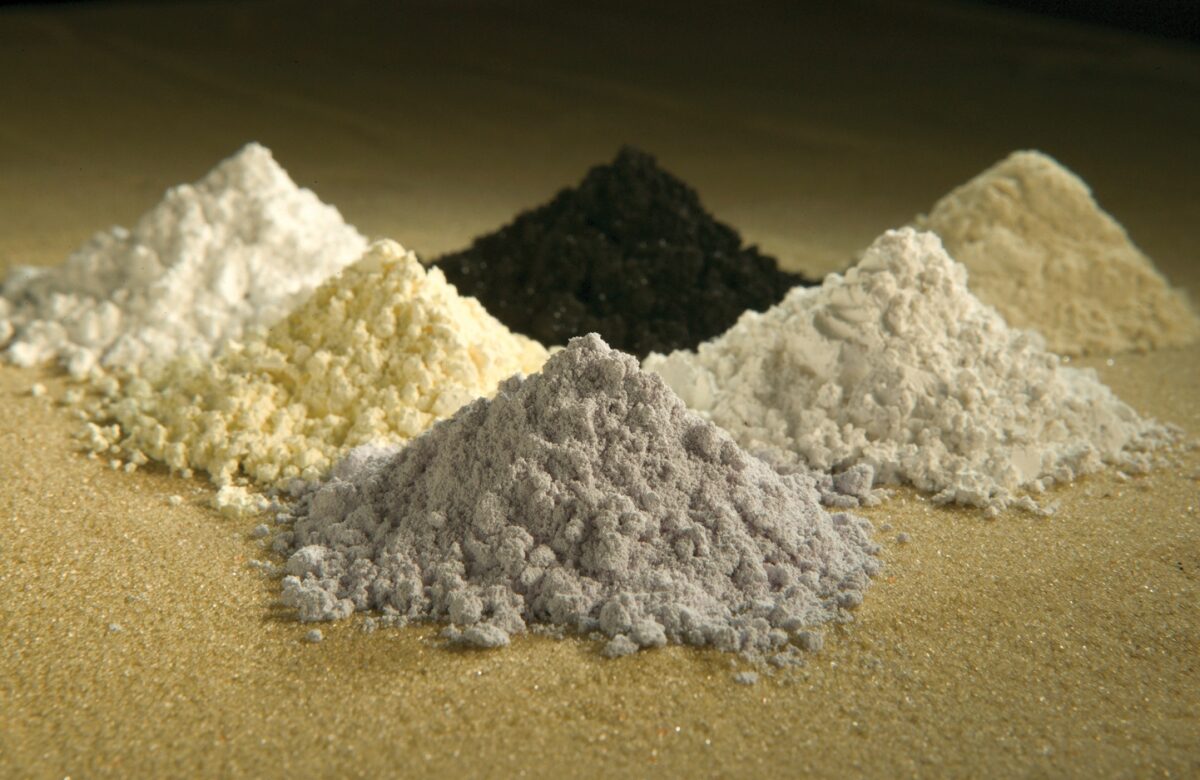
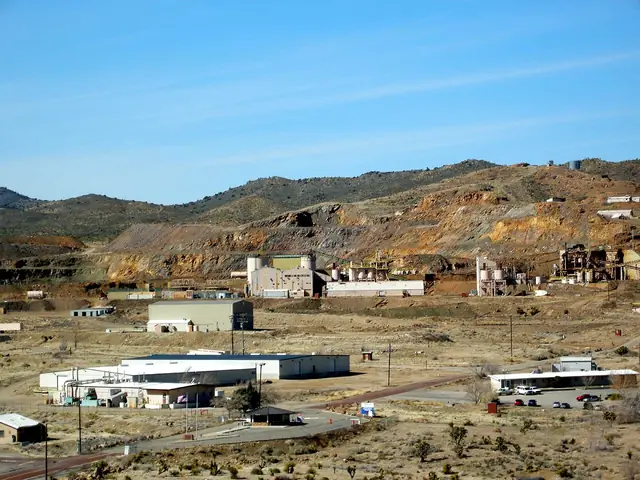
- Rare earths lead. Two transactions, USA Rare Earth’s purchase of Serra Verde and Lynas’s agreement to buy Meteoric Resources, represent 42 percent of all the value A&M counted [CNN Brasil, 8 October 2026]. A&M values Serra Verde, owner of the Pela Ema mine in Minaçu (GO), at US$2.8 billion, and the Lynas deal for Meteoric, which controls the Caldeira project in Minas Gerais, at about US$672 million [CNN Brasil, 8 October 2026]. Desk check: US$2.8 billion plus US$0.672 billion is US$3.47 billion, or 42.3 percent of US$8.2 billion.
- Chinese buyers hold about 30 percent. Deals involving CMOC, Chalco and MMG account for roughly 30 percent of announced value since 2025 [CNN Brasil, 8 October 2026]. CMOC bought Equinox Gold’s Brazilian gold assets for up to US$1.015 billion, Chalco and Rio Tinto are taking control of CBA in a US$903 million operation, and MMG agreed to pay up to US$500 million for Anglo American’s nickel assets in Goiás and Pará, a deal still under regulatory review in the European Union [CNN Brasil, 8 October 2026].
- A large share is unfinished. Eight deals worth US$4.6 billion have closed. Five worth US$3.6 billion still depend on closing conditions or approvals [CNN Brasil, 8 October 2026].
- The juniors are funded too. Companies with Brazilian projects raised more than US$600 million in grants and strategic investment since July 2025, per the same A&M survey, including US$120 million in minority capital for Viridis Mining’s Colossus rare earth project in Minas Gerais and US$50 million for Aclara Resources’ Carina project in Goiás [CNN Brasil via O Seringal, 8 October 2026].
Brazil angle
Lei 15.506, signed on 16 September without vetoes, makes the National Council for the Industrialization of Critical and Strategic Minerals (CIMCE) the body that approves changes of corporate control, under article 41, III, b [Cescon Barrieu, 22 September 2026]. Mayer Brown’s reading adds that CIMCE also approves international supply contracts for these minerals and the sale, assignment or encumbrance of federal mining titles [Mayer Brown, 28 September 2026].
The part that matters for dealmakers is what the law left out. Cescon Barrieu reports “no statutory deadline for a decision” and notes that proposals for a 60 day deadline and deemed approval were rejected, which gives CIMCE broad discretion [Cescon Barrieu, 22 September 2026].
A&M does not read this as a blockade. Rafael Marchi, managing director at A&M Infra, told CNN Brasil that “dificilmente algum projeto será barrado” (hardly any project will be blocked) and that the council will be “mais uma etapa de validação, assim como o Cade” (one more validation step, like Cade, the antitrust authority). Asked whether companies rushed deals to beat the new rules, he said he did not see it, adding that the regulatory changes “atrasaram alguns processos pela insegurança” (delayed some processes through insecurity) [CNN Brasil, 8 October 2026]. His summary of the market: “Toda a discussão geopolítica e estratégica está sendo transformada em números” (the whole geopolitical and strategic discussion is being turned into numbers) [CNN Brasil, 8 October 2026].
The desk’s reading: if few deals are blocked but none has a clock, the cost of the regime shows up as time, and time is what US$3.6 billion of open deals is now exposed to. A&M’s survey, as reported, does not say which of the five pending deals will fall under CIMCE review, and none of the legal summaries the desk read this week addresses how the council treats deals signed before 16 September. That is the first question the council’s practice will answer.
US angle
The largest single deal is an American one with a public balance sheet behind it. USA Rare Earth said on 4 September that it had completed its combination with Serra Verde [Metal Tech News, 4 September 2026]. Pela Ema’s phase one is projected to produce 6,400 metric tons of total rare earth oxides a year, Serra Verde has a financing facility of up to US$565 million from the US International Development Finance Corporation, and it agreed to sell 100 percent of phase one mixed rare earth carbonate for 15 years to a US government backed special purpose vehicle [Metal Tech News, 4 September 2026]. USA Rare Earth’s chairman described demand for these materials across “renewable energy, robotics, semiconductors, aerospace, defense, and other advanced technologies” [Metal Tech News, 4 September 2026].
That is the mechanism that ties a Goiás clay mine to the AI buildout. Magnet rare earths, neodymium, praseodymium, dysprosium and terbium, are critical for high performance magnets, and The Oregon Group, summarizing an IEA projection, reported that data center demand would lift global rare earth demand by about 3 percent by 2030 versus 2024, alongside 11 percent for gallium [The Oregon Group, 10 April 2025]. The same piece notes the IEA warning that over 90 percent of magnet rare earths, among other inputs, come from three dominant producers, primarily China [The Oregon Group, 10 April 2025].
China angle
Beijing is on both sides of the ledger. Chinese buyers are about 30 percent of Brazil’s disclosed mining M&A [CNN Brasil, 8 October 2026], and on 9 October China told the European Union, in a joint statement after talks in Beijing, that it was “willing… to continue facilitating the approval of export licenses for rare earths and permanent magnets destined for the EU” [AFP via France 24, 9 October 2026]. The headline of those talks was cars: EU trade commissioner Maros Sefcovic said the understanding “opens the prospect of cutting China’s export” of hybrids to the EU “by more than a half” [AFP via France 24, 9 October 2026].
“Facilitating” approval is not removing the licence. Adam Dunnett of the EU Chamber of Commerce in Beijing said greater “transparency and predictability” around rare earths is a key deliverable [AFP via France 24, 9 October 2026], which is another way of saying neither exists yet. As long as magnets out of China move by licence, a mixed carbonate stream out of Goiás that is contracted to a US backed buyer is worth more than its tonnage suggests. The desk reads part of the US$2.8 billion valuation as that premium.
What it means
Brazil attracted the money first and claimed a say in who owns the ground second, and the say came without a stopwatch. For AI hardware supply chains, the near term risk is not that Brazil blocks a magnet feed deal. It is that the next deal, a Chinese bid for a Brazilian rare earth junior or a Western bid for a stake in an operating mine, waits on a council with no track record and no clock.
The largest deal also shows where the value is still captured. What Pela Ema sells under its 15 year contract is mixed rare earth carbonate [Metal Tech News, 4 September 2026], an intermediate, not magnets.
What to watch
- CIMCE’s first case. Mayer Brown reads the law as requiring the council to be established within 90 days of the law’s publication [Mayer Brown, 28 September 2026], which puts the window around mid December. The first change of control decision, and how long it takes, will price the regime.
- The five open deals. US$3.6 billion is still waiting on closing conditions or approvals [CNN Brasil, 8 October 2026]. Watch whether any party discloses a CIMCE filing, and whether MMG’s Anglo nickel deal clears its European Union review.
- EU licence approvals after 9 October. If the EU Chamber reports faster magnet licences before the next EU and China meeting, set for March [AFP via France 24, 9 October 2026], the scarcity premium on non Chinese feed narrows. If it does not, Brazilian clay keeps its premium.