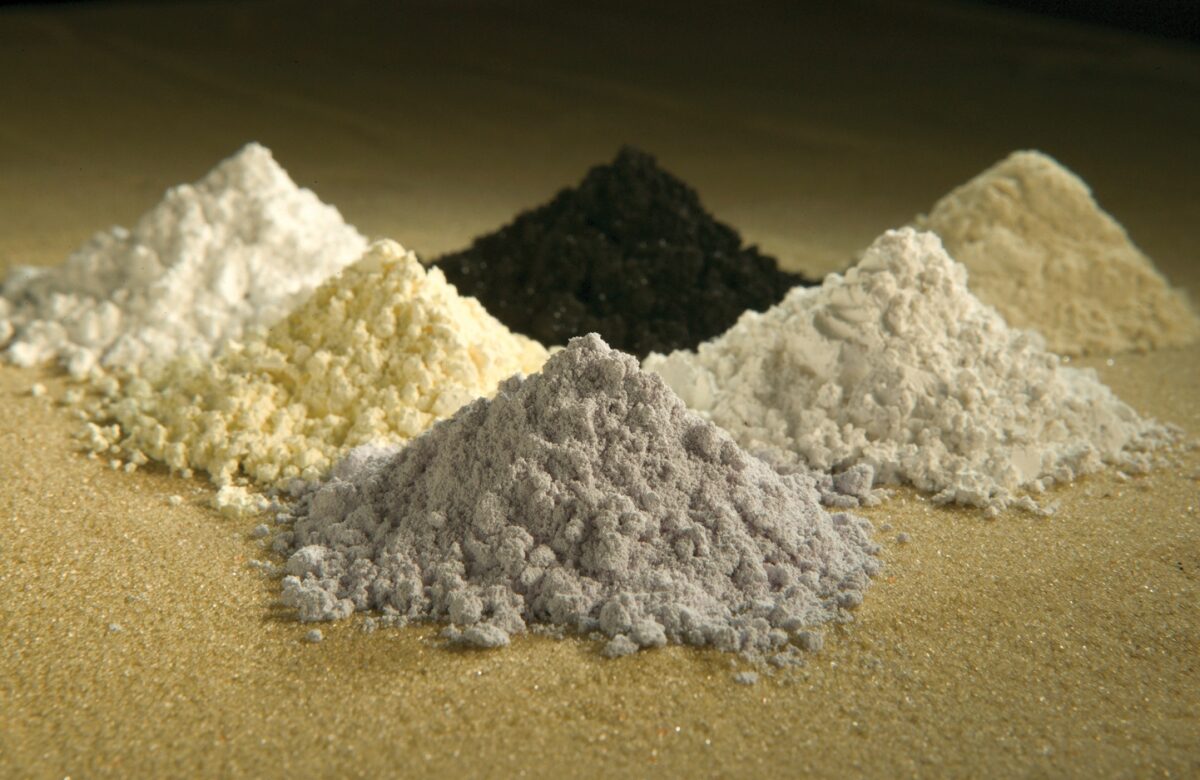
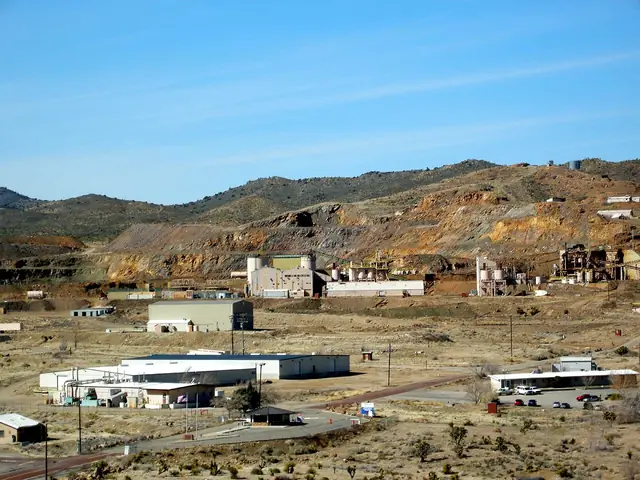
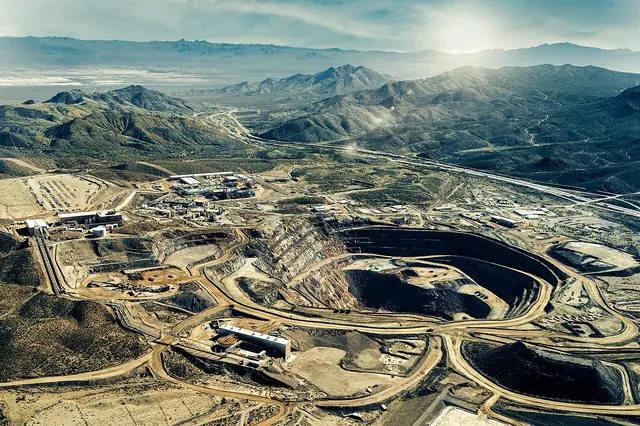
The West's heavy rare earth chain now runs Malawi to Kazakhstan to France. Governments set the price.
Lindian and Carester signed a binding 20-year offtake on September 2 for separation capacity at Stepnogorsk. The pricing clause is the story: payabilities are indexed to whatever floor France, the US or Japan puts under the market. Brazil is not on the route.

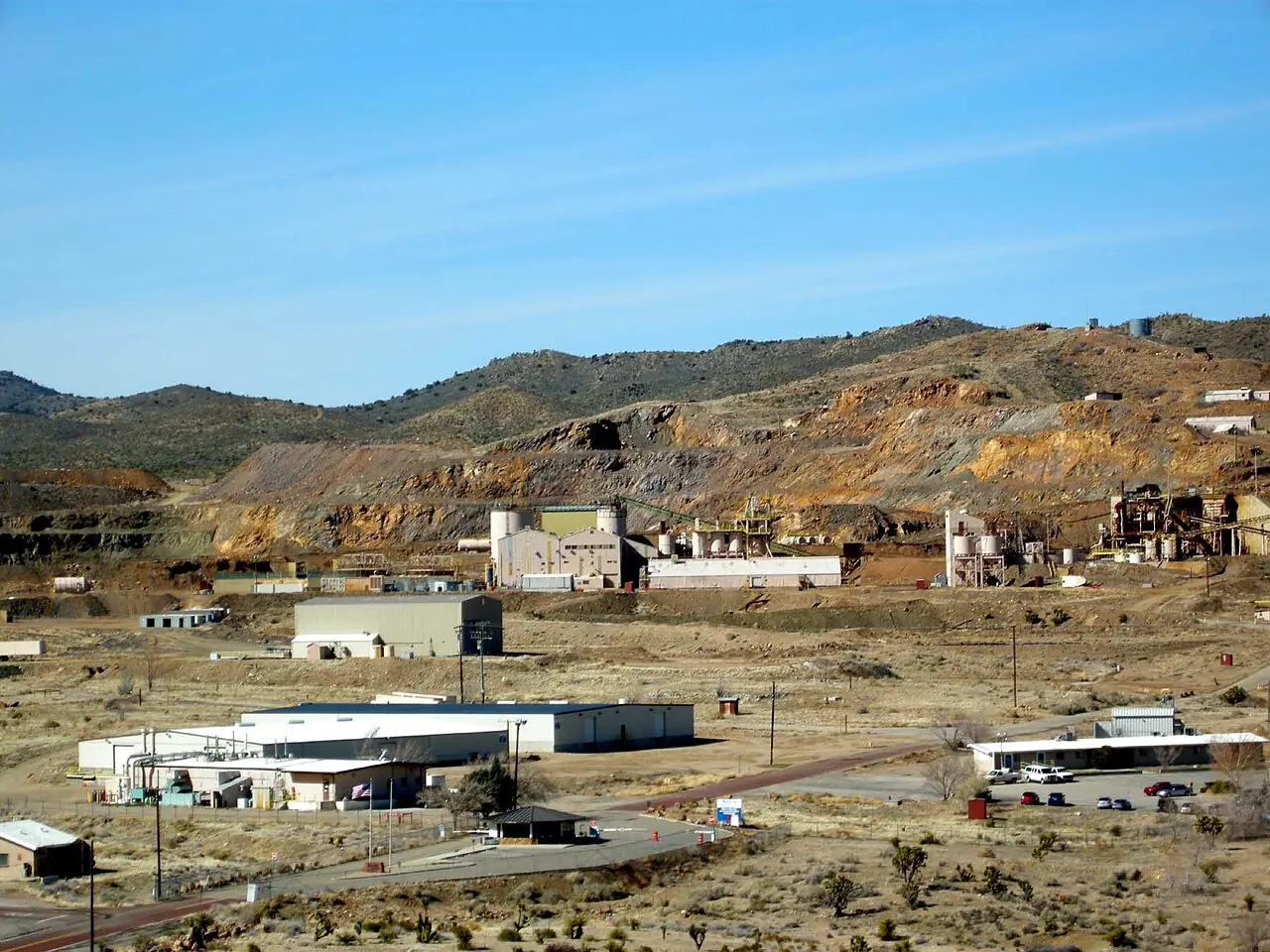
On September 2, Lindian Resources executed a technology and engineering services agreement and a binding long-term offtake with the French separation specialist Carester SAS. The plan is an 8,000 tonne per annum rare earth oxide solvent extraction and separation facility at Stepnogorsk, Kazakhstan, fed by monazite concentrate from Kangankunde in Malawi, with the heavy rare earth product routed to Carester’s Caremag refinery at Lacq in southwestern France [Lindian Resources, September 2, 2026].
Read the route: a Malawian mine, a Soviet-era Kazakh industrial complex, a French refinery. No part of the chain that separates the magnet metals sits in a country that will consume them at scale. That is the shape the ex-China heavy rare earth build is actually taking, and it is not the shape Atlantic policy documents have been describing.
What’s happening
- Carester, with Tetra Tech Coffey, will advance a definitive feasibility study for the 8,000tpa facility at Stepnogorsk, targeted for completion by the end of 2026 [Lindian Resources, September 2, 2026].
- The offtake runs up to 20 years, an initial 10-year term with two five-year extensions. Carester will buy 70 percent of the mixed heavy rare earths compound produced at SARECO and holds a right of first refusal over 70 percent of the mixed heavy rare earths carbonate [Lindian Resources, September 2, 2026].
- Caremag is a joint venture between the Japan Organization for Metals and Energy Security, Iwatani Corporation and Carester [Lindian Resources, September 2, 2026].
- The separation plant is to be funded internally, from Kangankunde and SARECO cash flows with first production in Q4 2026, plus year-end cash and undrawn Nico facilities of A$125 million [Lindian Resources, September 2, 2026].
- Executive chairman Robert Martin put Kangankunde Stage 1 commissioning in November, SARECO full commissioning in October, and both the Kangankunde Stage 2 and oxide facility studies in December [Lindian Resources, September 2, 2026].
The pricing clause is the news
Buried in the highlights is the sentence that matters. Payabilities on the heavy carbonate and the mixed heavy compound are “linked to the Carester Realised Price and tied to any government floor price (France/Europe, US or Japan)” provided for magnet rare earth oxides and yttrium produced at Caremag [Lindian Resources, September 2, 2026].
That is a commercial contract writing a public subsidy into its revenue line before the subsidy exists. Not a hedge against a floor, an index to one, and to whichever of three governments provides it. The standard Western argument has been that supply follows demand once the mines are financed. This contract says something harder: the mine is financed, the plant is designed, the customer is signed, and the revenue line still needs a state underneath it.
Caremag was built on the same premise. Lacq secured €216 million, €110 million from JOGMEC and Iwatani through a joint venture and €106 million from the French government via France Relance, France 2030 and a Green Industry tax credit. It will recycle 2,000 tonnes of magnets and refine 5,000 tonnes of concentrate a year, yielding 600 tonnes of dysprosium and terbium oxides, around 15 percent of global production, plus 800 tonnes of neodymium and praseodymium oxides [Carester, March 17, 2025].
Take the 15 percent seriously. If 600 tonnes is roughly 15 percent, global dysprosium and terbium oxide output runs on the order of 4,000 tonnes a year (desk arithmetic from the Caremag figures). The entire world market for the two elements that let a neodymium magnet hold its coercivity when it runs hot is smaller than one mid-sized copper mine’s annual concentrate shipment. Thin markets are what export controls are for. Kazakhstan’s framing was explicit: the project moves the country toward becoming a significant producer of permanent magnet materials “increasingly critical to artificial intelligence, robotics, e-mobility and renewable energy” [Lindian Resources, September 2, 2026].
Brazil angle
Brazil has the rock and does not have this. Serra Verde and Brazilian Rare Earths’ Monte Alto district carry the heavy fraction Caremag is built to process, and this desk has tracked both through 2026. What Brazil lacks is the middle: solvent extraction and oxide separation at commercial scale. Stepnogorsk is being handed that role, and the stated reasons should be read closely in Brasília. Lindian credits the site’s existing power, gas, water, rail and reagent infrastructure, skilled labour and local sulphuric acid supply as brownfield cost advantages [Lindian Resources, September 2, 2026]. Separation plants do not go where the ore is. They go where the acid, the power and the trained operators already are. Sovereign Plan money buys mines. It has not yet bought a reagent supply chain, and this contract is what that gap costs.
US angle
The American position is a minority stake and a deposit two years from producing. USA Rare Earth and InfraVia signed a term sheet in April aiming at roughly 12.5 percent each in Carester, InfraVia acting through a Critical Metals Fund seeded by the French State. The deal gives USA Rare Earth and its LCM Europe subsidiary the right to buy some of Caremag’s oxide and access to Carester’s separation engineering and intellectual property; Carester gets long-term access to feedstock from Round Top in Texas, expected in commercial operation in late 2028. It remains subject to due diligence and definitive documentation. LCM Europe’s planned 3,750 tonne per annum metal and alloy plant at Lacq already carries C3IV credits of up to 45 percent of eligible equipment and real estate, capped at €130 million, with Bpifrance Assurance Export signalling it may guarantee half the commercial debt [USA Rare Earth, April 9, 2026]. Public credit at every node.
China angle
On November 7, 2025, MOFCOM and the General Administration of Customs issued Announcement No. 70, suspending six export control announcements from October 9, 2025, effective until November 10, 2026. Three matter here. No. 62 prohibited exporting technologies for rare earth mining, smelting and separation, metal production, magnet manufacturing and recycling. No. 61 extended control to foreign-made products containing Chinese-origin rare earths or made with Chinese technology. No. 56 covered separation hardware, including centrifugal extraction equipment and extraction agents. MOFCOM did not explain the suspension [CIRS Group, November 12, 2025].
That leaves 68 days from today (desk arithmetic). The category China suspended, and can restore on November 10, is precisely the category Carester is selling into Kazakhstan: separation technology, the engineers who run it, and the reagents it consumes. A Western separation plant is not only a hedge against Chinese oxide. It is itself an exposed asset if the technology controls return.
What it means
The ex-China heavy rare earth chain is real and contracted, and it is being assembled through Central Asia rather than through the Atlantic partners funding the rhetoric. It is also, on its own pricing terms, not yet a market. The desk’s indexes carry the same tension: SOV50 at 122.2 on concentration premium with an underlying HHI of 0.66, against a Southern Diversification Index of 103.6 and TAI at 108.4 [Tantalum indexes, updated August 29, 2026]. Concentration is being priced faster than diversification is being delivered.
What to watch
- November 10, 2026. Announcement No. 70’s suspension expires. Extension, lapse or replacement determines whether Caremag commissions into a market where separation technology moves freely or one where it does not.
- December 2026. Two feasibility studies land together, Kangankunde Stage 2 and the Stepnogorsk plant. The Stepnogorsk capital number is the first hard read on whether brownfield Kazakh separation undercuts greenfield Western separation.
- Q4 2026 commissioning. Kangankunde first production and SARECO first processing fall in the same quarter, and the separation plant is funded from their cash flow. A slip at either end pushes the Stepnogorsk build out with it.