A Rare Earth Magnet Plant Just Asked Korea for 750 Megawatts
Evolution Metals agreed principal terms with KEPCO to take its Pohang site from 130 MW to 750 MW. The midstream that is supposed to break China's magnet grip now bids for the same power blocks as the data centers that need the magnets.

The number that matters in yesterday’s Evolution Metals announcement is not the tonnage. It is 750 megawatts.
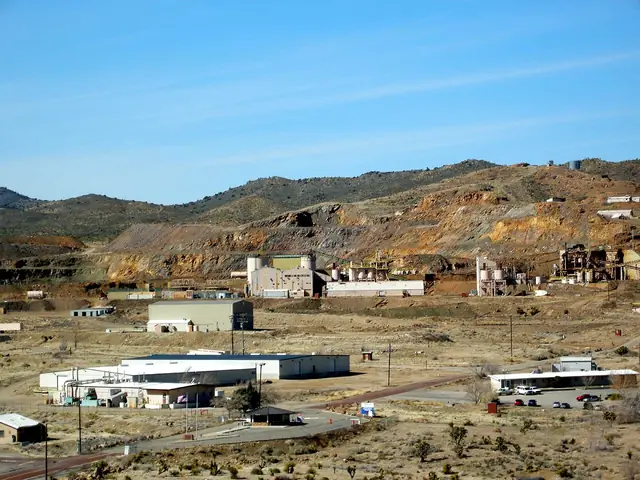
Evolution Metals & Technologies Corp (Nasdaq: EMAT), which describes itself as a US-based critical materials and advanced manufacturing company, said on August 27 that it has agreed principal terms with Korea Electric Power Corporation to expand the electrical infrastructure serving its Pohang, Republic of Korea operations from 130 MW to approximately 750 MW [Evolution Metals & Technologies press release, August 27, 2026]. That is a 620 MW increment for one magnet factory. Desk arithmetic against Korea’s all-time peak demand of roughly 104 GW puts a single plant’s incremental ask at about six tenths of one percent of the entire national peak [Korea Times, August 23, 2026].
The Western rare earth debate has been about ore and separation. This is the moment it becomes a debate about interconnection queues.
What’s happening
- KEPCO is expected to raise EM&T’s Pohang supply from 130 MW to about 750 MW, with EM&T holding a right of first refusal on additional available capacity. KEPCO is expected to fund roughly 90 percent of the substation, cabling and civil works [EM&T, August 27, 2026].
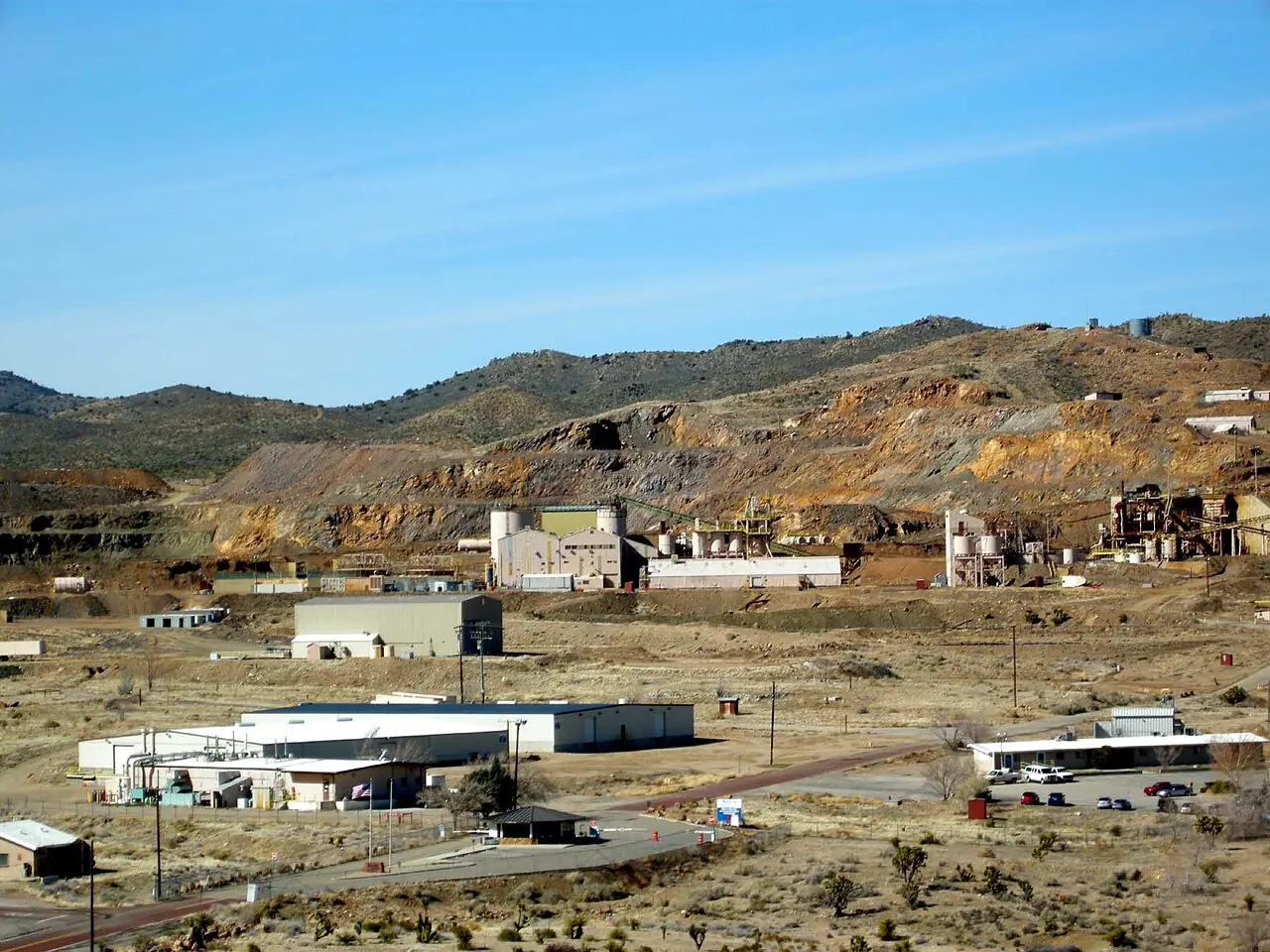
- EM&T plans to buy about 1.3 million square feet of land from the Pohang City Government and expand its magnet plant footprint from 24,000 square feet to 482,000 square feet, a twentyfold increase in floor area by desk arithmetic [EM&T, August 27, 2026].
- Conditional approval is in hand for a grant of about US$20.7 million (₩28.3 billion) from Pohang City and Gyeongbuk Province, with execution pending the property acquisition. Note that the release’s own subheadline describes this as a grant from “the Korean Government” while the body attributes it to city and provincial authorities [EM&T, August 27, 2026].
- Power is contemplated to arrive alongside the facility expansion and ULVAC equipment installation, planned for November 2026 [EM&T, August 27, 2026].
- Executive Chairman David Wilcox put the constraint in plain language: “Large blocks of reliable power are becoming incredibly difficult to secure as demand for power accelerates across advanced manufacturing, artificial intelligence infrastructure, data centers and other power-intensive industries” [EM&T, August 27, 2026].
Take the tonnage claim with care. The release says the expansion supports production of more than 10,000 metric tons of sintered and bonded magnets, and a subheadline frames the scale-up from 1,000 tons to 10,000 tons as happening “by end 2026.” On the release’s own timeline the power is not energized until November, the land is not yet bought, and the power supply documentation is not yet executed. Everything in the announcement is written in the conditional. The power agreement is the news. The 2026 tonnage is not.
For comparison, MP Materials is spending more than $1.25 billion on its 10X campus in Northlake, Texas, to reach a company-wide capacity of roughly 10,000 metric tons of NdFeB magnets per year, with commissioning set to commence in 2028 [MP Materials, February 26, 2026]. Same tonnage target. Two years apart.
The loop that closes
MP’s own release names the end markets these magnets serve, and AI data centers sit on the list alongside drones, robotics, electrification and advanced semiconductor fabrication [MP Materials, February 26, 2026].
That is the loop. The buildout creates the magnet demand, the magnet capacity to serve it requires power blocks measured in hundreds of megawatts, and the same buildout is bidding those blocks away. Wilcox is describing his own competition.
Korea angle
Korea is where this collision is furthest along. A government assessment presented at the fifth discussion meeting for the 12th Basic Plan for Electricity Supply and Demand estimates peak demand reaching 158.4 to 165 GW by 2040, roughly 27 GW above a projection made four months earlier and equivalent to about 19 large 1.4 GW nuclear reactors. Against a current all-time peak near 104 GW, demand could rise by more than half within fourteen years [Korea Times, August 23, 2026].
Pohang is a shrewd address for exactly this reason. It is the centre of Korea’s steel industry, which means heavy grid already in the ground, and EM&T expects competitive power rates there [EM&T, August 27, 2026]. The Korea Times identifies the Seoul metropolitan area, where the Yongin cluster and large data centers are the emerging demand, as the mismatch point, with most renewable generation sitting in the southwest. The same 620 MW request filed near Seoul would be a much harder ask.
Brazil angle
Brazil is running the opposite failure. Through May 10 of this year, curtailment of Brazilian wind and solar averaged 3 GW, or 17.8 percent of potential generation from those sources, after a record 20.7 percent in 2025. ONS projects an average 3.11 GW curtailed in 2026, growing to 3.5 GW in 2027 and an average 3.65 GW in 2029. In 2025 Aneel withdrew 509 wind and solar authorizations at company request, representing 22 GW of capacity that developers judged no longer viable [S&P Global Commodity Insights, May 11, 2026].
Desk arithmetic on that window: 3 average GW of discarded generation is enough to run nearly five Pohang-scale magnet expansions. Brazil has the rare earth resource base this desk has tracked all year and it has the surplus clean electrons, and it is converting neither into magnets. What Brasília has been converting them into is data centers, as our coverage of the Pecém export processing zone and the Campinas substation this month recorded. That is the easier customer for surplus power, and the one that leaves no industrial capability behind when the lease ends.
US angle
10X is a cornerstone of MP’s public-private partnership with the US Department of War, established in July 2025, and carries a ten-year Pentagon offtake commitment plus a state and local incentive package worth roughly $200 million over more than a decade [MP Materials, February 26, 2026]. Washington has bought the offtake and subsidised the capex. The federal toolkit has less to say about the item EM&T just spent a press release on, which is that a magnet campus is now a load-serving problem sitting in the same interconnection queues as hyperscaler campuses, and those queues do not distinguish between strategic demand and speculative demand.
China angle
China’s installed generation capacity reached 4.04 billion kilowatts by end-June 2026, up 10.8 percent year on year, with a record peak load of 1.551 billion kilowatts on July 14 [National Energy Administration via Global Times, July 22, 2026]. Desk arithmetic on that growth rate implies roughly 394 GW added over twelve months, about 1.08 GW per day, which means China adds the equivalent of EM&T’s entire 620 MW Pohang increment roughly every fourteen hours.
Installed capacity is not the same thing as a firm interconnection, and a Chinese magnet producer still has to get connected. But the backdrop matters. China’s magnet dominance is usually explained by ore, separation chemistry and labour cost. Power is the quieter half of it. A Chinese producer asking for 620 MW is asking for roughly half a day of national capacity growth. A Korean one triggers a line item in the national electricity plan.
What it means
The chokepoint has moved again. It went from mine to separation to metallization, and it is now sitting in the substation. Any Global South producer pitching a move up the value chain, in Latin America or in Africa, should expect the diligence question to shift from whether it has the deposit to whether it can deliver a firm, contracted, multi-hundred-megawatt block on a fixed date. Brazil can answer that question better than almost anyone and is not being asked it.
The Tantalum AI Materials Index stood at 108.8 in its August 22 weekly reading, with the power sub-index TAI-P at 108.3. The power leg is no longer a hedge on the materials leg. It is increasingly a precondition for it.
What to watch
- Execution of the KEPCO power supply documentation. EM&T’s terms are principal terms only. A signed supply contract, or its absence, is the first real test. Watch EM&T filings through the November 2026 installation window.
- The Pohang land closing. The US$20.7 million city and provincial grant is conditional on the property acquisition. No closing, no grant, no 482,000 square foot facility.
- Korea’s 12th Basic Plan. The final plan will show how much AI data centre demand the government chose to credit. If it underweights speculative data centre load, industrial users like EM&T get their power. If it fully credits it, they queue.