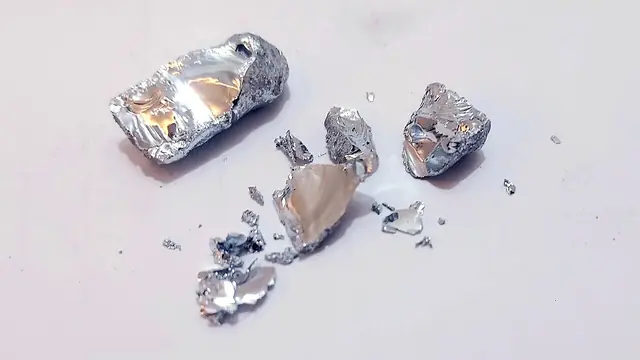
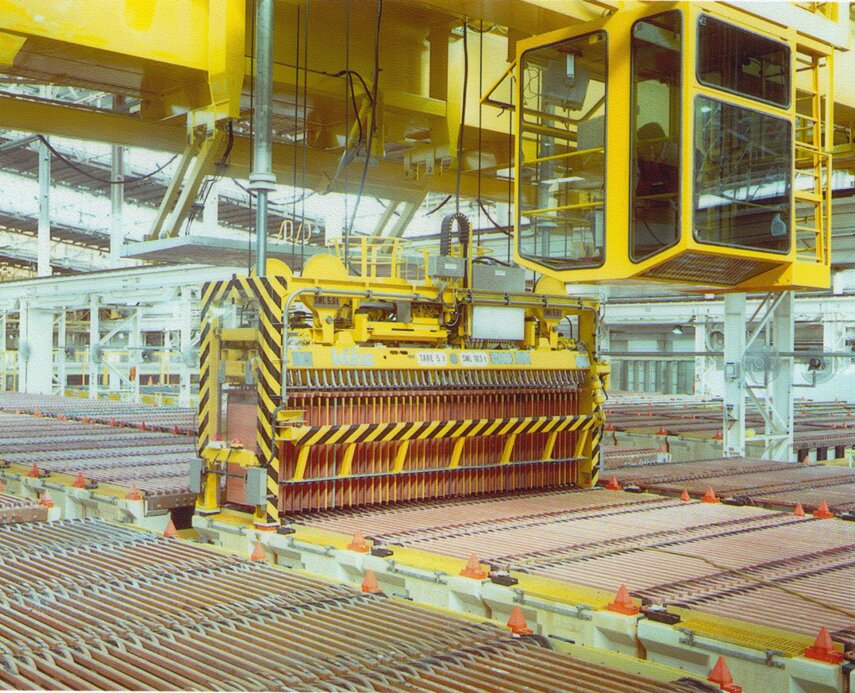
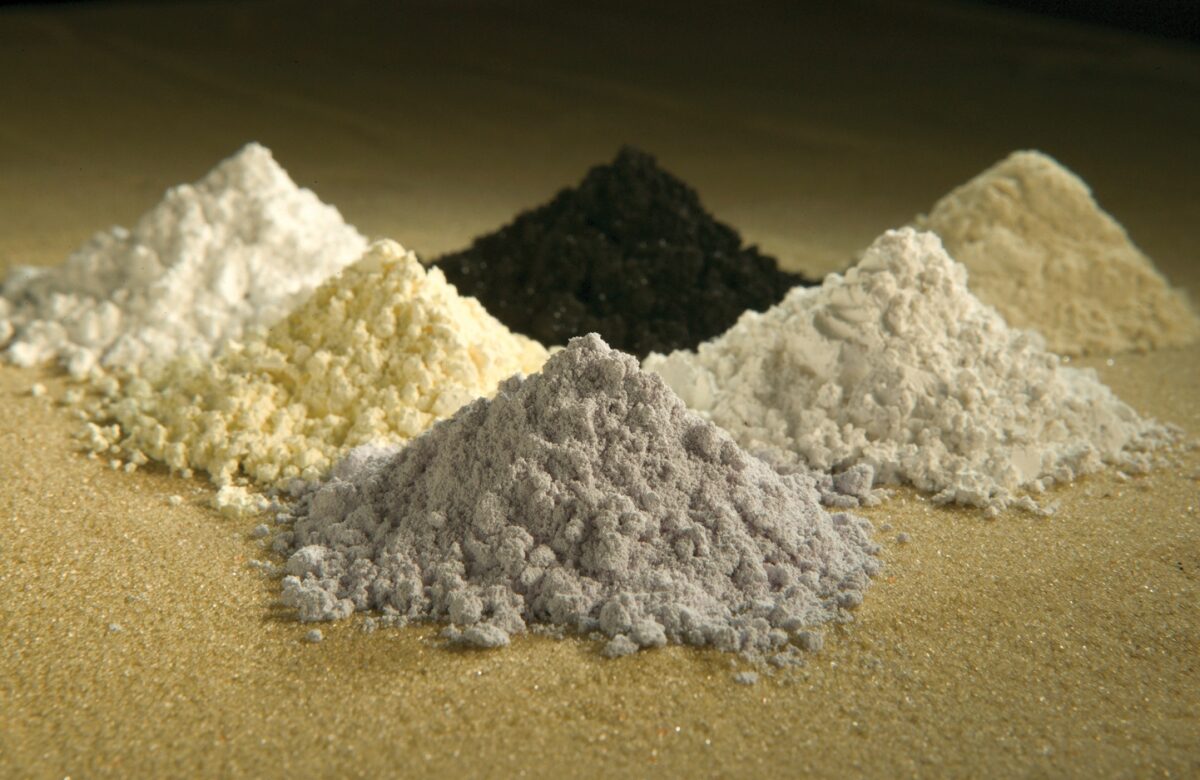
Korea Zinc's Tennessee smelter would add 54 tons of gallium, 6 percent of last year's world output. It arrives in 2030.
The federal environmental review is done and the money is lined up. But the gallium is a byproduct stream of a $7.4 billion smelter, it starts in 2030, and China's suspension of its US export ban expires in 52 days.

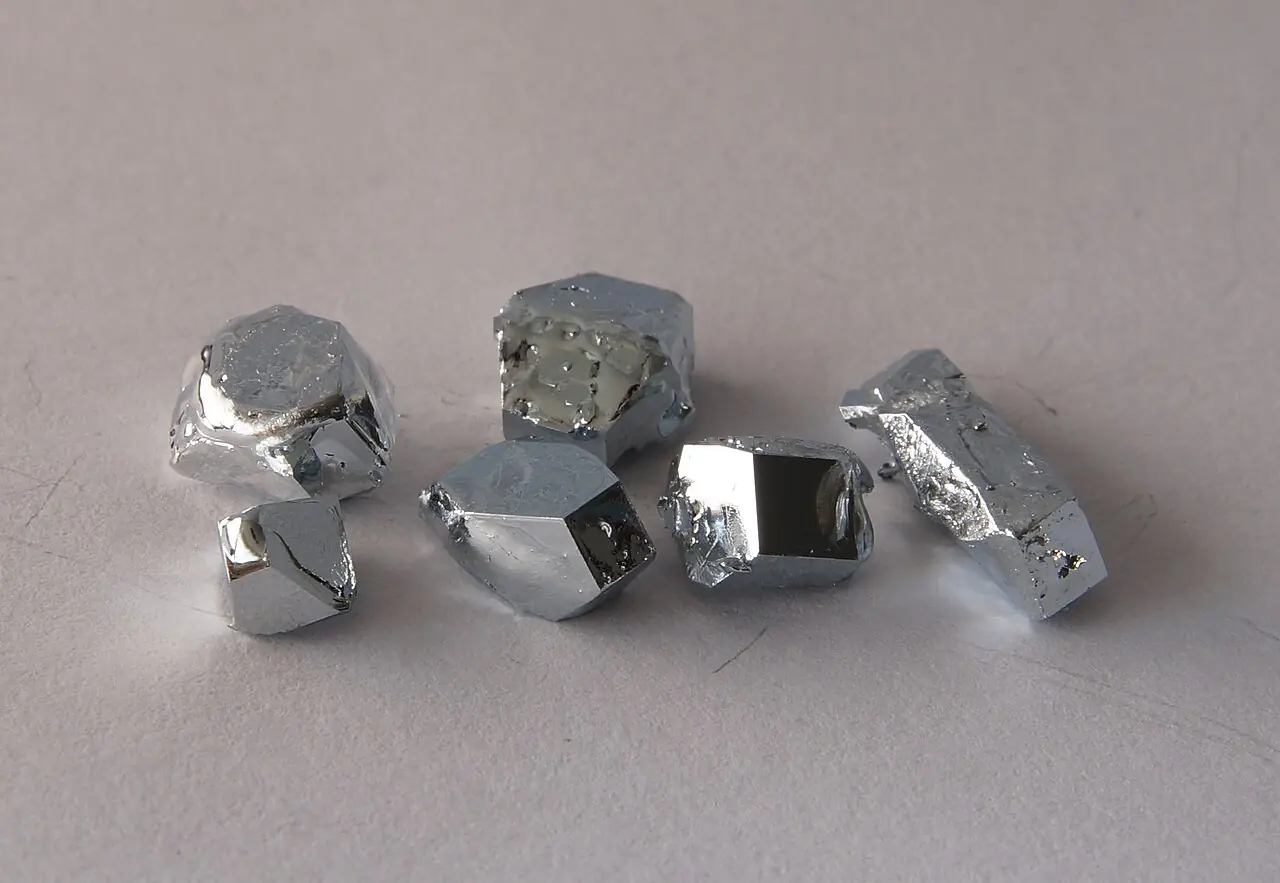
Korea Zinc said on September 21 that the US Department of War had issued a Finding of No Significant Impact for Project Crucible, its $7.4 billion integrated smelter at Clarksville, Tennessee [Seoul Economic Daily, September 21, 2026]. The company’s own investor deck says the plant will produce 54 tons of gallium and 44 tons of germanium a year from 2030 [Korea Zinc, “U.S. Smelter Investment,” January 2026]. Against a world that made an estimated 900 tons of primary gallium in 2025, 99 percent of it in China [USGS Mineral Commodity Summaries 2026, gallium], that is a large number. It is also a plan, not a plant, and the dates matter.
What’s happening
- The permit gate cleared. The Department of War’s finding covers air, greenhouse gases, water, biological and cultural resources, waste, hazardous materials and traffic. Korea Zinc says Tennessee Valley Authority support for power infrastructure and federal financing decisions follow from it [Seoul Economic Daily, September 21, 2026].
- The money is mostly public. Of the roughly $7.4 billion, the company’s deck shows a $4.7 billion Department of War loan, a $0.21 billion CHIPS Act grant, and $2.52 billion of equity, of which $1.94 billion comes from a foreign joint venture with US government and strategic investors and $0.58 billion from Korea Zinc itself [Korea Zinc, January 2026]. The Korea Times reports the grant as up to $210 million from the Commerce Department [Korea Times, September 23, 2026].
- The schedule is long. The deck targets groundbreaking in the first quarter of 2027, zinc process commissioning in the fourth quarter of 2028 and trial operations in 2029, with all processes at full utilization in the first quarter of 2030 [Korea Zinc, January 2026]. The gallium and germanium figures are stated “starting in 2030.”
- The feedstock is a legacy pile. The site is the former Nyrstar zinc smelter, the only US zinc smelter at 130,000 tons a year, and the deck says a substantial quantity of germanium, gallium, zinc and lead remains in untreated “pond cake” there [Korea Zinc, January 2026]. USGS adds that the Tennessee mine that fed that smelter has been suspended since November 2023 [USGS Mineral Commodity Summaries 2026, germanium].
- The company’s demand case leans on defense. The deck says US gallium and germanium demand should reach at least 50 tons a year by 2030 “due to surging defense-related demand,” while also naming AI, semiconductors, batteries and renewables as growth drivers [Korea Zinc, January 2026]. This is the company’s description of its own market.
The AI mechanism
Gallium nitride is a power-switching material. Navitas said on May 21, 2025 that its GaN and silicon carbide devices were selected to support Nvidia’s 800 V HVDC data center power architecture, for 1 MW IT racks and beyond, including the Kyber rack systems for GPUs such as Rubin Ultra [Navitas press release, May 21, 2025]. USGS reports that integrated circuits accounted for 73 percent of US gallium consumption in 2025, with high-performance computers among the listed uses [USGS Mineral Commodity Summaries 2026, gallium]. On the germanium side, USGS lists fiber optics for data networking and telecommunications as the largest US end use [USGS, germanium].
The loop closes like this: if rack power moves to 800 V and GaN takes a share of the conversion stages, every gigawatt of new capacity pulls on a metal whose primary supply sits in one country. We have not found a published per-megawatt gallium intensity for AI racks, so we do not put a tonnage on that pull. The mechanism is direct. The size is unmeasured.
Desk arithmetic
- 54 tons against USGS’s 2025 estimate of 900 tons of world primary low-purity gallium is 6.0 percent. China made 900 of those tons in USGS’s table and accounted for 99 percent of the world total [USGS, gallium].
- 54 tons is 2.8 times US reported gallium consumption of 19 tons in 2025 [USGS, gallium].
- At USGS’s 2025 average import value of $580 a kilogram for gallium and $4,100 a kilogram for germanium metal, 54 tons of gallium is about $31 million and 44 tons of germanium is about $180 million. Together that is about $212 million a year, 2.9 percent of the $7.4 billion capital cost [USGS, gallium and germanium; Korea Zinc, January 2026]. At those prices the two metals are small next to the capital cost. By tonnage the plant is mostly base metals: the deck lists 535,000 tons of three non-ferrous metals against 5,100 tons of rare metals [Korea Zinc, January 2026].
Brazil angle
Gallium is mostly a bauxite byproduct, and Brazil produces both at scale: 11 million tons of bauxite and 33 million tons of alumina in 2025, about 7.3 and 7.5 percent of world output [USGS bauxite and alumina, 2026]. Brazil also supplied 71 percent of US alumina imports in 2021 to 2024 [USGS, same]. USGS’s gallium table lists primary producers only in China, Japan and Russia, with other capacity in Germany, Hungary, Kazakhstan, South Korea and Ukraine. Brazil does not appear [USGS, gallium]. At USGS’s average bauxite gallium content of 50 parts per million, 11 million tons of bauxite would contain about 550 tons of gallium (desk arithmetic; contained is not recoverable). If Brazil’s bauxite is near that average, the metal is in the ore. USGS’s table shows no recovery in Brazil.
US angle
The US has recovered no primary gallium since 1987 and is 100 percent import reliant [USGS, gallium]. Crucible is one of several Washington-backed attempts, alongside a DOE research program of up to $6 million and a $29.9 million Defense Production Act award for a Louisiana demonstration plant [USGS, gallium]. Of these, Crucible is the one with a stated annual tonnage.
China angle
China banned gallium and germanium exports to the United States in December 2024 and suspended that ban until November 27, 2026. The metals remain under a licensing regime [Evertiq, November 10, 2025]. From October 6 that is 52 days. Crucible cannot help with that cliff: its metals start flowing roughly three years after it. The window is exactly where the West has to buy its way through.
What it means
Crucible is a credible answer to a 2030 problem and no answer to a 2026 one. For AI buyers the near-term gallium exposure is still licensed Chinese supply. For Brazil, the open question is recovery, not geology: the average grade implies the metal is there, and the USGS table shows no circuit capturing it.
What to watch
- November 27, 2026: expiry of China’s suspension of its US ban. Extension, lapse or new conditions.
- Groundbreaking in Q1 2027: the deck’s date for site preparation and civil works to begin.
- Whether gallium recovery appears in the offtake terms: a named chipmaker or data center power supplier signing for the 54 tons would convert a defense-led plan into an AI-linked one.