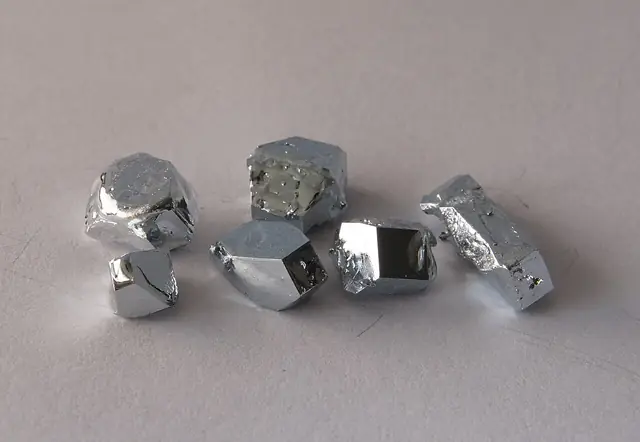
Gallium up 122 percent in twelve months. Brazil's alumina recovers none.
$2,269 a kilo printed on June 5. The metal that runs the AI server's power supply is bauxite's byproduct. The November 27 expiry on China's US suspension is roughly twenty-five weeks away.

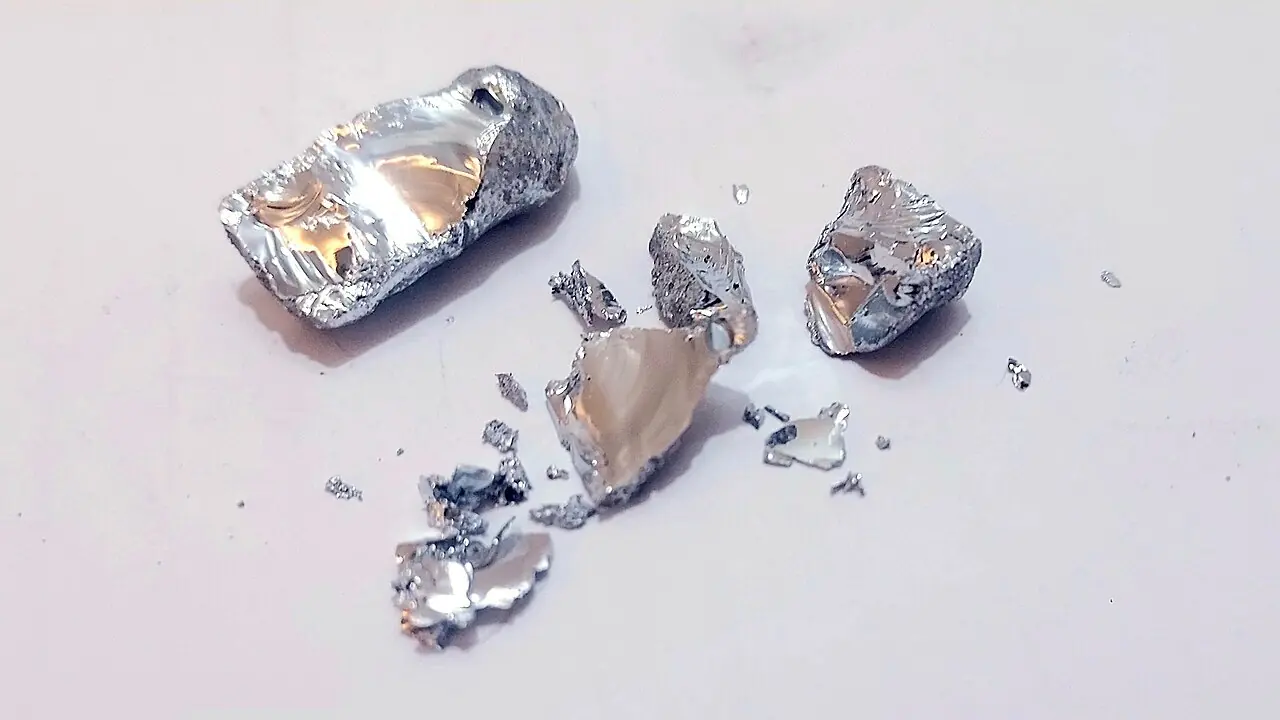
Strategic Metals Invest’s retail price for gallium printed at $2,269.40 per kilogram on June 5, 2026, up 31.74 percent year to date and up 122.10 percent from $1,021.80 twelve months earlier [Strategic Metals Invest, June 5, 2026]. That is the cleanest single number on the metal that powers the AI server’s power supply, and it lands roughly twenty-five weeks before the November 27, 2026 expiry of China’s suspension of expanded gallium, germanium, and antimony controls on the United States.
The bottleneck is not the chip. The bottleneck is the supply chain underneath it.
What’s happening
- Gallium has no primary mine. Every commercial kilogram is recovered as a byproduct of Bayer-process bauxite-to-alumina refining or, less commonly, of zinc smelting. China dominates because of its huge alumina-refining base, with smaller volumes coming from Russia, South Korea, and Japan [Critical Minerals HQ, June 6, 2026; Strategic Metals Invest, June 5, 2026].
- China supplies over 95 percent of global gallium output [Strategic Metals Invest, June 5, 2026]. SOV50 carries gallium at an HHI concentration score of 0.90, the highest in the basket [Tantalum SOV50 methodology, indexes.json].
- The United States is 100 percent net import reliant on gallium and has not domestically produced the metal since 1987 [US Department of Energy, April 14, 2026].
- On April 14, 2026, the DOE Office of Critical Minerals and Energy Innovation announced approximately $5.4 million for five projects under the Technology for Recovery and Advanced Critical-material Extraction Gallium (TRACE-Ga) initiative. The named performers are PHNX Materials in San Leandro, Atlantic Alumina in Gramercy, Found Energy in Charleston, Kunin Technologies in Chattanooga, and Indium Corporation in Clinton [US Department of Energy, April 14, 2026].
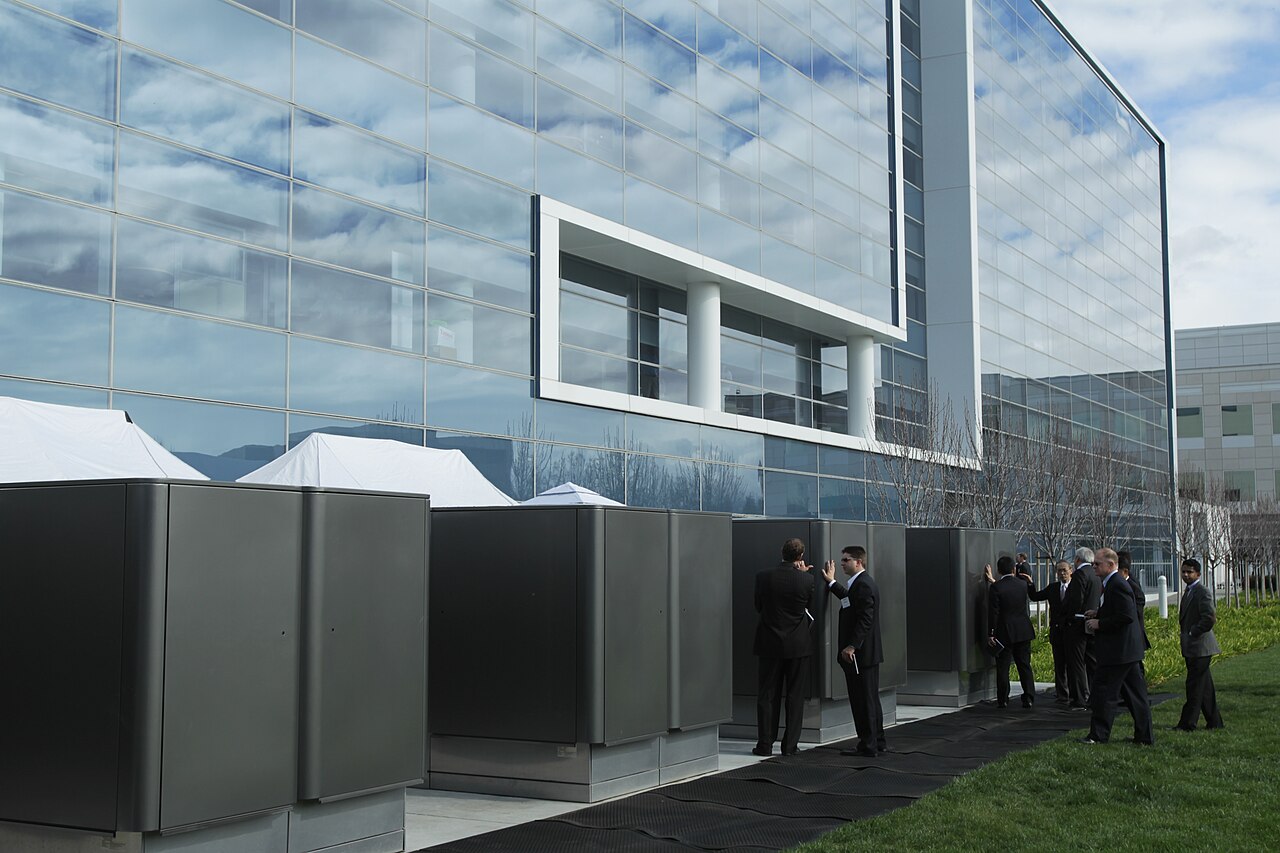
- The AI demand pull is no longer theoretical. Navitas Semiconductor reported Q1 2026 revenue of $8.6 million on May 5, up 18 percent sequentially from $7.3 million in Q4 2025, with high-power markets including AI data centers, grid, performance computing, and industrial electrification growing roughly 35 percent year over year and representing a majority of revenue. The company guided Q2 2026 to $10.0 million plus or minus $0.5 million [Navitas Semiconductor press release, May 5, 2026].
- Navitas debuted a 20 kW 800V-to-6V GaNFast power delivery board at NVIDIA GTC, targeting up to 97.5 percent peak efficiency at full load, and pegged its 2030 serviceable available market for AI data center, grid, performance computing, and industrial electrification power at $3.5 billion growing 60 percent CAGR [Navitas Semiconductor press release, May 5, 2026].
The bauxite circuit nobody tapped
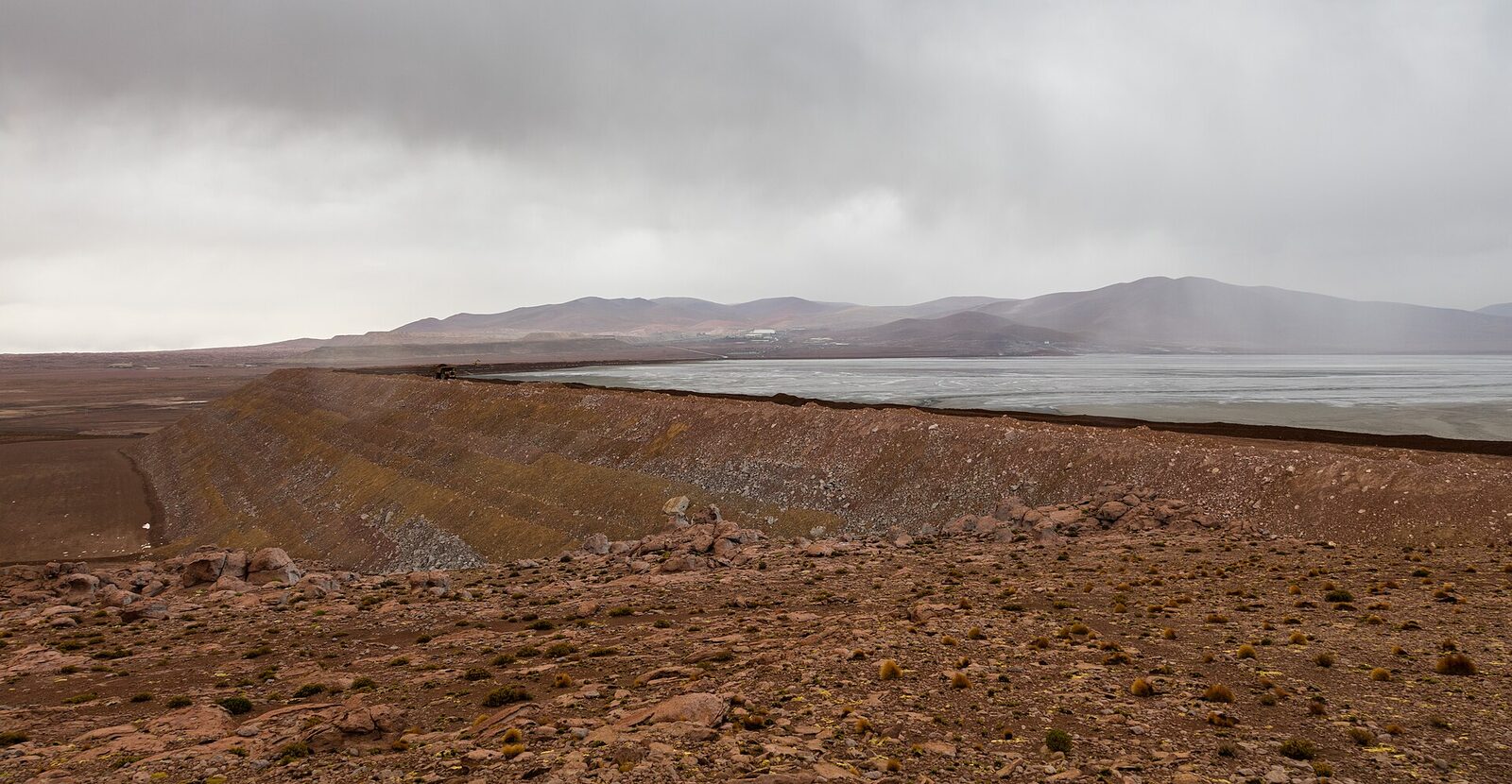
Brazil’s bauxite-to-alumina circuit is the largest one outside China, and it produces no gallium today. Alunorte in Barcarena, Pará, is the world’s largest alumina refinery outside China with a nameplate of roughly 6.3 million tonnes per year [Glencore press release, April 27, 2023]. Mineração Rio do Norte (MRN) in Trombetas, Pará, has roughly 12.5 million tonnes per year of bauxite capacity and supplies the bulk of Alunorte’s feed alongside Norsk Hydro’s wholly-owned Paragominas mine, which provides about 70 percent of Alunorte’s bauxite requirements [Glencore press release, April 27, 2023]. Glencore is the non-controlling minority shareholder in both Alunorte and MRN under the terms of its 2023 stake acquisition from Norsk Hydro; the operator structure has not changed.
The chemistry has been in the Bayer liquor the entire time. The separation infrastructure has not been built. Of the five US TRACE-Ga performers, three are working alumina-related streams: Found Energy on dilute Bayer liquor, Atlantic Alumina on counter-current ion exchange of alumina-circuit feedstocks, and PHNX Materials on alumina-producing waste streams [US Department of Energy, April 14, 2026]. The same flowsheets can be added to a Brazilian alumina circuit. No Brazilian operator has announced a gallium recovery project at any of Alunorte, Paragominas, or MRN. BNDES has signaled approximately R$50 billion of analysis across 56 critical-minerals projects [Agência Brasil, May 2026]. Gallium has not yet surfaced as a named line item.
What Washington funded in April
The TRACE-Ga budget is small. Five awards totaling $5.4 million does not build a refinery; it funds rapid prototyping. Found Energy’s Direct Bayer Extraction targets continuous electrochemical recovery without modifying the alumina circuit. Kunin Technologies has put a 12-tonne-per-year output target on the board. Indium Corporation is working on gallium recovery from manufacturing scrap, which is closer to a sortable feedstock than primary recovery [US Department of Energy, April 14, 2026]. Combined, these are pilots, not throughput.
Meanwhile, US demand is rising fast on the GaN power-electronics side. Navitas’s quarterly cadence is now the single cleanest demand read in the listed tape: high-power revenue compounding sequentially, the design wins concentrated at the 800V DC distribution architecture that hyperscalers are converging toward. The mismatch between funded recovery capacity and accelerating demand is the policy gap, and it is widening.
The twelve-month clock China is watching
China suspended its expanded October 2025 rare-earth export controls and a separate set of November 2024 controls covering gallium, germanium, antimony, and superhard materials to the United States for twelve months following the APEC summit. The gallium suspension is currently scheduled to lapse November 27, 2026 [Pillsbury Law analysis of MOFCOM Announcement 72]. The retail premium outside China is the visible cost of the licensing filter that remains in place around the suspension.
The rest of the map
The non-China gallium production base sits with Russia, South Korea, and Japan, with Kazakhstan emerging via zinc-byproduct recovery and Germany as a secondary refiner [Critical Minerals HQ, June 6, 2026; Strategic Metals Invest, June 5, 2026]. No African gallium recovery exists at commercial scale despite the continent’s bauxite production base. The Atlantic basin bauxite belt that connects Brazil and the US Gulf Coast alumina circuit is the single largest unworked gallium recovery opportunity outside China.
What it means
The asymmetry between AI power-supply demand and Western primary gallium recovery is structural, not cyclical. The price tape says the buy side is paying for the gap. The Q1 Navitas numbers say the demand is now booking, not forecasted. The DOE April announcement says the US gap is being addressed in pilots, not in capacity. Brazil is the only Western jurisdiction with the upstream feedstock, the operator base, the policy mandate, and the BNDES financing envelope to fast-follow the TRACE-Ga recipe at the alumina-refinery scale that actually matters. Whether it does is now a clock-watching question.
What to watch
- November 27, 2026: expiry of China’s suspension on gallium, germanium, and antimony controls to the United States [Pillsbury Law]. The first MOFCOM signal on whether the suspension extends or lapses is the read on whether the retail premium widens further.
- Q2 2026 Navitas earnings, scheduled for early August: the $10.0 million revenue guide is the second sequential read on the AI data center power demand curve. Beat or miss either way moves the demand thesis.
- BNDES critical minerals project pipeline: whether any of the 56 projects under analysis names a gallium recovery line at Alunorte, MRN, or Paragominas in 2026 will be the single best indicator that Brazil reads its own opportunity.