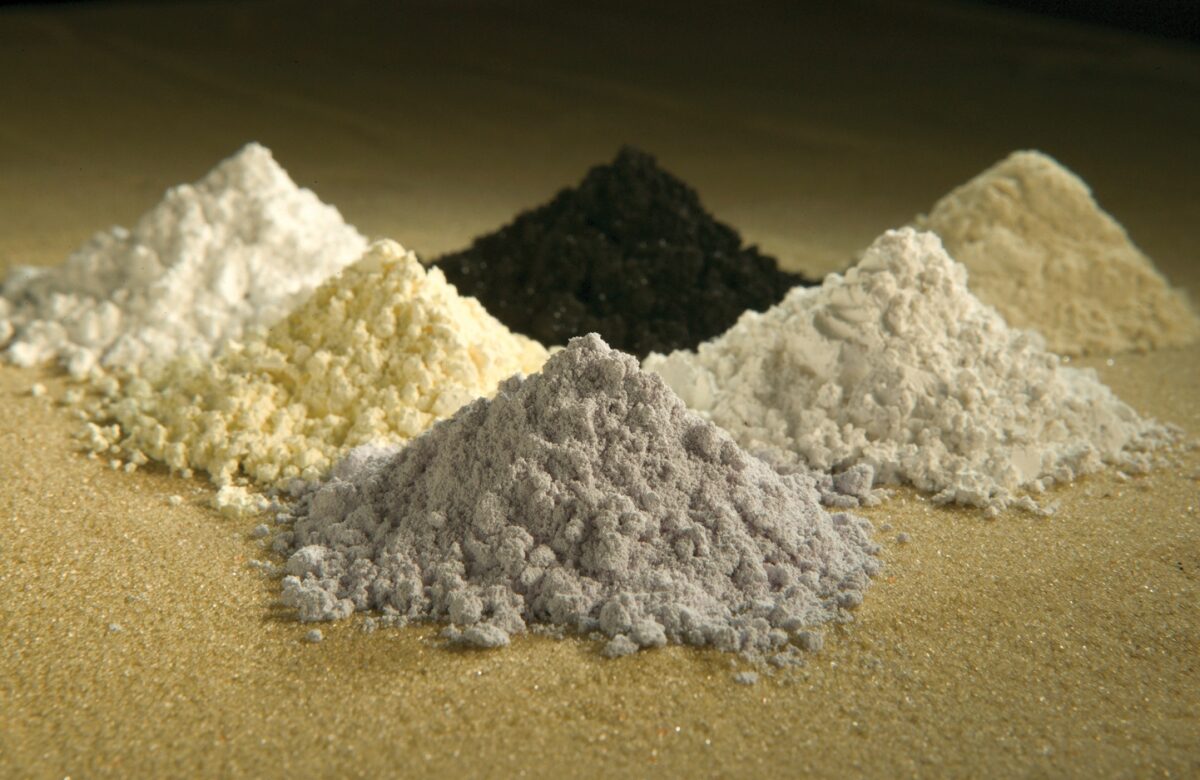
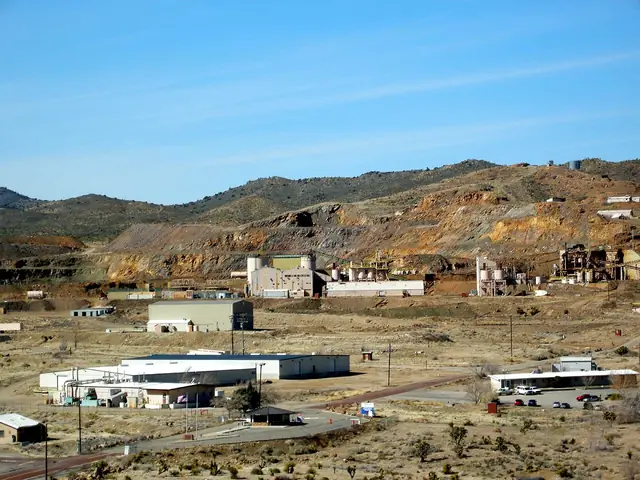
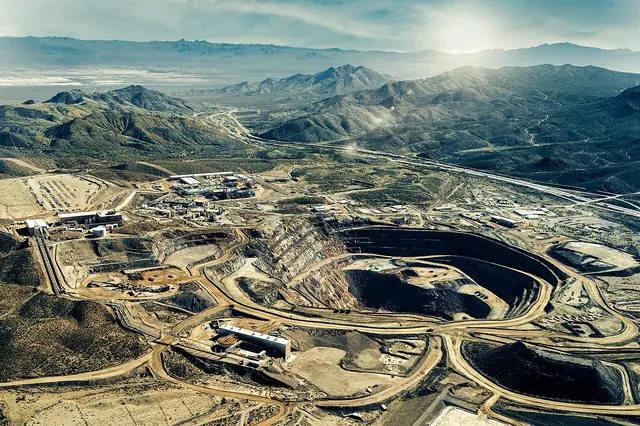
The West Aimed at the Magnet. China Moved to the Part Around It.
JL Mag is targeting 60,000 tons of magnet capacity and a business selling finished robot rotors. MP Materials' largest planned plant is 10,000 tons. Magnet shipments to the US fell 21 percent in August, three days before Xi lands in Washington.

In July this desk argued that China’s rare earth chokepoint had moved downstream, from the separated oxides the West cannot make to the finished magnets it barely makes. A Bloomberg investigation published yesterday says the chokepoint is moving again, one layer further out, and this time the Western build is not aimed at it.
What’s happening
- JL Mag Rare Earth Co., which says it became the world’s largest permanent magnet producer by both output and sales in 2024, is building its biggest plant yet in Baotou. Bloomberg’s reading of the filings gives two milestones: up to 20,000 tons of additional annual capacity at Baotou by 2028, and a company-wide target of 60,000 tons by next year, roughly a 50 percent increase [Bloomberg News via MINING.COM, September 21, 2026].
- China’s rare earth magnet shipments to the US fell 21 percent in August to 512 tons from the prior month, per customs data released Sunday. That implies a July figure near 648 tons, desk arithmetic. Shipments average about 504 tons a month in 2026 against 621 tons in 2024 before the curbs, leaving August roughly 18 percent below the pre-control run rate, desk arithmetic [Bloomberg News via MINING.COM, September 21, 2026].
- Trump and Xi meet in Washington on Thursday. US negotiators have signalled rare earths are a sticking point and that the truce expiring in November may be extended by only three to six months. Beijing hopes to offer additional export licences as a bargaining chip [Bloomberg News via MINING.COM, September 21, 2026].
- China accounted for roughly 94 percent of global rare earth permanent magnet manufacturing in 2024, well above its share of mining, per the IEA as cited by Bloomberg. JL Mag’s own share is estimated at 10 to 20 percent, and its three closest rivals are also Chinese.
- JL Mag named humanoid robots its next growth pillar and is moving from supplying magnets to making finished magnetic components. Daiwa Securities identifies it as the sole supplier of motor rotors for Tesla’s Optimus robots [Bloomberg News via MINING.COM, September 21, 2026].
The layer above the magnet
The Western strategy has a shape: mine the ore, build separation, build magnet plants, and the dependency ends. JL Mag’s expansion says it does not end there, because the company is climbing into the assembled part that contains the magnet. A rotor is not a magnet. It is a magnet plus geometry, tolerance, bonding and a customer specification, sold as a component to a robot maker rather than as a commodity to a magnet buyer.
Hence a moving target. Nomura, cited in the same report, says humanoids use significantly more rare earth material per motor than EVs, and China accounted for 97 percent of global humanoid shipments in the first half of 2026 per one survey in that report. If the fastest-growing demand layer is also the layer where China sells the finished part, Western magnet tonnage arrives one rung below where the leverage has relocated.
Brazil angle
Bloomberg makes the Brazilian point directly: even if countries outside China secure enough dysprosium or terbium from new mines in places like Brazil, they could still depend on Chinese companies, their technology, patents and manufacturing scale, to supply fast-growing industries like robotics.
That risk runs underneath every Brazilian heavy rare earth story this desk has covered this year. Feedstock is priced against oxide markets. Rotors are priced against robot bills of materials. A country that sells the first and buys the second does not capture the margin the AI and robotics buildout is creating, and tonnage alone does not fix it.
US angle
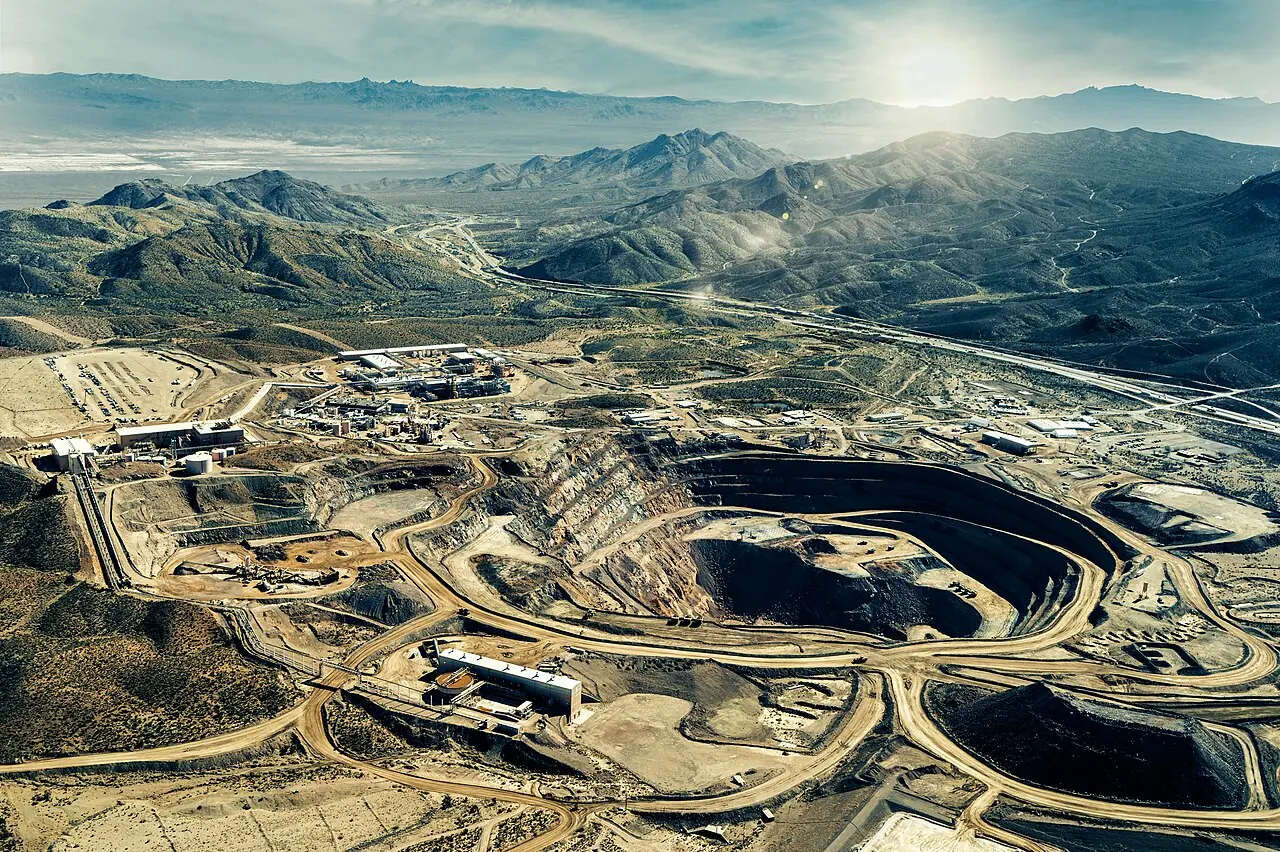
MP Materials began producing magnets at Fort Worth last year. After the Trump administration invested $400 million for a roughly 15 percent equity stake, MP announced more than $1.25 billion for a larger plant at Northlake, Texas, eventually reaching about 10,000 tons a year. Against JL Mag’s 60,000 ton target that is one sixth, desk arithmetic. Bloomberg’s own comparison is that Northlake would equal about a third of JL Mag’s 2025 production, before the Chinese expansion.
One number needs care. Direct Chinese magnet shipments to the US run near 6,000 tons a year at the 2026 average, desk arithmetic, smaller than the Northlake target. That does not mean Northlake closes the gap. Direct imports undercount dependence precisely because magnets also arrive inside assembled motors, drives and components, the layer JL Mag is expanding into, so the import line will keep understating exposure as the Chinese product mix moves up.
China angle
Beijing’s leverage here is industrial, not only regulatory. Baotou is a cluster: processors, magnet makers and research institutes a few hours by train from Bayan Obo, which cuts logistics, shares suppliers and pools specialised labour. JL Mag was among the first granted a general export licence when the April 2025 controls disrupted foreign manufacturers, and its US sales revenue rose 40 percent. Daiwa’s Derek Zhang told Bloomberg that Chinese producers can ramp capacity easily at perhaps a tenth of Western cost. JL Mag told Citigroup it expects China to still make 80 percent of the world’s magnets in 2030.
Export licences are the negotiable layer. Cluster economics are not, and Thursday cannot trade them.
LATAM angle
JL Mag has said it wants to shift some processing to Monterrey, Mexico, closer to US clients, in a document on its own investor relations site that Bloomberg links. The reporting is from yesterday; the stated intention is not new. If it proceeds it would place Chinese magnet processing inside the USMCA perimeter while US policy tries to exclude it, which is a rules-of-origin question rather than a mining one.
What it means
The indexes read the pressure but not the relocation. TAI sits at 100.8, down 2.33 on the week, SOV50 at 110.7, and the Southern Diversification Index at 97, down 4.06, as of the September 19 update. SDX below 100 is the relevant line: diversification is not being rewarded right now. A Bloomberg Economics note in the second report makes the mechanism plain, that periods of restored access to cheaper Chinese material weaken the urgency to break dependence. A licence-generous outcome on Thursday would be bearish for the very projects the West says it needs.
What to watch
- Thursday, September 24, Washington. Whether the truce is extended three to six months or longer, and whether any licence relief is general or entity-specific. Relief that excludes MP and USA Rare Earth, both placed on MOFCOM’s export control list on June 22 as this desk reported the following day, would be a tell.
- JL Mag disclosure of Baotou commissioning dates. The 60,000 ton figure is a target in filings, not commissioned capacity. Watch the next annual report for a start date rather than a 2028 envelope.
- January 1 Pentagon procurement cutoff. Certain defence technology containing Chinese rare earth magnets stops being procured. Watch whether the rule reaches assembled components containing Chinese magnets or only the magnets themselves. That is the same layer distinction this article is about, and Niron Magnetics and the other non-rare-earth entrants are sized against the answer.