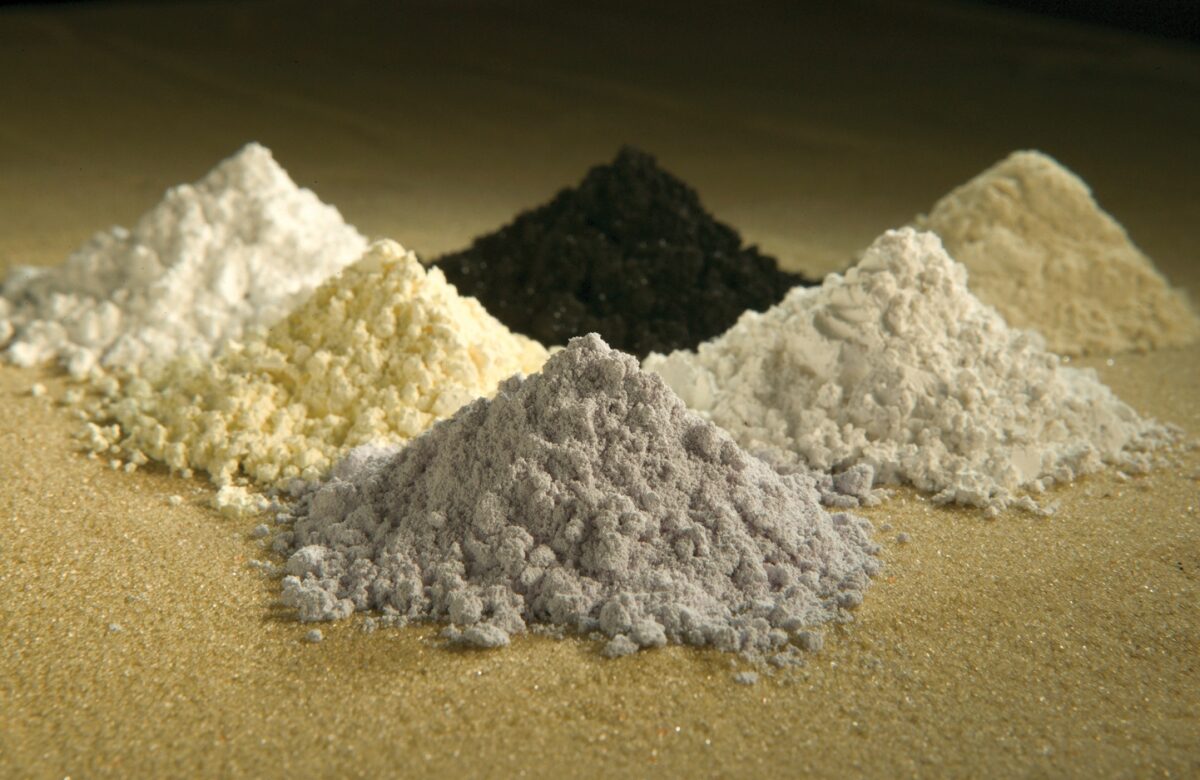
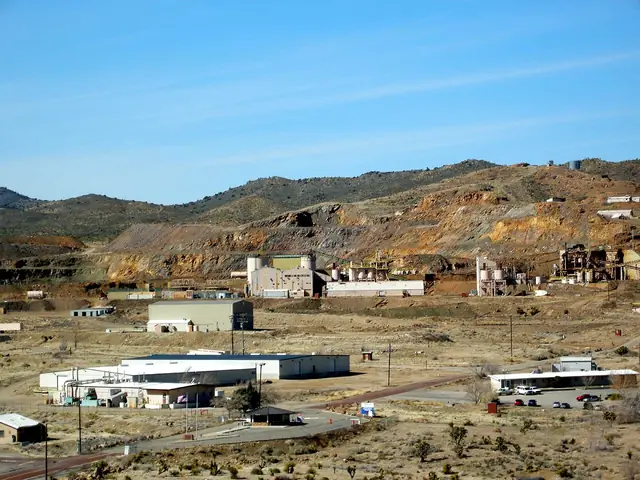
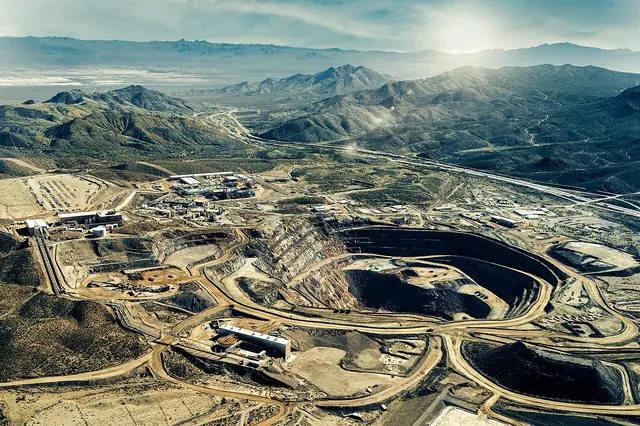
Erbium broke ranks with the whole rare earth basket. It sits in the amplifier, not the magnet.
European erbium prices rose about 50 percent since the start of June while 13 of 19 tracked elements fell in August. Erbium's demand base is fibre-optic amplification, and China's suspension covering it lapses November 10.

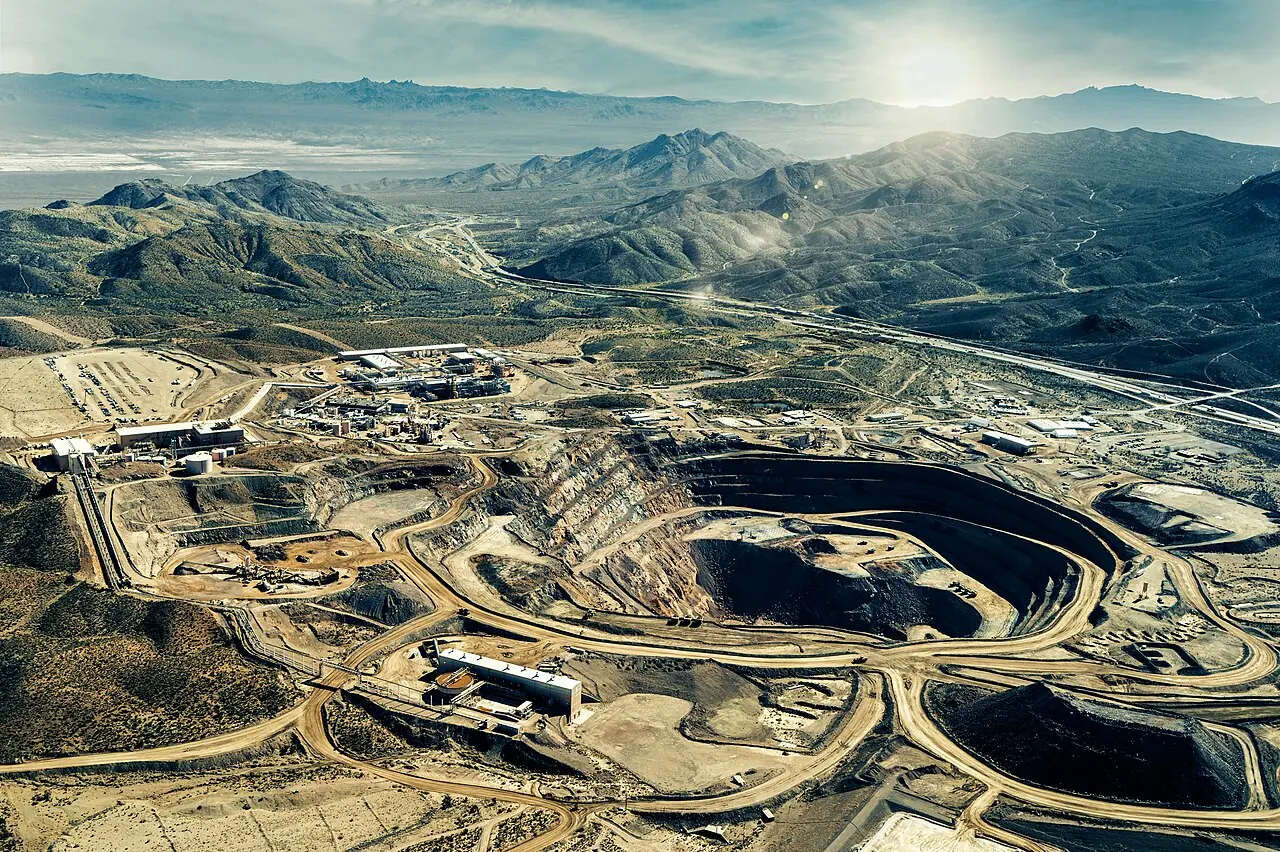
The tracked rare earth basket sold off in August and one element went the other way. Erbium oxide on the Shanghai Metals Market domestic benchmark rose 17.6 percent to $81.69 per kilogram from $69.45, the only element in a 19-element basket to post a double-digit gain, against an average change of -5.4 percent and a median of -9.2 percent. Gallium fell 18.8 percent to $234.62. Dysprosium fell 11.6 percent. Terbium fell 7.19 percent [Rare Earth Mining News, August 3, 2026, citing SMM assessments of 3 August 2026].
Erbium is not a magnet metal, and that is the whole point. Dysprosium and terbium price off traction motors and wind turbines. Erbium’s demand base is anchored in erbium-doped fibre amplifiers, which operate in the 1550 nanometre low-loss window of silica fibre [Rare Earth Mining News, August 3, 2026; Rare Earth Exchanges, July 4, 2026]. Long-haul links, subsea systems and the optical layers stitching AI clusters together lean on that component. When the magnet complex pulls back and erbium climbs, the buyer on the other side of the trade is not an automaker.
What’s happening
- European erbium prices have risen about 50 percent since the beginning of June and Chinese prices about 40 percent, on Argus Media assessments reported by the Financial Times. Argus rare earths pricing lead Maeve Flaherty told the FT that “market participants both inside and outside of China believe that export controls may be reimposed on erbium, cutting off erbium supply to the rest of the world” [Mining.com.au, August 13, 2026, citing Financial Times and Argus Media].
- China introduced sweeping critical mineral export restrictions in 2025, then suspended some of the toughest measures for one year. That suspension expires on November 10. Holmium and ytterbium were also among the materials in the suspended tranche, and since early June Chinese holmium prices have risen about 25 percent and ytterbium about 75 percent on Argus data cited by the FT [Mining.com.au, August 13, 2026].
- The two price agencies disagree, and that is the story underneath the story. On the SMM domestic assessment of 3 August, ytterbium oxide was down 11.1 percent to $13.07 and holmium oxide down 3.96 percent to $79.40 [Rare Earth Mining News, August 3, 2026]. Argus, over a June to mid-August window, has both up. These are thin, privately negotiated markets with no futures curve, and Western benchmarking still leans on Chinese reporting agencies [Rare Earth Exchanges, July 4, 2026]. Read any single print as directional, not definitive.
- The US is drafting a border measure on the layer above. The Federal Communications Commission is reportedly preparing a ban on imports of Chinese-made optical modules and other data center components, a move that sent North American supplier shares sharply higher. Chinese manufacturers currently supply more than half of the world’s key high-speed optical interconnects. Reuters reported on August 4 that US officials aim to roll out the restrictions within this year [Reuters, August 4, 2026].
- The demand curve underneath all of it: LightCounting put optical transceivers at $7 billion in 2024 and projected $24 billion by 2030, and CRU-cited industry data show data center fibre demand grew about 76 percent in 2025 and could reach 30 percent of global fibre demand by 2027, from under 5 percent in 2024. Preform capacity takes 18 to 24 months to build [Rare Earth Exchanges, July 4, 2026].
Brazil angle
Brazil is buying into the fibre layer and skipping the chemistry layer. On August 4 Furukawa Electric said it would invest 100 billion yen, about $635 million, expanding optical fibre and rollable ribbon cable capacity across India, the United States, Brazil and Japan, on the strength of hyperscale data center demand, with mass production phasing in progressively from the second half of FY2028. In Brazil the money goes to upgrading facilities at its Lightera LatAm division [CGTN, August 4, 2026; Developing Telecoms, August 5, 2026].
That is a real industrial win for Paraná. It is also cable, not dopant. Brazil’s rare earth pipeline this month is entirely magnet-oriented. Power Minerals reported a first hole of 116 metres at 4.78 percent TREO from surface at Morro do Ferro in Minas Gerais, including 31 metres at 10 percent TREO and 1.58 percent magnet rare earth oxides. Oceana Metals raised $20 million to accelerate Serra Negra. Viridis Mining has a demonstration plant running at Colossus with a final investment decision targeted for the third quarter of 2026. IMC Rare Earths, a Brazil-focused magnet rare earth developer, closed a $20 million IPO and began trading on NYSE American on July 29 [Rare Earth Mining News, August 3, 2026].
Not one of those is an erbium separation line. Brazil is preparing to make more of the glass that carries AI traffic while importing the ion that amplifies the light inside it. That is the same structural gap this desk flagged on germanium in June, one element to the left on the periodic table and one step further down the optical stack.
US angle
Washington’s instrument is a border measure, not a supply measure. An FCC import restriction on Chinese optical modules changes who assembles the transceiver. It does not change who separates the erbium going into the amplifier that feeds it. The broader US minerals push has been financially wide and chemically narrow: the White House says the administration has signed or approved 160 mineral transactions worth nearly $40 billion since January 2025, and a package announced on August 7 included a conditional loan of up to $1.4 billion for Sila Nanotechnologies, $400 million for Sunrise Energy Metals and its Australian scandium project, and $150 million for Niron Magnetics [InvestorNews Critical Minerals Report, published August 17, 2026, citing the White House and Reuters]. Batteries, scandium, magnets. No announced optical dopant chain.
The Global South entries point the same way. The US International Development Finance Corporation committed up to $50 million in equity toward Phalaborwa in South Africa, majority owned by Rainbow Rare Earths and structured via TechMet, targeting NdPr oxide and a mixed heavy rare earth carbonate from phosphogypsum stacks, and up to $4.84 million to Harena Rare Earths’ Ampasindava ionic clay project in Madagascar [Rare Earth Mining News, August 3, 2026]. Both are magnet-feedstock theses. Erbium rides along as a by-product line item.
China angle
Beijing does not need to reimpose anything to collect the premium. The suspension is still in force and erbium has already repriced. That is leverage exercised through the calendar rather than the licence desk. Enforcement is tightening in parallel: Chinese authorities have detained several Japanese nationals, including senior executives of companies operating in China, in investigations involving alleged violations of dual-use export restrictions, with corporate offices inspected and employees questioned. Separately, a proposed expansion at Bayan Obo would lift annual mining capacity 50 percent, from 10 to 15 million tonnes, through investment exceeding 500 million yuan, about $74 million, principally to raise iron ore output, with rare earths recovered as a by-product and still governed by quotas [InvestorNews Critical Minerals Report, published August 17, 2026, citing South China Morning Post and China’s Ministry of Commerce]. More ore does not mean more separated heavy rare earths reaching foreign buyers.
What it means
SOV50 sits at 121.8, down 0.16 percent on the week, with a weighted basket HHI of 0.68 and rare earths carried at China roughly 70 percent. Neither erbium nor any optical dopant is a named SOV50 constituent. The August move is a reminder that the desk’s rare earth exposure is a magnet proxy, and that the AI stack carries a second, smaller, less visible rare earth dependency sitting in the photonics layer. A basket built on the NdPr complex will not register an erbium squeeze until it surfaces as a transceiver lead time.
What to watch
- November 10. The suspension expiry. Watch whether MOFCOM extends it, lets it lapse, or issues licences selectively for optical-grade material.
- The FCC rule, targeted within 2026. Whether it defines a covered manufacturer by nationality, Covered List status, or physical manufacturing location, and whether importers get a transition period. Chinese-owned capacity built outside China is the test case.
- China’s MIIT second-half mining and smelting quota. Typically released in June or July, still unpublished as of the August 3 assessment. It is the largest open catalyst for the heavy rare earth complex, erbium included [Rare Earth Mining News, August 3, 2026].