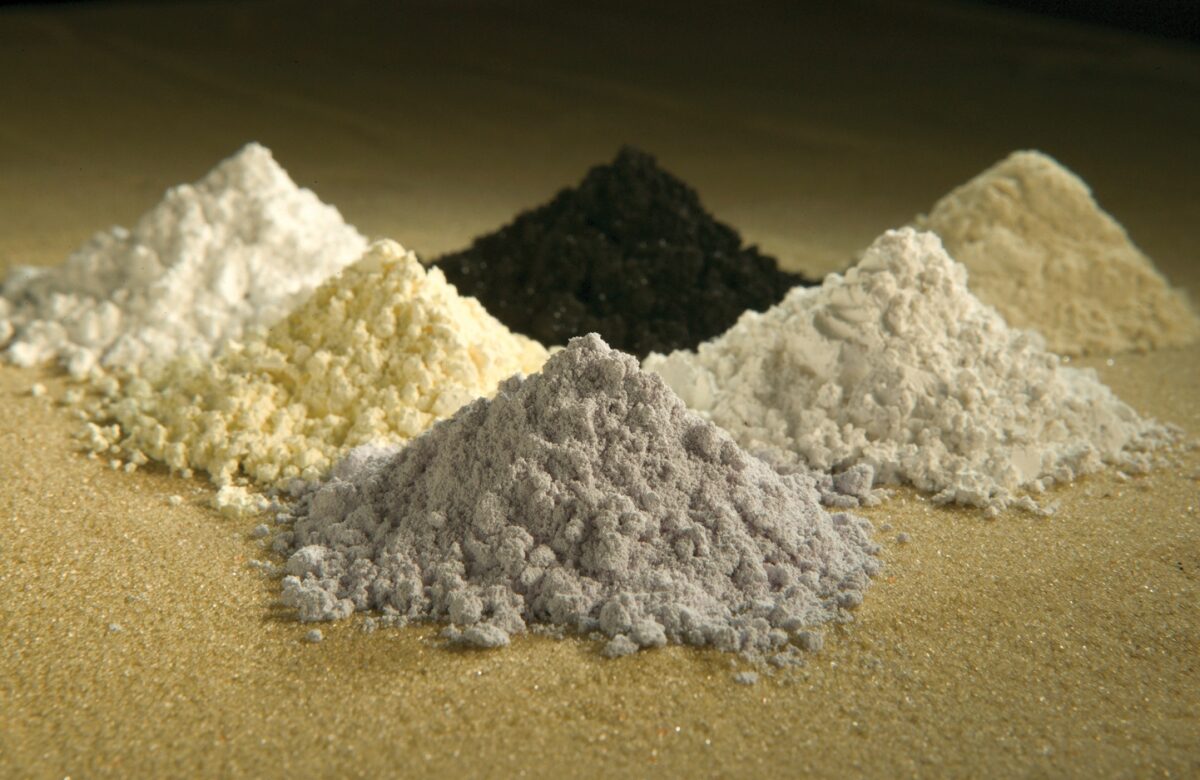
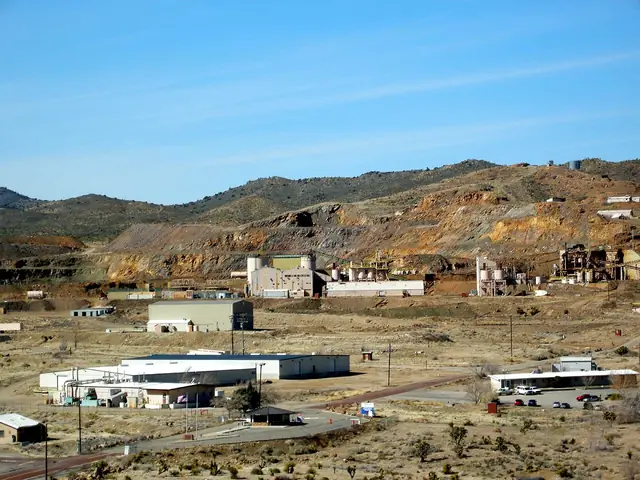
Brazil's biggest rare earth project started detailed engineering before it found the last US$280 million
Viridis named its EPCM contractor on September 11 and approved US$3 million to begin design work ahead of a final investment decision it has not taken. The debt that pays for construction is still unsigned, and the separation plant intended to take the output sits in France.

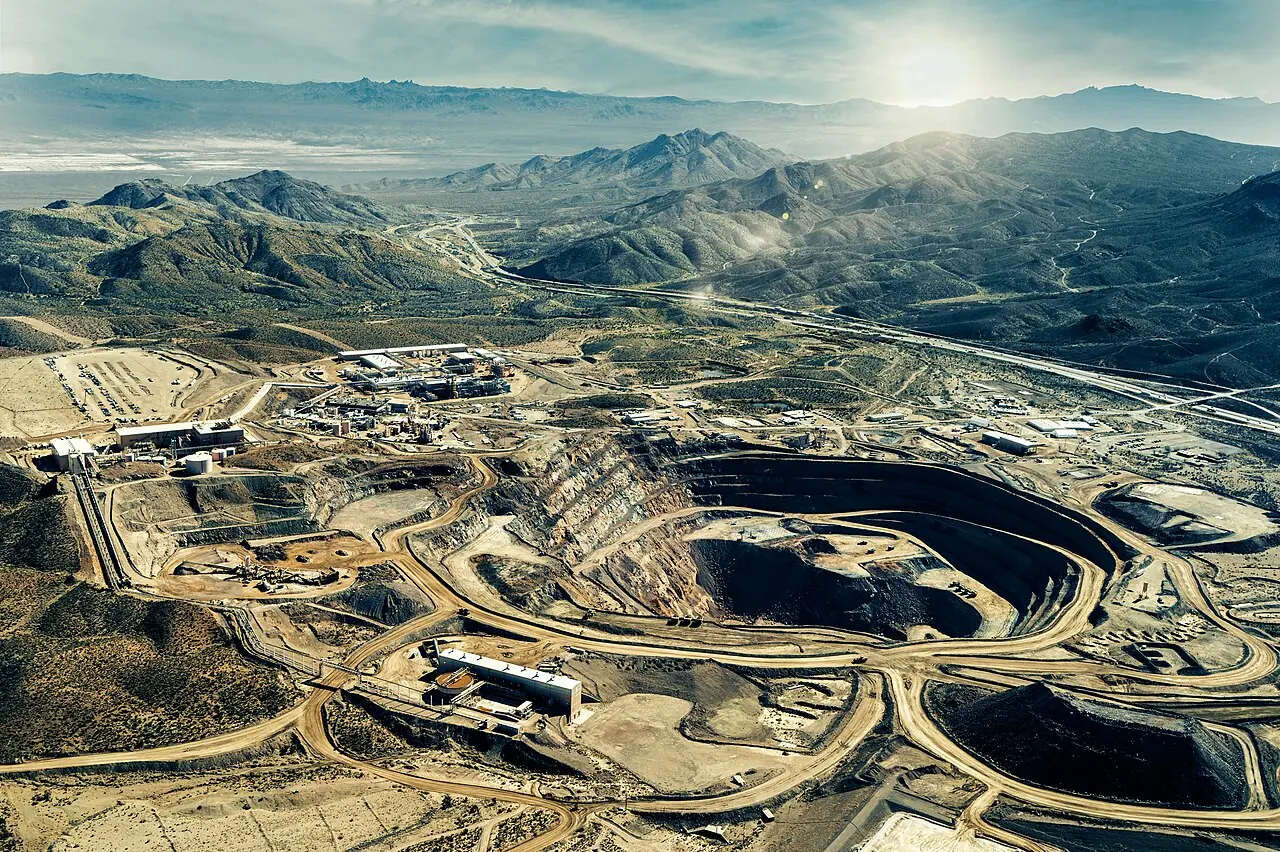
On September 11 Viridis Mining and Minerals selected Sedgman and its Brazilian engineering provider Blossom Consultoria e Assessoria as preferred EPCM partner for the Colossus rare earth project in Minas Gerais, and approved up to US$3 million for a pre final investment decision bridging phase [Mining.com.au, 11 September 2026].
Read that sequence again. The EPCM contract is not signed, the FID has not been taken, and the money to build the plant has not been raised. Detailed engineering starts anyway, out of the company’s own pocket. Managing Director Rafael Moreno said the quiet part directly: “Importantly, we are not waiting for FID to commence this work … This allows us to continue de-risking the execution schedule and maintain momentum towards our targeted 2028 production schedule while limiting our financial commitment ahead of FID.”
That is a company buying calendar with cash, because the calendar is the scarce thing.
What’s happening
- Sedgman and Blossom were chosen from a tender involving 11 international and Brazilian engineering groups. Full appointment remains subject to final terms and FID [Mining.com.au, 11 September 2026].
- The definitive feasibility study puts total pre-production capital at US$449 million, for a plant processing 5 million tonnes a year of run of mine feed to roughly 2,967 tonnes a year of magnetic rare earth oxides [Mining.com.au, 20 August 2026].
- On September 8 Moreno told Bloomberg that BNDES had approved a R$77.5 million loan supporting a research centre and the newly opened demonstration plant. With it, Viridis puts the remaining debt requirement to fully fund construction at around US$280 million [Mining.com.au, 9 September 2026].
- That loan runs 16 years at an indicative cost near 4.8 percent. It funds the Centro de Pesquisa e Processamento de Terras Raras, which makes mixed rare earth carbonate at pilot scale and develops processing routes for the region’s ionic clays [Revista Minérios, 8 September 2026].
- Non-binding support so far: Export Finance Australia up to US$50 million, Export Development Canada a letter of interest up to US$100 million, and France’s Bpifrance at an amount not disclosed. Term sheets were targeted by end of September, FID in the fourth quarter [Mining.com.au, 20 August 2026].
Desk arithmetic: US$449 million of pre-production capital against roughly US$154 million of identified equity leaves about US$295 million, reconciling with the company’s post-BNDES figure of around US$280 million. The two ceilings carrying public numbers total US$150 million, just over half that. Bpifrance’s is unquantified in what we could source, so any claim that the letters fully cover the package asserts more than the disclosed arithmetic shows.
Two dates look like a conflict and are not. BNDES has the plant starting implementation in Q1 2027 and operating by end 2028; Viridis has FID in Q4 2026 and first production in H2 2028. Same sequence, opposite ends.
Brazil
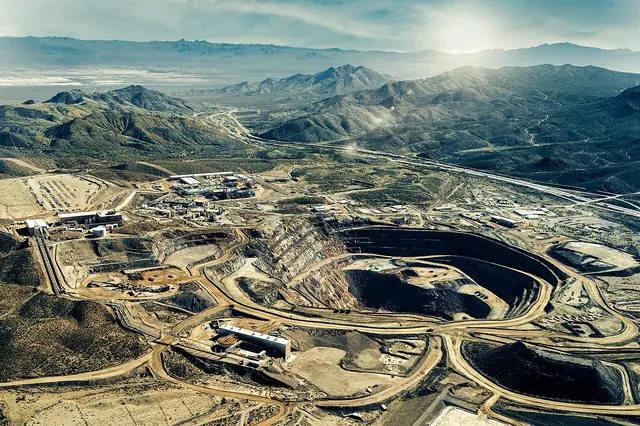
Brazil holds roughly 21 million tonnes of rare earth reserves by USGS estimate and operates one commercial mine [Mining.com.au, 9 September 2026]. Colossus covers 228.62 square kilometres around the Poços de Caldas Alkaline Complex, and Viridis calls it the largest undeveloped ionic adsorption clay deposit outside China. Its 200.1 million tonne ore reserve grades 2,894 parts per million TREO, the subset of a larger resource that survived economic testing and the only part that underwrites a loan.
What Brasília financed this month is worth naming precisely. The R$77.5 million is innovation credit for a research centre and pilot plant, not construction capital for the mine. It buys the part of the chain Brazil has historically not owned, which is the metallurgy. It is not the US$280 million.
Washington visits, Paris lends
Representatives of the European Investment Bank and the US International Development Finance Corporation have visited the Colossus site, per Moreno [Mining.com.au, 9 September 2026]. Visits are not letters. Of the three institutions that have put support in writing, none is American. Australia, Canada and France are financing the deposit Washington keeps sending delegations to.
France has a reason. In June, Solvay and Viridis signed a non-binding letter of intent for supply of mixed rare earth carbonate from Colossus to Solvay’s La Rochelle plant, described as one of the largest rare earth separation facilities outside China. The identified feedstocks are neodymium, praseodymium, dysprosium and terbium, with samarium, gadolinium and yttrium alongside [Mining Technology, 2 June 2026]. The letter is explicitly non-binding.
So a French state bank helps fund a Brazilian mine whose intermediate product is intended for a French separation plant. That is industrial policy working as designed, and also a map of where value is captured. Colossus ships carbonate. La Rochelle makes the separated oxides magnets require.
On September 3 this desk wrote that the West’s heavy rare earth chain ran Malawi to Kazakhstan to France, and that Brazil was not on the route. That judgment needs updating. Brazil is on the route. It joined as the mine.
What it means
The binding constraint has moved. Not geology, which the reserve settled. Not equity, which August settled. It is one unsigned debt package of roughly US$280 million. The demonstration plant averaged 78.1 percent magnetic rare earth oxide recoveries in July against DFS assumptions of 76 to 78 percent [Mining.com.au, 20 August 2026]. The technical case is holding. The financing case is open.
Dysprosium and terbium are what keep neodymium magnets working at temperature, and those magnets run through the cooling and drive systems of data centre infrastructure. China still dominates global processing and magnet manufacturing, so every heavy rare earth tonne reaching a Western separation plant is a tonne outside the reach of a Chinese export licence. Colossus is one of the few projects that could deliver those tonnes before 2030, and it is about US$280 million short.
The Tantalum AI Materials Index reads 103.2, down 4 percent on the week, as of the desk’s 12 September update.
What to watch
- Lender term sheets by end of September 2026. Moreno told Bloomberg on September 8 he hoped to finalise “in the next month, six weeks maximum,” putting the outer edge near October 20. A slip past that moves FID out of Q4 and pressures the 2028 date.
- Whether Bpifrance attaches a number, and whether the DFC converts a site visit into paper. Which institution closes the remaining half determines whose supply chain Colossus is formally attached to.
- Conversion of the Solvay letter of intent into binding offtake. Binding offtake and senior debt were two of the four pre-FID items Moreno named in August. EPCM is now ticked. Those two are not.