Beijing spent June blocking MP Materials. It may spend the autumn owning a piece of it.
Reuters reports state-owned China Rare Earth Group wants control of Shenghe Resources, which holds 3 percent of MP. Shenghe denies it. Brazil's Pela Ema, three weeks inside a US parent, is the asset that makes the question urgent.

Three months ago Beijing put MP Materials on an export control list. Reuters now reports that a Chinese state company is in talks to acquire the Shanghai-listed firm that owns 3 percent of it. If both things are true at once, the story of the Western rare earth build is no longer only about exclusion. It is about who sits on the share register.
What’s happening
State-owned China Rare Earth Group is in talks to acquire Shenghe Resources, according to two sources cited by Reuters. One of the sources said China Rare Earth Group wants a controlling stake. Talks have been underway since earlier this year, and the sources did not know when any deal would be announced or completed [Reuters via Investing.com, September 18, 2026].
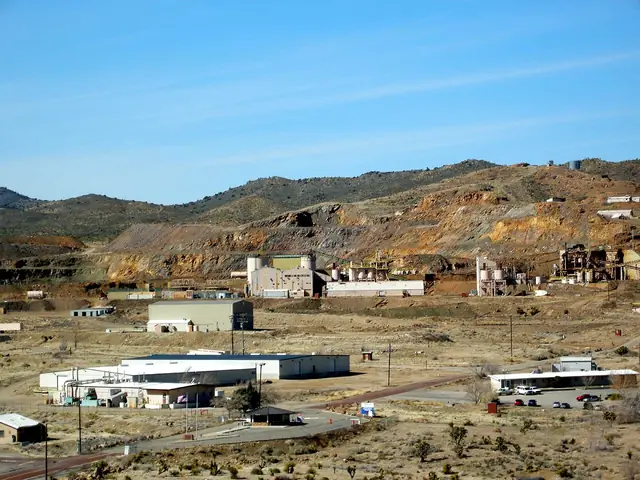
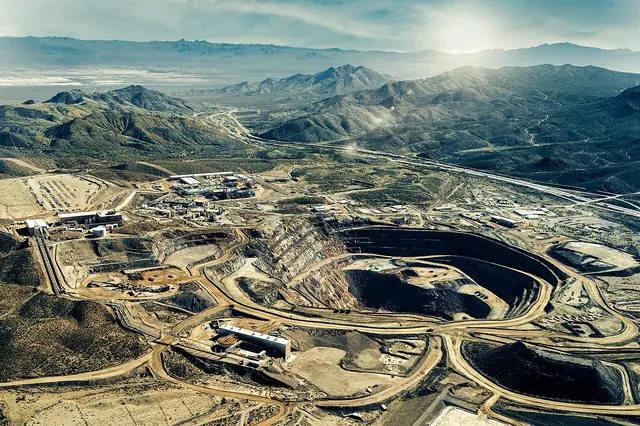
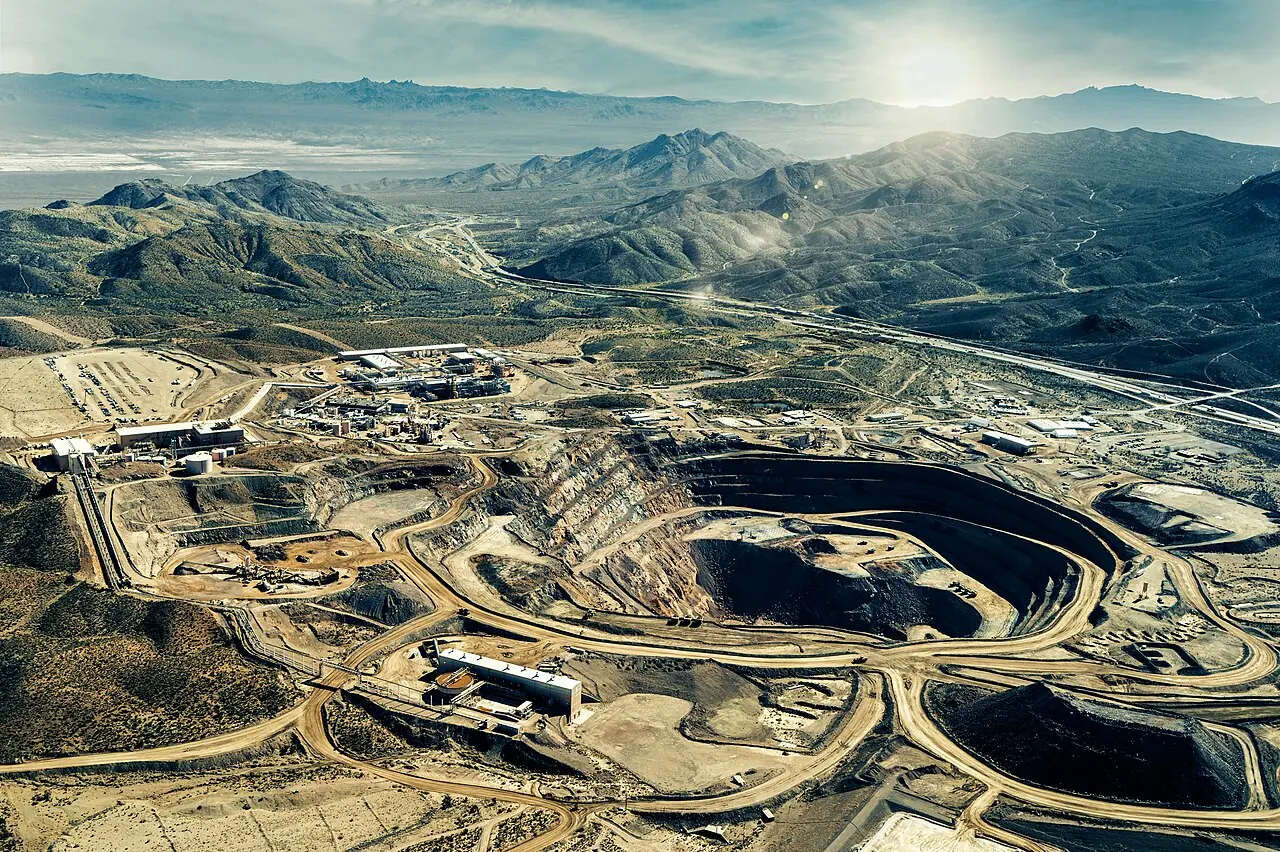
A deal would hand over control of Shenghe’s stakes in foreign firms, including its roughly 3 percent holding in MP Materials, the operator of Mountain Pass in California. The US Department of Defense is MP’s largest shareholder [Reuters via Investing.com, September 18, 2026]. MP shares fell on the report and were last quoted at $48.22 on September 18, down 2.35 percent, for a market value of $8.6 billion [Mining.com, September 18, 2026]. On those figures the 3 percent position was worth roughly $258 million, which is desk arithmetic.
Shenghe pushed back. In a filing to the Shanghai stock exchange carried in Reuters’ updated story on September 20, the company said it was aware of “false” reports about a rare earth enterprise group’s alleged plan to take a controlling stake and indirectly hold its overseas assets. It said its controlling shareholder, the Institute of Multipurpose Utilization of Mineral Resources, had responded in writing that there are no plans to transfer the controlling stake to external parties [Reuters via Investing.com, September 20, 2026].
Read the denial closely. It rules out a transfer to external parties. It does not, on its face, rule out a reallocation inside the Chinese state system, which is what a China Rare Earth Group acquisition would be. That is a desk reading of the published language, not a claim about intent.
China Rare Earth Group was set up in 2021 after a reorganization of five state-run rare earth companies and is the country’s largest supplier of heavy rare earth elements. A deal would also grant Shenghe better access to the mining, smelting and separation quotas Beijing allocates to state-run companies, which China has stopped publicly disclosing [Reuters via Investing.com, September 18, 2026].
Brazil angle
The timing matters for Brazil more than for California. USA Rare Earth completed its combination with Serra Verde Group on September 3, 2026, seventeen days ago, folding the Pela Ema operation in Goiás into a Nasdaq-listed parent. Serra Verde is the only scaled producer of all four magnetic and other critical heavy rare earth elements outside Asia. Production began in January 2024, with a first-stage run-rate of about 4,000 tonnes per annum of total rare earth oxide targeted by the end of 2026 and a second stage under construction aimed at 6,400 tpa [USA Rare Earth investor release, September 4, 2026].
Brazil holds almost a quarter of the world’s estimated rare earth reserves and accounted for less than 1 percent of global production last year [Bloomberg via Mining.com, August 31, 2026]. Pela Ema is the asset closing that gap, and it now sits inside a company that Beijing has designated on an export control list. USA Rare Earth says so in its own risk disclosure, warning that the designation “has had and is expected to continue to have an adverse impact on our ability to source key raw materials and supplies from China” [USA Rare Earth investor release, September 4, 2026].
Brazil has already run the experiment the MP situation is now posing. When Pela Ema was being developed, Serra Verde agreed 10-year offtake deals with Chinese companies that could buy and process its concentrate. Those contracts were later shortened to expire at the end of 2026 [Bloomberg via Mining.com, August 31, 2026]. Brasília watched a Chinese commercial position over its only commercial rare earth producer get unwound by contract. An equity position acquired through a parent company reorganization is harder to unwind, because there is no expiry date on a share certificate.
US angle
The Pentagon’s position in MP came through an agreement announced on July 10, 2025, under which DoD purchased $400 million of a newly created series of convertible preferred stock plus a warrant, both carrying an initial conversion and exercise price of $30.03 per common share, together representing 15 percent of shares outstanding on an as-converted and as-exercised basis as of July 9, 2025 [MP Materials, July 10, 2025]. Against the $48.22 quote on September 18, the market price sits about 61 percent above that strike, which is desk arithmetic.
Washington did not buy a passive stake, it bought a conversion right sized to make the government a durable owner. That is the architecture now in question. Reuters’ sources did not know what would happen to Shenghe’s overseas assets under a deal, and it is not clear how a Chinese state-owned rare earth firm sharing a register with the Defense Department would be treated [Reuters via Investing.com, September 18, 2026]. MP has repeatedly said neither Shenghe nor the Chinese government has any control over its operations.
China angle
Beijing’s leverage has never been the mine. In 2025, China or Chinese-controlled firms produced 83 percent of the world’s rare earth ore and handled 91 percent of the processing that turns it into usable oxides. In 2024 they made 94 percent of the world’s rare earth magnets [Bloomberg via Mining.com, August 31, 2026]. Consolidating Shenghe would close out a decades-long push to bring the sector under state control, capturing one of the last leading Chinese rare earth miners and refiners with some private ownership [Reuters via Investing.com, September 18, 2026].
The reach extends past the United States. Shenghe acquired Australia-listed Peak Rare Earths last year [Reuters via Investing.com, September 18, 2026]. That deal, struck through Shenghe subsidiary Ganzhou Chenguang at a total value of about A$158 million, carried with it Peak’s 84 percent-owned Ngualla project in Tanzania, over which Shenghe already held binding offtake rights to 100 percent of the rare earth concentrate [Mining Weekly, May 15, 2025]. A single corporate action in Shanghai would therefore touch a Californian mine, a Tanzanian deposit and the quota system that sets global supply.
What it means
The Tantalum indexes read TAI 100.8, SOV50 110.7 and SDX 97 at the September 19, 2026 weekly recompute, and the sovereignty index is the one to watch here. Every Western rare earth mechanism built since 2025 has assumed the contest is over flow: who mines, who separates, who is allowed to buy. The Shenghe question is about stock rather than flow. If control of a Chinese listed company changes hands, the foreign equity it carries moves with it, and no export licence, offtake clause or tariff schedule is triggered.
For the AI buildout this is the quiet part. Magnet rare earths sit in the motors, cooling fans and drive hardware of data centre infrastructure, and USA Rare Earth names data centres and physical AI among the sectors its integrated platform is built to serve [USA Rare Earth investor release, September 4, 2026]. The supply Washington and Brasília are assembling for that demand is real. The ownership of it is apparently still negotiable.
What to watch
- Further Shenghe filings to the Shanghai stock exchange. The September denial covers transfers to external parties. A reorganization inside the state system would test whether that wording was a refusal or a definition.
- November 10, 2026, when the partial suspension of Beijing’s October 2025 rare earth control package is set to lapse [Tantalum, June 23, 2026]. Entity listings and equity consolidation are cheaper instruments than a broad regime, and the desk expects Beijing to price that choice before the deadline.
- End of 2026, twin deadline for Serra Verde. The shortened Chinese offtake contracts expire and the first-stage 4,000 tpa run-rate target falls due [Bloomberg via Mining.com, August 31, 2026; USA Rare Earth investor release, September 4, 2026]. Thras Moraitis, formerly Serra Verde’s chief executive, takes over as USA Rare Earth CEO on October 1, 2026 [USA Rare Earth investor release, September 4, 2026].