Chile Digs a Quarter of the World's Copper. It Melts 4.2 Percent of It.
A new Cochilco study puts Chile's share of global smelted copper at 4.2 percent against 23 percent of mined concentrate, with the furnaces it already owns running at about 60 percent. The AI buildout's hardest physical input gets turned into metal somewhere else.

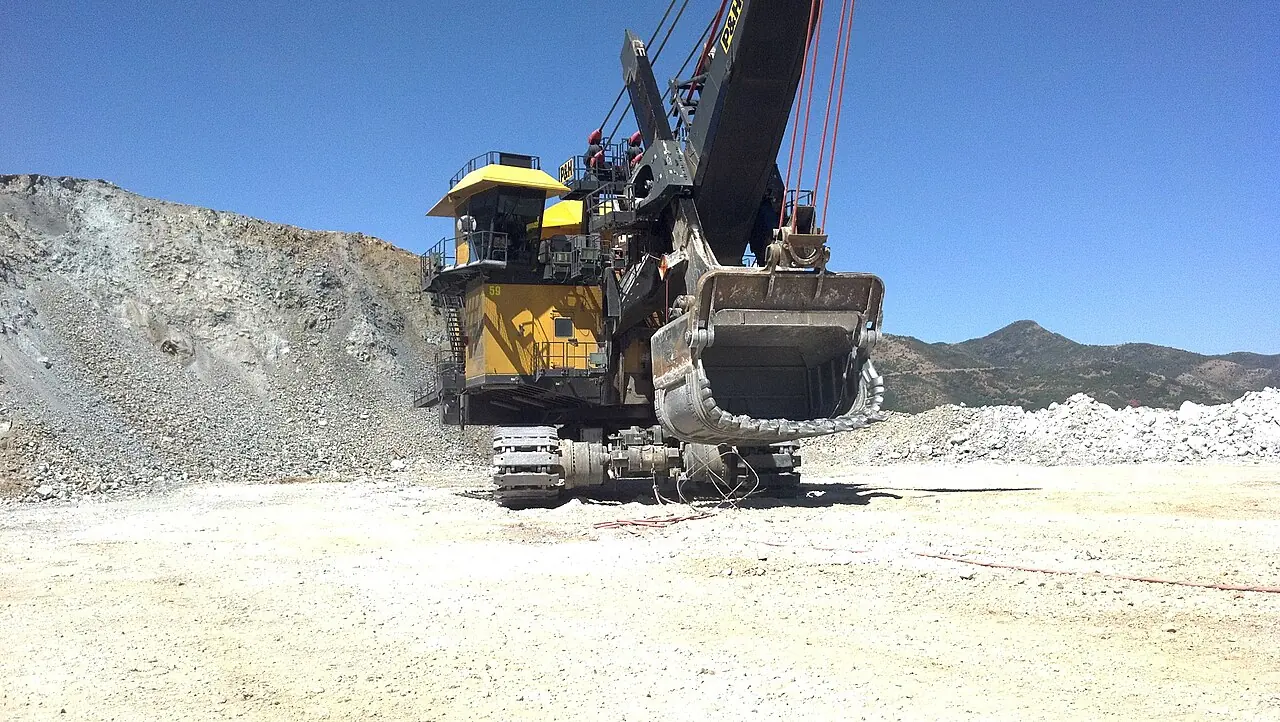
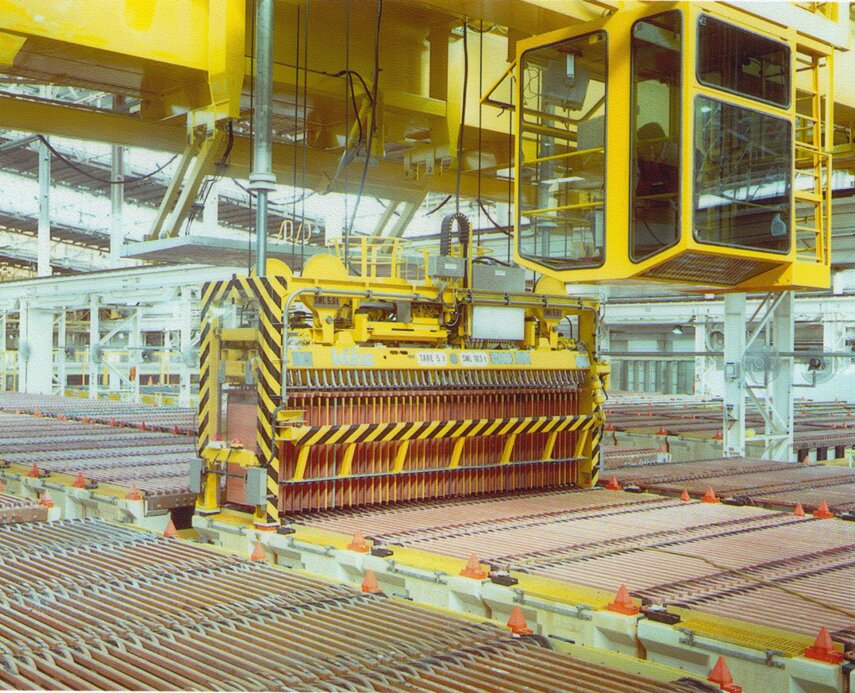
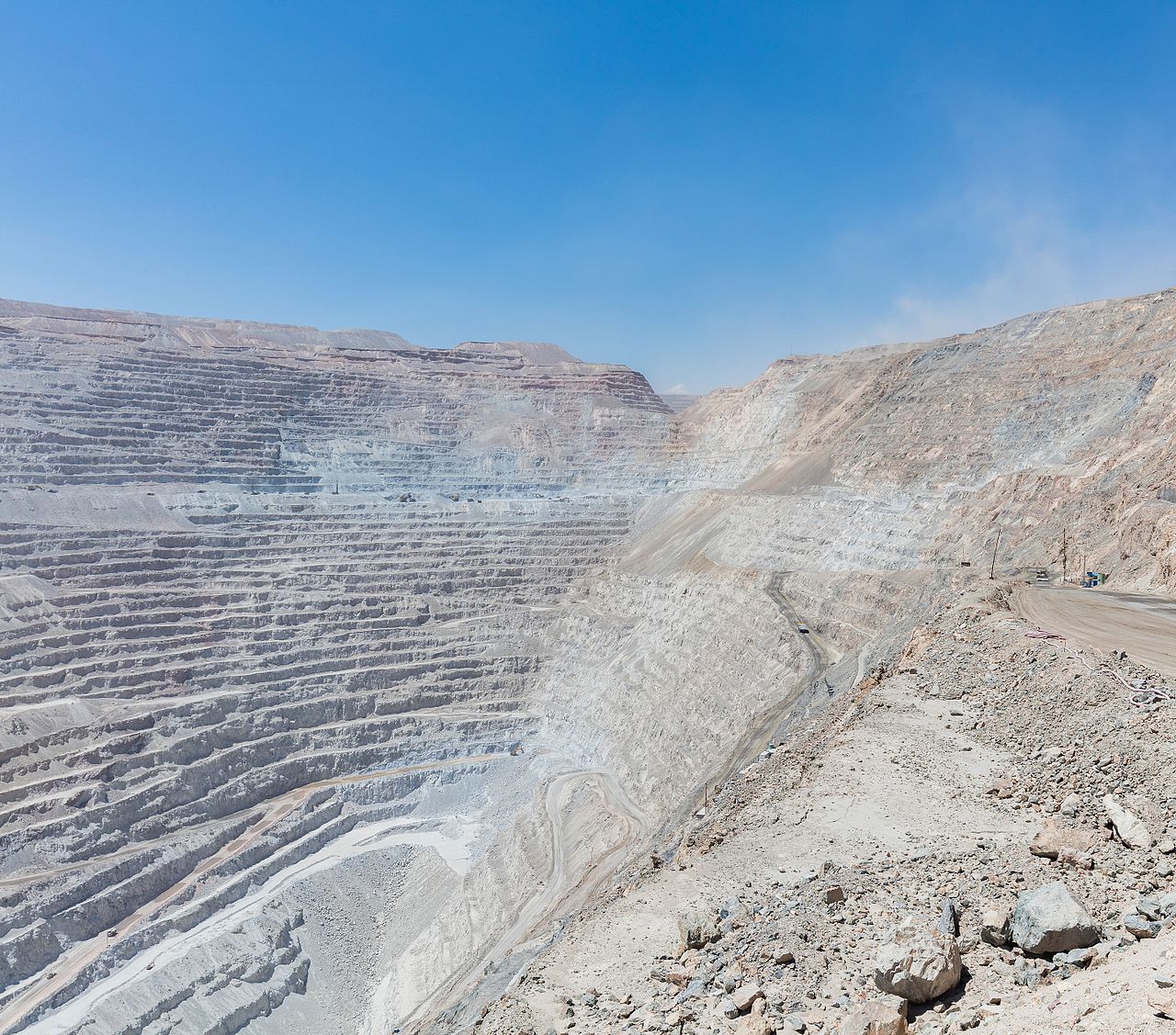
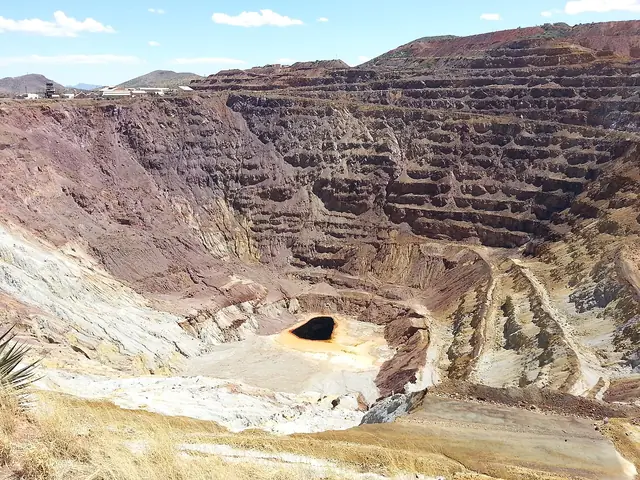
LME copper hit an all-time peak of $14,779 per tonne on 8 September, a fourth straight session of gains, with analysts telling Reuters $15,000 was possible within the week [Reuters via MINING.COM, 8 September 2026]. The next morning, the country that mines more copper than anyone else published a study explaining why that does not help it much. Chile’s state copper commission, Cochilco, released a report on the concentrate market and smelting industry showing Chile produced about 23 percent of global copper concentrate in 2025 while accounting for just 4.2 percent of the world’s smelted copper, down from 13.3 percent in 1990 [MINING.COM, 9 September 2026]. That is not a mining problem. It is a furnace problem, and it sits under the AI buildout.
What’s happening
- Chile has Latin America’s largest smelting capacity, an estimated 5.44 million tonnes of annual concentrate treatment, but its five major plants run at only about 60 percent of nominal capacity. On desk arithmetic that leaves roughly 2.2 million tonnes of treatment idle each year. Cochilco’s framing is that the immediate opportunity is recovering operational continuity and treated volume “before committing new expansions” [MINING.COM, 9 September 2026].
- About two thirds of Chile’s concentrate exports go to China, which Cochilco says gives the country access to the world’s largest smelting market while leaving it exposed to Beijing’s demand, industrial policy and commercial terms [MINING.COM, 9 September 2026].
- Projects under global consideration could add 8.2 million tonnes of fine copper in annual smelting capacity by 2041, concentrated mainly in Asia. Against roughly 28.7 million tonnes of refined copper the world consumes this year, that pipeline equals about 29 percent of current annual refined demand. The 29 percent is desk arithmetic combining the Cochilco pipeline with Kpler’s consumption estimate [MINING.COM, 9 September 2026; Kpler, 17 July 2026].
- Spot treatment and refining charges, normally a core smelter revenue line, sit around zero or negative, weakening the case for adding capacity anywhere [MINING.COM, 9 September 2026].
Note the sequence. The study is new this week; the decline it measures runs from 1990. The 4.2 percent is not a 2026 event but a thirty-six year erosion a 2026 study finally attached a number to.
Why this is an AI story
Copper is, in Kpler’s phrasing, one of the AI buildout’s hardest inputs to design out. Its July analysis anchors modern data centre builds at roughly 27 tonnes of copper per megawatt, using Microsoft’s Chicago campus at about 2,177 tonnes across roughly 81 MW, with AI-dense halls at 30 to 45 tonnes per megawatt. On that basis 2026 data centre construction embeds 300,000 to 700,000 tonnes of copper against global demand growth of roughly 450,000 tonnes for the year, absorbing close to the entire annual increment in world copper consumption before grid reinforcement [Kpler, 17 July 2026].
Hyperscalers do not buy concentrate. They buy busbar, cable and transformers, made from refined cathode. Every tonne of Chilean concentrate crossing the Pacific is a tonne whose conversion into the metal AI consumes happens under someone else’s industrial policy.
Brazil angle
Brazil is legislating at the other end of that sequence. Its Senate approved a bill creating a National Policy for Critical and Strategic Minerals, now with President Lula, establishing a council linked to the presidency able to scrutinize changes of corporate control over companies holding critical mineral rights. It allows rules tying exports to value-addition commitments, requires disclosure of destination, final beneficiary and degree of processing, and pairs that with a 2 billion real (about $383 million) guarantee fund and up to 5 billion reais (about $958 million) in tax credits over five years for processing projects [MINING.COM, 7 September 2026].
No Brazilian official cited Chile. But the desk reads the two as one problem at different stages: Chile has furnaces it cannot fill, while Brazil is writing a degree-of-processing rule before its chains are built.
US angle
Washington’s arithmetic is worse. The United States mined about 1.06 million tonnes of copper in 2024, more than half of it leaving as concentrate, mostly to Asia. Its two active primary smelters, Rio Tinto’s Kennecott and Freeport-McMoRan’s Miami, produce just over 400,000 tonnes of refined copper between them, leaving a top-five mining nation a net importer of refined metal [Fastmarkets, 31 October 2025].
Into that gap the administration has proposed a 15 percent tariff on refined copper imports from the start of 2027, rising to 30 percent in 2028, and has neither confirmed nor ruled it out. Anticipation alone has drained metal into American warehouses: COMEX stocks stand at a record 695,624 tonnes against just over 300,000 tonnes on the LME and ShFE combined. SP Angel’s John Meyer said there is plenty of physical copper in the world “but it’s all in the United States” [Reuters via MINING.COM, 8 September 2026]. A tariff on refined copper taxes the step America mostly cannot perform at home.
China angle
China is roughly 58 percent of global refined copper demand, and its pull is narrowing onto the copper-intensive end of the economy. Even with property contracting, refined copper imports rose about 3 percent year on year in June to 478,000 tonnes, the strongest month since September 2025, with State Grid spending estimated up 35 to 40 percent. Concentrate imports slid to a 19-month low and smelter treatment charges went negative [Kpler, 17 July 2026]. Chinese smelters are bidding concentrate away from each other hard enough to work for nothing on the conversion fee, which the desk reads as defending control of the step rather than the margin on it.
What it means
Copper’s 2026 argument has been about grades, permits and warehouse stocks. Cochilco relocates it. Even if every Chilean permit cleared tomorrow and every mine hit nameplate, the metal would still be finished in Asia, because that is where the furnaces are and where the next 8.2 million tonnes of them are planned. Hyperscalers hedged power. They did not hedge the smelter.
Cochilco does not quantify what the underutilization costs Chile annually, nor establish whether the government has ruled out new construction [MINING.COM, 9 September 2026]. Those omissions are the policy question, and the commission’s own answer points at utilization before expansion.
What to watch
- Lula’s signature on the Brazilian critical minerals bill. Watch whether implementing regulations operationalize the degree-of-processing disclosure or leave it a discretionary power that never gets used.
- The US tariff decision, with 1 January 2027 attached to the 15 percent proposal. Confirmation or explicit rejection resets the arbitrage holding 695,624 tonnes in American warehouses. Morgan Stanley’s Amy Gower has flagged softer US import demand in 2027 under either outcome [Reuters via MINING.COM, 8 September 2026].
- Whether Codelco and Glencore convert their evaluation agreement into a sanctioned smelter, and whether state-owned ENAMI’s modernization gets funded [MINING.COM, 9 September 2026]. With treatment charges at or below zero, any sanction would be a political choice about value capture rather than a return-driven one.