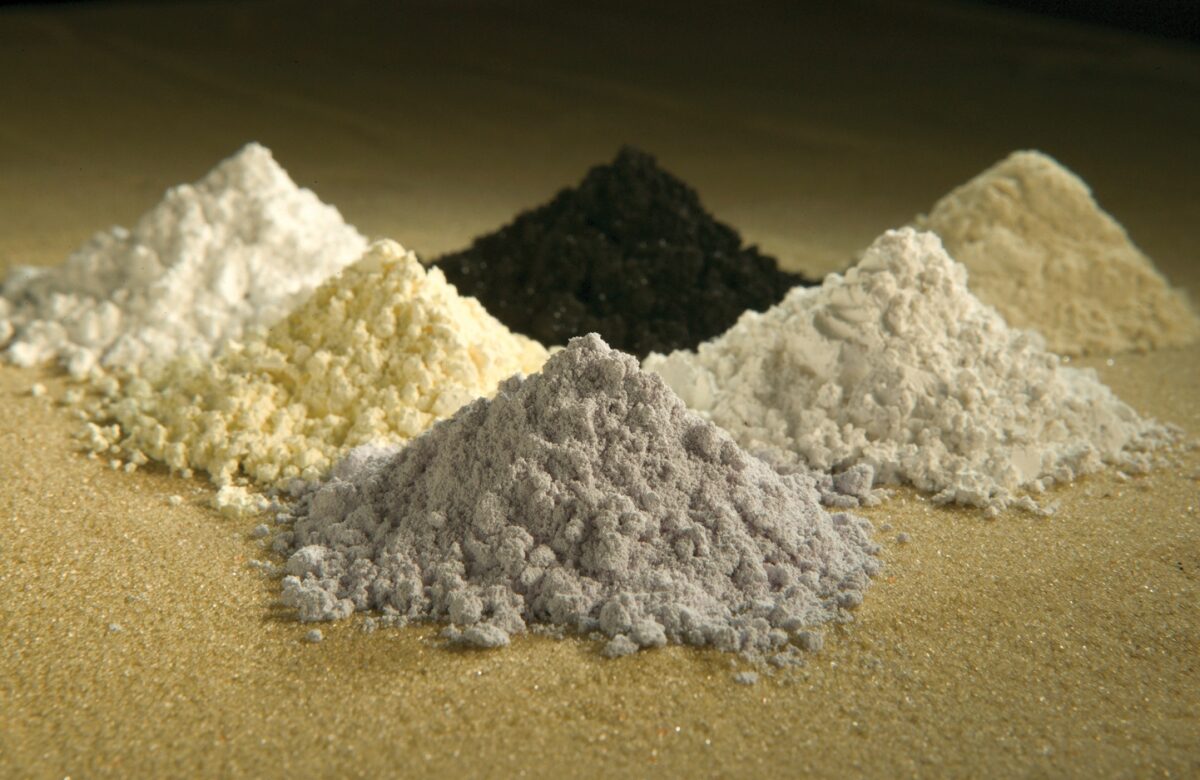
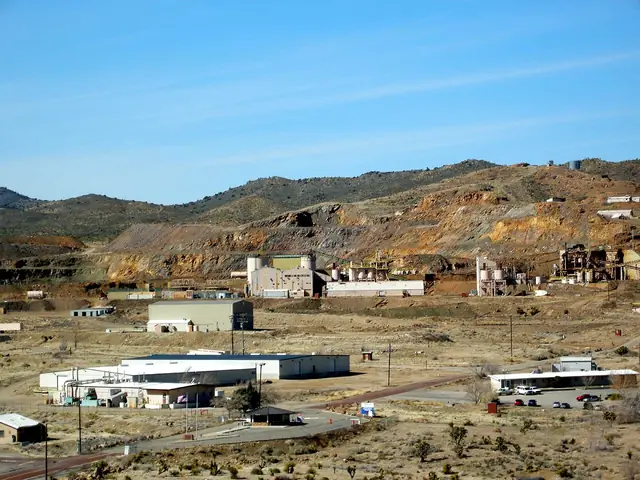
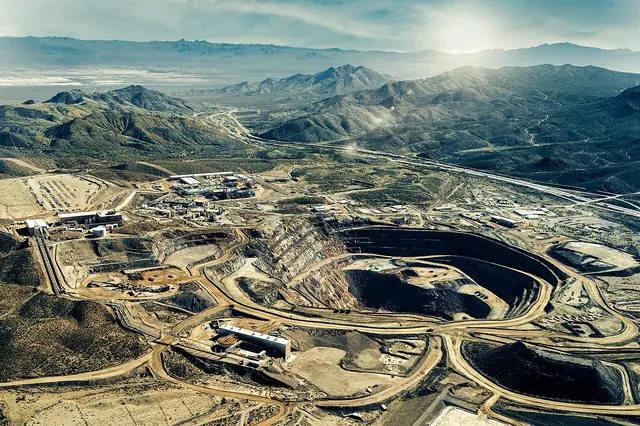
Washington offers to fund Brazilian rare earth refining. The one producing mine pays royalties on the cost of digging.
US embassy sources told MINING.COM on September 28 that Washington is open to backing local processing. Brazil's mining agency has never published a reference price for rare earths, so Serra Verde's royalty base is its own mining cost. Minaçu has collected R$3.1 million since 2024.

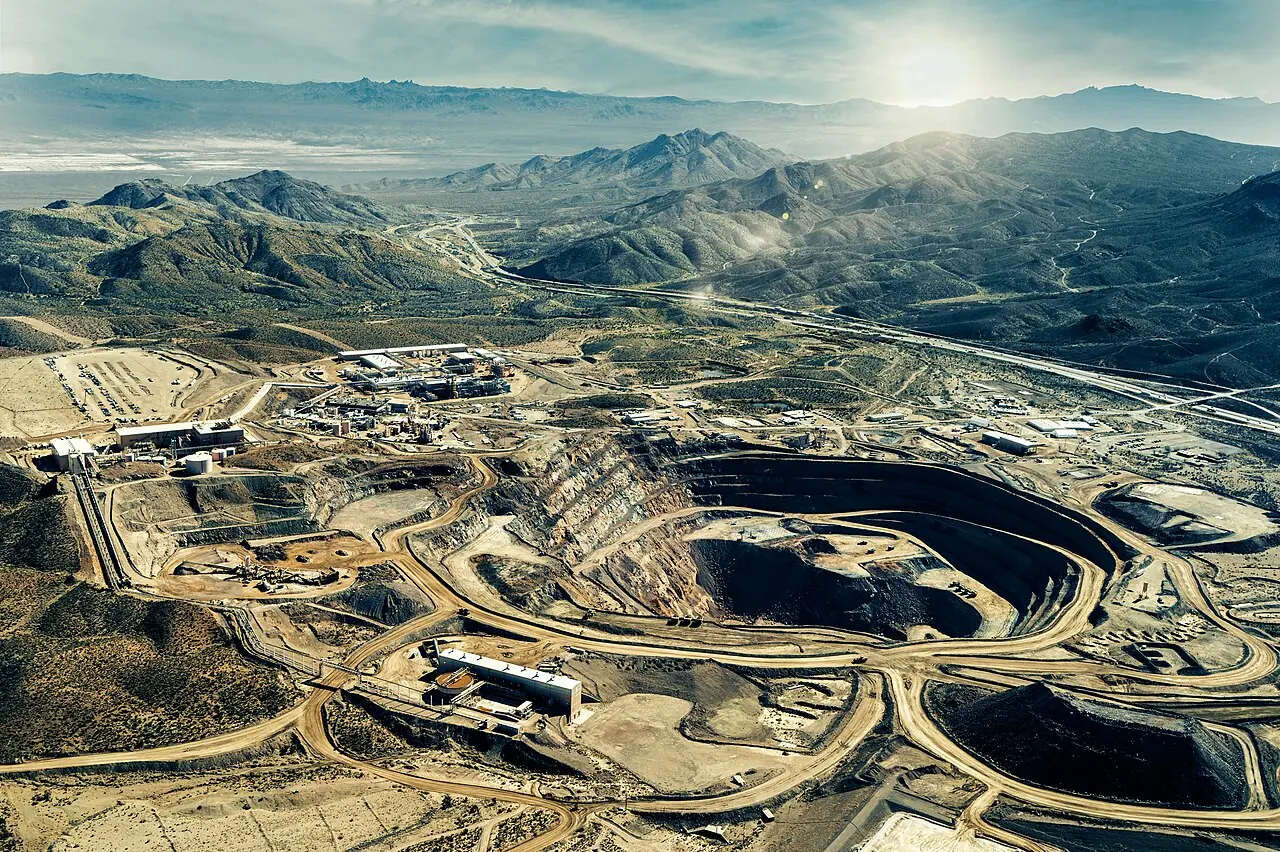
Yesterday this desk argued that Goiás is accumulating world-class polymetallic geology while the separation step that turns it into magnet feed remains unbuilt. That is the physical gate. There is a fiscal one underneath it, and it is in worse repair.
What’s happening
- US embassy sources told MINING.COM that American representatives have stressed in meetings with Brazilian counterparts that they are open to commitments adding value locally, including support for processing and refining [MINING.COM, September 28, 2026]. A USA Rare Earth spokesperson told the same outlet the company has not excluded building further downstream capabilities in Brazil.
- Washington signed a non-binding critical minerals memorandum with Goiás, the state that hosts Serra Verde, covering cooperation from mining and separation through to metal alloys and permanent magnets. MINING.COM places the signature in March, the same month former chargé d’affaires Gabriel Escobar said US investment in Brazilian critical minerals projects had passed $600 million [MINING.COM, September 28, 2026].
- Brazil’s National Mining Agency, the ANM, is preparing resolutions that would change how rare earth miners calculate royalties. Current law sets the CFEM at 2 percent of revenue from ore sales. The open question is whether rare earth carbonate counts as a mineral product, which attracts CFEM and routes most of the money to producing municipalities, or an industrial one, which falls under IPI, goes mostly to the federal government and is exempt on exports [O Fator, August 31, 2026].
- Where a company sells something that is not an ore, ANM rules say CFEM should rest on the current price of the mineral behind it, or on a reference value the agency publishes. That is how CBMM’s niobium at Araxá is handled. For rare earth ore there is no published price from any price reporting agency, and the ANM has never published a reference value. So Serra Verde, the only rare earth miner in operation in Brazil, used its own mining cost as the base, and per ANM data cited by O Fator, Minaçu has received R$3.1 million in rare earth CFEM since 2024 [O Fator, August 31, 2026].
Brazil angle
O Fator ran the arithmetic on the two Minas Gerais projects closest behind Serra Verde, using their definitive feasibility studies. Meteoric, at Caldas, projects US$3.35 billion in carbonate revenue across its first five years, which on the revenue base is US$67 million in CFEM, an average of US$13.4 million a year, 60 percent of it to the producing municipality. On the mining cost base it is US$4.3 million over the same five years, or US$860,000 a year. Viridis, at Poços de Caldas, projects US$341 million in annual carbonate revenue, so US$6.82 million a year on the revenue base against US$758,400 on the cost base. O Fator puts the combined annual difference at US$18.6 million, a figure it says market participants validated.
The ratio is the story. Meteoric’s revenue base is roughly 15.6 times its cost base, Viridis’s about 9 times (desk arithmetic on the O Fator figures, which reconcile: 12.54 plus 6.06 equals the stated 18.6).
The resolutions sit inside public consultation CP nº 03/2025, which never mentions rare earths and instead seeks input on reference values generally. The ANM published a draft in May saying a later act will define enrichment indices per substance, and that until those exist, companies subject to reference values must use production cost up to the stage before mineral transformation. Asked when the final text lands, the agency said the schedule depends on consolidating contributions and on legal and regulatory impact analyses still under way. Asked for its own impact numbers, it declined, citing industrial secrets and fiscal confidentiality [O Fator, August 31, 2026].
Read that against what Brasília did two weeks ago. The law enacted September 16 created a National Council for the Industrialization of Critical and Strategic Minerals with authority to approve changes of control at companies holding strategic mineral rights and to review certain international supply agreements, and it allows tax credits of up to 20 percent for qualifying processing, transformation and urban mining spending, capped at R$1 billion a year from 2030 through 2034 [MINING.COM, September 28, 2026]. This desk covered the statute and the CIMCE decree on September 17. Brazil now has a gate on who may own the ore, an incentive that starts paying in 2030, and no answer to what the ore is worth today.
US angle
USA Rare Earth completed its roughly $2.8 billion acquisition of Serra Verde in early September [MINING.COM, September 28, 2026]. This desk covered the April 20 terms on May 30 and the MOFCOM listing of MP and USAR on June 23. The company says it is developing technology to convert the mixed rare earth carbonate produced at Pela Ema into separated products, and that such technology is not yet commercially available outside Asia at scale. That is the company’s characterisation, not an independent assessment.
The acquisition drew argument inside the Lula administration, with some officials pressing for intervention on the grounds that control of Brazil’s only commercial-scale rare earth producer carried strategic implications. The prevailing view was that blocking it would damage legal certainty [MINING.COM, September 28, 2026]. Note what that debate did not touch. Ownership was contested. The royalty base was not.
Washington’s federal track has gone worse. Brazilian officials found earlier Trump administration proposals too generic, and one provision read in Brasília as granting the US preferential access to certain projects, which US officials dispute [MINING.COM, September 28, 2026]. A Quaest poll released September 21, surveying 2,004 voters between September 17 and 20, put Flávio Bolsonaro at 42 percent and Lula at 41 percent in a hypothetical runoff, inside the two-point margin of error. October’s election sits on top of every one of these files.
China angle
What the sourcing establishes is narrow: no price reporting agency publishes a current market price for rare earth ore, and the ANM has never set a reference value [O Fator, August 31, 2026]. Neither the agency nor O Fator attributes that absence to China.
This desk’s reading is that the two are connected. Price reporting agencies publish where there is a liquid market to observe, and the separated products that give carbonate its value are priced through Chinese channels. On that reading, Brazil’s inability to tax its ore sits downstream of the same chokepoint that makes the ore strategic. That is an inference, not a finding, and it is the part of this piece to discount hardest.
What it means
Washington is offering to help build the refinery. Brasília has legislated the gate and scheduled the credit. Neither touches the asset already in production. Serra Verde has moved R$3.1 million in rare earth CFEM to Minaçu since 2024, while the two projects behind it are modelling annual royalty gaps of US$12.5 million and US$6.1 million between the two possible bases (desk arithmetic on the O Fator figures). The money at stake in the formula is larger than the money the formula has produced.
Malawi is running the same experiment with a longer horizon. The World Bank estimates Malawian mining exports could exceed $30 billion between 2026 and 2040, but that under business-as-usual only three of seven advanced projects proceed, holding annual government revenue near $400 million by 2040 against roughly $600 million with reform, and that with the current supplier base only about a third of mineral export value returns to the country [Africa Briefing, September 7, 2026]. Export tonnage is not retention. Brazil’s version of that gap is narrower and more fixable, because it turns on a single unpublished number rather than an absent industrial base.
The desk indexes as of the September 26 update read TAI at 99.7, down 1.09, with materials at 97 and power at 107.9. That is the only reading below the January base of 100 in the published 26-point history, and materials now sit 10.9 points under power (desk arithmetic on the published values). SOV50 is at 107.5, against the 112.8 this desk cited for September 12. SDX is at 94.4. Concentration is repricing down and diversification is not picking up the slack, which is the environment in which host jurisdictions find out how much value they actually captured.
What to watch
- Publication of the ANM resolution from CP nº 03/2025, and the subsequent act defining enrichment indices. The second document decides whether rare earth carbonate is mineral or industrial. Until it exists, the draft’s own default keeps the base at production cost. The agency has given no date.
- Serra Verde’s next CFEM disbursements to Minaçu under USA Rare Earth ownership. ANM publishes CFEM distribution data. A new controller with declared downstream ambitions and a pending reference-value rule is the cleanest available test of whether the base moves before the rule does.
- Whether Meteoric and Viridis hold to the position O Fator reports. Executives at both have said privately they will choose whichever model most benefits the municipalities, whatever the ANM decides. If either files on the revenue base before it is required to, that is the precedent the agency has been avoiding writing.