Brazil's best heavy rare earth project pays 34 percent of its gross revenue to Louisiana. EXIM just offered to fund the invoice
Aclara's Carina feasibility study books a US$314.4 million annual separation fee payable to a plant at the Port of Vinton that has not been built. On September 4 the company disclosed a US Export-Import Bank letter of interest for up to US$750 million toward building it.

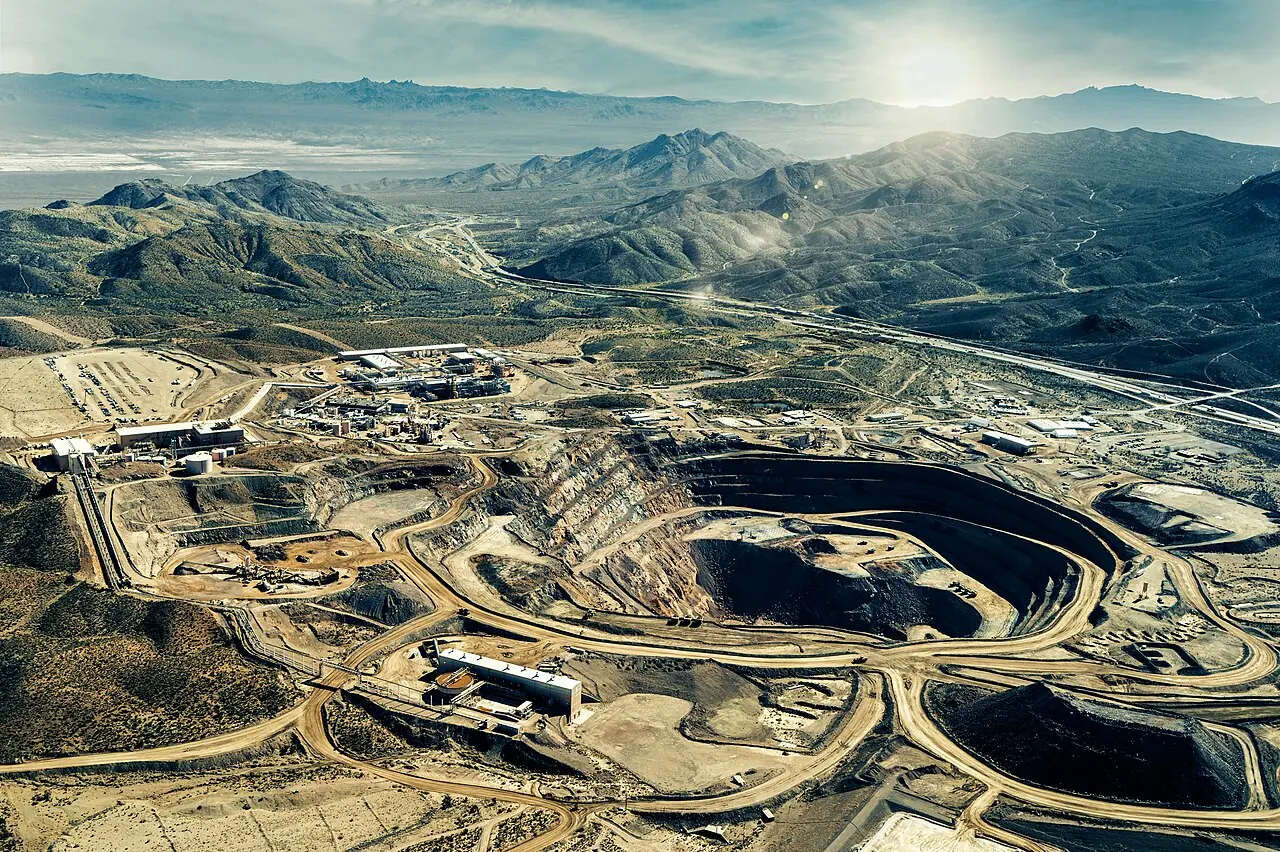
On September 4, Aclara Resources (TSX: ARA) announced that the Export-Import Bank of the United States had issued a Letter of Interest indicating willingness to consider up to US$750 million in financing for Project Dynamo, its planned rare earth separation, metals and alloys facility at the Port of Vinton, Louisiana. The repayment tenor runs up to 15 years, under EXIM’s Make More in America initiative [Aclara Resources via CNW, September 4, 2026].
The number that explains the announcement is not in the announcement. It is in the feasibility study Aclara filed five months earlier on its Brazilian mine.
What’s happening
- The letter is non-binding and subject to EXIM’s due diligence, underwriting and authorization. Aclara states plainly that it is not a final financing commitment and that there is no assurance the financing is approved [Aclara Resources via CNW, September 4, 2026].
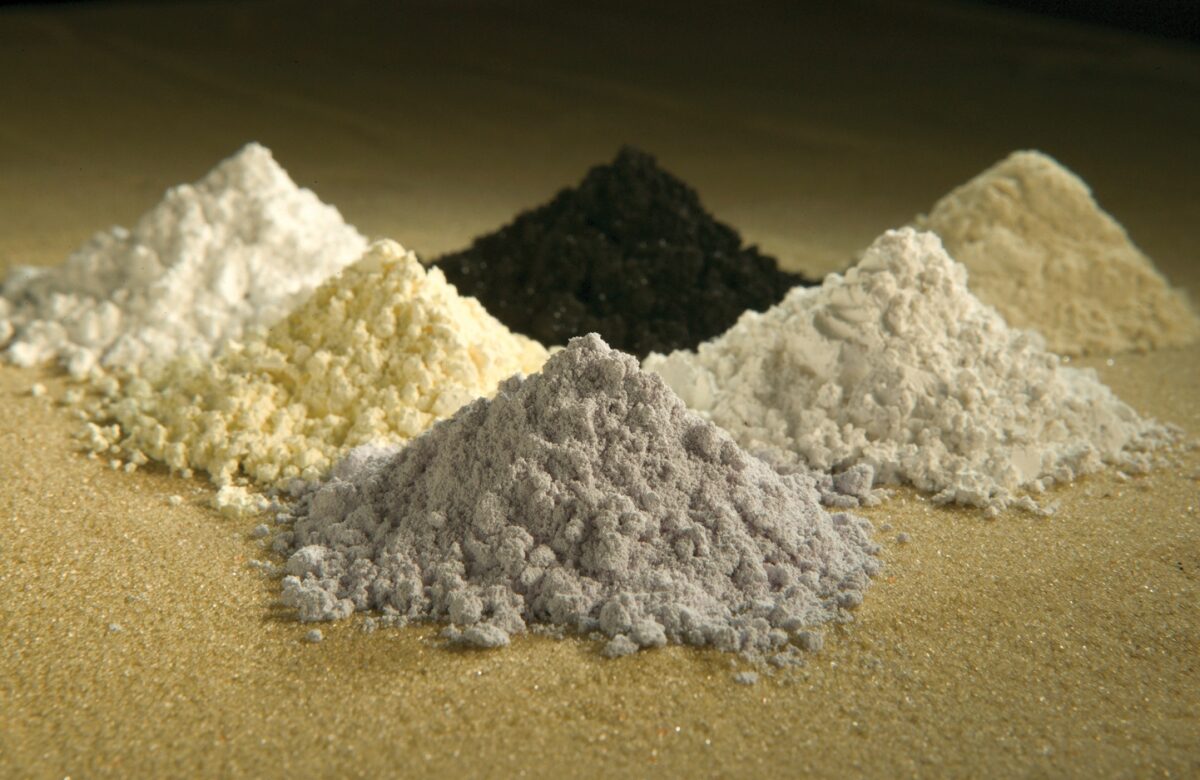
- Project Dynamo would separate Aclara’s Super Pure Rare Earth Carbonate into individual oxides including NdPr, dysprosium, terbium, samarium, gadolinium and yttrium, then convert them into magnet alloys. Hatch has the basic engineering, and the plant is expected to be construction-ready by end of 2026 [Aclara Resources via CNW, September 4, 2026].
- The feedstock is South American: Carina in Goiás, Brazil is the flagship, with the Penco Module in Chile’s Biobío region behind it and further concessions in Brazil, Chile and Peru [Aclara Resources via CNW, September 4, 2026].
- Carina’s feasibility study, filed April 13, 2026 with an effective date of March 20, applies an average annual commercial discount of US$314.4 million, equal to 34 percent of annual gross revenue, for full separation of its mixed rare earth concentrate. Aclara’s stated plan is to pay that fee to its own Louisiana project, whose NPV is excluded from the Carina study [Aclara Resources FS release, April 13, 2026].
- Carina itself: 18-year mine life, average annual output of 4,378 tonnes of rare earth oxides including 156 tonnes of dysprosium and 27 tonnes of terbium, average annual net revenue of US$599 million, after-tax NPV of US$1.661 billion at 8 percent, total construction capex of US$780.9 million [Aclara Resources FS release, April 13, 2026].
The fee is the architecture
Set the two documents side by side. Carina expects average annual net revenue of US$599 million. The separation fee it is designed to pay is US$314.4 million a year. On desk arithmetic that fee is roughly 52 percent of Carina’s average annual net revenue, and it is an intercompany payment from a Brazilian mine to an American plant inside the same corporate group.
This is not a criticism of Aclara, which has been transparent about the structure and deliberately excluded the Louisiana NPV from the Brazilian study so the two read separately. It is an observation about where value sits. The mine is in Goiás. The margin on separation, metals and alloys is booked in Louisiana. And the public capital now offered against that margin is American export credit, extended under a program whose stated purpose is US manufacturing, US supply chains and US jobs through projects with an export nexus [Aclara Resources via CNW, September 4, 2026].
Brazil angle
Brazil supplies the reserves, and they are real. Carina is, on Aclara’s account, the first ionic clay project anywhere to declare mineral reserves under NI 43-101, supported by 30,384 metres of drilling across 1,990 drillholes and a third pilot campaign run at semi-industrial scale in Goiânia. Early works start in Q3 2026, construction in Q1 2027, commissioning in H1 2028, initial production in H2 2028 [Aclara Resources FS release, April 13, 2026].
What Brazil does not get is the separation step. Across that same window, the capacity that captures 34 percent of gross revenue is being engineered, permitted and, if EXIM proceeds, financed in Louisiana.
US angle
EXIM is doing something more precise than writing a cheque. Make More in America conditions support on domestic production with an export nexus, so the instrument itself pins the processing to US soil. A Brazilian mine cannot draw on it. A Louisiana plant fed by Brazilian carbonate can. Nothing in it requires a Brazilian counterpart, approval or negotiation. There is earlier US public money in the stack too: the Development Finance Corporation committed up to US$5 million toward Carina’s feasibility study and holds a preferential option to invest further [Aclara Resources FS release, April 13, 2026].
China angle
The reason any of this pencils is the price gap China’s export controls opened. The Carina study, citing Argus Media, records that at end-March 2026 European dysprosium was US$1,000 to US$1,200 per kilogram against roughly US$200 in China, terbium US$3,800 to US$4,200 against US$1,145, and yttrium US$800 to US$975, close to a hundred times Chinese domestic levels [Aclara Resources FS release, April 13, 2026, citing Argus Media].
Aclara’s own risk disclosure is the honest counterweight: the European forecast assumes an ex-China supply chain that is not yet fully developed, and Beijing could intervene to lower prices materially. A footnote to the same study records that China agreed with the United States to remove export restrictions on all rare earths for one year, until November 2026. For scale, the study puts Carina’s future dysprosium and terbium output at roughly 11.8 percent of China’s 2024 estimated production of those two elements, derived from MIIT quotas [Aclara Resources FS release, April 13, 2026].
What it means
There is a gap between the two pitches. The financing pitch is an AI pitch: CEO Ramón Barúa’s September 4 statement names the AI economy and data center expansion driving demand for reliable power generation, alongside electromobility and robotics [Aclara Resources via CNW, September 4, 2026]. The pricing deck underneath Carina is not an AI deck. The Argus outlook reproduced in the feasibility study attributes magnet demand growth to vehicle electrification and renewables, then to industrial robotics and drones, without leaning on data centers [Aclara Resources FS release, April 13, 2026].
Both can be true at once. But a revenue case resting on a European price index that assumes a durable ex-China chain, and a financing case resting on AI demand, are two different assumptions and should be stress-tested separately.
On the tape underneath all of this: as of the September 5 index update, TAI reads 107.5, down 0.83, with TAI-M at 106.2, down 1.67, and TAI-P at 111.3, up 1.64. SOV50 reads 119.3, SDX 102.6. A non-binding letter of interest is a financing signal rather than a supply signal, and nothing here should be expected to move a materials index.
What to watch
- Whether EXIM converts. The tell is an application moving to authorization, not the letter. Aclara’s end-of-2026 construction-ready date is the natural checkpoint.
- November 2026. The one-year removal of Chinese rare earth export restrictions cited in Aclara’s study expires. If restrictions return, the European premium underwriting Carina’s NPV holds. If not, the decoupling assumption gets tested in public.
- Carina’s Installation License, targeted Q1 2027. Brazilian permitting, not American financing, is what gates first production in H2 2028.