Brazil broke ground on a gigawatt-class AI campus this week. Its transformers were ordered in March.
Terranova started construction on Campus Campinas with a 300 MW substation and headroom to 1 GW. The Siemens Energy contract behind it was signed on 15 March, and the hardware is being built in Jundiaí and in China.

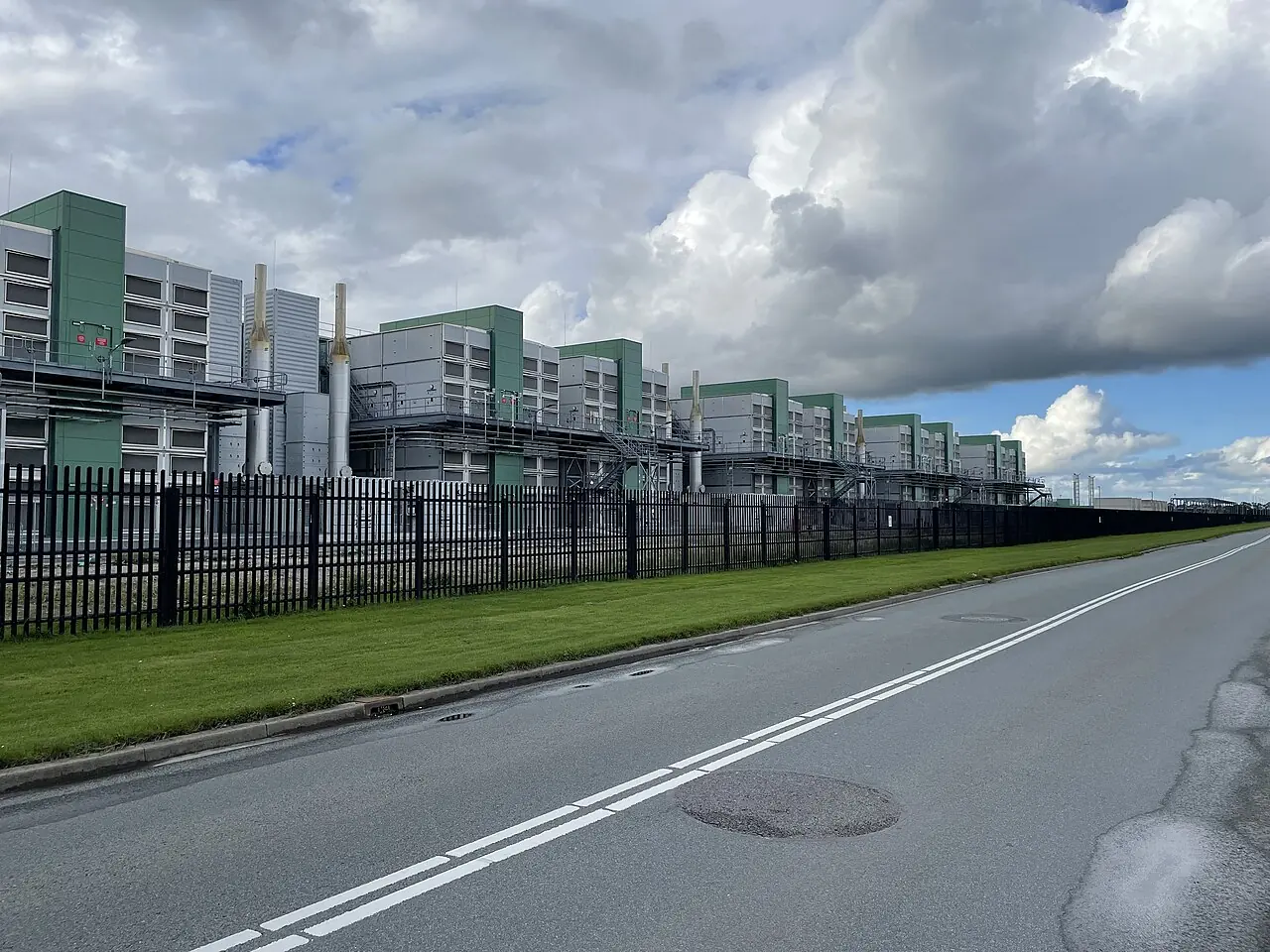
Terranova, the Latin American data center platform launched by global investment manager Actis, started work this week on the first phase of Campus Campinas, outside São Paulo. The substation carries an initial capacity of 300 MW, scheduled to energize in December 2027, with room to expand to 1 GW [DataCenterDynamics, 22 August 2026].
The megawatt figure is not the interesting number. The interesting number is the date on the equipment order.
What’s happening
- Phase one construction will exceed US$500 million, or 2.6 billion reais, with additional funding staged through 2029. The site covers roughly 944,000 square metres, of which about 115,000 will be built area, and uses closed-loop liquid cooling [DataCenterDynamics, 22 August 2026].
- The power hardware was contracted five months before the groundbreaking. On 15 March 2026, Siemens Energy signed a contract worth more than 100 million reais with Terranova to develop the electrical infrastructure of its future Campinas campuses: one gas-insulated switchgear substation rated at 300 MW, plus two transformers of 440/34.5 kV and 150 MVA each, manufactured at Siemens Energy’s Jundiaí plant in São Paulo state and in China. Delivery is scheduled for 2027 [CNN Brasil, 15 March 2026].
- Grid access was locked in parallel with the hardware. Terranova’s chief executive at the time, José Eduardo Quintella, told CNN Brasil the contract was signed alongside approval of electricity network access, securing connection conditions to Brazil’s National Interconnected System. He also named the constraint: in the poles holding Brazil’s main data processing loads, including Barueri, Campinas and Vinhedo, “the system does not support an additional investment in transmission line” [CNN Brasil, 15 March 2026]. By August, Actis managing director Mauricio Giusti was serving as interim CEO [DataCenterDynamics, 22 August 2026].
- Two items remain open: the long-term power purchase agreements, with Actis investee Serena named as one option under consideration, and the anchor customers, undisclosed as of March [CNN Brasil, 15 March 2026] and unnamed in the August announcement [DataCenterDynamics, 22 August 2026].
- Desk arithmetic: two units at 150 MVA sum to 300 MVA, nominally in line with the 300 MW initial rating, leaving no spare transformer on site once the substation runs at that rating.
Brazil angle
Brazil has spent two years being described as a spillover destination for load that could not get interconnected in Texas or Virginia. Campus Campinas is a different object: a named site, a signed substation, an approved connection, and a construction start. Actis launched Terranova late last year with plans to deploy US$1.5 billion over three years across Brazil, Mexico and Chile [DataCenterDynamics, 22 August 2026].
What makes it work is sequencing rather than scale. Quintella’s own diagnosis is that the São Paulo transmission system in these corridors cannot absorb another transmission-line investment, which means the scarce asset is not land or tax treatment but a delivered, energized connection. Terranova bought one, before breaking ground.
Quintella pointed to Redata, the special regime created by the government to encourage data center installation in Brazil through tax benefits, as a possible accelerator of customer demand [CNN Brasil, 15 March 2026]. Tax relief does not shorten a transformer lead time.
US angle
The competition for Jundiaí’s output is American. Marcela Souza, Siemens Energy’s senior vice president for Latin America, told CNN Brasil that equipment procurement is one of the critical demands of a project this size, given high global demand pulled mainly by the United States. Her words: exports to the American market have grown a great deal, and “80 percent of the factories have production going there, something never seen before,” driven by AI growth and the need for transmission lines [CNN Brasil, 15 March 2026]. A Brazilian campus is bidding for capacity from a Brazilian plant against US buyers, and the answer was to split the order between Jundiaí and China.
Meanwhile the US is repricing grid access for the same load. In a decision reported on 21 August, the Tennessee Valley Authority board removed data centers from its manufacturing service rate class, raising their power charges by approximately 10 percent, and imposed upfront capacity commitment charges of about US$1.5 million per megawatt on new developments, paid over three to five years. TVA’s integrated resource plan puts the additional generation its service area needs at 11 to 32 GW [DataCenterDynamics, 21 August 2026]. Three days later, AEP Ohio was reported to have tapped five data center firms, Meta, Amazon, QTS, SoftBank Energy and Google, for US$18 million toward its Neighbor to Neighbor bill assistance program, the largest single commitment being Meta’s US$2 million a year for five years [DataCenterDynamics, 24 August 2026].
Desk arithmetic, comparing unlike things deliberately: at the 5.2 reais to the dollar implied by the DCD figures, 100 million reais of substation and transformers across 300 MW is at least US$64,000 per megawatt of hardware. TVA’s new upfront capacity commitment charge is US$1.5 million per megawatt. The equipment is roughly four percent of what a US developer now posts to one utility for the right to connect. One is capex on steel and copper you own. The other is a charge for capacity someone else builds.
China angle
The Terranova transformer order is split between Jundiaí and China [CNN Brasil, 15 March 2026]. This desk has spent two years writing about Chinese capacity sitting upstream of Western buildouts, in gallium, germanium, rare earth magnets and graphite. Here it sits downstream as well, inside the finished electrical apparatus of a Brazilian AI campus, and not for policy reasons. It is there because a plant in Jundiaí is shipping the bulk of its output north.
What it means
Tantalum’s AI Materials Index (TAI) last read 108.8 as of 22 August 2026, up 2.74 percent week over week from 105.9 [Tantalum index file]. The materials story inside Campus Campinas is not exotic. Two 150 MVA power transformers and a gas-insulated substation are electrical steel and copper windings, sitting in the same global order book as every US campus. The transferable lesson for the Global South is procurement calendar discipline rather than capital. Phase one is at least US$1.67 million per megawatt of initial substation capacity by desk arithmetic, which is not a large cheque by hyperscaler standards. What it bought was a place in a queue that clears in 2027.
What to watch
- December 2027, substation energization. Siemens Energy scheduled delivery for 2027 and Terranova scheduled the substation online in December 2027. If the Jundiaí units slip while the Chinese units arrive, or the reverse, the split-sourcing decision gets graded in public.
- The PPA signature. No long-term power purchase agreement was signed as of March, with Serena named as one candidate. A signed PPA at Campinas would be the first hard price signal for what firm AI load costs in Brazil.
- The anchor tenant. No customer has been named, and Terranova’s own framing is that the buyer pool is narrow, mostly big techs and data processing firms. A hyperscaler name here would move Brazil from a build-and-hope market into a contracted one, and would push the next 700 MW of substation into the same transformer queue.