Brazil Drills a New Heavy Rare Earth District and Floats a Gallium Play
While the majors' deals grab headlines, Brazilian Rare Earths declared a 9 kilometre Monte Alto district and is spinning out a bauxite-gallium company, the raw inputs the AI buildout still sources through China.
The attention in Brazilian rare earths has gone to the deals: Washington’s $2.8 billion purchase of Serra Verde, Beijing naming the buyer, the whistleblower window that opened on July 1. This desk has covered each. The quieter story is what the country’s junior explorers are pulling out of the ground while those fights play out. On July 23 Brazilian Rare Earths declared a new heavy rare earth district, and on July 30 its bauxite-gallium spinout lists in Sydney. Both sit on inputs the AI buildout leans on, the magnets in data center drives and cooling, and the gallium behind the GaN chips in server power supplies, and both are still Brazilian owned.
What’s happening
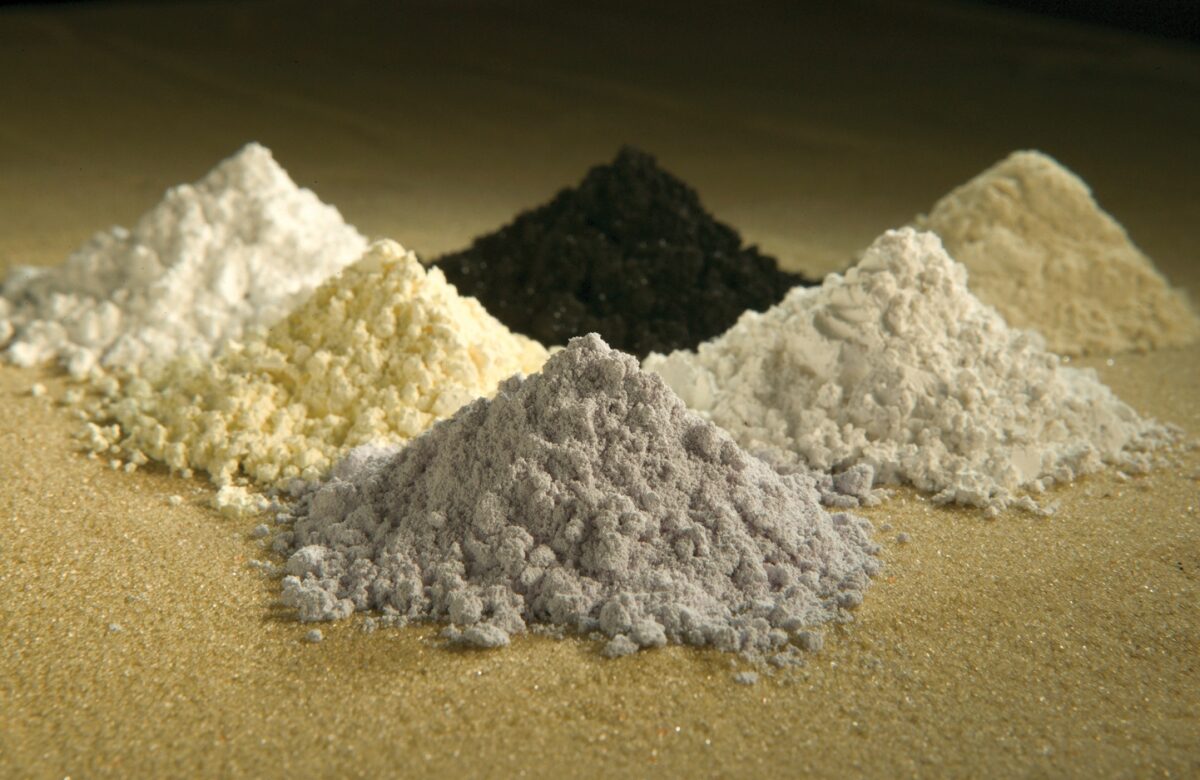
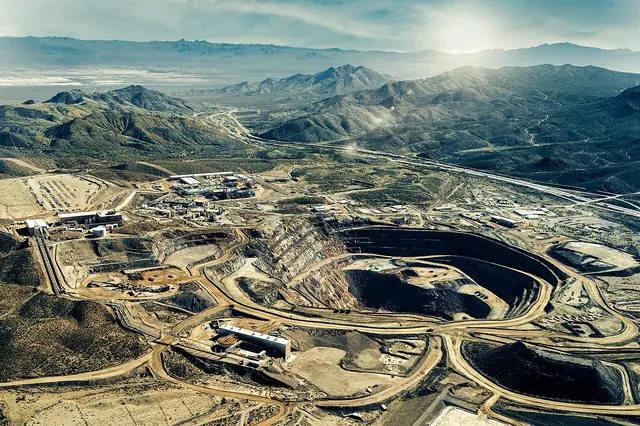
- Brazilian Rare Earths (ASX: BRE) said airborne geophysics and drilling defined more than 9 km of cumulative exploration corridors at its Velhinhas project, extending mineralisation over 8 km south of the Monte Alto Deposit. Reconnaissance diamond drilling returned 19.6% TREO, with 33,607 ppm NdPr, 1,463 ppm Dy2O3, 248 ppm Tb4O7, 7,431 ppm Y2O3 and 1,087 ppm U3O8. The company has folded its flagship deposit, a yttrium-rich discovery and the new corridor into one Monte Alto district [Brazilian Rare Earths, July 23, 2026].
- BRE spun its Amargosa bauxite-gallium project into Alurion Resources, approved by 99.94% of votes on July 10, raising A$50 million at A$1.05 per share. BRE keeps about 16%, worth roughly A$41 million. Alurion (ASX: ALU) is expected to list on July 30 and trade from August 3 [Brazilian Rare Earths, July 23, 2026].
- The market backdrop hardened underneath both. All 18 elements on SMM’s tracked basket rose in the July assessment, the first month in 2026 with zero declines. Dysprosium climbed 25.4% to $261.63 per kg, terbium 21.6% to $1,179.54, and NdPr alloy 21.4% to $133.02, all domestic China benchmarks excluding VAT [Rare Earth Mining, July 1, 2026].
Brazil angle
This is the part of the chain no acquisition has locked up yet. Yttrium makes up roughly 48 to 53% of total rare earth oxides across BRE’s main intervals, with one peak interval carrying about 58 kg of Y2O3 per tonne [Brazilian Rare Earths, July 23, 2026]. Heavy rare earths, dysprosium and terbium above all, are the elements China separates most exclusively and the ones that keep magnets stable at the temperatures inside motors and drives. A district that carries them in bedrock, in Brazil, is a different asset from a single mine already under foreign offtake.
The Amargosa spinout is the more novel piece. Gallium is recovered from bauxite and alumina refining, and China accounts for roughly 95% of it [Rare Earth Mining, July 1, 2026]. As this desk noted in June, Brazil refines bauxite at scale and recovers none of the gallium inside it. A listed vehicle with its own board and A$50 million of fresh capital does not close that gap, but it is the first time the Brazilian gallium option has had a market price attached to it. The material sits under the GaN power electronics moving into hyperscaler power supplies.
The wider pipeline keeps filling in. Viridis Mining and Minerals signed a non-binding letter this year to supply mixed rare earth carbonate to Belgium’s Solvay and plans a roughly $360 million plant producing 15,000 tonnes a year from 2028, after an EU commissioner toured its Pocos de Caldas site on June 20 [The Rio Times, June 23, 2026].
US and China angle
The contrast with the majors is the point. USA Rare Earth’s $2.8 billion Serra Verde deal, announced in April and expected to close this quarter, routes the only producing Brazilian mine into a 15-year US government-backed offtake [The Rio Times, April 20, 2026]. The BRE and Alurion assets are earlier and smaller, but they are floating on public markets rather than disappearing into a single buyer’s supply chain.
China’s hand is the established backdrop, not fresh news. The July price surge landed alongside the reporting mechanism Beijing opened on July 1 and the June additions of MP Materials and USA Rare Earth to its export control list [Morgan Lewis, July 1, 2026]. The two-track read still holds: Beijing suspended its ban on gallium and germanium exports to the US until November 27, 2026, even as it tightened enforcement everywhere else [Fastmarkets, November 11, 2025]. Owning the ore was never the hard part.
What it means
The desk’s Sovereignty 50 concentration indicator was last published at 118.9, up 14.6% for the year, the direction you expect when the market keeps repricing single-country supply risk [Tantalum indexes, as of May 22, 2026]. The Southern Diversification Index, by contrast, sat at 96.1, down 3.9%. The structural case for Brazilian, Andean and African supply, from Monte Alto to Chile’s SQM, Angola’s Pensana and Mozambique’s Syrah, is strengthening even as the equity basket tracking those producers lags. These are thematic indexes with editorial weights and no backtest yet, so read the divergence as a tension to watch, not a verdict. Brazil keeps announcing rock. The contest is still the separation, metallization and magnet steps that run through China.
What to watch
- Alurion Resources’ July 30 ASX debut and first trades on August 3, the first market read on a standalone Brazilian bauxite-gallium play [Brazilian Rare Earths, July 23, 2026].
- China’s MIIT second-half mining quota, unpublished at the start of July. A tighter quota would extend the price surge, a looser one would cap it [Rare Earth Mining, July 1, 2026].
- The Serra Verde close, expected this quarter and subject to Brazil’s antitrust review at CADE. A conditioned approval would signal Brasilia pushing back on raw-ore export models [The Rio Times, April 20, 2026].