Brazil has fewer than 50 people who can separate a rare earth. It needs 500 by 2040
The ANM said so on September 18, days after Lula sanctioned the critical minerals policy. China enrolls more than 500 students a year in rare earth degree programs across at least 11 institutions. The new law funds a research network and a PD&I levy. Neither compresses a training clock one former industry chief executive puts at three years per hire.

Days after Brazil sanctioned the law meant to move it up the critical minerals chain, its mining regulator published the number that explains why the law will run behind its own timetable. The country has fewer than 50 people trained to separate rare earth elements. Separation is the step China controls, and it is the one that cannot be bought, permitted or subsidised into existence on a policy calendar.
What’s happening
- The ANM said Brazil has fewer than 50 specialists with specific training in rare earth element separation, calling the scarcity of specialised professionals one of the main bottlenecks to advancing the country’s mineral production chains [Poder360, 18 September 2026].
- A study by the Centro de Gestão e Estudos Estratégicos puts the requirement at least 500 separation specialists by 2040 [CGEE, cited by Poder360, 18 September 2026].
- The statement followed the sanction of the Política Nacional de Minerais Críticos e Estratégicos, signed this week by President Luiz Inácio Lula da Silva. Brazil’s role in the international chain is today restricted to extraction and export [Poder360, 18 September 2026].
- The law obliges critical minerals companies to spend a minimum of 0.3% of gross operating revenue on research, development and innovation for six years, rising to 0.5% thereafter, and creates the RNMCE research and training network [Poder360, 18 September 2026].
- China operates more than 40 specialist rare earth laboratories and at least 11 universities and technical colleges enrolling more than 500 students a year in rare earths degree programs. Reuters could not identify a school outside China offering a specific undergraduate rare earths degree [Reuters via Mining Engineering, 1 June 2026].
The bottleneck is a person, not a plant
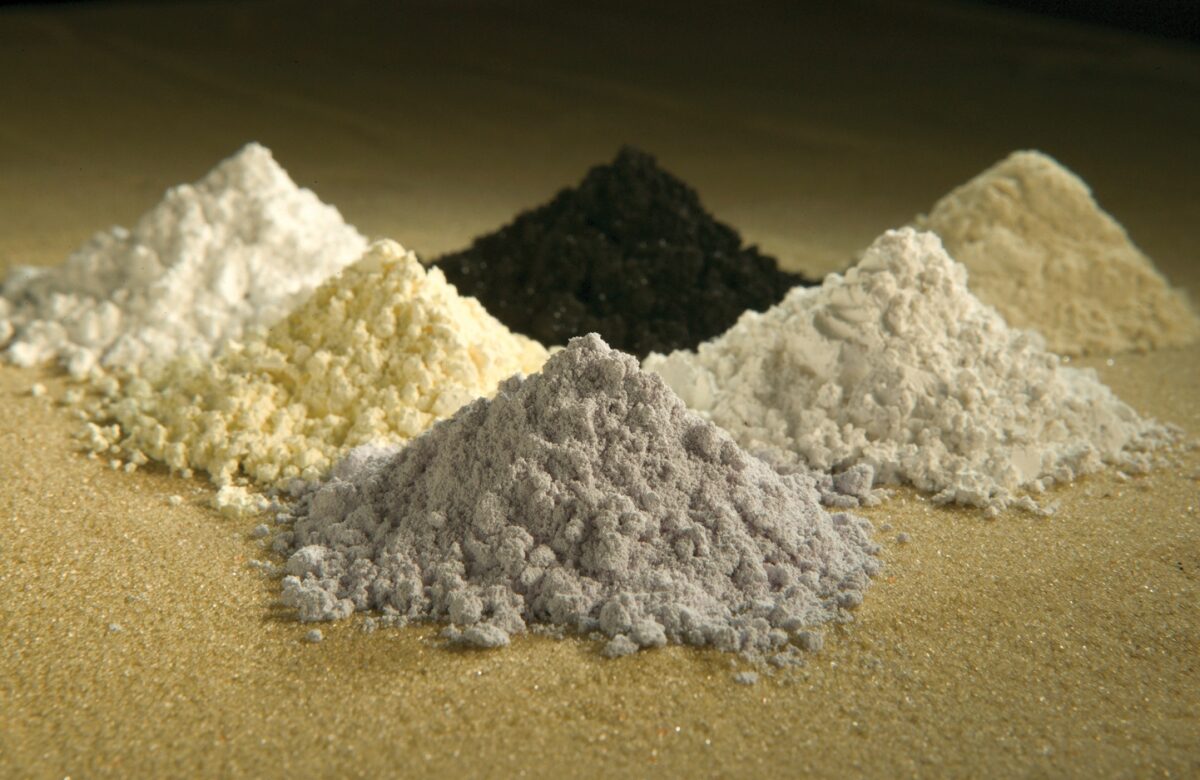
Separation pulls apart 17 chemically near-identical elements using an intricate sequence of acids, bases and other reagents. Getting neodymium and praseodymium out for motors means first stripping the more abundant lanthanum and cerium [Reuters via Mining Engineering, 1 June 2026]. It decides whether a country ships concentrate or sells oxide, and China produces over 90% of the world’s processed rare earths and magnets.
The skill does not transfer at the speed capital does. “In China, I used to hire kids right out of university and they’re immediately productive,” said Constantine Karayannopoulos, former chief executive of Neo Performance Materials and Molycorp. “Anywhere else I need to train them for three years” [Reuters via Mining Engineering, 1 June 2026]. On that figure a Brazilian student entering a separation track this year is not productive before 2029, and that assumes a program exists to enter.
Brazil’s gap is at least 450 people over 14 years, roughly 32 qualified specialists a year to 2040. That is desk arithmetic from the ANM and CGEE figures, not an official delivery path.
Brazil angle
The PD&I levy is the most interesting instrument in the law because it is not cash to the treasury. At 0.3% of gross operating revenue it is small, but it is compulsory, recurring and pointed at research rather than tonnage, which is the right shape for a human capital problem. The weakness is the base: a percentage of revenue from an industry that exports raw material funds research sized to raw material exports. The levy scales with the thing Brazil is trying to stop doing.
The RNMCE is the right instrument too, and it currently has no published enrollment target, no first cohort date and no named institutions. Set that against the Chinese specificity. Jiangxi University of Science and Technology told state media 70 students would enroll in its new rare earths degree, studying the chain from processing and metallurgy through to magnets, with company research projects before graduation [Reuters via Mining Engineering, 1 June 2026].
US angle
Washington has the same shortage and has started pricing it. On September 14 the Department of Energy’s Office of Critical Minerals and Energy Innovation launched the PROSPECT Planning Prize, up to $1 million per winner from a $16 million pool, part of a $100 million initiative whose near-term goal is to double US graduates holding mining, minerals and supply chain credentials. Applications close October 5, 2026 [US DOE via Mining Engineering, 14 September 2026]. Assistant Secretary Audrey Robertson said minerals professionals are essential to manufacturing, AI, energy and national security, “but this country isn’t producing enough of them.”
The base is thin. US institutions awarded just over 200 generalist undergraduate mining and metallurgical engineering degrees in 2023, the latest year with national figures, per Society for Mining, Metallurgy and Exploration data [Reuters via Mining Engineering, 1 June 2026].
Where the knowledge actually sits shows up in one line of an Aclara release. The company is demonstrating its proprietary solvent extraction separation technology at its Virginia Tech facility, while running a molten salt electrolysis cell in Chile, ahead of a commercial plant at the Port of Vinton, Louisiana designed to separate carbonate from its South American ionic clay deposits into NdPr, dysprosium, terbium, samarium, gadolinium and yttrium [Aclara Resources via CNW, 4 September 2026]. South American feedstock, American university, American plant. That release also names the demand driver directly, citing data center and AI infrastructure deployment as creating substantial new requirements for power generation materials.
On September 4 EXIM issued Aclara a Letter of Interest for up to US$750 million toward that facility, with a tenor up to 15 years under Make More in America. The release states the letter is non-binding and not a final financing commitment [Aclara Resources via CNW, 4 September 2026]. Against the $16 million workforce prize announced ten days later, the signalled plant financing is roughly 47 times larger. That is desk arithmetic comparing one non-binding letter to one prize pool, not total program spending on either side.
China angle
Beijing treats the pipeline as the asset and says so. Li Chaozhong, dean of JXUST’s rare earths program, told CCTV in April that rare earths are “core bargaining chips” and that the program exists “also to ensure that China continues to maintain its global leading position in the development of rare earth resources” [Reuters via Mining Engineering, 1 June 2026].
It is also closing the channel. China has increased restrictions on exports of rare earths technology and equipment and limited contact between industry professionals and foreigners, with some technicians ordered to surrender their passports, a crackdown that intensified after the April 2025 tariffs [Reuters via Mining Engineering, 1 June 2026]. A state that confiscates passports understands the technology walks out in people, not in crates.
One comparison needs care. Brazil’s 500 is a target for separation specialists specifically. China’s 500-plus is annual enrollment across rare earths degree programs generally, a broader category. The categories are not identical. The order of magnitude is the point.
Africa angle
The same constraint binds the other resource-rich bloc. Africa graduates large numbers of geoscientists, but significant gaps remain in geometallurgy, geodata science and predictive modelling, the advanced skills that convert deposits into processed output, according to Glen Nwaila and Grant Bybee of the University of the Witwatersrand [The Conversation via Wits University, 9 February 2026]. Their prescription is the one Brasilia has just legislated: targeted training, university and industry partnerships, and incentives for companies to transfer knowledge.
What it means
Every instrument aimed at breaking China’s separation monopoly is denominated in money, and the binding constraint is denominated in years. Brazil now has a law, a council, a research network and a compulsory levy pointed at a capability held by fewer than 50 people. The plants being financed offshore will be commissioned before any Brazilian cohort finishes training. That is the mechanism behind arrangements where South American material travels to a US plant to be separated. It is not only that the plant is there. It is that the people are there.
The Tantalum AI Materials Index sits at 100.8, down 2.33% on the week, with the materials sub-index TAI-M at 99.3 and the Southern Diversification Index at 97, down 4.06% [Tantalum indexes, updated 19 September 2026]. The diversification trade is being marked down in the same week Brazil published the reason diversification is slow.
What to watch
- RNMCE first cohort. Watch for a regulation naming participating institutions and an enrollment number. Until the network has a named first intake, 500 by 2040 has no delivery path. First PD&I compliance disclosures will show the real size of the research pool.
- PROSPECT results after October 5, 2026. Watch whether any winning proposal is specific to rare earth separation chemistry rather than generalist mining credentials.
- Aclara’s Virginia Tech demonstration. Watch for any training, secondment or technology transfer clause moving separation steps toward Brazil or Chile. That is the tell that the labor constraint has been priced into a contract rather than a policy document.