DOE listed twelve metals at five nuclear cleanup sites. Three are already leased to AI.
Washington wants private industry to haul copper, tungsten, platinum and vanadium off Cold War ground. It published no tonnages, and the smelters that would process the material are running under 70 percent outside China.

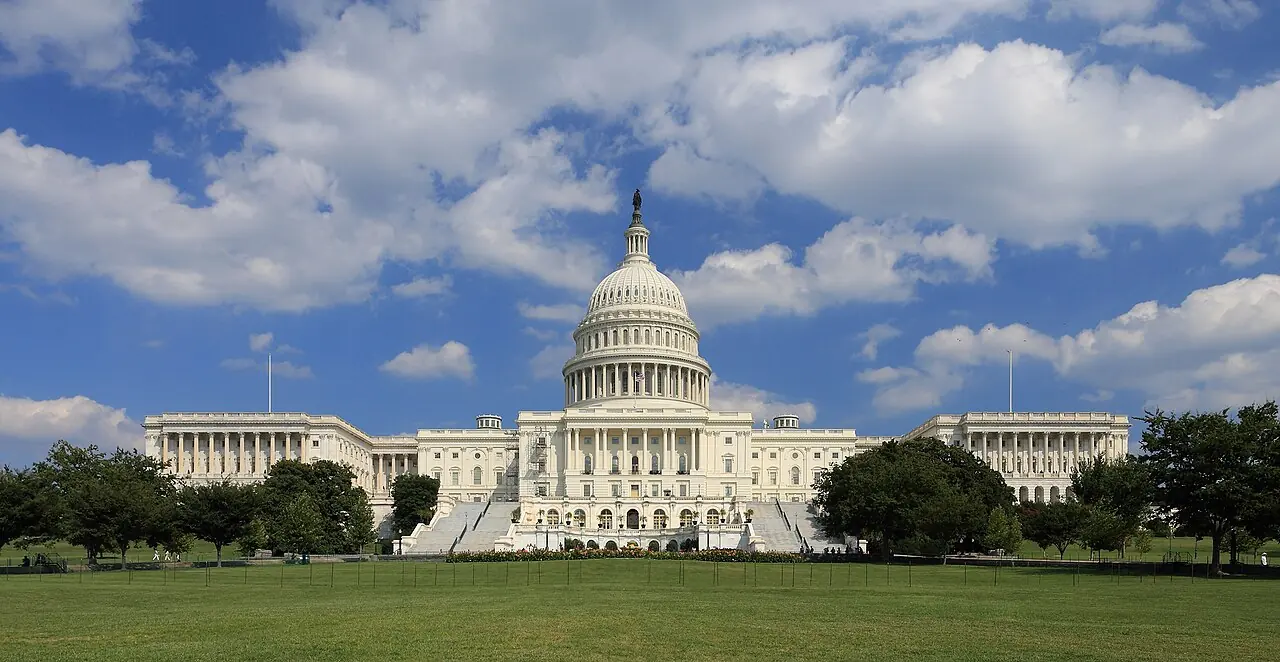
On Friday, September 18, the Department of Energy’s Office of Environmental Management (EM) released an expression of interest asking American industry what it would do with surplus critical minerals sitting at five nuclear cleanup sites [DOE Office of Environmental Management, September 18, 2026]. Twelve items are listed: aluminum, cesium-137, chloride, copper, fluorine, lead, lithium hydride, platinum, selenium, silver, tungsten and vanadium. The sites are Paducah in Kentucky, Portsmouth in Ohio, Oak Ridge in Tennessee, the Nevada National Security Site, and Moab in Utah.
Three of those five already sit inside the federal AI data center program. The office running the cleanup is also the landlord.
What’s happening
- EM published the EOI on September 18 and will host a virtual Industry Day on September 30. The release says the EOI package contains site-specific type, quantity and location data. No tonnages appear in the public announcement [DOE EM, September 18, 2026].
- “EM is transforming the legacy of America’s nuclear mission into opportunity,” said Rob Seifert, EM’s Infrastructure, Disposition and Regulatory Policy Director, who called the EOI “the first step in that conversation with the private sector” [DOE EM, September 18, 2026].
- Paducah and Oak Ridge were two of the first four federal sites DOE named in July 2025 for private AI data center development. On July 29, 2026 a Brookfield and NextEra coalition was selected at Paducah for a $100 billion privately funded campus with up to 4.6 GW of dedicated generation, up to 2 GW of gas and up to 2.6 GW of battery storage [POWER, July 29, 2026].
- Portsmouth carries the 10 GW PORTS Technology Campus, announced March 2026, pairing SoftBank subsidiary SB Energy with AEP Ohio, backed by 9.2 GW of new gas and $4.2 billion in SB Energy-funded 765-kV transmission upgrades [POWER, July 29, 2026].
United States
This is the cheapest-sounding supply in the Western inventory: above ground, already mined, already concentrated by decades of industrial process, no orebody risk, no permitting queue. The advantage is real.
The catch sits in one sentence of the release: respondents must provide their own equipment and expertise for any relocation or extraction. That transfers the entire recovery cost to the private sector, and recovery is where the West is thin. The IEA’s Global Critical Minerals Outlook 2026 makes the point structurally. Many strategic minor minerals are recovered as by-products of copper, zinc and lead processing, which makes base metal smelters the chokepoint rather than incidental infrastructure. The same report records benchmark copper smelter fees settled at zero dollars per tonne in 2026, the lowest ever agreed in annual negotiations, and smelter utilisation outside China below 70 percent by 2025 against roughly 85 percent inside China [IEA, Global Critical Minerals Outlook 2026].
Two line items also sit outside the metals conversation. Cesium-137 is a radioactive isotope and lithium hydride a reactive hydride. Whatever those become, they become it under a licensing regime rather than a scrap contract.
Brazil
Brazil has run a version of this play. INB’s Unit for Decommissioning of Caldas covers 1,360 hectares in the municipality of Caldas, southern Minas Gerais, cleaning up the former Osamu Utsumi uranium mine. As part of the decommissioning process, INB sold about 500 tonnes of scrap in 2022. Separately, the same unit stores Torta II drums, a residue from the chemical treatment of monazite, with a second remediation phase targeting 16,100 metal drums. Monazite was processed in São Paulo between the 1940s and the 1990s to make rare earth compounds [Nuclear Engineering International, September 26, 2023]. That is INB’s 2023 account and the desk has not verified its current status.
The structural point survives the date. Brazil holds a rare earth bearing legacy stock and treats it as waste to be remediated rather than feedstock to be recovered, while funding the other route. On September 8, 2026, BNDES approved R$77.5 million from BNDES Mais Inovação for Viridis Mineração’s Rare Earth Research and Processing Center at Poços de Caldas, the first stage of the Colossus project, to produce mixed rare earth carbonate at pilot scale and develop processing routes for local ionic clays. Viridis president Rafael Moreno told Reuters the company already had preliminary backing for nearly all of the US$314 million of debt the project needs, with final bank proposals expected by early October [Reuters, September 3, 2026].
Same geology, two philosophies. Washington is inventorying the pile. Brasília is financing the plant.
China
China is the recovery infrastructure, which is the part that does not appear in the EOI. The IEA puts China at over three-quarters of global battery pre-treatment capacity and 90 percent of material recovery capacity, and projects average recycling rates across key energy minerals rising from around 10 percent today to close to 20 percent by 2040 under current policy settings [IEA, Global Critical Minerals Outlook 2026]. That sets the ceiling. Secondary supply roughly doubles its contribution over fifteen years and stays a minority throughout, while the capacity to realise it sits in the jurisdiction that writes the export controls. The IEA also notes mineral tariff codes under Chinese export controls have tripled since 2023, and that recent controls target processing technologies and equipment, not only minerals. Salvage does not route around that. It runs into it.
What it means
Salvage is the cheapest-sounding supply and the slowest to arrive.
This is an inventory exercise, not a supply announcement. DOE says the quantities exist in the EOI package and published none of them. Until tonnages are public, anyone pricing this as incremental Western supply is pricing a press release.
The binding constraint is midstream, not material. Feedstock pushed into a recovery system the IEA describes as economically stressed outside China does not produce metal. It produces stockpiles.
The two uses of these sites also compete for the same acreage and the same calendar. Extraction crews and data center construction crews want the same ground at Paducah, Portsmouth and Oak Ridge, and DOE has not said publicly how it sequences them.
TAI stood at 100.8, SOV50 at 110.7 and SDX at 97 on the September 19 weekly recompute [Tantalum Strategy index data, September 19, 2026]. SDX is the relevant one: the diversification index sits below 100 and is not yet pricing salvage as diversification. On this evidence, it should not.
What to watch
- September 30, 2026. EM’s virtual Industry Day. Watch whether DOE releases quantities publicly or keeps them inside the EOI package. Public tonnages are the difference between a supply story and a filing.
- A named processor. Whether any respondent identifies a US smelter or refinery that would take this material. Absent a named destination, recovery stays theoretical however large the inventory proves to be.
- Early October, Brazil. Viridis’s final bank proposals on the US$314 million Colossus debt, per Reuters. The near-term test of whether Brazilian rare earth midstream can be financed on commercial terms while Washington is still counting its scrap.