Washington's Biggest Minerals Cheque Went Toward Not Needing the Minerals
The largest commitment on August 7 funded a silicon anode plant. The smallest of the Pentagon's three loans funded magnets with no rare earths. Substitution is a demand-side risk few Global South suppliers are pricing.

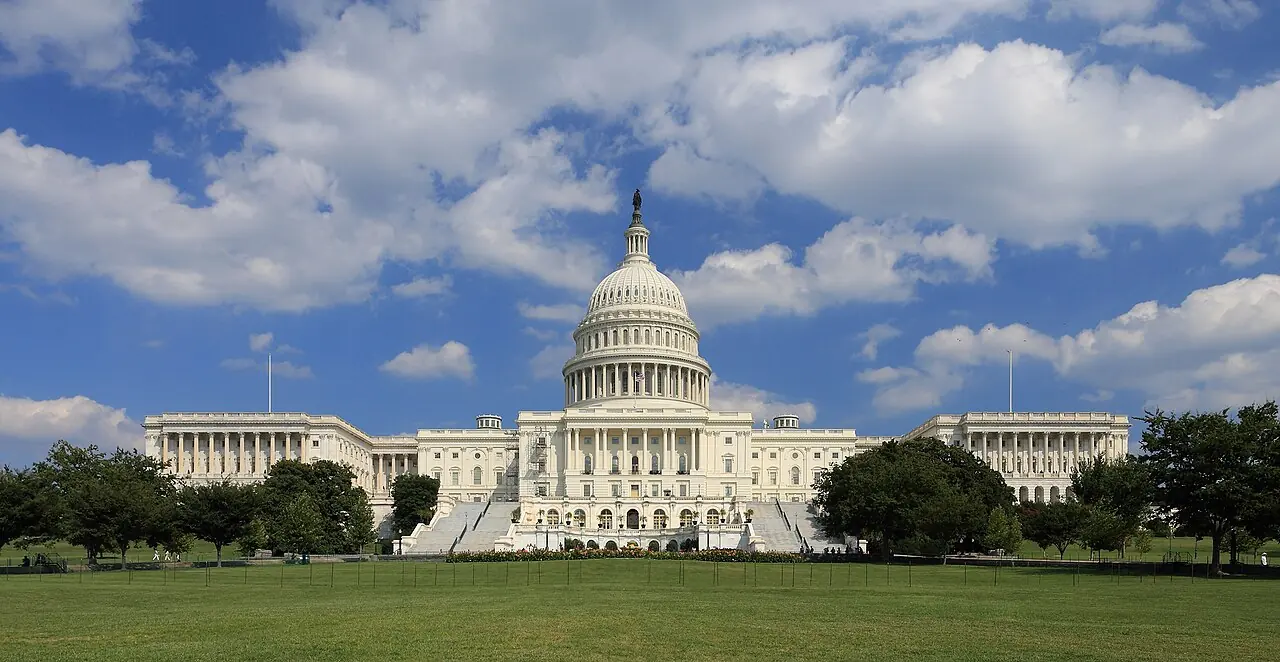
President Trump announced roughly $3 billion of critical minerals investment at a Department of State roundtable on Friday, August 7, and the coverage read it as a mining story [Bloomberg via MINING.COM, August 7, 2026]. Look at the largest cheque of the day, and then at the smallest of the Pentagon’s three loans. $1.4 billion to a silicon anode maker. $150 million to a company that makes permanent magnets without rare earths. Neither is a mine. Both are bets on needing less of what China controls, which is a different strategy from out-mining China, and the bill lands on suppliers rather than on Beijing.
What’s happening
- The Department of War’s Office of Strategic Capital announced a $150 million conditional loan commitment to Niron Magnetics on August 7. Niron “circumvents the concentrated and vulnerable rare earth supply chain by synthesizing magnets from domestically abundant commodity inputs, specifically iron and nitrogen” [Office of Strategic Capital, war.gov, August 7, 2026].
- Alongside private capital, that loan supports a $605 million plant in Sartell, Minnesota capable of up to 1,500 tons of rare earth free magnets a year. Niron’s prior two-year pilot with the Department of Energy’s ARPA-E ran at 1 to 2 tons per year [OSC, war.gov, August 7, 2026].
- Sila received a conditional commitment of up to $1.4 billion from the same office, for silicon-carbon anode capacity at Moses Lake, Washington and a lithium-ion cell plant. It follows a $300 million equity round led by Sutter Hill Ventures and Atreides Management [Sila, July 21, 2026].
- Sila’s own framing of the problem: China controls over 90 percent of anode material processing and over 80 percent of global battery cell production. The company names AI data centers among the sectors the capacity is meant to serve [Sila, August 7, 2026].
- The rest of the package was conventional supply-side work. $400 million for Sunrise Energy Metals’ scandium production in Australia, more than $1 billion of prospective EXIM financing toward Ivanhoe Electric’s Santa Cruz copper project in Arizona, $25 million of EXIM financing for a graphite plant in Alabama, and over $180 million for mining education [Bloomberg via MINING.COM, August 7, 2026]. The Alabama item is Westwater Resources’ Kellyton graphite processing plant, a refining facility rather than a mine [Westwater Resources and EXIM, August 2026]. Ranked by size, Niron’s $150 million was the day’s fourth-largest project commitment, and the smallest of OSC’s three loans. That is the point. The cheapest project line in the package is the one that changes the demand curve.
- OSC has committed over $8.4 billion in debt financing in FY 2026 and says it has mobilized over $17.8 billion in total public and private capital [OSC, war.gov, August 7, 2026].
The scale-up is the whole question
Niron’s pilot made 1 to 2 tons a year. The Sartell plant is designed for up to 1,500. That ratio is the entire investment case and the entire risk. Pilot-to-plant jumps of that order fail on yield, coercivity at temperature, and cost per kilogram rather than on chemistry.
The release asserts Niron’s magnets deliver “similar, and in some cases superior, performance and physical properties compared to rare earth magnets,” but publishes no specifications behind that claim, and the desk has not seen independent characterization at commercial scale [OSC, war.gov, August 7, 2026]. Treat 1,500 tons as a design figure until a customer qualifies it. Keep the denominator in view too: 1,500 tons a year is on the order of 1 percent of global rare earth permanent magnet output, which industry estimates place somewhere between roughly 100,000 and 250,000 tonnes a year depending on definition. This is a wedge, not a displacement.
Same discipline on Sila. The Moses Lake plant began operations in September 2025 [Sila, September 2025], and the company must still satisfy financial, legal and technical conditions before definitive documents [Sila, August 7, 2026]. A conditional commitment is a ceiling on available debt, not revenue.
Brazil angle
Brasília should read this one twice, because it cuts against the Brazilian pitch rather than for it. Brazil’s case is a supply case: rare earth districts, graphite, diversification through the Global South. Every instrument built on it, from BNDES vehicles to Serra Verde offtake, assumes the demand curve keeps rising and only the source changes.
Substitution attacks the demand curve instead. If iron nitride magnets qualify in commercial motors, the addressable market for neodymium shrinks at the margin. If silicon-carbon anodes take share, graphite demand per cell falls. Neither moves the demand curve this decade, even though the Sartell plant is scheduled to be operational in 2027 [Niron via MINING.COM, August 2026]. The exposure is longer-dated and it is real, and here the desk will state its position precisely rather than overclaim: we have yet to see a Brazilian critical minerals financing document that discloses a technological-substitution sensitivity. If one exists, we would like to see it. Pricing geology and politics carefully while pricing substitution at zero is a choice, and it is cheap to correct in a sensitivity table.
US angle
Read the capital allocation as a statement of belief. Washington has spent more than a year buying into the mine-to-magnet chain, including a $400 million preferred equity investment in MP Materials in July 2025 [Bloomberg via MINING.COM, August 7, 2026]. On August 7 the largest single cheque of the day went to a company whose product makes part of that chain less necessary. Those are not contradictory bets, they are a hedge, and a hedge is what you build when you are not confident the first bet closes the gap in time.
In fairness to the administration’s own reasoning, the stated rationale that day leaned on replenishing munitions stockpiles drawn down in the Iran war, and the dominant theme was workforce, with the education money aimed at expanding the pipeline of US mining graduates [contemporaneous reporting of the August 7 roundtable]. That is a supply-side and human-capital argument, not a substitution argument. The substitution reading is ours. It comes from the allocation, not from the podium.
One distinction is worth keeping straight. The AI data center link is explicit in Sila’s release and absent from Niron’s, which frames magnets through electrification, robotics and defense modernization [OSC, war.gov, August 7, 2026]. The magnet-to-AI read is the desk’s, not the government’s.
China angle
Substitution is one of the few levers that lowers a concentration score without opening a mine, recycling and thrifting being the others, and it is the most structural of them because it shrinks the denominator instead of adding to the numerator. SOV50 carries rare earths at an HHI of 0.52 and anode graphite at 0.51, on USGS 2025 production data [Tantalum Strategy indexes, published values]. Nothing announced on August 7 changes either number this year.
The counterweight is that China is not standing still on substitution either. On June 18, Sila, with co-complainant Georgia Tech Research Corporation, filed an ITC Section 337 complaint and a parallel federal district court action against Chinese silicon anode firms including Carbon One New Energy and Zhejiang Lichen New Material Technology [Sila, June 18, 2026]. Read that as the tell. The West is not racing China to a substitute only the West has. It is racing China to a substitute China is also building, which is a narrower lead than the announcement language suggests.
What to watch
- Whether either conditional commitment reaches definitive documents. Both releases specify unsatisfied financial, legal and technical conditions, and OSC can still modify or withdraw.
- A named commercial qualification for Niron’s magnet, ideally a motor customer publishing a temperature and coercivity spec. Absent that, 1,500 tons stays a design number.
- Whether Brazilian financing starts carrying substitution sensitivities. Watch the next BNDES critical minerals disbursement and Serra Verde offtake language for a volume-risk clause.
- The September Xi visit to Washington. The desk reads this package as timed against it. No official has said so.