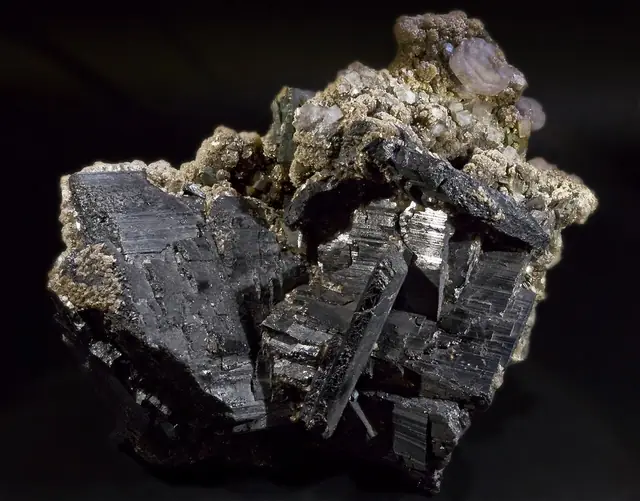
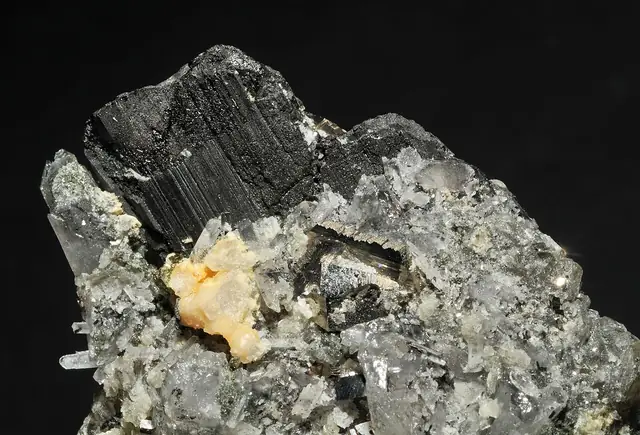
Tungsten's Next Chokepoint Is a Gas, and Two Japanese Plants Just Left
The desk tracked tungsten as scrap and as Kazakh ore. The purity chain ends in WF6, the gas that plates AI chip wiring, and its high purity supply is now walking out the door.

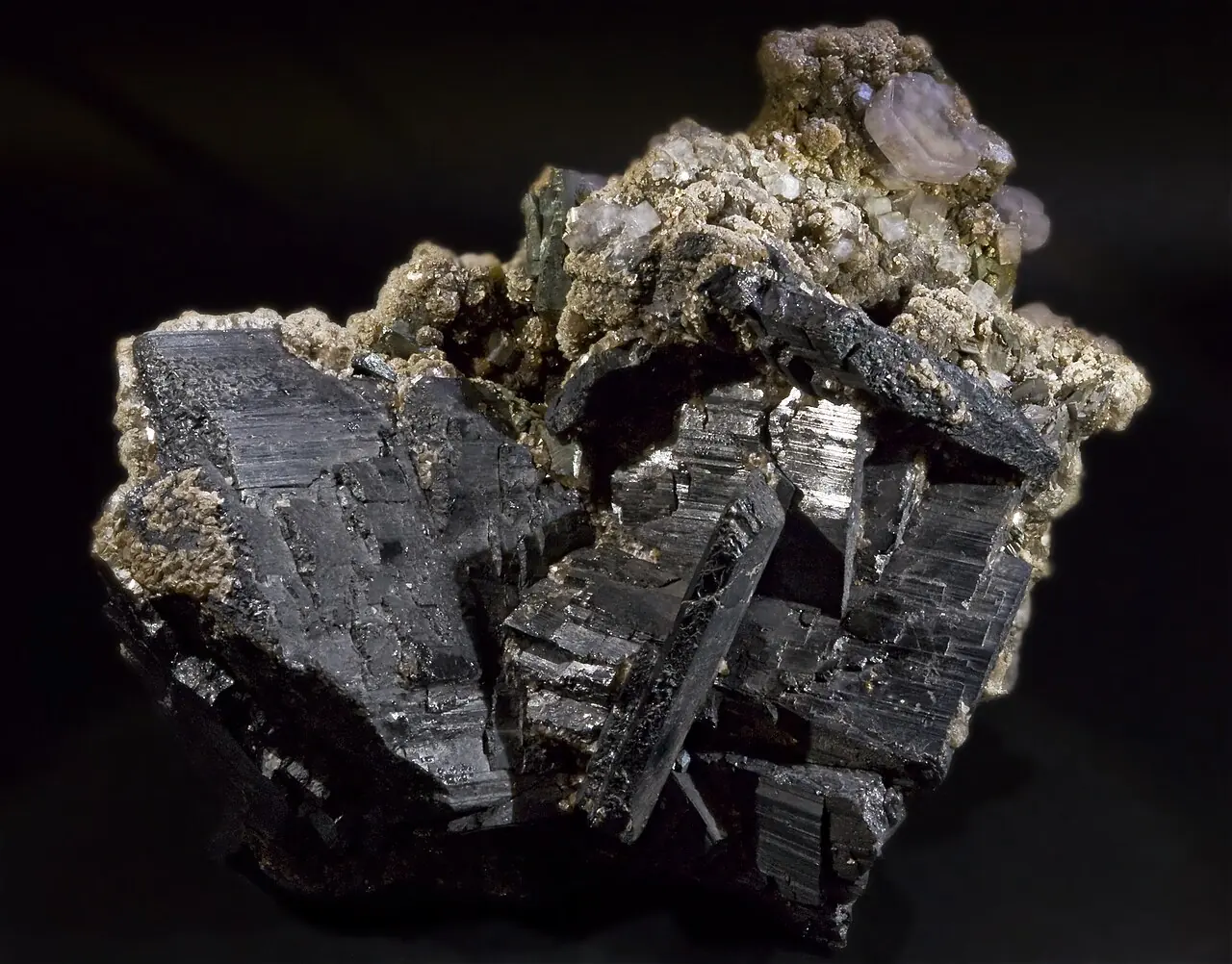
Tantalum has tracked tungsten twice this cycle: as scrap being bid out of US yards ahead of a 2027 defense ban (June 9), and as Kazakh ore drawing $1.6 billion of US government financing at Astana while Brazil sent nobody (June 13). Follow the metal up the purity chain and it ends in tungsten hexafluoride, WF6, the gas that deposits the tungsten wiring inside memory and logic chips. That top node is now the tightest. In April 2026 WF6 reached $149.79 per kilogram, up 203.83 percent month on month and 28.33 percent year on year, per China’s General Administration of Customs data cited by TrendForce. Two Japanese suppliers that anchored high purity output are exiting.
The AI read is direct. Advanced accelerators and the high density memory stacked beside them (3D NAND, DRAM, HBM) all use tungsten films to carry signal inside the die. More AI silicon means more deposition cycles, and each cycle consumes WF6. The ore and scrap stories were about where tungsten units come from. This one is about the last conversion step before the wafer, and it is the step with the least redundancy.
What’s happening
- WF6 hit $149.79 per kilogram in April 2026, up 203.83 percent month on month, per China customs data cited by TrendForce (2026-06-12). China’s 5N grade is quoted at RMB 1,670 to 1,810 per kilogram, up 232.7 percent year on year.
- Japan’s Kanto Denka Kogyo and Central Glass warned Korean chipmakers including Samsung and DB HiTek in April 2026 of supply disruption, then moved to permanently halt WF6 production from July 2026 (ChemNet via TrendForce).
- The two account for roughly 2,000 to 2,200 tonnes of the estimated 8,000 to 9,000 tonnes of annual global WF6 output, concentrated in the 6N and higher grades advanced nodes need (chinastarmarket.cn via TrendForce, 2026-06-12).
- The trigger is upstream: tungsten powder is 60 to 70 percent of WF6 production cost, and China’s export controls have choked powder flows to Japan (ChemNet via TrendForce).
- Korean producers SK Specialty and Foosung notified customers of 70 to 90 percent price increases for 2026 contracts (TrendForce, 2026-06-12).
WF6 is a chemical vapor deposition precursor. Under heat it reacts with hydrogen to lay tungsten films that form the interconnects, contacts, and vias inside a chip. It matters most where structures are dense and vertical: a 200 layer 3D NAND design runs on the order of 200 deposition cycles, so a supply gap flows straight into memory and advanced logic output (The Elec via TrendForce, 2026-06-12).
China angle
China’s December 2024 export restrictions on tungsten, gallium, and germanium, which named the United States for the first time, are the root cause of the Japanese exit (NAI 500, 2026-07-02). China is also the fallback: domestic WF6 capacity has reached roughly 4,500 tonnes per year, close to half of global supply, led by CSSC Sci-Tech, which TrendForce reports has entered the supply chains of TSMC, Samsung, and SMIC. The same controls that created the shortage hand Chinese gas makers the share the Japanese are vacating. This is the APT refining chokepoint the desk flagged at Astana, moved one node higher into semiconductor grade gas.
US angle
Washington’s tungsten capital, recapped from the June 13 piece, targets ore and intermediate refining: the Cove Kaz Capital tungsten package in Kazakhstan, Defense Production Act grants to Guardian Metal Resources (Nevada) and Fireweed Metals (Yukon), and Defense Logistics Agency stockpiling (Fastmarkets, 2026-04-21). The newest datapoint fits the same shape. US listed Almonty Industries (Nasdaq: ALM) began feeding stockpiled ore at South Korea’s Sangdong mine in June 2026, its first saleable concentrate since the early 1990s, and expects Sangdong to eventually supply around 40 percent of tungsten demand outside China (NAI 500, 2026-07-02). Every one of these dollars buys mine or concentrate. None of them buys a WF6 plant. The gas layer where the AI chip chain actually binds has no announced US program behind it.
Brazil angle
Brazil is the same lesson from the other end. Currais Novos in Rio Grande do Norte holds estimated reserves of 4.31 million tonnes of ore at 0.1 percent tungsten (Wikipedia, citing Masan and BNamericas project data), a tailings reprocessing asset Largo Inc. operated until 2012. On 2026-05-27 Largo said it would evaluate strategic alternatives for Currais Novos and its Northern Dancer project in Yukon, citing elevated tungsten prices and unsolicited interest (Largo Inc. release). Even if Brazil put those units back into the market, the value and the chokepoint in this cycle sit downstream in high purity WF6, the same conversion gap that constrains Brazilian lithium and rare earths, and the same gap the desk described in the July 11 oxide piece.
Africa and Latin America angle
The diversification map already reaches south, but at the mine, not the gas. In Rwanda, Trinity Metals’ Nyakabingo mine received about $3.9 million in DFC technical assistance in 2024 and shipped its first tungsten concentrate to a US processor, Global Tungsten and Powders in Pennsylvania, in September 2025 (Fastmarkets, 2026-04-21). Those are concentrate flows. They diversify raw units, not the semiconductor grade gas the current shortage is actually about.
What it means
Tungsten is a Sovereignty 50 constituent, in the desk’s high concentration bucket at roughly 80 percent Chinese supply. (SOV50 is a thematic risk indicator, not a benchmark grade index, and carries no backtest yet, so read it as a concentration signal, not a price call.) The WF6 episode makes the signal concrete and moves it up the chain the desk has been climbing all cycle: ore, then scrap, then APT, now the gas. New WF6 capacity plus customer qualification typically runs 18 to 24 months, so the market is likely to stay tight into 2027 (TrendForce). The lesson repeats across materials: Western capital funds the mine, and the bottleneck keeps migrating to the conversion step nobody funded.
What to watch
- Whether Kanto Denka and Central Glass fully cease WF6 output as flagged for July 2026, and how fast Korean and Chinese suppliers absorb the roughly 2,000 tonnes of vacated high purity capacity. Watch Samsung and SK Hynix qualification notices through the second half of 2026.
- WF6 and 6N grade price prints into late 2026. A sustained hold above the April 2026 $149.79 per kilogram mark would confirm the shortage is structural rather than a pre halt spike.
- Any US or allied move to fund high purity WF6 conversion, not just mining and APT. To date the EXIM, DFC, and DPA dollars stop at ore and intermediate. The layer the AI chip chain feels is the gas, and closing it would take a different kind of award.