Astana wrote the next chapter of the AI minerals trade. Brazil sent nobody.
The U.S. brought Ex-Im, DFC, and 20-plus companies to the Astana Mining Congress this week. A 1.4 million tonne tungsten deal moves to feasibility in H2. Brazil's R$15 billion Sovereign Plan, designed for exactly this moment, was not represented at the table.
The U.S. arrived in Astana this week with a delegation built for execution. Assistant Secretary of Commerce David L. Fogel told the floor of the 16th Astana Mining and Metallurgy (AMM) Congress on June 11 that the United States was “moving from dialogue to action” on Central Asian critical minerals, with more than 20 U.S. companies and a cross-government team in country, per the Times of Central Asia. Sergio Gor, U.S. Special Envoy for South and Central Asian Affairs, had opened the C5+1 Critical Minerals Dialogue at the Ritz-Carlton in Astana the day before with a line that should be read literally: “There is no such thing as a deal too small.”
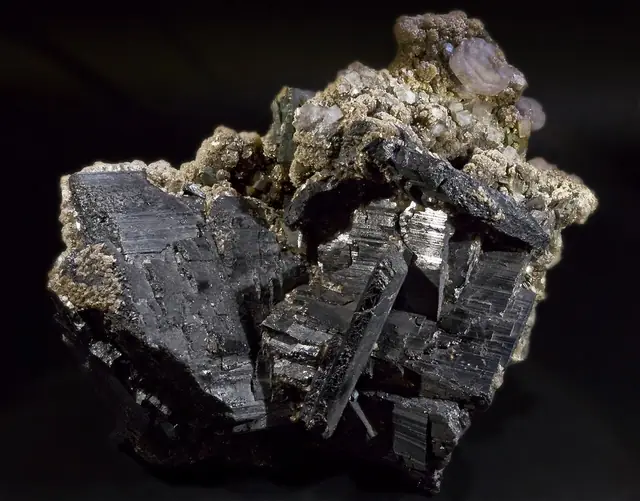
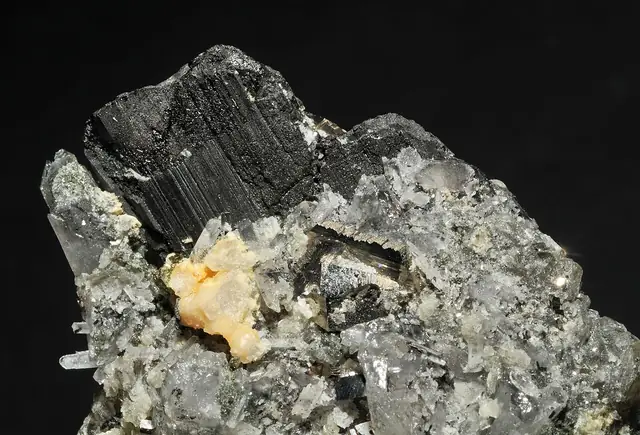
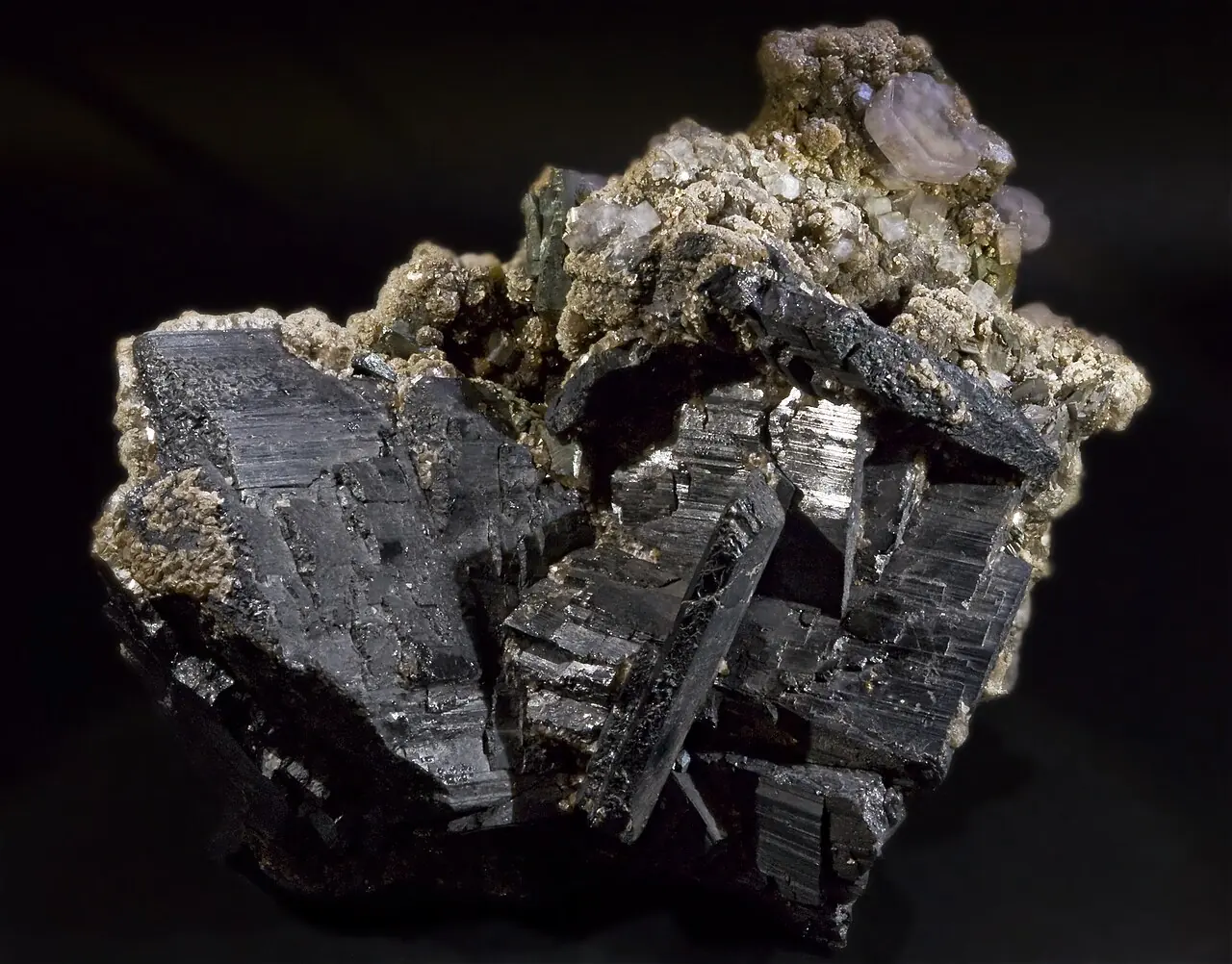
The deal already on the table is not small. Cove Kaz Capital Group, a U.S. portfolio company of Cove Capital, closed the financial purchase of a 70 percent controlling stake in Severniy Katpar LLP on April 29, 2026, with Tau-Ken Samruk National Mining Company holding the remaining 30 percent. Severniy Katpar carries the licenses for the Northern Katpar and Upper Kairakty tungsten deposits in the Karaganda Region, sitting less than 20 road miles apart. Feasibility work completed in April 2023 reports JORC compliant mineral resources of 1.4 million tonnes of tungsten trioxide, which Mining Technology and the company describe as approximately 70 percent of Kazakhstan’s estimated tungsten resource base. Planned annual output is 5,000 tonnes from Northern Katpar plus 7,000 tonnes from Upper Kairakty, a combined 12,000 tonnes per year that represents roughly 15 percent of current global tungsten production. Development cost is projected at about $1.1 billion. The Export-Import Bank of the United States has committed financing of up to $900 million; the U.S. International Development Finance Corporation has committed up to $700 million. The Cove Kaz definitive feasibility study is expected to begin in the second half of 2026 and is being scoped to include refining capacity inside Kazakhstan for ammonium paratungstate and other tungsten compounds. The joint venture was announced at the C5+1 Leaders’ Summit in November 2025 by Presidents Trump and Tokayev.
This is what the U.S. brought to Astana. The question worth asking, as the SDX trade keeps grinding sideways while SOV50 climbs on concentration premium, is what Brazil brought.
What’s happening
The 16th AMM Congress opened on June 11 with more than 1,500 participants from 16 countries. Prime Minister Olzhas Bektenov used the keynote to position Kazakhstan not as a raw-material supplier but as a processing hub, citing GDP growth of 6.5 percent in 2025, GDP exceeding $300 billion for the first time, and an announced state-funded geological exploration program of approximately $470 million for 2026 to 2028 that Bektenov described as comparable to the previous two decades of state exploration spending combined. He named more than $1 billion in cathode copper, ferrosilicon, ferroalloy and related downstream facilities commissioned over the past two years, a copper smelter project in the Abai Region valued at more than $1.5 billion, and a hydrometallurgical plant under construction in the Pavlodar Region designed to process up to 300,000 tonnes of gold-copper concentrate and produce up to 15 tonnes of gold per year.
On June 11, Kazakhstan and Saudi Arabia signed a memorandum of understanding on cooperation in rare earth metals, critical minerals, and the wider mining space, per the Times of Central Asia. The June 10 C5+1 Critical Minerals Dialogue, framed by Gor as the operational follow-on to the November 2025 White House meeting between Tokayev and Trump where Commerce Secretary Howard Lutnick and Kazakh Industry Minister Yersain Nagaspayev signed the bilateral critical minerals MOU, included sessions on geological exploration, surveying, mining and processing, and supply-chain integration.
The tungsten thesis sits inside a tightening market the desk has covered before. Chinese processing dominance in tungsten ore, powder, and ammonium paratungstate, plus tighter Chinese export licensing on intermediates since 2025, has rerated the upstream story. Tantalum Strategy covered the scrap-bid dynamic on June 9. The Cove Kaz pits offer a non-China primary source. The Cove Kaz scope to build APT refining inside Kazakhstan offers a non-China processing source. Whether the DFS confirms the refining commitment is the watch item.
Brazil
Brazil’s mineral story is stronger than Kazakhstan’s on most dimensions that mattered in Astana. Brazil owns roughly 90 percent of global niobium supply through CBMM, runs the world’s largest iron ore producer in Vale, has Sigma Lithium and Serra Verde in operation, and sits on rare earth deposits at Araxá, Catalão, and Pitinga. What Brazil did not send to the room where the United States, Saudi Arabia, China, Japan, South Korea, and the European Union met around a Kazakh-state table this week, on the published delegation lists, was a counterpart matching the U.S. team.
The instruments exist. The R$15 billion Sovereign Brazil Plan Credit Line that BNDES presented to IBRAM in May 2026, designed to finance new mine capital expenditure, processing equipment, and strategic sector development, was built for exactly this kind of moment. The R$1 billion Vale-BNDESPAR Critical Minerals FIP closed in 2024 has been deploying since early 2025. Neither instrument was visible in Astana arguing the case Bektenov was arguing on stage: come for the processing, the joint venture, the technology transfer, the 50-year asset life.
United States
The U.S. play in Astana reads as a parallel-track hedge against SOV50 concentration. The same Treasury, Commerce, Ex-Im and DFC firepower that has been pushing capital toward SDX geography through DPA Title III grants, Talon Metals-Rio Tinto on Tamarack, and IRA 30D battery sourcing rules is now actively building a Central Asia leg. Cove Kaz is structurally a Mountain Pass analog: a private U.S. vehicle, a friendly state co-investor, a 50-year asset life on a critical mineral, and an APT refining commitment that goes directly at the processing chokepoint. The difference is geography. Mountain Pass is FEOC-clean by definition. Cove Kaz is FEOC-clean by partner selection. The Karaganda Region is in Kazakhstan, not China, not Russia. The $900 million Ex-Im plus $700 million DFC commitment package is one of the larger named U.S. government financing postures into a Central Asian critical minerals asset to date.
China
Beijing is not absent from Central Asia. Tianqi and Ganfeng have pushed into adjacent lithium geographies, CMOC’s Kisanfu copper-cobalt Phase 2 expansion approved in October 2025 remains the dominant Chinese overseas mining play (Tantalum covered the cobalt-into-copper pivot on June 10), and Chinese partners have operated processing JVs inside Kazakhstan. What changed in June 2026 is that the U.S. arrived in formal delegation strength at AMM with a financing posture sized to compete on capital, not just diplomacy. The first U.S.-Kazakh tungsten asset is bilaterally announced, financed, and FEOC-eligible. That is a new posture, not a continuation of one.
What it means
The AI minerals trade is becoming a three-cornered competition: SOV50 (concentration risk, priced in), SDX (Brazil plus Lithium Triangle plus Africa as the diversification answer), and a Central Asian leg now drawing the U.S. government balance sheet. The SDX index has spent most of 2026 grinding sideways or down despite the rising concentration premium. Astana week shows part of why. Western capital is not waiting for Brazil. It is going to Kazakhstan because Kazakhstan showed up, asked for it, structured the JV around a 70-percent foreign control stake with a state minority partner, and welded the processing component into the deal. The desk’s read is that if the Sovereign Brazil Plan is to do the work the Plan was designed for, someone needs to translate R$15 billion into the language Cove Kaz is speaking: control stakes, multi-decade asset lives, downstream processing inside the country, and U.S. or allied bilateral financing wrapped into the structure.
What to watch
- Cove Kaz definitive feasibility study, expected to begin H2 2026. The DFS will set the firm capital number for Northern Katpar plus Upper Kairakty and will be a tradable comparison data point against Brazilian processing capex.
- The next BNDES disbursement schedule under the Sovereign Brazil Plan, expected to land over Q3 2026. If the first credit lines go to incremental upstream at existing Vale and CBMM facilities rather than new processing capex with a foreign control structure, the SDX trade stays stalled.
- C5+1 Critical Minerals Dialogue working-group output, due by year-end 2026. Whether the Astana posture produces a second bilateral asset (uranium, rare earths, copper smelter) inside calendar 2026 will determine whether Central Asia is on track to overtake SDX as the preferred AI-materials supplier outside China.