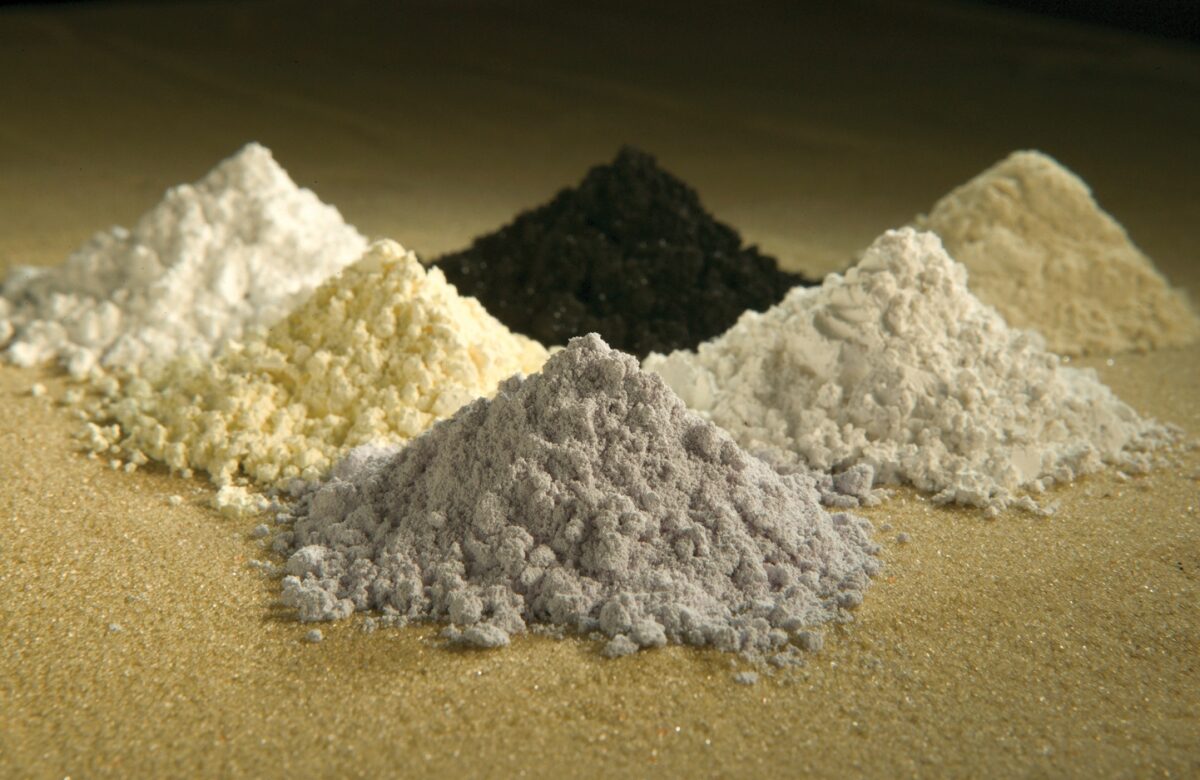
Tooele and Norra Kärr: heavy rare earth processing locks in around China's November clock
In the same week, the Pentagon picked Tooele Army Depot for U.S. dysprosium and terbium processing, and Sweden cleared Norra Kärr for a 25-year mining lease. The new ex-China heavy rare earth axis is taking shape, with a Brazil-shaped hole in it.

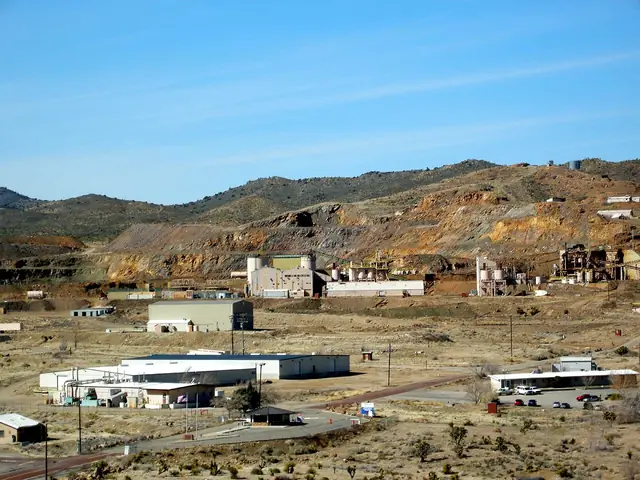
The ex-China heavy rare earth supply chain stopped being an aspiration this week. On June 25, the U.S. Army announced conditional Enhanced Use Leases for four critical mineral processing plants on military installations, including REalloys for dysprosium and terbium at Tooele Army Depot in Utah. On June 29, the Swedish government granted Leading Edge Materials a 25-year mining lease for the Norra Kärr heavy rare earth deposit in southern Sweden, ten years after a court revoked the prior concession. The two announcements landed against the same calendar driver: the April 2025 Chinese MOFCOM licenses on seven medium and heavy rare earths, including Dy and Tb, that remain in force, and the October 2025 broader controls that snap back from suspension on November 10, 2026.
What’s happening
- The U.S. Army granted conditional EULs on June 25 to REalloys (heavy rare earths, Tooele Army Depot, Utah), Empire State Mines / Titan Mining (graphite, Pine Bluff Arsenal Arkansas and Anniston Army Depot Alabama), EnergyX (lithium, Red River Army Depot, Texas) and Ioneer USA (boron, Tooele Army Depot, Utah). [U.S. Army, June 25 2026]
- Leases are structured under 10 U.S.C. § 2667. The Army stays the landlord; the lessees finance, build, operate and decommission. Rent is paid as in-kind infrastructure improvements on the host base. Construction targeted from 2027, Initial Operating Capability by 2028. [U.S. Army, June 25 2026]
- REalloys (Nasdaq: ALOY) priced a $100 million securities purchase agreement the same week the Tooele site was confirmed. Its allied feedstock pipeline includes a definitive 15-year offtake signed May 21, 2026 for 15% of Phase 1 production from Critical Metals’ Tanbreez heavy rare earth project in southern Greenland. [Northern Miner, June 26 2026; GlobeNewswire, May 21 2026]
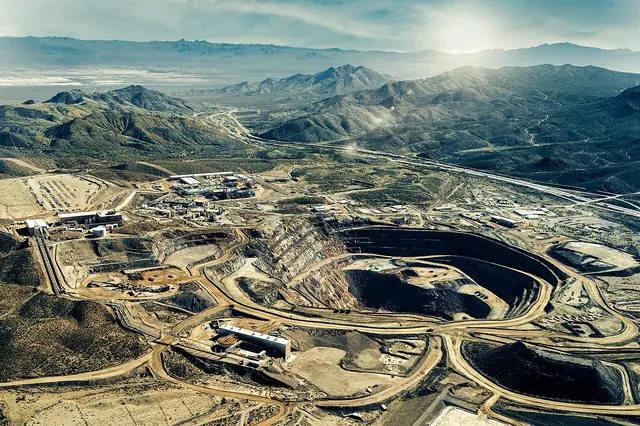
- Sweden granted Leading Edge Materials (TSXV: LEM) the 25-year mining lease for Norra Kärr on June 29 after the company reduced the project footprint by 65% to address environmental objections that had triggered the 2016 revocation. A 2021 PEA modeled a 26-year mine producing about 5,340 tonnes per year of mixed rare earth oxides from roughly 30% of an inferred 110 Mt resource grading 0.5% TREO. [Northern Miner, June 29 2026]
- The differentiator Leading Edge cites is the Dy+Tb to Nd+Pr ratio. Norra Kärr’s resource carries 2.5 to 1 light-to-heavy versus a peer-group average of 38.5 to 1, which is what makes the deposit interesting to magnet customers, not its tonnage. [Northern Miner, June 29 2026]
- Background: China’s April 4, 2025 MOFCOM controls require export licenses on samarium, gadolinium, terbium, dysprosium, lutetium, scandium and yttrium and remain active. The broader October 2025 controls, including the extraterritorial 50% rule, are suspended from October 30, 2025 through November 10, 2026. [Andersen Institute; Sourceability; White & Case]
Brazil angle
Brazil sits out this week’s two announcements, and the silence matters. Goiás-based Serra Verde, the Pela Ema producer, is the only mine outside Asia currently capable of supplying all four magnetic rare earths at commercial scale, including the heavy elements Dy and Tb that REalloys will process at Tooele. The natural feedstock chain reads Pela Ema to Tooele. The contractual chain does not, because Serra Verde is in the middle of being absorbed by USA Rare Earth in a $2.8 billion stock-and-cash deal announced April 20, 2026 and expected to close in Q3. [USA Rare Earth, April 20 2026] In the meantime, REalloys’ named feedstock for Tooele is Canadian and Greenlandic: the Army release describes Tooele’s Dy and Tb as “sourced through secure allied Canadian feedstocks”, which lines up with REalloys’ owned Hoidas Lake project in Saskatchewan and its May 2026 15-year Tanbreez offtake from Greenland. Not Goiás.
The structural read for Brasília is this: the Pentagon is willing to put rare earth processing onto Army real estate, and the Swedish government is willing to revisit a contested permit when the geopolitical stakes change. Brazil has the deposit and is letting an American listed company consolidate it. Domestic separation and metallization capacity, the step that converts mineral concentrate into the form REalloys will sell to U.S. defense customers, has not been put on the table by ANM, BNDES or the Lula administration.
US angle
The four EUL awards mark the first time the Army has sited commercial mineral processing on installations, under President Trump’s Executive Order 14241. Eligibility was restricted to entities organized under U.S. law with majority domestic ownership, which is why Australian Ioneer formed Ioneer USA Corporation as the lessee at Tooele. Davis-Bacon prevailing wages and Buy American Act requirements apply to in-kind infrastructure delivered to the Army. [U.S. Army, June 25 2026]
The economics are unusual. The Army receives rent as utility upgrades and infrastructure modernization on the host base, not cash, and a mandatory decommissioning bond is posted up front. Reading this as cost-free industrial policy is exactly right: Tooele’s 43,000 acres, Pine Bluff, Anniston and Red River sit on land that already carries federal environmental review and security perimeters, two of the biggest line items that have slowed greenfield processing in the U.S. since the Mountain Pass Phase II buildout.
EnergyX is the most operationally advanced of the four. Project Lonestar’s 250-tonne-per-year direct lithium extraction demonstration plant near Texarkana was commissioned March 26, 2026, with a planned 50,000-tonne expansion and a separately announced $230 million joint venture with Wildcat Discovery Technologies for a 15,000-tonne LFP cathode facility in Hooks, Texas next to the Red River Army Depot site. [EnergyX; Wildcat Discovery, June 4 2026] The lithium piece is the one that converts to revenue first; the rare earth, graphite and boron sites all carry 2028 production targets.
China angle
The April 2025 licenses are still doing real work. Beijing has not lifted the MOFCOM regime on the seven medium and heavy elements; the suspended October 2025 controls cover a separate set of materials and the extraterritorial reach, and that suspension expires November 10, 2026. The Pentagon and Stockholm both chose dysprosium and terbium as the named outputs of their announcements this week, which is the element pair that has been licensable on the Chinese side for fifteen months. The signaling is precise.
Beijing’s leverage is not the magnets themselves, which represent only a fraction of separation and processing margin globally. It is the ability to slow license approvals enough to disrupt a buyer’s production schedule. Tooele targets 2028 Initial Operating Capability. Norra Kärr is moving into prefeasibility and offtake conversations from a position where the mining lease is the binding constraint that just cleared. Both timelines assume the April 2025 license regime stays in roughly its current shape; if Beijing tightens approvals between now and November 10, the strategic case for the buildout strengthens, not weakens.
What it means
For the SOV50 read, this week chips at the Dy and Tb concentration premium without resolving it. The current HHI on rare earths in our basket is 0.52 with China at roughly 70% of global production, and neither Tooele nor Norra Kärr changes the production line for years. What changes is the option value of Western downstream: a magnet customer ordering in 2028 has a credible second source from Greenland through Tooele in Utah, and from a Swedish mine through European separators yet to be selected. The price the customer pays for the option moves before the volume does.
For TAI-M, the read is that the materials sub-index is becoming structurally less interpretable through ETF proxies alone. REMX as the rare earth basket proxy does not capture the value being created at the mine-to-magnet midstream, which is where Energy Fuels’ June 23 acquisition of Vacuumschmelze, REalloys’ Tooele award, MP Materials’ Fort Worth ramp and Norra Kärr’s Swedish lease are all stacking. The desk is watching whether listed midstream pure-plays (ALOY, UUUU, USAR after Serra Verde close) gain enough weight in the basket to make REMX behave differently from its 2024 to 2025 character.
For Brazil, the policy question is whether Goiás and Minas Gerais accept that the Brazilian heavy rare earth play is being captured upstream and processed elsewhere, or whether ANM and BNDES move toward a domestic processing pilot that pairs Serra Verde feedstock with a domestic separation facility. The latter requires capital that has not been put on the table.
What to watch
- November 10, 2026: expiry of the China rare earth export control suspension. Three outcomes are on the table per Andersen Institute analysis: extension, selective reinstatement, full reimposition.
- Q3 2026: closing of USA Rare Earth’s Serra Verde acquisition. If the deal closes on schedule, the implicit feedstock chain from Pela Ema in Goiás to USAR’s downstream tightens; if it slips, REalloys’ Greenland and Saskatchewan position looks better.
- 2027 H2: REalloys, Titan, EnergyX and Ioneer all targeting construction starts at their Army installations. First mover advantage on the EUL model goes to whichever lessee can break ground without a NEPA delay.