Rio Tinto's copper cost cut lands as Codelco chair picks profit over volume
Rio Tinto cut its 2026 copper C1 guidance by roughly half on July 15, days after Chile's Codelco signaled it will chase margin, not tonnage. The marginal ton of AI copper is repricing outside the Andes.

Rio Tinto released Q2 2026 production results at Melbourne open on July 15, and the headline was not iron ore. The world’s second-largest miner cut its 2026 copper C1 net unit cost guidance to US 30 to 50 cents per pound, from US 65 to 75 cents. In the same release, Oyu Tolgoi delivered 31 percent first-half copper growth on schedule. Three days earlier, Bernardo Fontaine, the new chairman of Chilean state miner Codelco, told El Mercurio the company will focus on profitability over production. The two announcements sit on opposite sides of the same question: where does the next AI copper ton come from.
What’s happening
- Rio Tinto Q2 2026 release: H1 copper equivalent production up 3 percent year-on-year; Oyu Tolgoi first-half copper up 31 percent; consolidated 2026 copper guidance held at 800 to 870 kt; C1 net unit cost guidance cut to US 30-50c/lb from US 65-75c/lb [Rio Tinto Q2 release, 15 July 2026].
- Rio Tinto lithium: Q2 LCE production 14.6 kt (up 20 percent YoY), H1 27.3 kt (up 53 percent YoY on the Arcadium integration); first commercial tonnes at Sal de Vida in Catamarca and Fenix 1B ahead of plan [Rio Tinto Q2 release]. Sal de Vida is 15 kt/yr LCE, Fenix 1B 10 kt/yr battery-grade lithium carbonate [Panorama Minero, 2026].
- Iron ore: Pilbara Q2 sales 85.3 Mt, up 7 percent YoY; strongest H1 iron ore since 2018. Simandou SimFer mine and port both more than three-quarters complete, port commissioning targeted Q1 2027, 60 Mt/yr nameplate H2 2028 [Rio Tinto Q2 release; SteelOrbis, 2026].
- Codelco: Fontaine told El Mercurio (published 12 July) the miner is running an external audit and will prioritize margin. Debt at approximately US$25 billion, output at 28-year low, missed guidance seven straight years. Jorge Gomez assumed executive president role Monday [Mining.com, 13 July 2026].
- Macquarie “Spinning Plates” note: LME copper inventories at 8-year highs, Comex at unprecedented levels, an estimated 550 kt off-exchange in the US; global visible stocks up 870 kt since start of 2025. Bank sees AI-driven copper demand as slower and smaller than the equity narrative implies [Mining.com, 9 July 2026].
The Vale question
Vale sits inside a two-front supply squeeze from this Rio Tinto release. Simandou, now more than 75 percent complete on both the SimFer mine and the port, is scheduled to ship 60 Mt of high-grade Guinean ore per year from H2 2028. That is direct pressure on the low-carbon steel corridor that has been Vale’s Carajás premium franchise. First cargoes from Simandou have already begun in modest volume.
The second front is lithium. Rio’s Argentine ramp at Sal de Vida (Catamarca) and Fenix 1B, both delivered ahead of plan, adds roughly 25 kt/yr of Lithium Triangle carbonate at the exact moment Sigma Lithium in the Vale do Jequitinhonha is still fighting to prove the Brazilian spodumene cost curve at scale. Rio’s Arcadium platform gives that alternative a scale advantage that Brazilian juniors do not yet have. This is the dynamic SDX was built to track: capital rotating into non-Chinese, non-DRC producers with real production, not just permits.
Washington’s copper problem
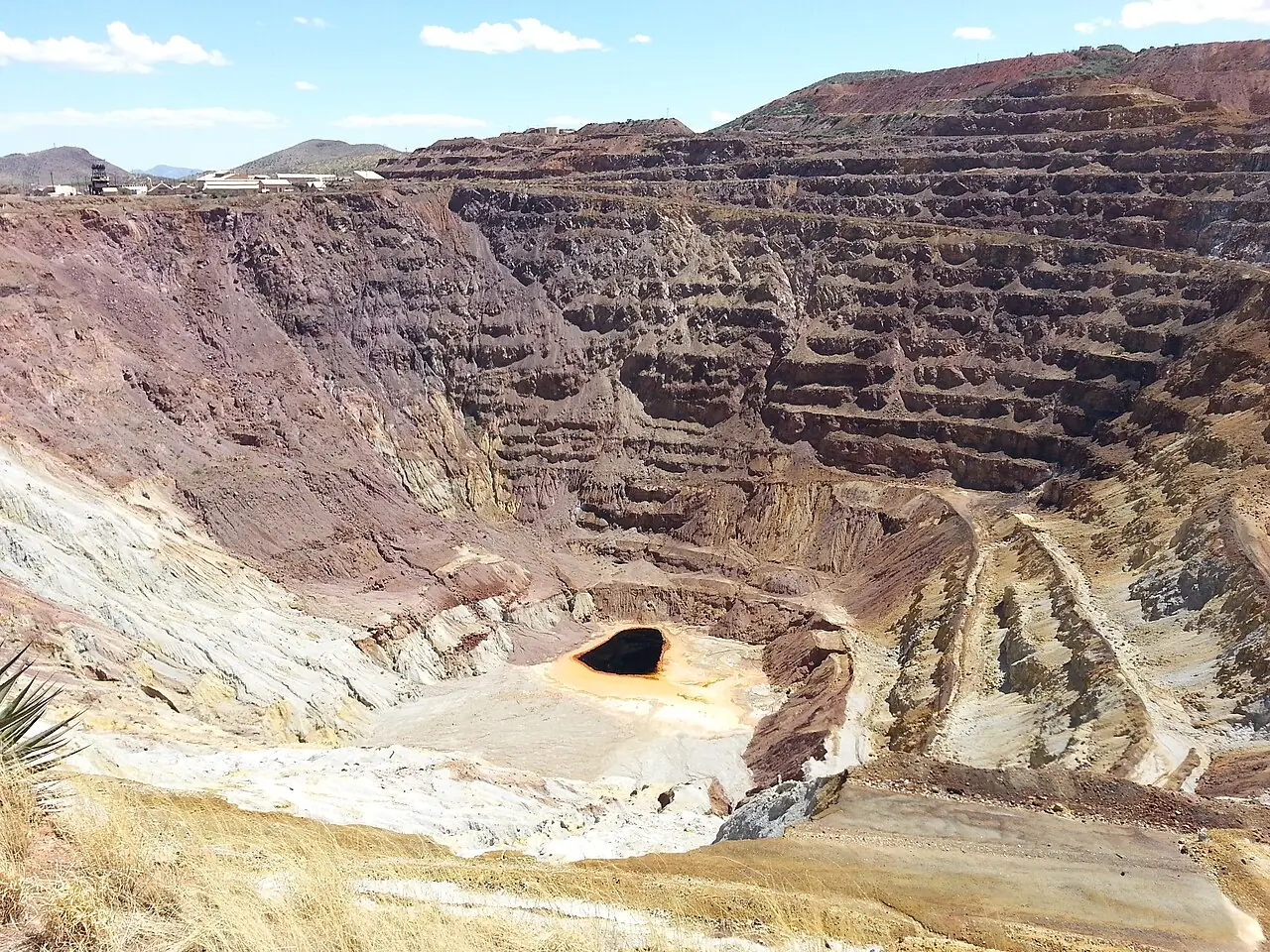
Rio’s US growth pipeline sits at Resolution Copper (Arizona) and Kennecott (Utah). Kennecott is a mature contributor and helps carry the group C1 cost cut through by-product credit. Resolution is what Chief Executive Simon Trott called a next-generation copper growth option in Wednesday’s release, which is Rio Tinto’s way of saying it is not near-term output. If Washington wants a domestic supply answer to AI copper demand, the Resolution timeline matters more than another 45X credit at Kings Mountain or Thacker Pass. The IRA does not build a mine. Permit velocity does.
What China’s smelters see
Chinese buyers stepped back at recent copper price highs, per the Macquarie compendium, which reads the current rally as running ahead of physical fundamentals. The visible concentrate surplus has weighed on downstream smelter margins. Oyu Tolgoi’s incremental tonnage does not relieve that pressure. In lithium, Rio’s Sal de Vida output adds Argentine competitor tonnage into a Lithium Triangle whose ownership structure has been actively contested between Western majors and Chinese offtakers over the last twelve months.
What it means
The AI copper thesis on the equity side has been sold as a supply-crisis narrative. Rio Tinto’s release on 15 July and Macquarie’s note on 9 July complicate that story. Supply is not failing everywhere. Oyu Tolgoi is delivering the growth Codelco cannot. Rio’s C1 cost cut, whatever its by-product driver, means the world’s second-largest copper producer earns record cash on today’s price even if $14,000/t proves unsustainable. Fontaine’s pivot at Codelco reads less as weakness than as recognition: chasing marginal tons at a Chilean grade and cost profile no longer clears a US$25 billion debt curve. The marginal AI copper ton is moving from the Andes toward Mongolia, and, in 2027-2028, toward Kamoa-Kakula and any Cobre Panama restart.
The lithium picture in the same release is quieter but arguably as consequential. Rio delivered first commercial tonnes from two Argentine assets ahead of plan while carbonate prices remain in a range that has kept Brazilian juniors capital-constrained. The Arcadium acquisition has moved from strategic bet to production reality inside 16 months.
What to watch
- Oyu Tolgoi Q3 2026 rate. If the 31 percent H1 pace holds through Q3, Rio’s copper output skews to the top of the 800-870 kt range.
- Fontaine’s audit conclusion at Codelco. The external audit is scheduled to inform the strategic reset. Watch for asset sales, joint-venture announcements, or a re-scoping of expansion timelines before year-end.
- Simandou first commercial cargo through permanent crushing. H2 2026 milestone in Rio’s timeline. Any delay flows into Vale’s premium share defense in China.