China's rare earth tape clears 252.8 and Brazil's Serra Verde leaves the open market
CREIA's index hit 252.8 on June 15, heavy rare earths leading. Five weeks earlier the only scaled non-Asian heavy producer signed a 15-year offtake to a U.S. government vehicle. Commerce closed $1.6 billion in CHIPS capacity on June 3.

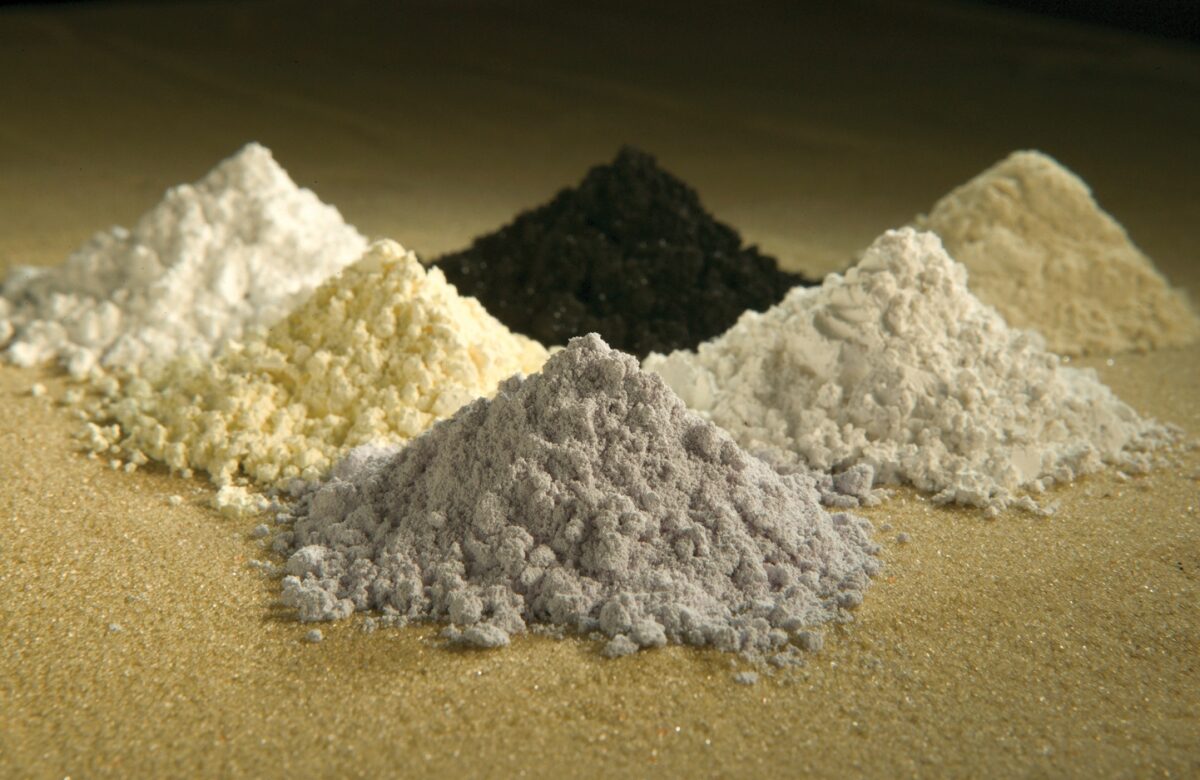
The China Rare Earth Industry Association published a Rare Earth Price Index value of 252.8 on June 15, 2026, up roughly 153 percent from the 2010 baseline of 100 [Rare Earth Exchanges, June 15, 2026]. The headline number is interesting. The composition is the story. The gain is concentrated in heavy rare earths, with terbium and dysprosium leading. CREIA’s same-date domestic Chinese quotes put terbium oxide at ¥7,650 to ¥7,850 per kilogram (about $1,148 to $1,178), terbium metal at ¥9,322 to ¥9,522, dysprosium oxide at ¥1,340 to ¥1,380, and the magnet benchmark NdPr oxide at ¥686.6 to ¥706.6 ($103 to $106) [REEx, June 15, 2026].
Those are the prices inside the state-managed Chinese market. Outside it, the same molecules clear far higher and far less reliably. The investor-grade retail channel Strategic Metals Invest lists dysprosium metal at $930.70 per kilogram on June 16, up 105.05 percent year to date [strategicmetalsinvest.com/dysprosium-prices, June 16, 2026]. That retail print is multiples of the Chinese domestic industrial oxide benchmark cited above (~$204/kg) and reflects a small, private-investor channel, not a wholesale industrial transaction; treat it as a directional signal of ex-China scarcity, not as the price an OEM is paying. Most ex-China industrial contracts settle in confidential bilateral deals rather than on a public index. The most public pricing signal outside China is the MP Materials–Department of Defense floor, set at $110 per kilogram for NdPr, which REEx flags as the de facto Western benchmark even though it covers only one chemistry [REEx, June 15, 2026].
What dysprosium and terbium do explains the composition of the move. They are the additives that let neodymium iron boron magnets hold field strength at the operating temperatures of EV traction motors, wind turbine generators, robotic actuators, and the permanent-magnet equipment USA Rare Earth lists for the data center and physical AI sectors it now supplies [USAR via Mining.com, June 3, 2026]. There is no drop-in substitute. There is no large producer of either element at industrial scale outside Asia, except one.
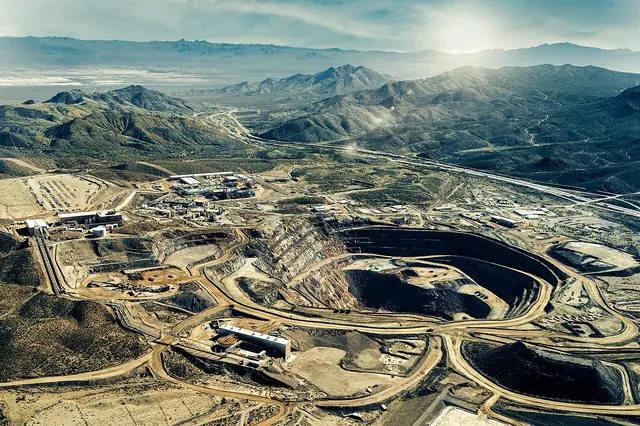
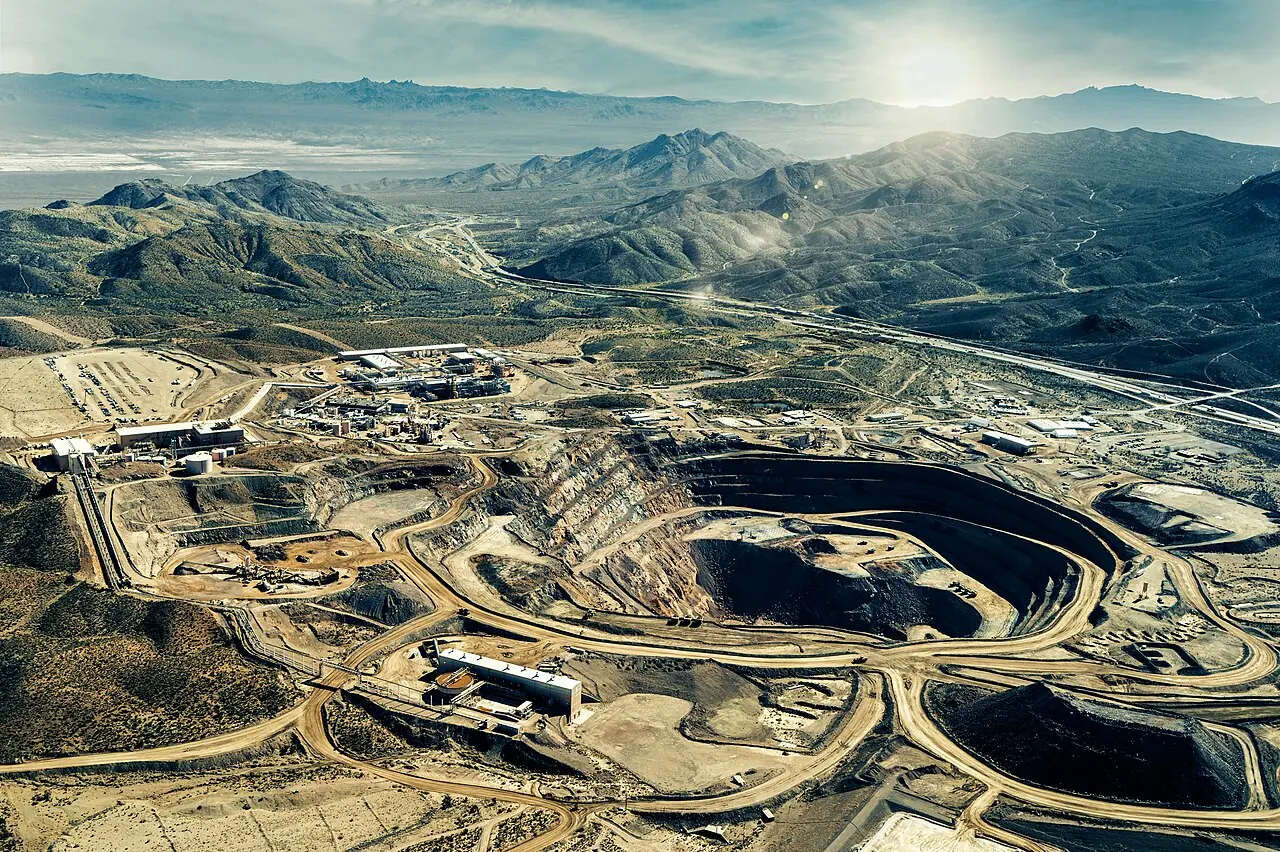
That one is Serra Verde, a Brazilian heavy rare earth operation in Minaçu, Goiás. Commercial production at the Pela Ema mine and processing plant commenced in early 2024. Phase I targets 6,400 tonnes per year of total rare earth oxide equivalent by the end of 2027, with a Phase II decision that could double run of mine before 2030 [Serra Verde, April 20, 2026]. Serra Verde is the only large-scale ex-Asia producer of all four magnetic rare earths, including dysprosium, terbium and yttrium. Five weeks before the June 15 index print, on April 20, the company announced an agreed combination with U.S.-listed USA Rare Earth and a 15-year offtake committing 100 percent of Phase I production to a special purpose vehicle capitalized by U.S. government agencies and private capital, with guaranteed floor prices for dysprosium and terbium [Serra Verde, April 20, 2026].
The federal layer hardened in early June, when USAR formalized its January 2026 letter of intent into definitive agreements with the U.S. Department of Commerce that unlock up to $1.6 billion under the CHIPS Program, comprising up to $277 million in federal funding and up to $1.3 billion in senior secured loan capacity, disbursements tied to project milestones [Mining.com, June 3, 2026]. Total committed capital behind the combined-company growth plan now sits near $3.5 billion [Mining.com, June 3, 2026]. Serra Verde’s earlier $565 million financing package with the U.S. International Development Finance Corporation, which refinanced legacy loans and funded the Brazilian Phase I optimization, remains in place [Serra Verde, April 20, 2026]. The combined entity targets EBITDA of $550 million to $650 million by the end of 2027 across eight sites in Brazil, the United States, the United Kingdom and France.
The Brazilian operation does not move. Pela Ema stays in Goiás. Ricardo Grossi, who runs Serra Verde Pesquisa e Mineração, continues to lead operations on the ground. The 350-plus workforce, 66 percent of it from the local community and roughly 30 percent women, stays in place [Serra Verde, April 20, 2026]. What moved is the listing, the offtake counterparty, and the locus of price discovery. For the next 15 years, the largest single source of non-Asian heavy rare earths sells its Phase I tonnage into a U.S. government-capitalized vehicle at a floor price the public will not see.
That sequence reads differently with November 10, 2026 less than five months away, when the one-year suspension of China’s expanded October 9, 2025 rare earth export controls is scheduled to expire [Mining Technology, May 2026]. The International Energy Agency, in a modeled stress-test scenario, has put roughly $6.5 trillion of annual ex-China economic activity at risk in a full-reinstatement case, with automotive and electronics the most exposed sectors [Mining Technology, May 2026]. Treat the number as exposure, not a forecast of realized loss. Brazil’s Sovereign Critical Minerals Plan and BNDES instruments were built for exactly this kind of moment, but in the heavy rare earth lane the U.S. capital and offtake stack got there first.
What to watch
- November 10 expiry. Three plausible outcomes: extension of the suspension, selective reinstatement targeting specific elements or end uses, or full reimposition of the October 2025 measures [Mining Technology, May 2026]. The path chosen sets the policy temperature on every government still trying to stand up a domestic magnet chain.
- First CHIPS disbursement to USAR. Milestone tranches gate the schedule; the cadence of federal release tells you whether the announced $1.6 billion moves in 2026 or stretches into 2027.
- Serra Verde closing. USA Rare Earth has stated it expects the combination to complete in the third quarter of 2026, subject to closing conditions and regulatory approvals [CNBC, April 20, 2026]. ANM and CADE clearances in Brazil are the procedural risks worth tracking.
- Ex-China price gap. If CREIA keeps climbing into a hard November expiry, expect the spread between Chinese published prices and ex-China industrial buy-back prices to widen, dragging more contracts into the bilateral confidential channel.