Pentagon puts $1 billion on the rare earth midstream. Brazil's June was another deposit week.
Phoenix Tailings' Freedom Facility lands $500M conditional from the Office of Strategic Capital plus $500M of private capital, targeting 2028. The same week, Resouro logged a $1B Tiros PEA in Minas Gerais and the DLA inked a five-year ferro-niobium stockpile with CBMM. Three signals about who is funding which step of the mine-to-magnet chain.

The Pentagon’s Office of Strategic Capital conditionally committed $500 million on June 16 to a rare earth midstream buildout by Phoenix Tailings, anchoring a roughly $1 billion financing push, with the balance from private capital, toward a new separation and metallization facility in New Hampshire and an expansion of the company’s existing metallization sites in Burlington, Massachusetts and Exeter, New Hampshire [Mining.com, June 16, 2026; Metal Tech News, June 16, 2026]. The project, called the Freedom Facility, is designed to process diverse feedstocks (mined concentrates, recycled material, and secondary sources) into both light and heavy rare earth metals, with initial operations targeted for 2028 [Mining.com, June 16, 2026].
It is the second federal commitment to US rare earth capacity inside two weeks. On June 3, USA Rare Earth formalized definitive agreements with the Commerce Department under the CHIPS Program that unlock up to $1.6 billion in federal funding and senior secured loan capacity, disbursements tied to project milestones [Mining.com, June 3, 2026; Tantalum, June 16, 2026]. The CHIPS money sits at the magnet end of the chain. The Freedom Facility sits in the middle, the part that turns concentrates and metal salts into the alloyable rare earth metals that magnet makers need. Phoenix is also separately selected, on June 4, for a $66 million Department of Energy Rare Earth Demonstration Facility Program grant anchoring a $147.8 million project with MIT and the University of Minnesota to scale next-generation separation technologies on diverse domestic feedstocks, building on the company’s existing metallization sites [Phoenix Tailings via Manila Times, June 4, 2026; Mining Weekly, June 5, 2026].
OSC director David Lorch called separation and metallization “key shortage areas that need to be rapidly addressed” [Mining.com, June 16, 2026]. Read together with yesterday’s coverage of the CREIA index clearing 252.8 on June 15 and Serra Verde’s 15-year offtake to a US government vehicle [Tantalum, June 16, 2026], a federal architecture is taking shape: government-anchored offtake at the upstream, federal debt and grant capacity in the middle, CHIPS at the downstream.
Brazil
Brazil’s same fortnight reads differently. On June 15, Resouro Strategic Metals released the Preliminary Economic Assessment for the Tiros project in northern Minas Gerais. The starter case is a 500,000 tonne per year operation producing roughly 90,000 tonnes of titanium dioxide concentrate and 3,636 tonnes of total rare earth oxide in a mixed rare earth carbonate, over a 20-year mine life, against a measured and indicated resource of 1.4 billion tonnes at 12 percent TiO2 and 4,000 ppm TREO. Post-tax NPV at 8 percent is $714.9 million; post-tax IRR is 44.2 percent [Mining.com, June 15, 2026]. The company’s market capitalization is C$34 million [Mining.com, June 15, 2026]. The deposit is large. The capital structure to take it to production is not yet visible.
On the other end of the supply chain, the US Defense Logistics Agency awarded CBMM North America Inc. a five-year base contract (SP8000-26-D-0007) for vacuum-grade ferro-niobium on April 9, 2026, with an initial $10 million firm-fixed-price task order (SP8000-26-F-0017) and an ordering period that runs through April 5, 2031 [DoD Contracts, April 9, 2026]. Trade press reporting frames the DLA’s broader solicitation intent at as much as $160 million and roughly 584.3 tonnes of vacuum-grade ferro-niobium for the strategic stockpile over the contract’s lifetime, the trajectory the initial task order opens against [The Metalnomist, June 6, 2026]. US imports of vacuum-grade ferro-niobium were 548 tonnes in 2025, all from Brazil [The Metalnomist, June 6, 2026]. Brazil accounted for roughly 93 percent of global niobium production in 2025 [The Metalnomist, June 6, 2026]. CBMM stays the supplier of record; the alloy crosses the border as feedstock for US specialty steel and aerospace alloy systems.
Stack the two events. Resouro tells the market about another billion-tonne Brazilian resource. The DLA writes a five-year purchase order for a Brazilian metal that the US cannot reproduce at scale. Both reinforce the same pattern: Brazil supplies the upstream and the alloyable intermediate; midstream rare earth processing and downstream magnet manufacturing get built in the United States. The R$15 billion Sovereign Brazil Plan Credit Line and the Vale-anchored R$1 billion Critical Minerals FIP, both designed to finance domestic processing, are not yet visible inside Tiros’s path to production [see Tantalum, June 13, 2026 and June 16, 2026].
US
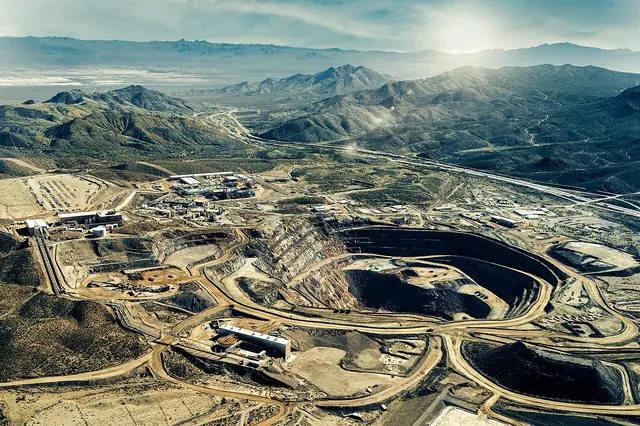
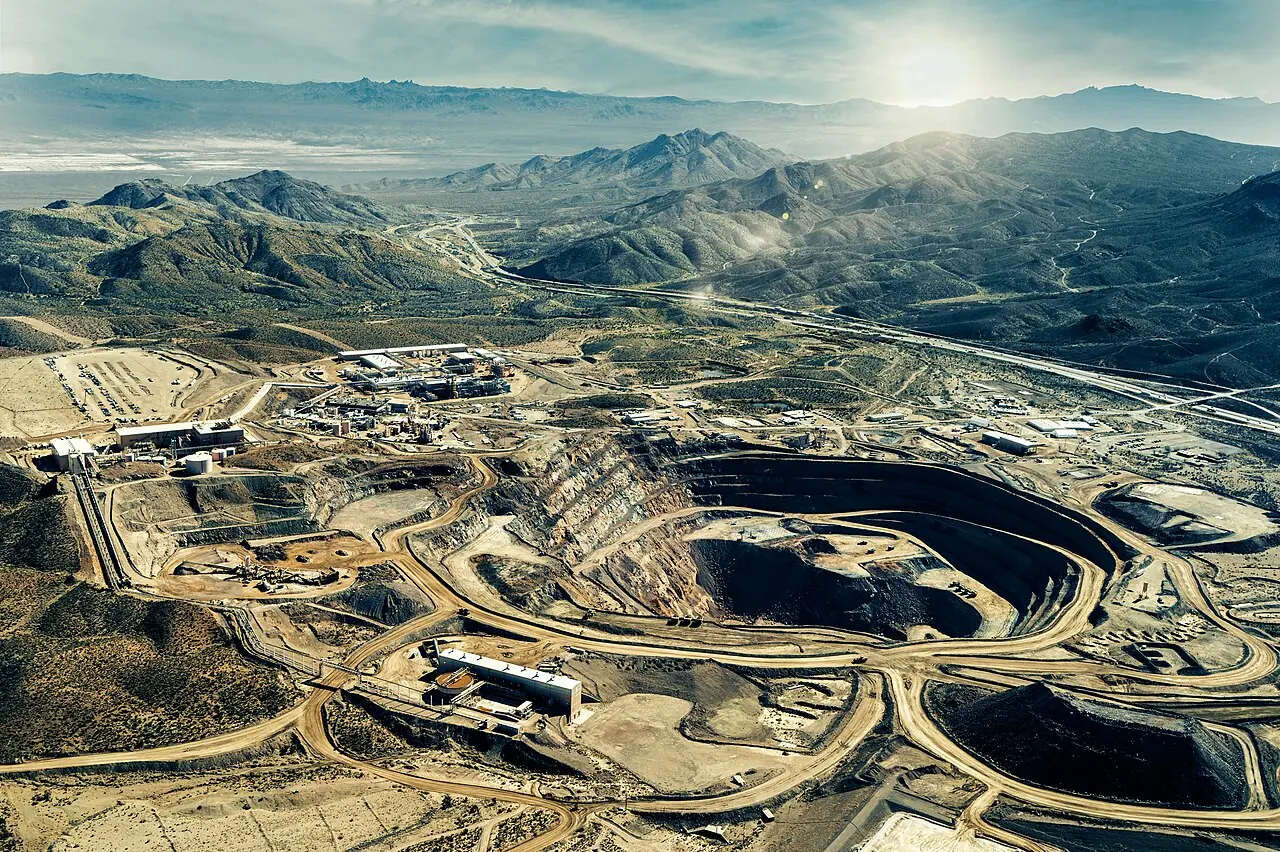
The Freedom Facility’s value to the federal architecture is its agnosticism on feedstock. The same plant can take Mountain Pass concentrate, Serra Verde mixed carbonate, recycled magnet stream, and tailings residue, and convert any of them into separated oxides and rare earth metals. That is the optionality the upstream side of the strategy needs. The US has Mountain Pass online. The US is about to have Serra Verde dysprosium and terbium offtake through the USAR vehicle once the third quarter 2026 closing is complete [Tantalum, June 16, 2026]. What the US has lacked is somewhere to send those streams that is not a Chinese separation plant. The Phoenix announcement is the federal answer to that question. Whether it executes by 2028 is the next read.
China
Chinese processing dominance is the comparison baseline, widely cited at roughly 90 percent of global separated rare earth output [Yahoo Finance, June 16, 2026]. The October 2025 export controls and the November 10, 2026 suspension expiry remain the policy backdrop most likely to test the Western capacity build before it is finished [Mining Technology, May 2026]. CREIA’s domestic index print of 252.8 on June 15 leans heavy rare earth, the same chemistries Phoenix and Serra Verde are now contracted to deliver outside China [REEx, June 15, 2026].
What to watch
- Financial close on the OSC $500 million conditional loan. The Phoenix release flagged customary additional due diligence as a precondition [Mining.com, June 16, 2026]. The close date is the first hard milestone.
- Resouro financing. The PEA’s $1 billion price tag implies a step change from a C$34 million market cap. Watch for streaming partners, government debt, or a strategic offtake similar to the USAR-Serra Verde architecture.
- CBMM-DLA fixed-price contract execution. A multi-year ferro-niobium stockpile contract at fixed price sets a US sovereign baseline on a Brazilian input; price drift in the broader market will test the spread.