RARA11: rare earth ETF debuts on the B3
Investo brings Brazilian investors direct access to the index that rises when the contest for critical minerals heats up.

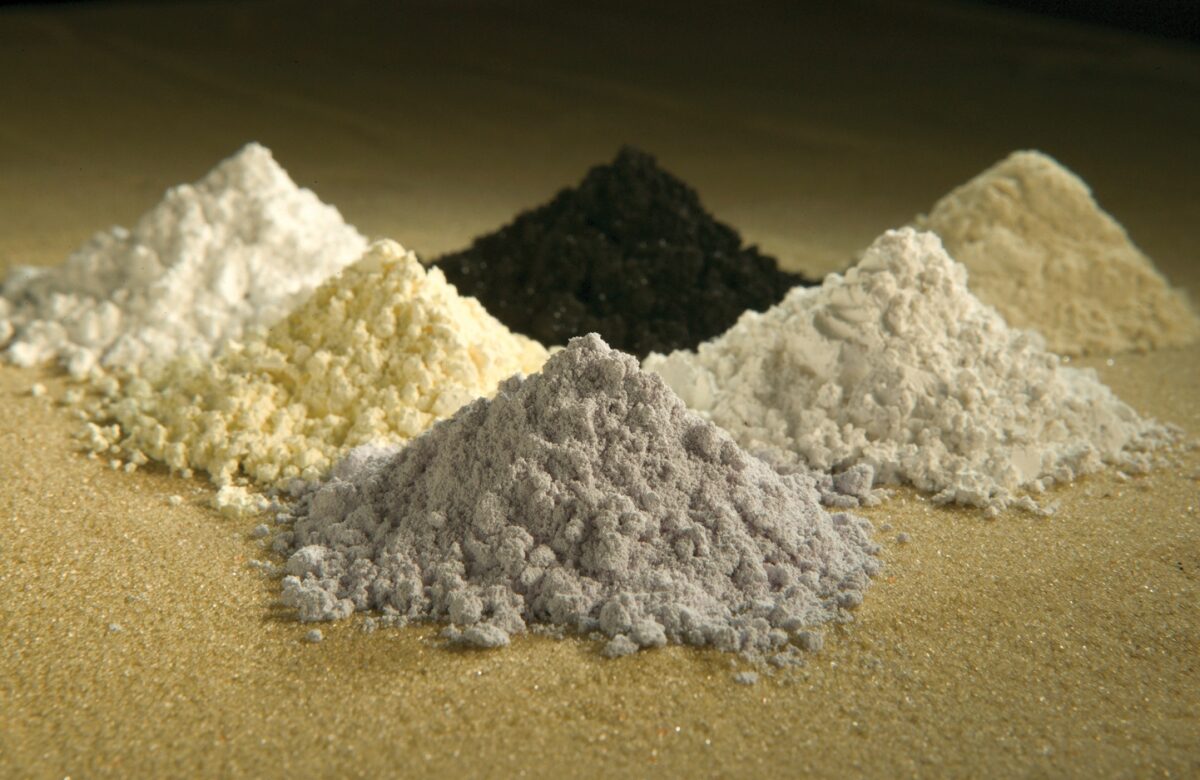
Investo, the Brazilian ETF manager owned by VanEck, launched the RARA11 on the B3 on June 26, 2026. The fund replicates VanEck’s REMX, the US$3 billion rare earths and strategic metals ETF that trades in New York. Secondary market trading began Monday, June 29. For Brazilian investors, it is the first domestic vehicle with pure-play exposure to the minerals at the center of the US-China supply chain contest.
The timing is not accidental. REMX returned more than 100 percent in US dollar terms over the past year (as of June 2026, per VanEck). The Pentagon has accumulated more than US$1 billion in critical mineral stockpiles and is now the largest shareholder of MP Materials, the only integrated US producer. Rare earths have moved from a niche geology story to a mainstream geopolitical trade. Investo, which already offers the CHIP11 (semicondutores) and NUCL11 (uranium and nuclear technology), is filling the last gap in its thematic lineup.
What’s in the basket
RARA11 holds more than 30 companies globally, filtered by a strict 50 percent revenue threshold from rare earths and strategic metals. The geographic breakdown tells the story of where the investable supply chain actually lives today:
| Geography | Weight |
|---|---|
| China | 27.1% |
| Australia | 25.9% |
| United States | 20.1% |
| Canada | 11.4% |
| Chile | 5.3% |
China takes the largest slice because that is where the separation and refining capacity is concentrated. Australia and the US follow as the primary alternative supply bases. Canada and Chile round out the basket with exploration and early-stage production names.
Brazilian companies do not yet appear in the REMX index, but that reflects where the global supply chain stands today, not where it is headed. Brazil holds the Araxá complex, the Pitinga tin-tantalum-niobium deposit with REE by-products, and Serra Verde, which became the country’s first commercial rare earth producer in 2024. The structural gap is downstream: no Brazilian company currently derives 50 percent of its revenue from rare earths at a scale that qualifies for the REMX methodology. Vale is an iron ore company. CBMM is private and focused on niobium. Serra Verde is still ramping.
Brazil: the next chapter
This is the central tension for Brazilian critical minerals policy. The country has the rocks. It does not yet have the downstream processing or the listed pure-play vehicles that would let global capital flow into them through standardized index products.
The Política Nacional de Minerais Críticos e Estratégicos (PNMCE), bill PL 2780/2024, is designed to close exactly this gap. Authored by Dep. Zé Silva (União-MG) with Dep. Arnaldo Jardim (Cidadania-SP) as relator, it prioritizes licensing for strategic mineral projects, creates a national critical minerals council linked to the Presidência (CIMCE), and backs the sector with a R$2 billion guarantee fund and up to R$5 billion in fiscal credits over five years. The Câmara dos Deputados approved it on May 6, 2026. It is now in the Senado Federal and not yet law.
Regulatory intent and actual revenue are different things. Even on an accelerated timeline, a Brazilian REE producer is unlikely to qualify for the REMX basket before 2028 at the earliest. When it does, the RARA11 will have built a domestic investor base already familiar with the theme.
Cauê Mançanares, CEO da Investo, acknowledges the geopolitical dimension explicitly. “You do not need to guess which country will take the lead. If it is the United States, if it is China, if it is Australia, you are exposed to that chain.” The diversification logic is sound for the investor. It also means that when Brazilian pure-play producers do qualify, there is a ready pool of domestic capital already familiar with the theme.
United States: MP Materials and the Pentagon floor
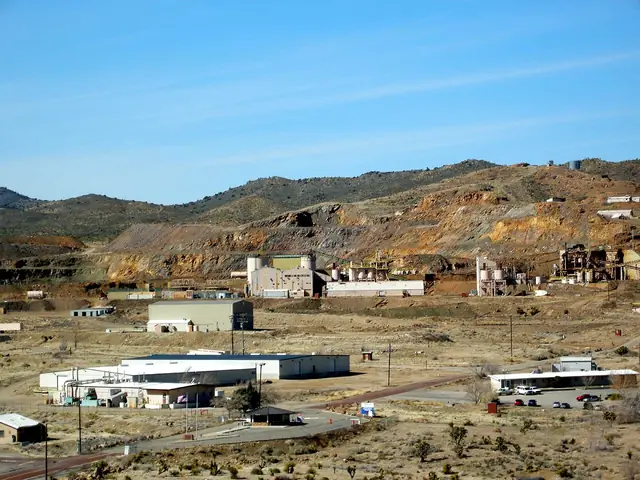
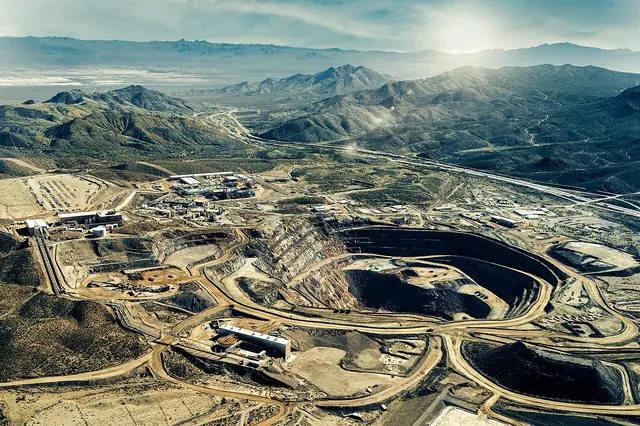
The 20.1 percent US weight in the basket is effectively a bet on MP Materials and its Fort Worth magnet plant, plus a handful of smaller names like Energy Fuels and USA Rare Earth. The Pentagon’s position as largest shareholder creates a de facto floor under the stock that is unusual for a materials play. It also means that RARA11 investors will be indirectly exposed to US defense procurement decisions.
The broader context is the US attempt to rebuild a domestic REE supply chain from mine to magnet. The effort is real but the timeline is long. MP Materials ships concentrate to China for separation today. Its Texas facility is scheduled to come online in phases through 2027. Until then, the US weight in REMX is more promise than production.
China: dominance baked into the index
China’s 27.1 percent weight is not an active bet on Chinese policy. It is a passive reflection of the fact that Chinese companies control approximately 90 percent of global rare earth separation capacity. Northern Rare Earth, China Northern Rare Earth High-Tech, and Shenghe Resources are the kind of names that appear in the basket. They are state-linked, export-controlled, and increasingly subject to MIIT quota restrictions.
The risk is asymmetric. If China tightens export controls further, the basket benefits from scarcity pricing. If China floods the market to crush competitors, the basket suffers. Investors in RARA11 are not making a directional call on Chinese policy. They are making a structural call on Chinese dominance. That is a different, and riskier, proposition.
What it means
For Tantalum Strategy, the RARA11 launch is a validation signal. The desk’s TAI-M sub-index includes REMX as a proxy component for rare earth exposure. More B3 capital chasing REMX via RARA11 means potential flow-driven lift to TAI-M that is independent of underlying commodity fundamentals. It is a demand signal for the vehicle, not necessarily for the minerals.
For Brazilian policymakers, the message is clear. The PNMCE is a necessary but insufficient condition. Without listed pure-play producers, without separation plants, without the downstream infrastructure that turns ore into revenue, Brazil will remain a geology story in a world that trades tickers. The capital is there. The B3 ETF market has doubled in AUM to R$121 billion in 12 months. The investors are ready. The product is not.
What to watch
- RARA11 AUM flows in the first 30 days. Does it attract meaningful capital or is it a thematic launch without follow-through?
- Serra Verde revenue mix disclosure. When the company reports that rare earths represent more than 50 percent of revenue, it becomes a candidate for REMX inclusion. That would be the first Brazilian name in the basket.
- Investo’s product pipeline. With 59 ETFs and ~30 percent of the B3 listed universe, the manager has scale to launch thematic products with lower revenue thresholds. A “critical minerals” basket (niobium, lithium, REE, graphite) at 25 percent would capture Vale, CBMM-linked vehicles, and Sigma Lithium.
- PNMCE (PL 2780/2024) progress in the Senate. It passed the Câmara on May 6, 2026 and now sits in the Senado Federal. Watch for the Senate vote, presidential sanction, then the regulations (ANM track, licensing shortcuts, BNDES lines) that make it operational. Until those land, it is intent, not infrastructure.
Sources: NeoFeed, Investo, B3, VanEck REMX fact sheet, Senado Federal (PL 2780/2024), Câmara dos Deputados, Tantalum Strategy desk estimates.