Indonesia Wrote the Rare Earth Ban and Forgot the Number
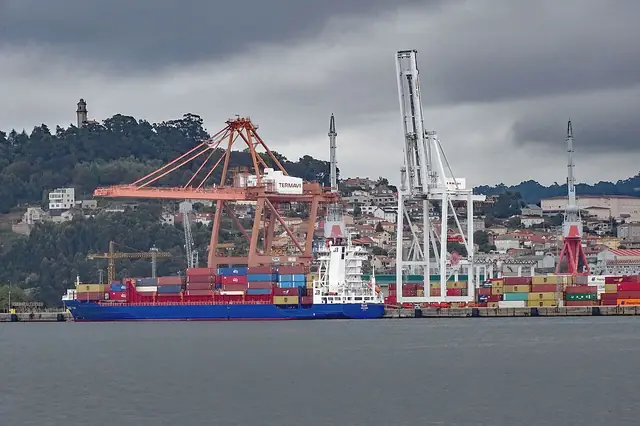
About a hundred cargoes of alumina, copper cathode and nickel derivatives sat at Indonesian ports because Jakarta banned rare earth exports without defining how much rare earth counts. Brazil, China and the United States all wrote that number years ago.

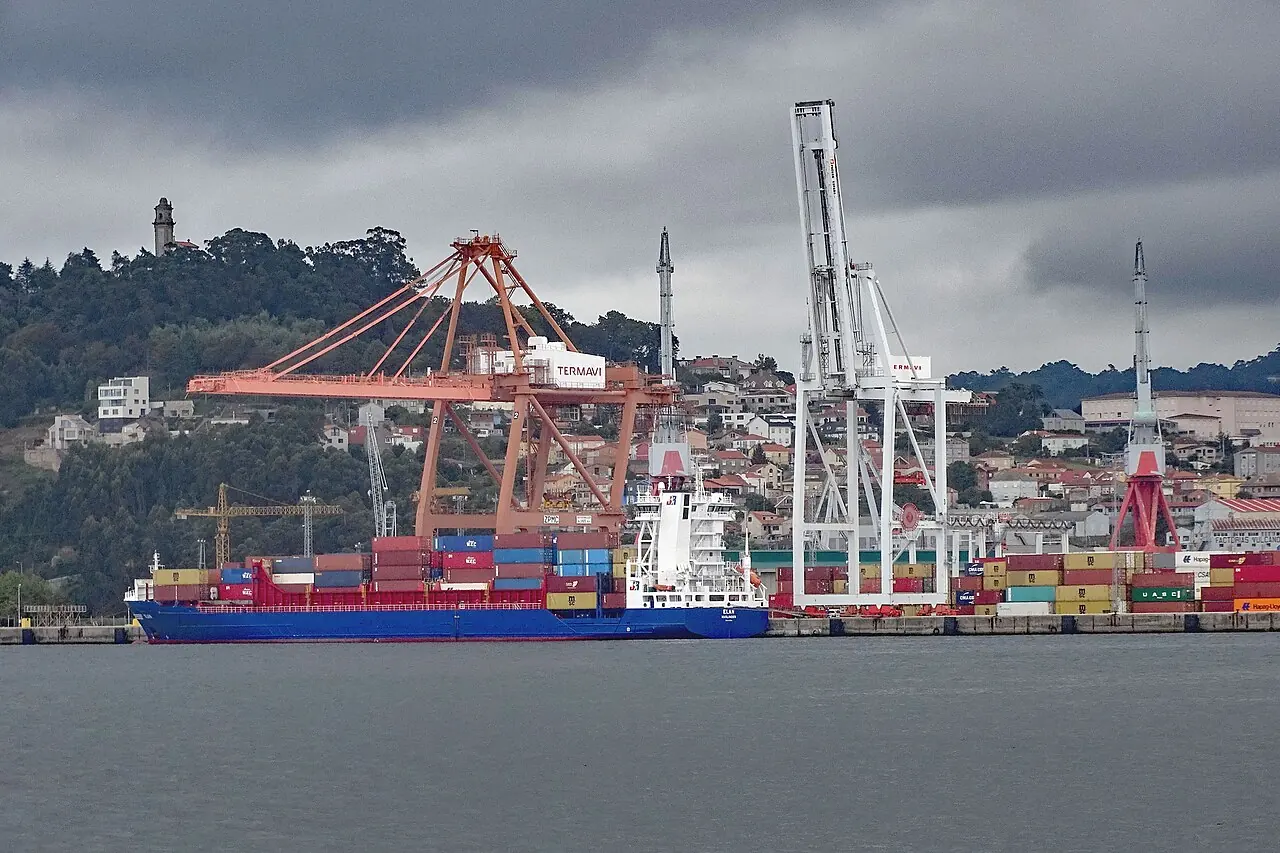
On Monday, August 3, 2026, Indonesia’s presidential staff office told reporters in Jakarta that mineral exports had resumed. Why they stopped is the more useful story for anyone tracking the physical inputs to the AI buildout. Jakarta banned rare earth exports without specifying how much rare earth content makes a cargo a rare earth cargo, and roughly a hundred ships carrying alumina, copper cathode and nickel derivatives waited at port for a surveyor willing to sign.
What’s happening
- Presidential Staff Office chief Dudung Abdurachman said the export ban applies to rare earth elements “exported as the primary product” and “does not automatically apply to rare earth elements occurring as associated elements in primary mining products and their derivatives” [ANTARA, August 3, 2026].
- State news agency ANTARA identifies the instrument as Trade Minister Regulation No. 6 of 2026, amending Trade Minister Regulation No. 22 of 2023 on Goods Prohibited from Export, and reports that it bars shipment of 17 rare earth elements and their compounds at purity below 99 percent [ANTARA, August 3, 2026]. A separate ANTARA report the same day put the count at 18, so treat the element list as unsettled. This desk has not read the regulation text itself and is relying on ANTARA’s identification of it.
- The delayed categories were bauxite, alumina, copper cathode and nickel derivatives, held up by a mandatory rare earth content testing programme and by uncertainty over how much content was permitted [Reuters via Mining Weekly, August 3, 2026].
- The Indonesian Nickel Industry Forum said at least 120 ships could not sail as of July 20 [ANTARA, August 3, 2026]. Dudung’s own count: “previously there were just over a hundred ships that were delayed. But they are now able to sail” [Reuters via Mining Weekly, August 3, 2026].
- A July 31 coordination meeting cleared state inspection company PT Sucofindo to issue 85 held surveyor reports, and the government obtained a legal opinion from the Attorney General’s Office to cover the transition [ANTARA, August 3, 2026]. Surveyors had stopped signing after authorities opened an investigation into shipments allegedly containing rare earths [Reuters via Mining Weekly, August 3, 2026].
- Still unwritten as of Monday: the definition of byproduct minerals, per-element concentration thresholds, laboratory testing methods, verification procedures, rules for naturally occurring radioactive material, and guidelines for issuing surveyor reports [ANTARA, August 3, 2026].
The AI link is not abstract. Two of the four blocked categories sit directly on this desk’s coverage map. Alumina carries gallium, recovered from the Bayer circuit, the metal behind the GaN power supplies in AI servers, a link this desk traced in June [Tantalum Strategy, June 6, 2026]. Copper cathode is the input to the windings, cable and busbar that turn a signed data center lease into delivered megawatts [Tantalum Strategy, July 24, 2026]. Those cathode volumes are already impaired. Freeport Indonesia cut its 2026 plan to 478,000 tonnes of copper cathode from roughly 700,000 tonnes after a September mud flow at the Grasberg Block Cave killed seven workers and suspended the mine, and its Manyar smelter sat idle [Reuters via Kitco, November 24, 2025]. Chief executive Tony Wenas has since put the target at 1.1 billion pounds, about 500,000 tonnes, rising to 1.5 billion pounds in 2027 [Mining.com citing Reuters, reported April 2026]. Indonesia’s own rare earth production remains limited and occurs mainly as a byproduct [Reuters via Mining Weekly, August 3, 2026]. The country stopped its own AI-relevant exports over the rare earth content of a metal it barely produces.
Brazil angle
Brazil wrote the number, and wrote it for exactly these commodities. The description here comes from CNEN’s own regulatory staff, writing in the IAEA’s NORM in Industry conference proceedings [Soares Borges, Gonçalves dos Santos and Rocha Scislewski, CNEN, in IAEA Proceedings Series, ISBN 978-92-0-120922-1, May 2022]. Per that paper, CNEN-NN-4.01 governs conventional mining and milling facilities handling ores associated with uranium and thorium chain radionuclides, and covers tin, rare earths, niobium, titanium, phosphate, copper and coal by name. Facilities are graded into three categories based on the largest activity concentration of any material in the production process, and the framework names raw material, product, byproduct and waste as the four things you measure. Facilities that handle nothing above 10 becquerels per gram, with annual worker effective dose at or below 1 millisievert and 0.3 millisievert for the representative individual, are exempt outright. Mining and milling of uranium or thorium as the primary mineral is a separate nuclear practice under CNEN-NE-1.13.
That is the institutional asset. A Brazilian exporter of niobium from Araxá, or of monazite-bearing concentrate from a tin or heavy mineral sand circuit, can look up a threshold before loading. The honest limit: the graded framework raises capital intensity for monazite-heavy flowsheets, and Brazil’s real constraint is the radioactive residue endgame, not the paperwork [Rare Earth Exchanges, December 30, 2025]. Brazil solved the definitional problem and still has the disposal problem. Indonesia has both.
US angle
Washington also wrote a number, and wrote three of them. Under the Nuclear Regulatory Commission’s exemption for unimportant quantities of source material, “rare earth metals and compounds, mixtures, and products containing not more than 0.25 percent by weight thorium, uranium, or any combination of these” are exempt from licensing [US NRC, 10 CFR 40.13(c)(1)(vi), text retrieved August 4, 2026]. Ore sits under its own line: 40.13(b) exempts unrefined and unprocessed ore containing source material, but only so long as the holder does not refine or process it. And the general 0.05 percent threshold in 40.13(a) expressly excludes byproduct material [US NRC, 10 CFR 40.13, text retrieved August 4, 2026]. Product, ore, byproduct. Three categories, three written rules. That is the whole difference between Washington and Jakarta this week.
The tariff structure makes Indonesia’s paperwork problem an American cost problem. The Section 232 copper action put a 50 percent tariff on semi-finished copper and copper-intensive derivatives from August 1, 2025 while explicitly exempting cathodes, ores, concentrates and scrap, as this desk documented in July [Tantalum Strategy, July 24, 2026]. Cathode is the tariff-free lane into the United States. When Indonesian cathode cannot clear a surveyor, the cost lands on the buildout that depends on that lane.
China angle
Beijing’s rare earth architecture is built on thresholds and on the apparatus to enforce them. Per White & Case’s reading of the underlying notifications, which the firm links directly to their publication on mofcom.gov.cn, MOFCOM Notification No. 61/2025 of October 9, 2025 asserts extraterritorial jurisdiction over foreign operators moving rare earth permanent magnet material between third countries when 13 named elements account for no less than 0.1 percent of total value, requires those operators to pass compliance statements down the chain, and pairs the whole thing with a 50 percent affiliates rule and presumptive denial for military end users [White & Case, October 13, 2025]. Controls on Chinese-origin elements took effect immediately; the third-country measures ran a grace period to December 1, 2025.
Read the two systems side by side. China’s controls bite because the licensing, laboratory and compliance machinery predates the restriction. Indonesia announced the restriction and then convened a meeting to build the machinery, and the cost of that sequencing was borne by its own exporters.
What it means
The operative instrument in the AI materials layer is increasingly the content threshold, not the ban. Bans are announcements. Thresholds are what customs officers, surveyors and laboratories actually act on, and whoever writes the number governs the trade. Indonesia has just demonstrated the cost of writing the prohibition and leaving the number blank.
There is an index implication the desk will carry forward. At the July 31, 2026 recompute, SOV50 stood at 121.9 against a January base of 100, while SDX stood at 100.1, essentially flat (Tantalum Strategy index file, July 31, 2026). The market is paying up for concentration exposure and paying nothing for diversification. SOV50’s weighted HHI concentration score of 0.68 (as_of USGS Mineral Commodity Summaries 2025) measures where supply physically sits. It does not measure whether the paperwork clears. Indonesia is not an SDX constituent, whose producer base spans Brazil, Chile, Argentina, the DRC, Australia, Angola and Mozambique. But the episode names a risk the diversification thesis carries generally: suppliers outside the China and DRC nexus often have younger regulatory institutions, and institutional immaturity shows up as ships at anchor rather than as a concentration statistic. Read that as one candidate explanation for the flat SDX print, not as a measured cause.
What to watch
- The Coordinating Ministry for Economic Affairs convened on Monday to recommend permissible rare earth content in exportable minerals. The trigger to watch is whether the revision of Trade Minister Regulation No. 6 of 2026 publishes actual per-element concentration thresholds and NORM rules, or restates the transitional guidance in different words.
- The surveyor report gap. Eighty-five reports were authorized on July 31 against the at least 120 the nickel industry forum counted as of July 20. Watch the forum’s next statement for whether the backlog cleared or a second tranche is stuck.
- Tin. Indonesia’s rare earth thesis often points to monazite in tin tailings [Rare Earth Exchanges, December 30, 2025], and tin was not among the four categories Jakarta named as cleared on Monday. If the testing regime reaches tin cargoes, the disruption widens into a market where Indonesia is genuinely systemic.