IEA puts a $6.5 trillion price tag on China's rare earth chokepoint
Global Critical Minerals Outlook 2026 quantifies the downstream damage if Beijing's October 2025 export controls take full effect. The year-delay clock runs down while refining concentration climbs.

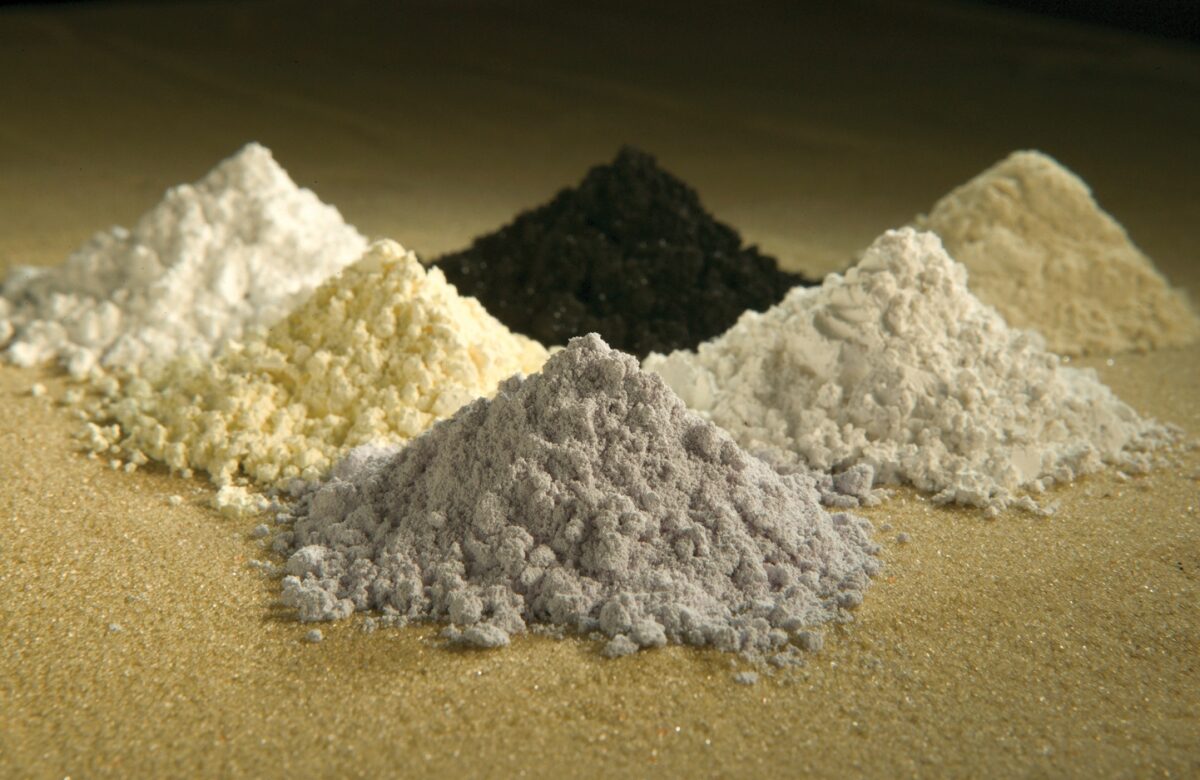
The International Energy Agency published its Global Critical Minerals Outlook 2026 on Thursday and attached a dollar figure to the downstream cost of a Chinese rare earth cut-off. That figure is $6.5 trillion. It is the annual value of production across automotive, high-tech, defence, and energy sectors outside China that would be exposed if Beijing’s October 2025 rare earth export controls are ever implemented at full strength, with the US and Europe accounting for nearly half of the impact [IEA, July 16 2026; Reuters, July 16 2026]. A separate $300 billion sits at risk from the parallel graphite controls announced at the same time and later postponed [Reuters, July 16 2026].
The $6.5 trillion number is not a forecast. It is an inventory of what depends on the current supply chain. But the fact that the IEA, a body that generally speaks in the register of official energy security concerns, is willing to publish this figure at all is the news. Sovereignty risk moved from qualitative into quantitative in one release.
What’s happening
The Outlook finds that critical mineral prices rebounded in 2025 and early 2026 after several years of decline, and that new export restrictions have accelerated the reversal. Overall critical minerals investment fell 9% in 2025, ending several years of growth [IEA, July 16 2026]. Refining concentration is deepening, not thinning. The average market share of the top three refining nations across copper, lithium, nickel, cobalt, graphite, and rare earths climbed to 86% in 2024, up from 82% in 2020 [IEA Global Critical Minerals Outlook 2026]. Almost all of the incremental supply since 2020 came from a single top supplier: Indonesia for nickel, China for the rest.
The report highlights three special focus areas: strategic minor minerals, nuclear supply chains, and Latin America. That third one is notable. Latin America was singled out as a region whose diversification role is now central enough to warrant its own analytical section, which tracks how Serra Verde, the Lithium Triangle, and Chilean copper have moved in the desk’s coverage this year.
The IEA quantification sits on top of a well-populated enforcement stack:
- China exported 30,482.8 tonnes of rare earths in H1 2026, a 6.4% year-over-year decline. June alone was 5,104.8 tonnes [Reuters, July 2026].
- On June 22, MOFCOM added MP Materials and USA Rare Earth to its dual-use export control list, along with eight other US entities [Mining.com, June 22 2026; Al Jazeera, June 22 2026].
- On July 1, a new whistleblower mechanism took effect, encouraging organisations and individuals to report suspected violations of rare earth export controls [Morgan Lewis, July 2026].
- In May, two Japanese nationals employed by a major Japanese company were detained in Dalian on allegations of smuggling rare earth-related items [Morgan Lewis, July 2026].
- The October 2025 controls expanded an earlier April 2025 round that had already forced some automakers to cut or suspend production. Implementation of the October expansion was delayed for one year, which puts full effect around October 2026 [IEA, July 16 2026; Reuters, July 16 2026].
Brazil angle
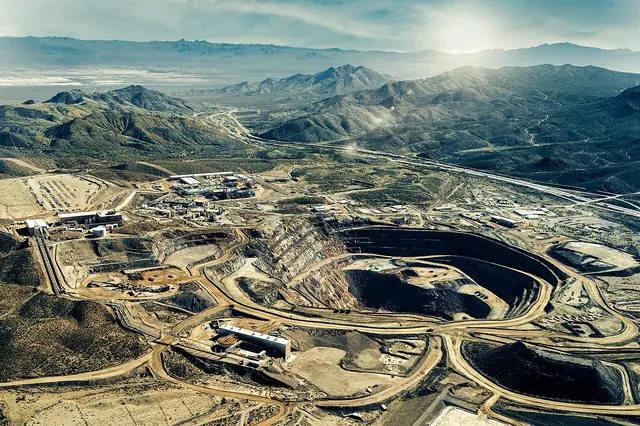
Serra Verde is the only scale producer of dysprosium, terbium, neodymium, and praseodymium outside Asia. The Pela Ema mine in Goiás went commercial in 2024 and is running at a Phase 1 target of roughly 4,400 tonnes of total rare earth oxides per year (after lanthanum removal), scaling to 6,400 tonnes by end of 2027 [Serra Verde Group operations page].
The Serra Verde transaction now sitting inside Brazil’s antitrust review is the story that gives this $6.5 trillion number physical form. USA Rare Earth announced in May a $2.8 billion acquisition of Serra Verde, with a 15-year US offtake agreement covering the Pela Ema production of Nd, Pr, Dy, and Tb [Mining.com, May 2026; BNamericas, May 2026]. CADE’s Superintendência-Geral opened an administrative procedure on May 11 to assess whether the transaction and the offtake constitute a concentration act requiring formal notification [CADE press release, May 2026]. The deal is expected to close in Q3 2026, subject to regulatory approval.
That does not solve the midstream separation problem, which is where China’s chokehold is genuinely tightest. Serra Verde ships a mixed rare earth carbonate. The four heavy magnet elements still have to be separated somewhere, and that somewhere is still mostly China. Brazil has no operating heavy rare earth separation plant.
United States angle
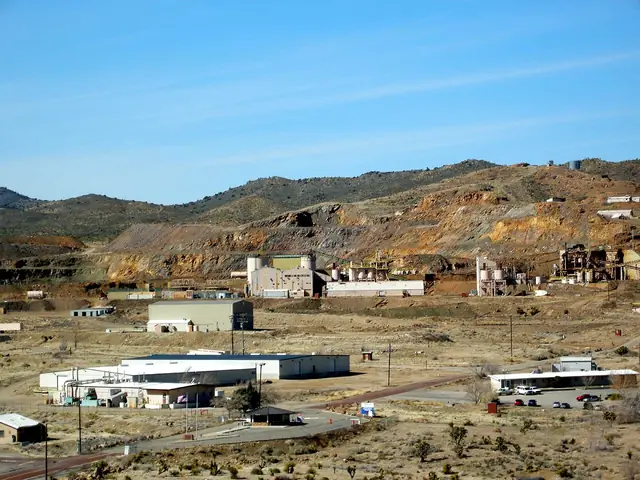
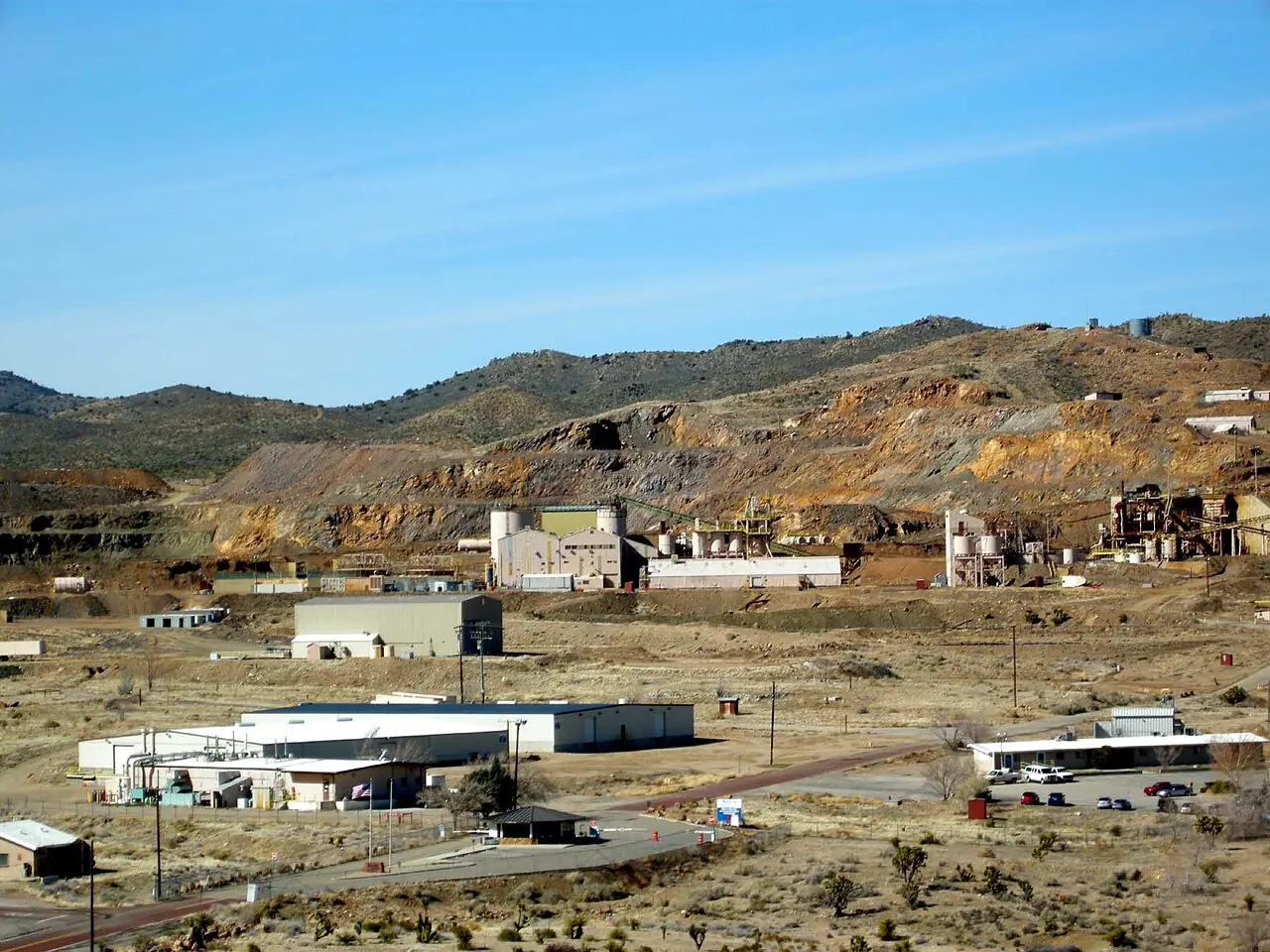
MP Materials and USA Rare Earth are named on both sides of the trade war ledger now. On the US side, MP Materials runs Mountain Pass and the Independence magnet facility in Fort Worth. USA Rare Earth is advancing Round Top in Texas alongside a Colorado separations facility, with a January letter of intent from the Department of Commerce covering $277 million in direct CHIPS Act funding and $1.3 billion in senior secured debt, plus a parallel collaboration with the DoE’s National Energy Technology Laboratory on heavy rare earth separations [Global Trade Alert, January 2026; USA Rare Earth investor release, January 2026]. On the Chinese side, both are on the June 22 entity list, forbidden from receiving Chinese-origin dual-use goods [Mining.com, June 22 2026].
The IEA’s $6.5 trillion figure is arriving into a US policy environment that is already spending. Pentagon EUL awards, DoE LPO commitments, DPA Title III grants, and the 45X production tax credit are all funding ex-China midstream buildout. The Outlook makes the case that this is not enough. Investment in critical minerals overall is declining, and the concentration ratio is still moving in the wrong direction.
China angle
The Chinese playbook is now visible in three layers. First, quotas and controls at the ministerial level (MOFCOM, MIIT, October 2025 rare earth and graphite lists). Second, entity-specific bans on named foreign competitors (June 22 addition of MP Materials, USA Rare Earth, and eight others). Third, the enforcement infrastructure: the July 1 whistleblower mechanism, the Dalian detention of the two Japanese nationals, and audit intensification on customs paperwork.
Notably, the October 2025 expansion was delayed for one year rather than dropped. The delay is a suspension, not a rescission. Around October 2026 it expires. The IEA’s $6.5 trillion number is the answer to a question that returns to the negotiating table in about ten weeks.
What it means
The Outlook does two things for the desk. First, it validates the SOV50 framing that sovereignty risk in AI-relevant materials is measurable and material. Second, it shifts the marginal Western capital case for Brazil, Australia, and Africa from “diversify because it feels right” to “diversify because the IEA now says $6.5 trillion of your economy sits behind a chokepoint you do not own.”
For AI infrastructure specifically, the exposure is unevenly distributed. NdFeB magnets used in servomotors, high-torque wind, and EV drives are Nd/Pr heavy, both of which Serra Verde makes. Heavy rare earths (Dy, Tb) that go into military-grade magnets and some high-temperature applications remain the tightest bottleneck.
What to watch
- The October 2026 expiry of the delayed-implementation window on China’s October 2025 rare earth and graphite controls. If not renegotiated, watch for a MOFCOM notice reasserting full effect.
- CADE’s Serra Verde transaction ruling, expected in Q3 2026. A conditional approval that requires domestic separation buildout would be the single most consequential regulatory move in Latin American rare earths this year.
- MP Materials Independence magnet output ramp and USA Rare Earth’s Colorado separations start-up. Every kilogram of NdFeB magnet and each tonne of separated Nd, Pr, Dy, and Tb produced outside China narrows the exposure the IEA just priced.