13 GW of hyperscaler nuclear PPAs. Less than 20 percent of demand. The fuel chain is the real story.
A June 2 Carnegie paper audits every hyperscaler nuclear deal and gets to 102 TWh a year against a mid-range data center demand of 560. The next bottleneck is enrichment, where DOE just put $900 million into Piketon and Brazil's Resende sits idle on its second phase.
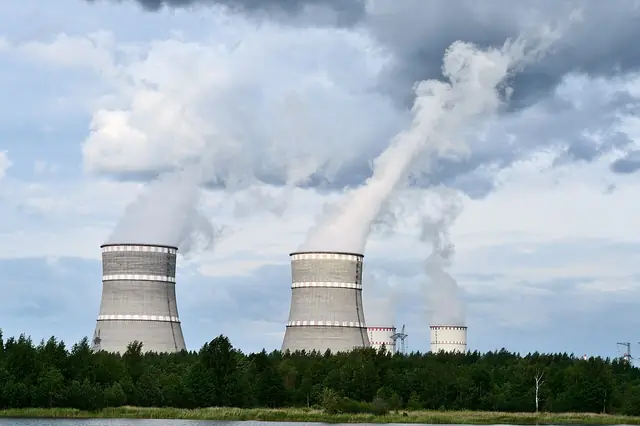
The Carnegie Endowment published an audit on June 2 that did the math the press releases would not. John Pendleton and Mackenzie Schuessler added up every announced hyperscaler nuclear power purchase agreement and direct partnership and arrived at roughly 13 gigawatts of nameplate capacity, split between traditional plant restarts and unbuilt small modular reactors (Carnegie, June 2, 2026). If every project ships on schedule, the four hyperscalers and their fellow travelers will pull about 102 terawatt-hours a year from the grid by the mid-2030s. Mid-range US data center demand for the same year clocks in at 560 terawatt-hours. The deals cover less than 20 percent of what the buildout needs.
That gap is the news. The next news is the fuel chain underneath it.
The audit, in numbers
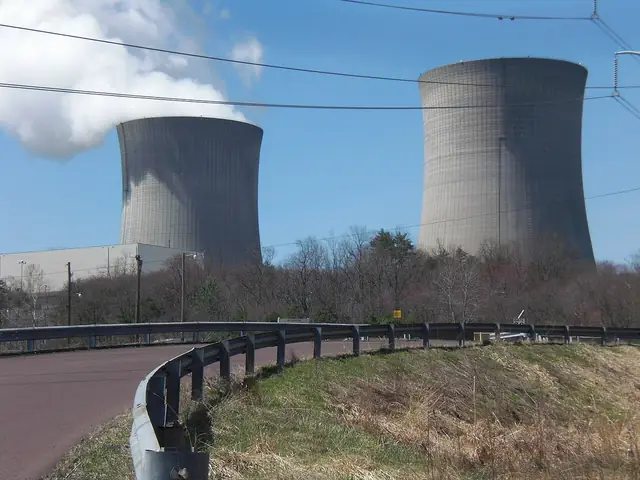
Pendleton and Schuessler walk through each agreement with citations. Microsoft’s twenty-year contract with Constellation to restart Three Mile Island Unit 1 (now Crane Clean Energy Center) is the largest single restart at 835 megawatts, financed by $1.6 billion in Constellation capex and a $1 billion Department of Energy loan, targeted for 2027 service. Meta’s two PPAs with Constellation and Vistra cover 1,121 megawatts at Clinton in Illinois and 2.6 gigawatts across Ohio and Pennsylvania, including 433 megawatts in planned uprates. Amazon’s front-of-the-meter restructuring of the Talen Susquehanna deal puts 1.9 gigawatts on contract through 2042. Alphabet has gone the smallest and earliest, with a 50 megawatt Kairos Hermes-2 demonstration at TVA and a separate three-site, 1.8 gigawatt agreement with the developer Elementl. Add the announced small modular reactor partnerships (Meta with TerraPower and Oklo, Amazon with X-energy) and the total reaches roughly 13 gigawatts.
That is real money, and it is also real timing risk. Vogtle Units 3 and 4 in Georgia, the most recently completed US nuclear project, finished in 2024 seven years late and more than $30 billion over budget. None of the small modular reactor designs hyperscalers are buying have run a commercial unit yet. Carnegie’s chart of 2026 planned grid additions makes the substitution obvious: 43.4 gigawatts of new utility-scale solar (about 60 percent more than 2025), 24 gigawatts of battery storage, and 6.3 gigawatts of natural gas this year alone. RMI counted 94 gigawatts of gas additions in utility resource plans through 2035. Texas alone has 10 gigawatts of new gas backed by more than $5 billion in state loans.
What the audit does not price: the SWU
Restarting a reactor and signing a PPA is the first step. The second step is loading fuel rods, and the fuel chain has its own audit waiting to happen.
The world’s commercial enrichment capacity sits with four producers: Urenco (US, UK, Germany, Netherlands), Orano (France), Rosatom’s TENEX (Russia), and Centrus, the only commercial American enricher (World Nuclear Association). The EIA Uranium Marketing Annual Report puts the average price US utilities paid for separative work unit (SWU) capacity at $97.66 in 2024 and $106.97 in 2023 (EIA Uranium Marketing). Both numbers sit well above the long-term floor that prevailed before utilities began unwinding Russian contracts after February 2022.
The chokepoint shows up sharpest in high-assay low-enriched uranium, HALEU, the 5 to 20 percent enriched fuel that TerraPower’s Natrium, Oklo’s Aurora (enriched to about 19 percent) and X-energy’s Xe-100 designs all require. Centrus produced 900 kilograms of HALEU at Piketon, Ohio in 2024 for the Department of Energy. The DOE then moved on the bottleneck in two steps. In January 2026 it awarded American Centrifuge Operating, a Centrus subsidiary, a $900 million task order to expand Piketon for commercial-scale HALEU, with up to $170 million in additional options for DOE-purchased fuel (Centrus Energy press release, January 5, 2026). Later that month it added $2.7 billion across the broader domestic LEU and HALEU supply base, the funding Carnegie cites as the most concrete federal action behind the May 2025 executive orders on nuclear. Centrus selected Geiger Brothers as construction contractor and Fluor as EPC in April 2026.
Brazil has a Phase 2 plant and a Navy that knows how to spin a centrifuge
The piece of the chain that almost no one outside the industry tracks is sitting in Rio de Janeiro state. Indústrias Nucleares do Brasil finished Phase 1 of the Resende Nuclear Fuel Factory in late 2022 with ten ultracentrifuge cascades. That capacity covers about 70 percent of Angra 1’s fuel demand. Phase 2, contracted to Amazônia Azul Tecnologias de Defesa (Amazul) for engineering, is intended to add thirty more cascades over a decade and reach 100 percent of all three Angra reactors plus roughly 850 tonnes of enriched uranium a year by 2037 (World Nuclear News on INB-Amazul; Rio Times on Brazilian enrichment).
The technology behind the cascades is Brazilian Navy intellectual property, developed with the Institute of Energy and Nuclear Research. IBRAM noted in 2011 that Brazil enriched about 95 percent of Angra fuel abroad (IBRAM, 2011); Phase 1’s late-2022 completion at 70 percent of Angra 1’s demand has narrowed that gap but Angra 2 and the under-construction Angra 3 still rely on foreign enrichment services. The export license INB received in earlier rounds is conditional and small. Brazil is one of the few countries outside Russia and China with sovereign enrichment technology that has not yet been commercialized at scale. The strategic asset value is rising along with the SWU price, and Phase 2 is currently on Brazilian fiscal-cycle pace.
China is moving the other way. CNNC operates roughly 11 million SWU per year of installed capacity and Chinese sources project an additional 2 million SWU per year or more during the 2026 to 2030 Five-Year Plan, with CGN preparing to enter the enrichment business via a planned joint venture (World Nuclear Association on China nuclear fuel cycle). Rosatom remains the swing supplier the West is trying to underwrite around. The Carnegie paper does not score China explicitly, but its math is the same math: every announced reactor that comes online needs a fuel route that does not pass through Russia or China.
What it means
The 13 gigawatts of hyperscaler nuclear capacity is real, but the audit Carnegie released this week made two things explicit. First, the volume is too small to do what the press releases imply about decarbonizing AI; renewables and gas are doing the actual marginal work. Second, the fuel chain underneath the small modular reactor deals is the next leg of the trade. Centrus’s Piketon expansion and DOE’s $2.7 billion for the LEU and HALEU supply base are the visible part. The invisible part is which of the three or four sovereign capabilities outside Russia and China will get capitalized in time to matter. Brazil holds one of them, and is moving slower than the demand curve.
What to watch
- A Phase 2 cascade construction start at Resende. Amazul’s engineering contract is signed; the next public marker is a financing or capex commitment from BNDES or a partner. Watch the second half of 2026.
- The next Centrus DOE task-order milestone. Centrus has said HALEU commercial production targets late-decade ramp; check Q3 2026 10-Q for cascade installation pace at Piketon.
- A small modular reactor design hits demonstration. Kairos Hermes-2 at Oak Ridge is the closest to first criticality among hyperscaler-backed designs. Any slip past 2030 is a flag for every PPA that depends on it.