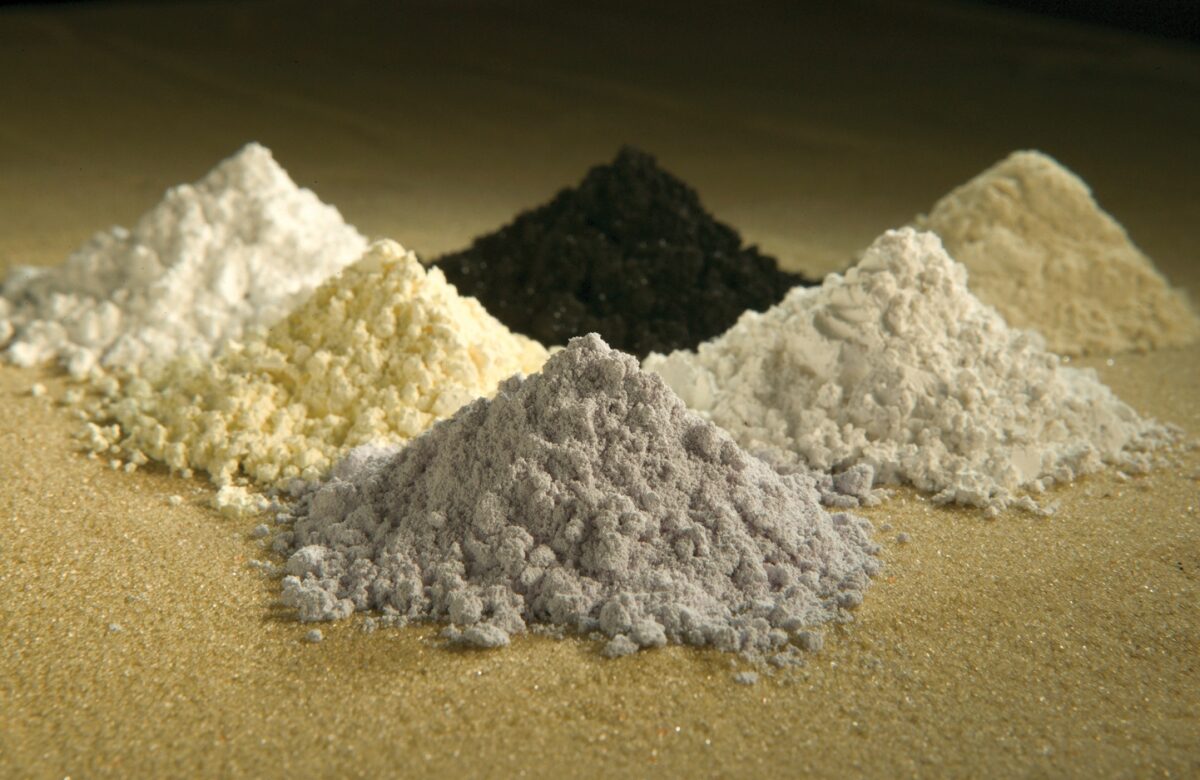
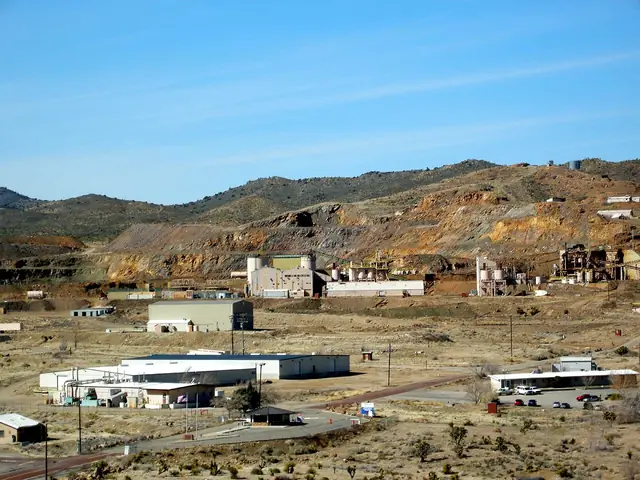
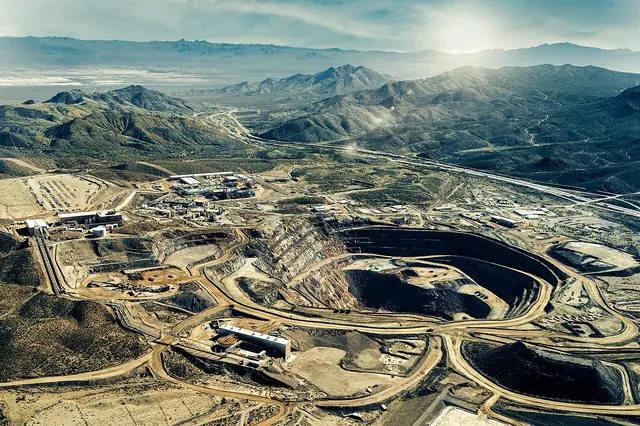
G7 Évian wrote a 60 percent rare earth ceiling. Canada's 13 new bilaterals skipped Brazil.
The Évian declaration sets the first hard numerical target on rare earth source concentration. Canada walked away with 13 new bilateral deals worth more than $5 billion. None landed in Brazil.

G7 leaders signed a critical minerals declaration at Évian-les-Bains on June 17 that puts a number on what had been a slogan. The signatories commit to “significantly reduce our dependencies on a single supplier outside the G7 and partner countries for rare earths and permanent magnets to under 60 per cent by 2030 and continuing to decrease further over time, with an ambition to reach 50 per cent as soon as possible” [Office of the Prime Minister of Canada, June 17, 2026]. For other critical minerals, ministers are tasked with setting specific targets by the end of 2026. Australia signed as a partner country.
The 60 percent figure is the first quantitative ceiling the G7 has put on rare earth source concentration. Bloomberg, in pre-release reporting, framed it as a defense-led mandate likely to require quotas in at least some industrial sectors to actually deliver [Bloomberg via Mining.com, June 17, 2026]. The 2025 International Energy Agency global critical minerals review, cited in the same Bloomberg piece, found China controls roughly 70 percent of refining for the majority of critical minerals, 85 percent of processed cobalt and 99 percent of primary gallium [Mining.com / Bloomberg, June 17, 2026]. Closing the gap between current concentration and the 60 percent ceiling by 2030 with offtake, processing, and recycling capacity that does not yet exist is what the declaration is asking the alliance to deliver.
The mechanism is the G7 Critical Minerals Resilience and Production Alliance, a rename and broadening of the Critical Minerals Production Alliance set up under Canada’s 2025 G7 presidency [PM of Canada, June 17, 2026]. The CMRPA is non-binding, open to like-minded partners on the approval of existing members, and underwritten by a separate G7 Platform for Critical Minerals Cooperation. The platform will lean on the IEA Critical Minerals Security Program and OECD for data, run a crisis-anticipation mechanism for “future market stress or disruption in supply or demand,” exchange information on stockpiling including JOGMEC’s, and pilot traceability standards on lithium and nickel first, extending to five new minerals per year with rare earths flagged for particular attention [PM of Canada, June 17, 2026].
What’s happening
- The Évian summit ran June 15 to 17. France hosted; Brazil, India, Korea, Egypt, Kenya, Qatar, Ukraine and the UAE attended as guests. Saudi Arabia was on the original invitation list but Crown Prince Mohammed bin Salman declined, citing prior commitments; Australia signed the declaration as a partner country [PM of Canada, June 17, 2026; Times of Israel, June 2026].
- The declaration cites 195 critical-mineral projects announced since the start of 2026 totaling €64 billion in committed investment, equity and offtake combined [PM of Canada, June 17, 2026].
- Policy tools still under discussion include resilience criteria, transparency and traceability mechanisms, revenue stabilisation including price-gap subsidies, joint procurement instruments, and trade tools such as quotas and price floors [PM of Canada, June 17, 2026].
- China’s Foreign Ministry responded on June 18, urging the G7 “to respect market economy principles and international trading rules rather favouring ‘small cliques’” [Reuters via Mining Weekly, June 18, 2026]. The one-year suspension on Beijing’s expanded October 9, 2025 rare earth export controls is scheduled to expire November 10, 2026 [Mining Technology, May 2026, via Tantalum, June 16, 2026].
The Canadian bilateral round, and where Brazil is not
The substantive deal flow at Évian was bilateral, and it ran through Ottawa. Canada announced 13 new CMRPA partnerships with more than eight countries, unlocking, per the PM’s office, more than $5 billion in capital across the Canadian critical minerals value chain [PM of Canada, June 17, 2026]. Named deals include Japan’s Sumitomo Corporation supplying Ucore Rare Metals output to Japanese and North American magnet makers, Italy’s Eni taking a stake in Nouveau Monde Graphite’s Matawinie mine in Quebec, France’s Schneider Electric partnering with Torngat Metals on Quebec rare earths, Germany’s RCT Solutions building a solar manufacturing hub in Manitoba with Sio Silica, and Portugal’s Lifthium Energy partnering with NORAM Electrolysis Systems on lithium refining [PM of Canada, June 17, 2026]. France, Germany, Italy and the Republic of Korea also indicated they intend to partner with Canada on critical minerals stockpiling.
Brazil is on the guest list. Brazil is not in the bilateral list. None of the 13 named partnerships routes through Brazilian capacity. The publicly reported bilaterals Lula did hold at Évian were about the September 3 European Commission decision removing Brazil from its approved meat exporter list over antimicrobial enforcement (a separate track from the Mercosur tariff-quota architecture) and steel-trade frictions, not about minerals [Agência Brasil, June 17, 2026; S&P Global, May 14, 2026]. Brazil’s R$15 billion Sovereign Brazil Plan Credit Line and the Vale-anchored R$1 billion Critical Minerals FIP, both designed to absorb this kind of trans-Atlantic offtake flow, are not visible inside any of the named structures.
What it means
The declaration creates a perimeter. Inside it, the 60 percent cap does not bind. Outside it, the ceiling is operationalized through stockpiling, traceability pilots, price-gap subsidies, and quotas under discussion. The strategic question for non-G7 producer states is which side of the perimeter they want to sit on.
For Brazil, the question is concrete in a way it was not a week ago. Phase I production at Serra Verde, the only large ex-Asia heavy rare earth operation, is locked into a 15-year offtake to a US government-anchored vehicle as of April [Tantalum, June 16, 2026]. CBMM’s vacuum-grade ferro-niobium runs to a five-year DLA base contract [Tantalum, June 17, 2026]. The ATL stake in St George’s Araxá project routes Brazilian rare earth and niobium tonnage bilaterally into a Japan-anchored battery supply chain [Tantalum, June 16, 2026]. Three lanes, three counterparties, no Brazilian processing layer in any of them.
The 60 percent declaration could change that arithmetic if Brazil is invited into the partner perimeter for follow-on processing capacity. Accession is open-ended (“subject to the approval of participating countries”), and the multilateral development banks and G7 development finance institutions are tasked with “design and implement strategies” before the end of the year. Lula’s posture at Évian, consistent with the speech Foreign Minister Mauro Vieira read on his behalf at the CELAC summit in Bogotá on March 21, was that resource-rich countries should (paraphrasing) rewrite the region’s historical pattern by capturing value chain stages rather than exporting concentrate [Agência Brasil, March 23, 2026 (event March 21)]. That argument has now been formally received by the G7. The first iteration of Carney’s deal book did not act on it.
What to watch
- End of 2026: G7 ministers’ deadline for non-rare-earth concentration targets, recycling targets, and the first publishable scope of the joint cooperation mechanism with the IEA [PM of Canada, June 17, 2026].
- November 10, 2026: scheduled expiry of the suspension on China’s October 2025 rare earth export controls [Mining Technology, May 2026]. The G7 platform’s crisis-anticipation mechanism is being built for this date in particular.
- Next CMRPA announcement window: whether the next tranche of partnerships includes Brazilian processing capacity (Tiros, the BNDESPAR FIP, INB-Resende fuel-chain) or whether the second round again routes through OECD partner geography.