From Alto Paranaíba to Évian: Brazil's critical minerals moment accelerates
A TDK-backed battery giant takes a direct stake in a Brazilian REE-niobium project while Lula pitches the same geology to G7 leaders. Two events, one week, and a signal that Brazil is no longer a bystander in the supply chain chess game.

What’s happening
Two events, separated by two weeks and two continents, tell the same story: Brazil is being pulled from the periphery into the center of the global contest over critical minerals.
On June 2, 2026, Amperex Technology Limited (ATL), the Hong Kong-based lithium-ion battery manufacturer controlled by Japan’s TDK Corporation, restructured its three-year joint venture with St George Mining (ASX: SGQ). ATL exchanged its 10 percent project-level stake in the Lithium Star Western Australian lithium portfolio for 12.5 million St George shares at A$0.16 apiece. The A$2 million transaction, priced at a 36 percent premium to the 30-day volume-weighted average, makes ATL a direct shareholder in St George. That means ATL now holds exposure to St George’s flagship asset: the Araxá rare earths and niobium project in Minas Gerais, Brazil.
On June 15-17, 2026, President Lula is expected in Évian-les-Bains, France, as a guest at the G7 Leaders’ Summit. Critical minerals supply chain resilience is one of the French presidency’s top three priorities. Brazil has been invited as one of four non-G7 countries. Lula’s message, previewed by Finance Minister Dário Durigan at the G7 finance ministers’ meeting in Paris on May 18-19, is consistent: Brazil has the geology. What it wants is capital, technology transfer, and domestic industrialization. Not mere export.
The ATL deal is the capital-market layer of that pitch. The G7 summit is the diplomatic layer. Both are happening in the same fortnight.
The Araxá project: what ATL is buying into
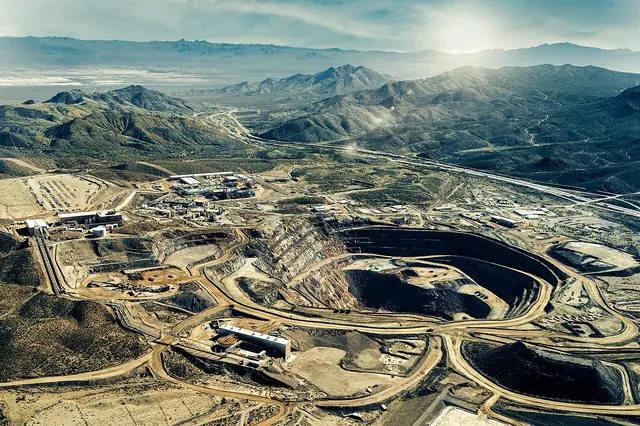
St George’s Araxá project sits in the Barreiro Carbonatite Complex, roughly 6 km from the city of Araxá in the Alto Paranaíba region of Minas Gerais. It is the same geological formation that hosts CBMM, the Moreira Salles-controlled company that produces roughly 80 percent of the world’s niobium.
The project’s March 2026 JORC resource upgrade is substantial:
| Classification | Tonnes (Mt) | TREO (%) | Nb₂O₅ (%) |
|---|---|---|---|
| Measured | 8.02 | 5.23 | 1.06 |
| Indicated | 21.46 | 4.31 | 0.63 |
| M&I Total | 29.49 | 4.56 | 0.75 |
| Inferred | 41.42 | 3.71 | 0.52 |
| Total | 70.91 | 4.06 | 0.62 |
An additional 24.56 Mt at 0.52% Nb₂O₅ sits outside the TREO resource envelope, bringing total niobium inventory to 95.47 Mt.
The TREO grade of 4.06 percent is lower than Lynas’s Mt Weld (7.9 percent) or MP Materials’ Mountain Pass (7.98 percent). But Araxá is the largest carbonatite-hosted hard rock rare earths deposit in South America, and the niobium co-product changes the economics. St George’s metallurgical testwork has produced a 15.7 percent TREO flotation concentrate with roughly 82 percent combined REE recovery. A pilot plant is scheduled for Q3/Q4 2026. First commercial production is targeted for 2028.
The St George team is stacked with former CBMM executives, including Thiago Amaral (17+ years at CBMM) and Adriano Rios (former CBMM Production Manager). The proximity to CBMM’s operational infrastructure, workforce, and regulatory ecosystem is not a formal partnership, but it is a real operational advantage.
Why ATL restructured: from project partner to corporate shareholder
ATL and St George created the Lithium Star joint venture in October 2023 to explore for hard-rock lithium in Western Australia. ATL invested US$3 million for a 10 percent stake, with rights to increase its holding and a right of first refusal on lithium offtake.
The June 2026 restructure changes the geometry. St George now owns 100 percent of Lithium Star. ATL becomes a shareholder in the parent company. The rationale is straightforward: ATL, one of the world’s largest Li-ion battery cell manufacturers, gains exposure to niobium and rare earths (materials for next-generation batteries, magnets, and power electronics) without managing a junior exploration JV. St George simplifies its ownership structure and brings a major global battery manufacturer onto its register ahead of feasibility and offtake negotiations.
ATL also retains a right of first refusal on up to 25 percent of lithium products from successful Lithium Star developments, and an 8 percent discount on long-term offtake contracts priced against international benchmarks.
The deal requires shareholder approval at a general meeting scheduled for early July 2026.
Brazil angle: the regulatory tailwind
The timing is not accidental. Brazil’s Chamber of Deputies approved the National Policy on Critical and Strategic Minerals (PNMCE) on May 6, 2026, by a vote of 343-97. The bill, now before the Senate, establishes:
- A National Council for Industrialization of Critical and Strategic Minerals linked to the Presidency, with powers to approve projects, monitor ownership changes, and ratify international contracts
- R$5 billion in tax credits for 2030-2034 (capped at 20 percent of investments)
- A Mineral Activity Guarantee Fund with an initial R$2 billion federal contribution
- Expansion of the REIDI infrastructure incentive regime to the critical minerals chain
The government abandoned earlier plans for a state-owned Terrabrás entity after industry pushback. The final framework relies on private investment with federal oversight and incentives.
The message to foreign capital is calibrated: invest in Brazil, but build processing capacity in Brazil, and share technology with Brazilian universities. That is the condition Lula set in his May 2026 meeting with Donald Trump, and it is the same message Durigan carried to Paris.
US angle: friendshoring meets Brazilian geology
The US has approximately $600 million deployed in Brazilian critical minerals projects, according to public estimates. USA Rare Earths has committed roughly $2.8 billion in Brazilian rare earth acquisitions. A formal Critical Minerals Agreement (CMA) between Washington and Brasília is under active negotiation.
St George’s own shareholder register tells the story. Hancock Prospecting, Gina Rinehart’s vehicle, invested A$22.5 million in St George’s October 2025 A$72.5 million capital raise, acquiring roughly 6 percent of the company. Rinehart is already the largest shareholder in MP Materials (US rare earths) and holds roughly 8 percent of Lynas Rare Earths. Her presence in St George signals that Australian capital views Brazilian REE-niobium as a complementary bet to US and Australian assets.
St George also participated in the Brazil-US Critical Minerals Forum in São Paulo on March 20, 2026, and has appointed Worley as feasibility technical adviser. US offtake interest is not hypothetical. It is being cultivated.
China angle: the gap ATL is trying to close
China dominates roughly 70 percent of rare earth mining and 90 percent of separation and magnet manufacturing. It has tightened export controls on gallium, germanium, graphite, tungsten, and antimony over 2024-2025, and the MIIT’s rare earth regulatory framework is undergoing public consultation with a deadline of May 28, 2026.
ATL is a TDK subsidiary, and TDK is Japanese. But ATL manufactures in China and serves Chinese EV and consumer electronics markets. Its investment in St George is not anti-Chinese. It is diversification insurance. A battery manufacturer that depends on Chinese-processed REE and niobium feedstock wants a second source. Brazil, with the right geology and a friendly investment framework, is that second source.
The competitive read: China will not sit idle if Western and Japanese capital builds a parallel REE-niobium pipeline in Brazil. Expect Chinese SOEs (Chinalco, CMOC, China Minmetals) to scout Brazilian assets more aggressively. The Serra Verde rare earths project in Goiás, already foreign-owned and under CADE investigation, is a precedent.
What it means
For investors: The ATL restructure is a validation event. A major battery manufacturer paid a 36 percent premium to get exposure to Araxá at the corporate level, not the project level. That is a vote of confidence in the asset, but also a signal that offtake competition for non-Chinese REE and niobium is intensifying.
For Brazil: The country is moving from “potential” to “positioned.” The PNMCE bill, the G7 invitation, the Hancock investment, and now the ATL stake all point in the same direction. The risk is execution: infrastructure gaps, processing capacity shortages, and the long path from JORC resource to operating mine.
For supply chain resilience: Araxá is not yet a mine. But it is the most advanced new REE-niobium project in the Western Hemisphere outside Mountain Pass. If it reaches production by 2028-2029, it would be the first new major rare earths producer in South America.
What to watch
- July 2026: St George shareholder vote on the ATL share issuance. If approved, ATL becomes a locked-in strategic holder.
- Q3/Q4 2026: Araxá pilot plant commissioning. Metallurgical results will determine whether the 15.7% TREO concentrate can be scaled.
- June 17-18, 2026: 3rd Brazil Critical Minerals Summit in Belo Horizonte, back-to-back with the G7 summit. Watch for MOUs, investment announcements, or offtake framework discussions.
- Senate vote on PNMCE: Expected before Brazil’s October 2026 general elections. If delayed, the legislative window narrows.
- Chinese response: Any CADE filings, acquisition attempts, or diplomatic moves by Chinese SOEs targeting Brazilian REE or niobium assets.
Sources: St George Mining ASX announcements (June 2, March 3, February 16, 2026); G7 France 2026 presidency documents; Brazilian Chamber of Deputies voting record (May 6, 2026); Valor International; Mining.com; Covington & Burling policy briefs.