Beijing names MP and USA Rare Earth. Brazil's Serra Verde walks into the trade war.
MOFCOM added the two US rare earth majors to its export control list on Monday. USA Rare Earth's pending $2.8 billion takeover of Brazil's Serra Verde, the only producer outside Asia of all four magnetic rare earths at scale, now sits inside an active retaliation cycle.

China’s Ministry of Commerce on Monday, June 22, 2026, placed MP Materials and USA Rare Earth on its export control list, restricting Chinese dual-use exports to the two US companies that the Pentagon has anchored its domestic rare earth strategy around. Eight other US firms in drones, robotics, aerospace and defence services were named alongside them. The Finance Ministry separately barred Chinese government procurement from roughly 46 US companies, including subsidiaries of Lockheed Martin, Boeing, General Atomics and General Dynamics [Mining.com, June 22, 2026; Al Jazeera, June 22, 2026; Engineering News via Bloomberg, June 22, 2026]. The action is entity-specific, not a broad new rare earth rule, but it lands on the very companies the US has been using to break Chinese midstream concentration. It also lands on the one US company that is mid-flight on a $2.8 billion deal to acquire Brazil’s only commercial rare earth producer.
What’s happening
- MOFCOM listed 10 US entities on June 22: Aveox, Red Cat Holdings, Teal Drones, IMSAR, Jaia Robotics, Ball Aerospace & Technologies, Oshkosh Defense, L3Harris Maritime Services, MP Materials Corp., and USA Rare Earth Inc. [Stock Titan, June 22, 2026; Al Jazeera, June 22, 2026].
- The listing bars Chinese exporters from supplying dual-use items to the named firms, prohibits parties anywhere from transferring China-origin dual-use goods to them, and requires ongoing transactions of that type to be suspended pending a possible MOFCOM exemption [Stock Titan, June 22, 2026].
- The Finance Ministry barred Chinese government procurement from 46 US firms, including subsidiaries of major US defence primes [Al Jazeera, June 22, 2026].
- China framed the move as a response to the Pentagon’s June 8, 2026 update to the Section 1260H list of Chinese Military Companies, which added 65 entities (17 new parent-level listings and 48 new subsidiaries) and removed 10. New parent-level designations include Alibaba, Baidu, BYD, NIO, CALB, EVE Energy, JA Solar, Trina Solar, WuXi AppTec, Unitree, BOE, Tianma, Innolight, Autel Technology, Robosense, Novogene, and TP-Link [WilmerHale client alert, June 12, 2026; DoD 1260H list PDF, June 8, 2026].
- The strictest rare earth rules from Beijing’s October 9, 2025 package remain partially suspended until November 10, 2026, under the Xi-Trump truce. Monday’s listing is incremental and entity-targeted, not a re-imposition of the broad regime [Stock Titan, June 22, 2026 citing European Parliament research].
- The G7 Évian declaration on June 17 set a 60 percent ceiling on rare earth import dependence on any single non-G7 country by 2030 [Office of the Prime Minister of Canada, June 17, 2026]. Monday’s listing is the first concrete sign of how Beijing responds to the ceiling, by going after the named US firms that would have to deliver the substitution.
Brazil angle
The Brazilian read is sharper than the headline. USA Rare Earth signed a definitive agreement on April 20, 2026 to acquire Serra Verde Group for roughly $2.8 billion, paying $300 million in cash plus 126.849 million USAR shares, with closing expected in the third quarter of 2026 subject to regulatory approvals [USA Rare Earth investor release, April 20, 2026; Denham Capital release, April 20, 2026]. Serra Verde operates the Pela Ema mine and processing plant in Goiás, the only Brazilian commercial rare earth producer, with Phase 1 capacity of about 6,400 tonnes per annum of rare earth oxides and a Phase 2 expansion under evaluation that could roughly double output before 2030 [Serra Verde Group, operations page; Discovery Alert, 2026]. Serra Verde sits inside a 15-year offtake to a US government-backed special purpose vehicle for 100 percent of Phase 1 neodymium, praseodymium, dysprosium and terbium output [Denham Capital release, April 20, 2026; Tantalum, June 16, 2026]. The Brazilian flagship REE asset is therefore in flight to a buyer that, as of Monday, is on a Chinese export control list. CADE clearance is the regulatory step still ahead in Brazil. Brazilian policymakers now have to decide whether USAR being on Beijing’s list changes the merger review calendar or its conditions. The structural read for Tantalum is that Brazil’s mine-to-magnet value chain became more strategic on Monday and more contested in the same move. Resouro’s Tiros project in northern Minas Gerais (post-tax NPV $714.9 million on a 1.4 billion tonne resource at 12 percent TiO2 and 4,000 ppm TREO) and CBMM’s adjacent monazite by-product streams are the next tier of Brazilian optionality if USAR-Serra Verde slows for any reason [Mining.com, June 15, 2026; Tantalum, June 16, 2026].
US angle
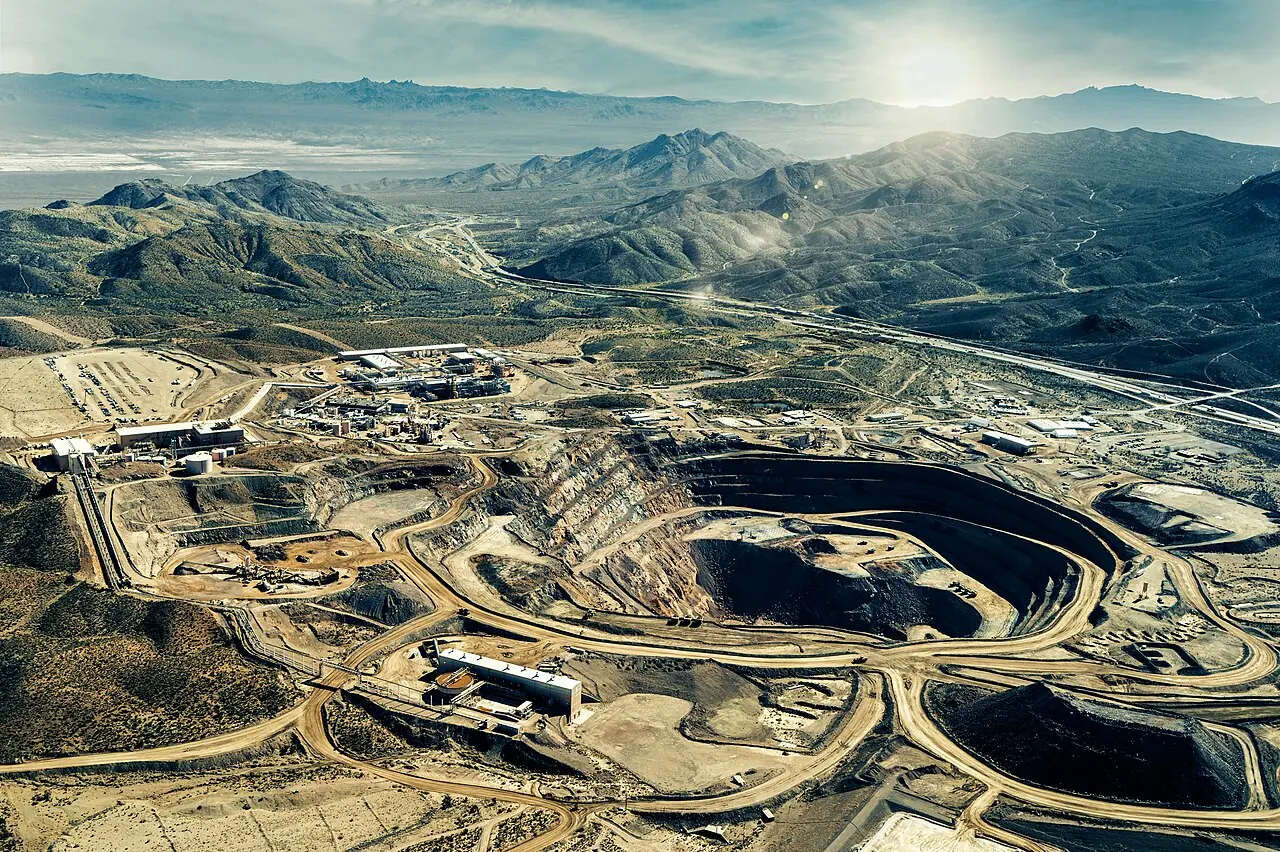
MP Materials and USA Rare Earth are the two pillars of Washington’s domestic rare earth strategy. MP operates Mountain Pass in California, the only active US rare earth mine, and the Pentagon is a shareholder under a 2025 public-private partnership [Mining.com, June 22, 2026]. USA Rare Earth is building the magnet plant in Stillwater, Oklahoma and ringfencing the Pela Ema feedstock through the Serra Verde acquisition. The June 22 listing does not by itself cut their revenue. What it constrains is the inbound flow of Chinese dual-use inputs that both companies use in upstream processing and downstream manufacturing. The market signal was muted on the day, with MP roughly flat and USAR modestly higher, but YTD share moves coming into the announcement (USAR up about 107 percent, MP up about 20 percent) compress the cushion against any negative supply event [Stock Titan, June 22, 2026]. The Office of Strategic Capital’s June 16 conditional $500 million commitment to Phoenix Tailings (anchoring a $1 billion Freedom Facility build for separation and metallization) becomes more load-bearing if Mountain Pass throughput slows on Chinese-input restrictions [Mining.com, June 16, 2026; Tantalum, June 17, 2026].
China angle
Beijing structured the action for maximum precision. The new MOFCOM order is not a re-imposition of the broad rare earth controls suspended until November 10. It is entity-targeted, aimed at the two firms in the publicly visible US response architecture. The pattern matches the playbook from earlier 2026 entity listings, namely targeted retaliation that preserves the strategic optionality of the broader regime. China’s leverage at the magnet processing layer remains the binding chokepoint. The June 22 listing is a signal, not a supply cut. It tells the US capital market and the merger-review apparatus in Brasília that any further Pentagon-anchored equity moves invite entity action. The 2025 IEA review, cited in Évian preparation, found China controlling roughly 70 percent of refining for most critical minerals, 85 percent of processed cobalt, and 99 percent of primary gallium [Mining.com / Bloomberg, June 17, 2026]. The June 22 entity-targeting is consistent with using that leverage selectively rather than spending it across the whole regime.
What it means
Three things move together. First, the Pentagon’s two named horses in the US rare earth race are now also Beijing’s named targets, which forces both companies to validate that their Chinese-input exposure can be substituted or licensed under the new MOFCOM order. Second, the Brazilian REE asset most clearly tied to that race, Pela Ema, is in flight to one of those two companies and now has Chinese trade-policy visibility attached to its merger calendar. Third, the G7 Évian 60 percent ceiling, set days before the listing, just became more expensive to deliver because the supply alternatives the ceiling depends on (MP, USAR, and the Brazilian and Australian feedstocks they aggregate) are the companies Beijing chose to put a finger on first.
What to watch
- CADE filing posture on USA Rare Earth’s acquisition of Serra Verde Group. The Q3 2026 closing target depends on Brazilian merger-review timing as well as US clearances [USA Rare Earth investor release, April 20, 2026].
- Any MOFCOM exemption licensing pattern for the 10 listed firms. Stock Titan flagged the suspension-with-application-for-approval mechanism as the operative pressure release valve [Stock Titan, June 22, 2026].
- US response from Commerce, Treasury, or the Office of Strategic Capital. The June 16 Phoenix Tailings conditional commitment was the last named federal step on this chain.
- BYD, Alibaba, and Baidu posture toward US capital markets after their addition to the Pentagon’s June 8 1260H list [WilmerHale, June 11, 2026].
- Whether the November 10, 2026 expiry of the partial rare earth control suspension is extended, allowed to lapse, or replaced with a narrower regime focused on entity listings [Stock Titan, June 22, 2026].