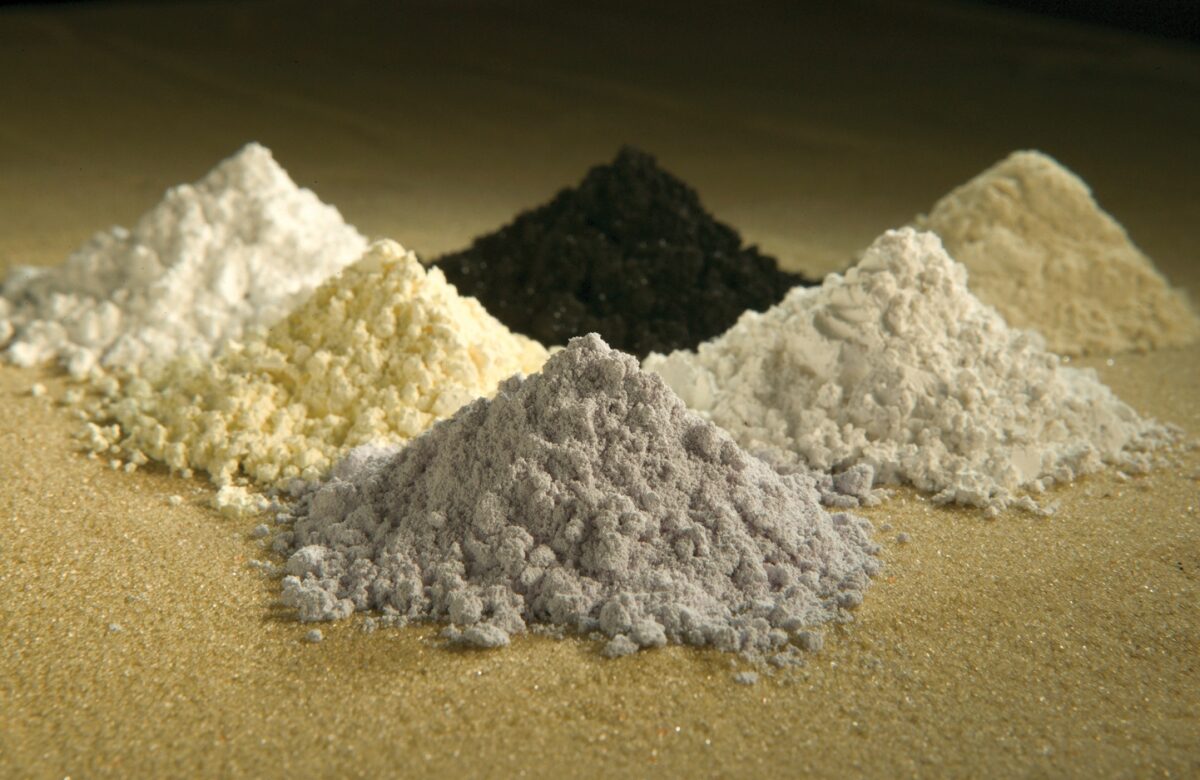
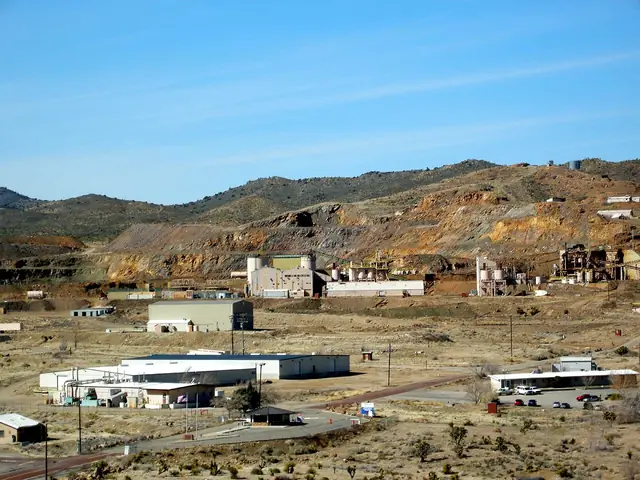
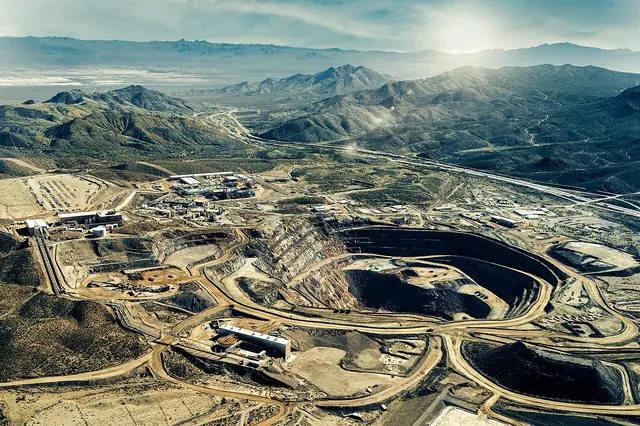
Washington funds the mines. Japan and Korea buy the oxide.
The Financial Times' read of MP, Energy Fuels, and Phoenix Tailings finds most US-funded rare earth output crossing the Pacific because domestic magnet capacity is a 2027 story. Serra Verde and Brazilian monazite face the same gap.

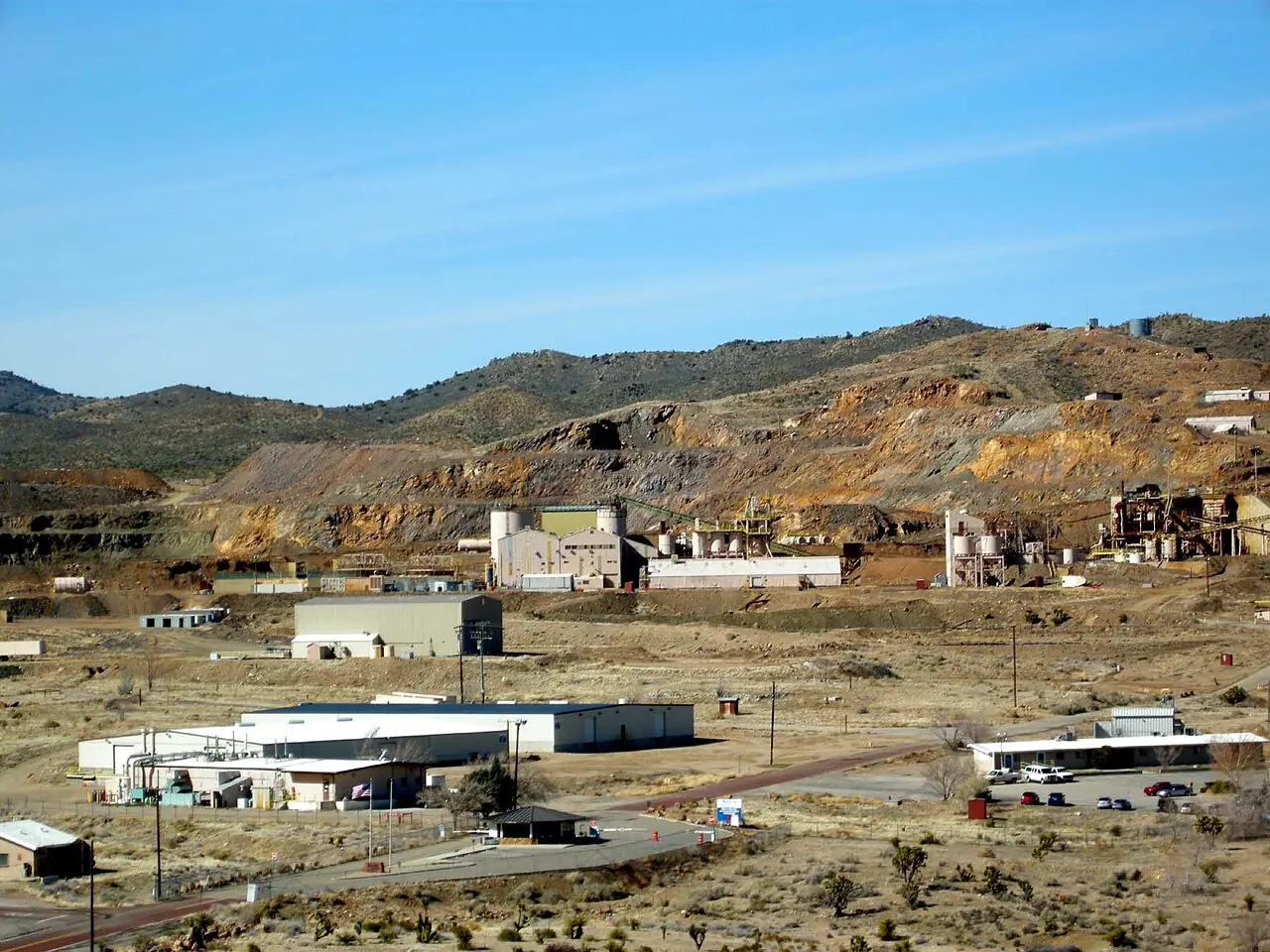
On July 9, 2026, the Financial Times reported that MP Materials, Energy Fuels, and Phoenix Tailings, the three US rare earth producers with billions of dollars in federal support, are selling most of their output to Japan and South Korea (Mining.com and The Northern Miner citing FT, July 9, 2026). The reason is not a policy loophole. It is the same trap Brazilian producers face: the magnet-manufacturing capacity that would convert Western oxide into finished neodymium-iron-boron and samarium-cobalt magnets sits in Asia, and that is where the customers and cash-in-90-days sit too.
What’s happening
- Phoenix Tailings CEO Nick Myers told the FT that Phoenix’s customers are “primarily in Korea and Japan,” and that “unless the [US defence] primes move quickly, I will sell out. Other companies are paying top dollar faster.” Phoenix received conditional US government support of $500 million in June 2026 (Mining.com and The Northern Miner citing FT, July 9, 2026).
- MP Materials, the largest US producer, sells its neodymium-praseodymium (NdPr) oxide and metal primarily through Sumitomo Corp for distribution to Japanese customers, per MP’s latest quarterly results. MP has stopped selling mined rare earths to China’s Shenghe Resources under its US government agreement (Mining.com, July 9, 2026).
- Energy Fuels received $725 million in conditional Pentagon funding in June 2026 and plans to ship rare earth oxides to South Korea through its pending acquisition of Australian Strategic Materials, whose Korean facility produces rare earth metals (Mining.com, July 9, 2026).
- Energy Fuels also agreed on June 23, 2026 to acquire the century-old German magnet maker Vacuumschmelze (VAC) from Ara Partners for approximately $1.9 billion equity value, structured as $718 million in cash plus 65.853 million newly issued Energy Fuels shares. VAC was founded in Hanau, Germany in 1923, holds more than 400 patents, and serves more than 1,000 customers across aerospace, defence, automotive, and industrial markets. Deal close is expected in early 2027 (Energy Fuels press release via PR Newswire, June 23, 2026; CNBC, June 23, 2026).
- China holds roughly 90 percent of global NdFeB magnet production, per US government estimates. Japan is the largest non-Chinese producer, with South Korea, the US, and Europe holding smaller or emerging shares (Mining.com citing US government estimates, July 9, 2026).
The read: federal capital is buying midstream capacity that Asian customers underwrite. The offtake goes east not because policy failed, but because the magnet lines that would consume US NdPr oxide domestically are 2027 or later assets. MP’s Fort Worth “Independence” facility will supply Apple with recycled-material NdFeB magnets starting 2027 under the July 15, 2025 $500 million partnership (MP Materials press release, July 15, 2025). The Energy Fuels-VAC combination runs only after early 2027 close. Between now and then, either the oxide moves east or the miners run out of runway.
Brazil angle
The same pattern reproduces on the Brazilian side. USA Rare Earth agreed in April 2026 to acquire Serra Verde, the Goiás ionic-clay producer, for approximately $2.8 billion, backed by a 15-year offtake covering 100 percent of Serra Verde’s Phase I neodymium, praseodymium, dysprosium, and terbium output. Phase I targets 6,400 tonnes of total rare earth oxide by end of 2027, with the deal expected to close in Q3 2026 (Serra Verde disclosure, April 2026). USA Rare Earth sits on the June 22 MOFCOM export-control list alongside MP Materials (Al Jazeera, June 22, 2026). Meanwhile, ADL Mineração, a private São Paulo-based operator running a Buena unit in Rio de Janeiro state, shipped Brazil’s first private-sector monazite concentrate in decades this year with the first container going to Canada, targeting 500 to 1,000 tonnes by end of 2026 and 3,000 tonnes within two years (Rare Earth Exchanges, May 8, 2026).
Brasília has no announced downstream magnet-plant program. Chinese, Japanese, and Korean magnet lines will absorb Brazilian oxide as readily as they absorb American oxide. The refining gap is a Western Hemisphere problem, and Brazil owns the most concentrated ionic-clay rare-earth asset outside China at Serra Verde with none of the magnet-plant investment to keep the finished good on this side of the Pacific.
US angle
The federal pricing agreement that guarantees MP a minimum price on certain products is the reason MP can hold the domestic-first line while Asian premia widen. Not every US producer has that floor. Phoenix Tailings’ “I will sell out” quote is honest cash-flow arithmetic. The Trump administration’s push is credible on the mining and separation side; the gap is downstream. MP expects to begin shipping finished magnets to General Motors later this year under previously announced supply agreements (Mining.com, July 9, 2026). Energy Fuels’ March-through-June 2026 stack, $725 million Pentagon loan, $1.9 billion VAC acquisition, Australian Strategic Materials Korean facility purchase, is the same play sequenced differently: buy an existing magnet plant abroad, then reroute feedstock. The gap between “US-funded” and “US-consumed” closes in 2027 to 2028, not in 2026.
China angle
MOFCOM Announcement No. 61 of 2025, published October 9, 2025, applied the foreign direct product rule to rare-earth magnets containing 0.1 percent or more Chinese-origin heavy rare earths, or produced using Chinese processing technology (CSIS, October 9, 2025). The July 1, 2026 MOFCOM Announcement No. 26 whistleblower window sits on top of that architecture. Chinese-origin content is now a compliance question inside every finished magnet, including Sumitomo-mediated shipments carrying MP NdPr oxide into the Japanese magnet ecosystem. Japanese and Korean magnet makers can pair US-origin light rare earth oxide with domestic Nd metal, but the dysprosium and terbium share of their feedstock still runs partly through Chinese separators, and a magnet with 0.1 percent Chinese Dy still needs a MOFCOM licence to move under No. 61. That is the mechanic Energy Fuels is trying to short-circuit with VAC and ASM. The June 22 blacklist and the July 1 whistleblower rule are how Beijing keeps the ticket-issuing seat.
What it means
Federal capital is buying midstream and downstream in that order. Mining and separation are booked. Finishing is 12 to 24 months out. In the interval, US oxide flows to Asian magnet plants because they exist and they pay in weeks. That interval is where the sovereignty story is thinnest and where Chinese pressure tools, export licensing, blacklisting, whistleblower reporting, will land hardest. Brazil watches this from the same trap without a $500 million domestic pricing floor.
What to watch
- Energy Fuels-VAC close in early 2027, and any German or EU regulatory review of the Ara Partners exit.
- USA Rare Earth-Serra Verde deal close in Q3 2026, and the first shipment lane it opens.
- Whether BNDES or MDIC announces a Brazilian magnet-plant program in the second half of 2026 alongside domestic separation build. Without one, Serra Verde and ADL both become oxide exporters by default.
- MP Materials’ Fort Worth “Independence” commissioning cadence. That is the domestic anchor that pulls US oxide off Asia-bound ships in 2027.