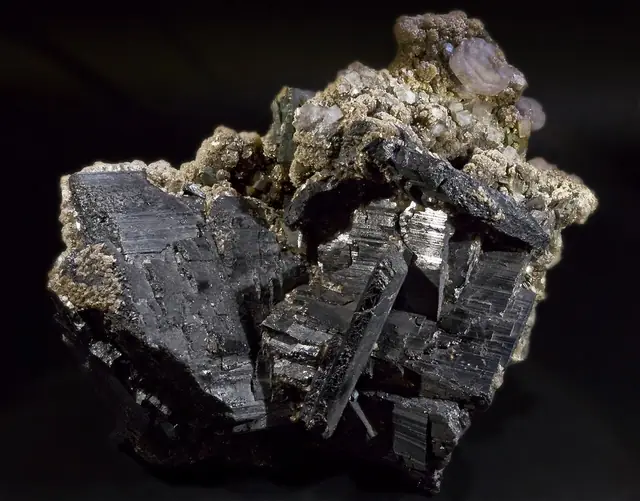
Tungsten scrap at 350%. The metal that wires AI chips is being bought in Home Depot parking lots
Chinese buyers are draining US scrap yards for tungsten ahead of a 2027 defense ban. The same metal forms the interconnects inside every AI accelerator.

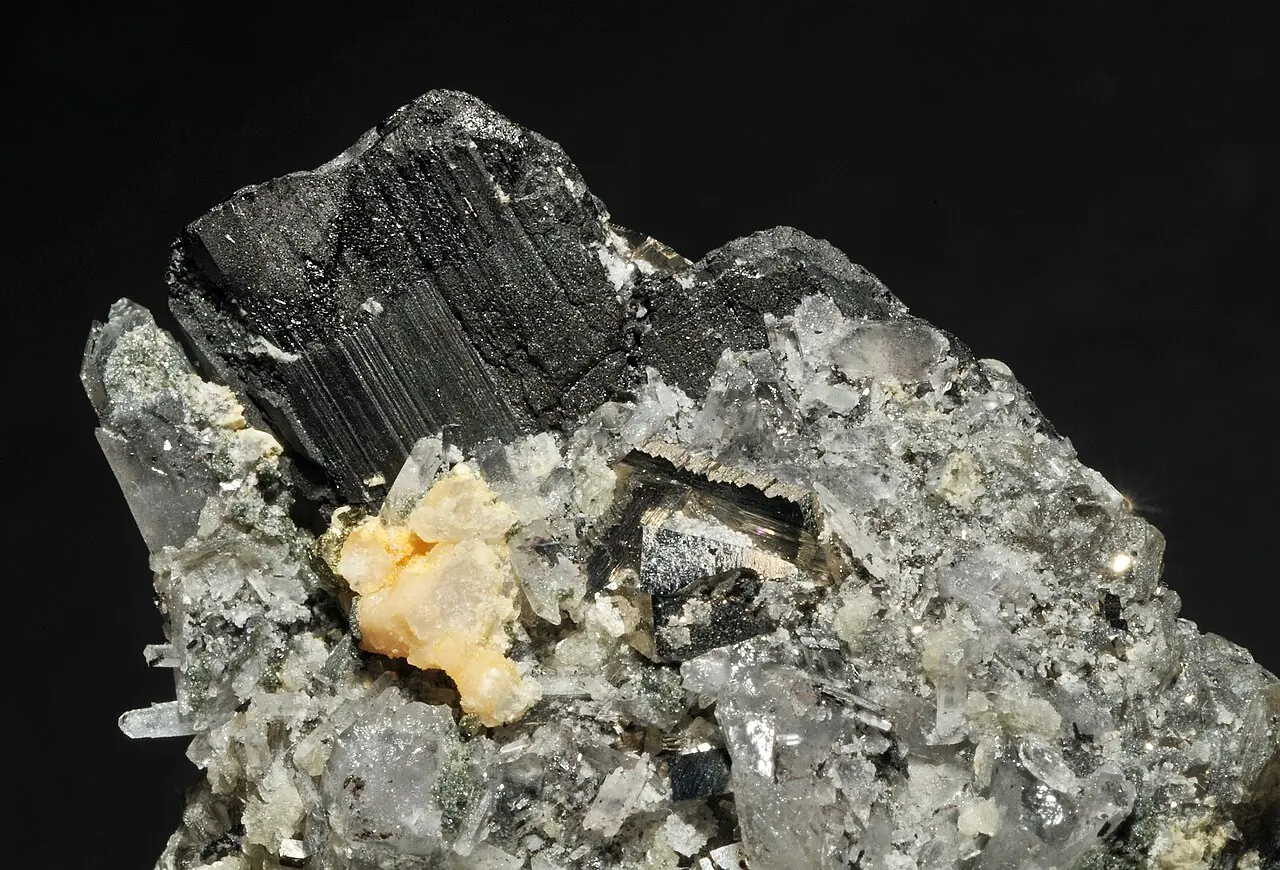
The price of tungsten scrap in the United States has risen roughly 350 percent in twelve months. Chinese buyers are calling American recyclers, meeting them in parking lots, and paying cash for lots that used to sit unsold. The Financial Times first reported the buying spree. The National Association of Manufacturers confirmed the pattern. What started as a quiet accumulation in early 2025 has become a structural drain on the only tungsten supply the US currently has: scrap.
This is not only a defense story. Tungsten hexafluoride gas is the feedstock for chemical vapor deposition of the interconnect layers inside advanced semiconductors. No tungsten, no via fill. No via fill, no 3-nanometer chip. The same metal that armor-piercing rounds require is what binds the transistors in an AI training cluster.
What’s happening
China controls roughly 80 percent of global tungsten concentrate production and an even larger share of processed ammonium paratungstate, or APT, the intermediate that feeds both carbide tools and semiconductor-grade tungsten. In early 2025, Beijing restricted tungsten exports to a whitelist of fifteen approved firms. APT shipments from China to Western markets fell roughly 70 percent year on year.
The price response was immediate and extreme. Rotterdam APT CIF, the European benchmark, traded at approximately $415 per metric tonne unit in early 2025. By April 2026, the same unit cost over $3,100. That is not a commodity cycle. That is a supply fracture.
The US has not mined tungsten commercially since about 2015. Domestic supply depends on imports, recycling, and the Defense National Stockpile Center. The stockpile is projected to run out in 2026. The Pentagon activated the Defense Production Act for tungsten in late 2025.
Enter the scrap buyers. According to the Financial Times investigation, Chinese traders have been cold-calling US recyclers since early 2025, outbidding local buyers by multiples. One recycler described meeting a buyer in a Home Depot parking lot to exchange a $20,000 lot of scrap. The material is typically routed through third-party recycling hubs in Vietnam, Taiwan, South Korea, or the Philippines before entering China, circumventing direct scrap import bans.
The dynamic is paradoxical. The world’s largest tungsten supplier is buying scrap from a country that has no primary production, while that same country is eighteen months away from banning Chinese-origin tungsten in all defense applications.
Brazil angle
Brazil has tungsten. It simply does not have the world market’s attention yet.
The Seridó Mineral Province, spanning Rio Grande do Norte, Paraíba, and eastern Ceará, hosts Brazil’s largest concentration of scheelite deposits. The Brejui mine, operated by Mineração Tomaz Salustino near Currais Novos, is the largest scheelite operation in South America, with an estimated resource of 11 million tonnes grading 0.61 percent WO₃. MTS has reported production of roughly 15 to 19 tonnes per month in recent years, or approximately 180 to 228 tonnes annually. A second operation, Pedra Preta in Pará, adds modest output.
National production was 284 tonnes in 2023, according to USGS. That is down from a historical peak of 1,710 tonnes in 1971. Brazil exports roughly 85 percent of its scheelite concentrate, mostly unprocessed. There is no domestic APT plant, no tungsten carbide powder facility, and no tungsten hexafluoride production.
The contrast with niobium is instructive. Brazil dominates global niobium because CBMM runs a vertically integrated chain from Araxá ore to ferroniobium alloy. Brazil has scheelite ore in Seridó but has never built the residue-to-oxide step. The R$15 billion Sovereign Brazil Plan Credit Line presented to IBRAM in May 2026 and the R$1 billion Critical Minerals FIP could theoretically address this gap. Neither program has announced a tungsten-specific line item.
Bodó Mineração, also in Rio Grande do Norte, holds a higher-grade deposit at 1.0 to 1.44 percent WO₃ with 150 tonnes per day of processing capacity, but the operation has been paralyzed. Bonfim, at 4.8 percent WO₃, is also idle. The deposits are small, pocket-type, and suited to artisanal methods that resist large-scale mechanization. Rapid depletion of individual pockets, high fuel and labor costs, and a strong real that made exports uneconomic in 2024 have kept Brazilian tungsten marginal.
At current Rotterdam prices, that math may be changing.
US angle
The United States is racing a hard deadline. Effective January 1, 2027, the Defense Federal Acquisition Regulation Supplement will ban the Pentagon from purchasing tungsten products if any supply chain step, mining, refining, separation, melting, or fabrication, occurred in China, Russia, Iran, or North Korea. The regulation applies to the full supply chain, not just the final product.
The Trump administration has responded with a flurry of deals and grants:
- In July 2025, the Defense Department awarded $6.2 million to Golden Metal Resources, a subsidiary of Guardian Metal Resources, to advance its Pilot Mountain tungsten project in Nevada. Guardian’s CEO, Oliver Friesen, told Foreign Policy that the company aims to deliver commercial production before the end of the Trump administration.
- In late 2025, Cove Capital and the government of Kazakhstan agreed to develop a tungsten mining and processing plant backed by $1.1 billion in capital expenditure. The US Export-Import Bank issued a letter of interest for $900 million in financing, and the International Development Finance Corporation issued a letter of interest for $700 million. The metal from the project is contractually reserved for US government and commercial needs.
- Almonty Industries, which owns the Sangdong tungsten mine in South Korea, one of the world’s largest tungsten resources outside China, completed Phase 1 commissioning in March 2026. The mine is expected to produce approximately 2,300 tonnes of tungsten concentrate annually in its first phase, doubling to 4,600 tonnes in Phase 2 by 2027. At full capacity, Sangdong could supply roughly 40 percent of global tungsten demand outside China. Almonty has a fifteen-year US defense contract guaranteeing minimum offtake.
- The House Select Committee on China sent a letter to Almonty in June 2025 inquiring about its intent to support US national security needs. Almonty has announced plans to redomicile from Canada to the United States.
Chris Berry, president of House Mountain Partners, told Foreign Policy that even with this push, realistic domestic US tungsten production is unlikely before 2030. That leaves a four-year gap between the 2027 defense ban and any meaningful non-Chinese primary supply.
Scrap is filling that gap. For now.
China angle
Beijing’s tungsten strategy has two prongs: restrict exports, and acquire foreign scrap.
The export controls, implemented through an updated Dual-Use Items Catalog in early 2025, limited tungsten and tungsten carbide exports to fifteen approved firms. Chinese domestic APT prices have traded at a steep discount to international benchmarks, reflecting trapped domestic supply. The gap between Chinese domestic and Rotterdam CIF prices has at times exceeded $85,000 per metric tonne unit, an unprecedented divergence.
The scrap buying is the second prong. By acquiring US scrap through informal channels and routing it through Asian hubs, Chinese buyers are removing material from the Western recycling loop at the exact moment the US needs it most. The National Association of Manufacturers has called for policy responses to counter what it terms “weaponized export restrictions.” No US scrap export ban is currently in place.
The January 2027 defense deadline is Beijing’s leverage point. If Chinese tungsten is banned from US defense supply chains, and no alternative primary supply exists, the US will depend on scrap, recycling, and strategic stockpiles. China is buying the scrap now.
What it means
For AI infrastructure, the tungsten squeeze is a secondary chokepoint behind the better-known rare earth and gallium-germanium restrictions. Tungsten hexafluoride is not a headline material. But it is a Tier 2 critical consumable for frontier chip production, and there is no near-term substitute for CVD tungsten deposition at advanced nodes. Lam Research disclosed in April 2025 that the industry is exploring molybdenum as a potential successor for interconnects at the most advanced nodes, but molybdenum adoption is in early phases and does not solve the immediate supply gap.
Hyperscalers are guiding to roughly $700 billion in combined 2026 infrastructure capex. A meaningful share of that lands in silicon. The tungsten that fills the vias in that silicon is now subject to a parking-lot bidding war.
For Brazil, the read is the same as for germanium and niobium: the country owns the geological endowment but not the processing chain. At $3,100 per mtu, the economics of reopening Bodó or scaling Brejui may finally work. But without APT refining capacity, Brazil would still ship concentrate while China captures the margin in hexafluoride and carbide.
For the US, the gap is four years of primary production and a scrap export policy that does not yet exist. For China, the gap is leverage that expires on January 1, 2027, unless the US fails to build alternatives.
What to watch
- January 1, 2027: The DFARS tungsten ban takes effect. Any delay or exemption request signals Pentagon supply stress.
- Q3 2026 Almonty Sangdong ramp: first sustained non-Chinese concentrate supply in volume. Any production shortfall extends the scrap dependence.
- Guardian Metal Resources Pilot Mountain: permitting and construction timeline. If Berry’s 2030 estimate holds, the US has a half-decade gap.
- Brazil ANM and BNDES: any tungsten-specific line item in the Sovereign Brazil Plan Credit Line or Critical Minerals FIP presentations to IBRAM. Brejui at 0.61 percent WO₃ is not high grade by global standards, but at current prices the cutoff shifts.
- US scrap export legislation: NAM and defense trade groups are pushing for restrictions. A ban would stop the parking-lot trade overnight and force price discovery on primary supply.