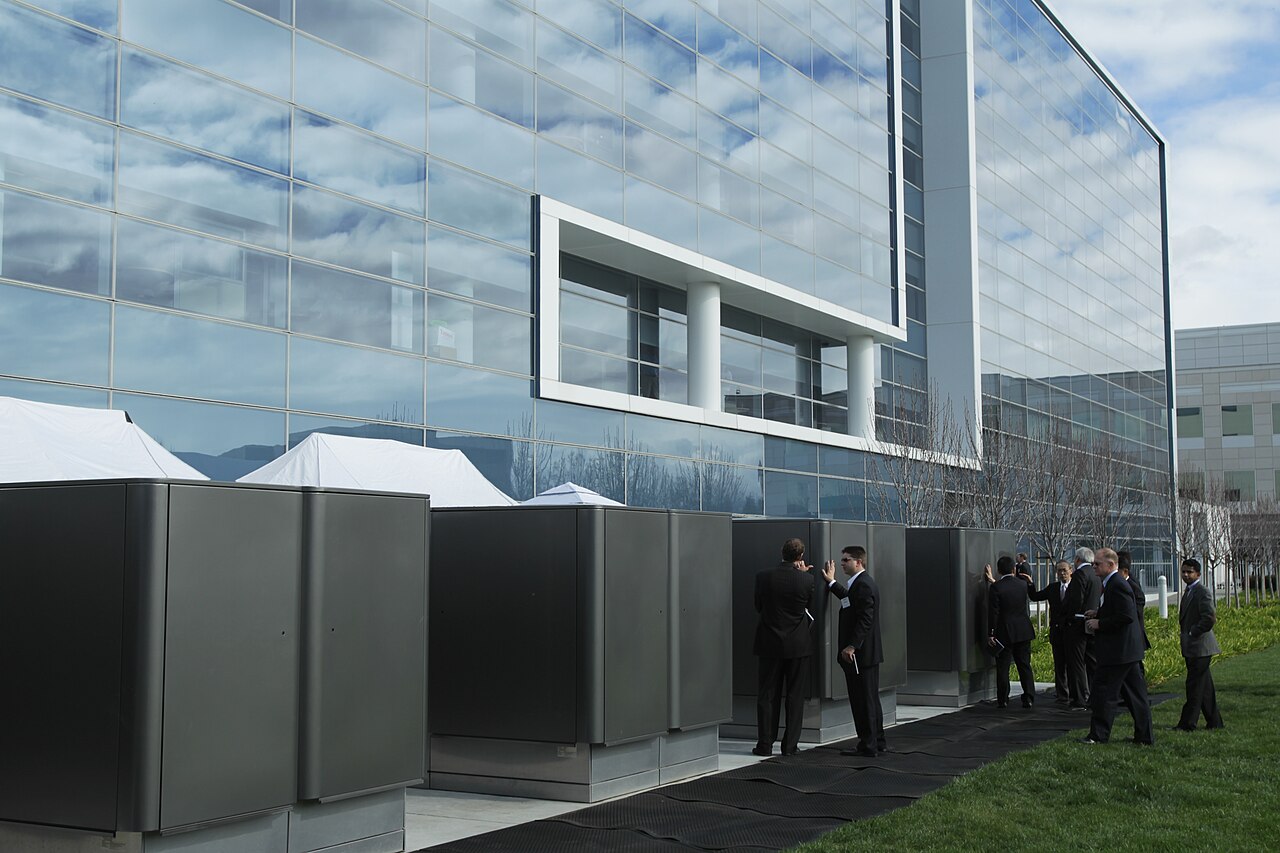
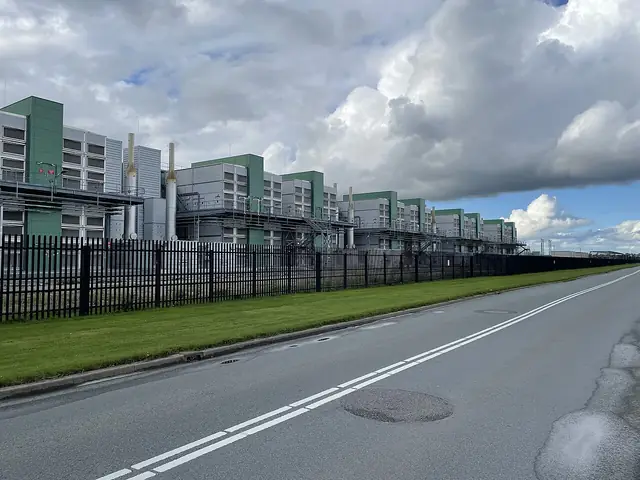
TSMC lifts 2026 capex to $60 to $64 billion. Arizona commitment hits $265 billion.
Thursday's Q2 print answered Monday's preview with upside on every number the desk flagged. Revenue guidance to more than 40 percent, capex up 14 percent, another $100 billion booked for Arizona. The AI materials runway just got extended in a single call.
Taiwan Semiconductor Manufacturing Company reported Q2 2026 results on Thursday, July 16, and raised guidance on every line the desk previewed on Monday. Revenue came in at US$40.2 billion, at the high end of the guided range and a company record. Net profit reached roughly US$22 billion, up 77.4 percent year on year, with gross margins at 67.7 percent, above the top of management’s own forecast (Benzinga, July 16, 2026; Yahoo Finance / GuruFocus, July 16, 2026). Full-year 2026 revenue growth guidance moved to slightly more than 40 percent in US dollar terms, up from the earlier “more than 30 percent” outlook and above the roughly 35 percent sell-side consensus (Yahoo Finance, July 16, 2026; GuruFocus via Yahoo Finance, July 16, 2026).
The number that reprices the AI materials thesis sat in the capex line. TSMC lifted 2026 capital spending guidance to US$60 to US$64 billion, at least US$4 billion above the prior US$52 to US$56 billion range and now a record for the company (Yahoo Finance, July 16, 2026; Benzinga, July 16, 2026). Chief Financial Officer Wendell Huang said capital expenditure over the next three years will be “significantly higher” than the previous three, with capital intensity rising to roughly 36 percent of sales in 2026 from 33.5 percent in 2025 (GuruFocus via Yahoo Finance, July 16, 2026). Alongside the guidance, TSMC announced a further US$100 billion of Arizona investment, taking the total US commitment to US$265 billion (GuruFocus via Yahoo Finance, July 16, 2026).
What’s happening
- Q2 2026 revenue US$40.2 billion, at the high end of guidance; net income up 77.4 percent year on year to about US$22 billion; gross margin 67.7 percent (Benzinga, July 16, 2026; GuruFocus, July 16, 2026).
- Full-year 2026 revenue guidance raised to slightly more than 40 percent US-dollar growth, from the prior “more than 30 percent” outlook (Yahoo Finance, July 16, 2026).
- 2026 capex raised to US$60 to US$64 billion, from US$52 to US$56 billion, with most of the incremental spend earmarked for advanced-node capacity serving AI and HPC customers (Benzinga, July 16, 2026).
- Additional US$100 billion committed to Arizona expansion, bringing the total US commitment to US$265 billion (GuruFocus via Yahoo Finance, July 16, 2026).
- Chairman and CEO C.C. Wei on the call: “Our conviction in the multi-year AI megatrend remains very high,” and, on end markets, “consumer and price sensitive end market segment are being challenged due to the impact of rising component prices and macroeconomic uncertainties” (Yahoo Finance, July 16, 2026).
- Stock reaction: TSM traded down about 4.6 percent premarket Thursday even as revenue and guidance beat, as investors focused on the capex ramp; shares are up roughly 28 percent year to date (Benzinga, July 16, 2026).
The answer to Monday’s preview
The desk’s July 14 preview flagged three signals to watch on the Thursday call: full-year revenue guidance, Wei’s language on CoWoS second-half and 2027 capacity, and any change to the US$52 to US$56 billion capex range. All three moved sharply higher. Revenue guidance went to 40 percent plus. Wei told analysts the multi-year AI megatrend conviction remains “very high,” while flagging weakness in consumer and price-sensitive end markets (Yahoo Finance, July 16, 2026). Capex moved US$8 billion higher at the top of the new range. A 14 percent mid-year lift in the largest single-company capex budget in semiconductor history is a validation event, not an incremental update. It says the AI physical thesis has another 12 to 18 months of financed runway, at minimum, and that the marginal customer is willing to sit in the CoWoS backlog into 2027 to get product.
Enfoque Brasil
Brazil sits at zero direct exposure to the CoWoS packaging chain and to the Arizona buildout the US$265 billion commitment funds. The Nova Indústria Brasil semiconductor allocation stays at design and mature-node fabrication rather than 2.5D or 3D packaging (Click Petróleo e Gás on the Nova Indústria Brasil framework). What Thursday’s number did surface is a downstream materials read that includes Brazilian rare earths. On July 9, ASX-listed Meteoric Resources released an update to the Global Mineral Resource Estimate for the Caldeira project in Minas Gerais: Measured Resources up 246 percent to 128 million tonnes at 2,815 ppm total rare earth oxide, and Global MRE at 1.6 billion tonnes at 2,317 ppm TREO, with 209 kt praseodymium oxide, 594 kt neodymium oxide, 6 kt terbium oxide, and 34 kt dysprosium oxide contained (Sharecafe, July 9, 2026; Mining.com.au, July 9, 2026). Alongside Serra Verde in Goiás, that gives Brazil two of the largest measured heavy and light rare earth resources outside China. Neither one is yet plumbed into a US magnet line. The Arizona expansion means the demand pull for domestic magnet and heavy rare earth midstream builds gets larger, not smaller. Whether Brasília responds with a BNDES or MDIC magnet or separation program in H2 is the near-term move to watch.
Enfoque Estados Unidos
The US$265 billion Arizona figure is now the largest single foreign direct investment commitment on US soil in the semiconductor era. It sits alongside the ex-China rare earth midstream stack the desk has been tracking: MP Materials at Mountain Pass and Fort Worth, USA Rare Earth Round Top and Colorado separations, Energy Fuels and its pending Vacuumschmelze combination, and the June 2026 Pentagon EUL awards to Tooele and adjacent processing sites. Every 45X-eligible ton of NdPr, Dy, and Tb produced ex-China now has a larger domestic finished-goods sink than it did on Wednesday. The other side of the Arizona ledger is power. TSMC’s own guidance implies capital intensity climbing to 36 percent of sales, which lands in electricity, transformer steel, gas turbines, and copper transmission the same way Meta’s Hyperion expansion did in Louisiana on Monday.
Enfoque China
Chairman Wei warned in June that TSMC would remain unable to meet US customer demand for several years even as Arizona ramps (GuruFocus via Yahoo Finance, July 16, 2026). That gap runs through Taiwan. SK Hynix, a lead high-bandwidth memory supplier into the AI packaging chain that TSMC operates, expects memory shortages to continue beyond 2030 as data-center demand rises (GuruFocus via Yahoo Finance, July 16, 2026). Chinese hyperscaler-scale accelerators still route through Taiwanese CoWoS via customers holding US export licenses, or through slower domestic packaging without the same HBM bandwidth. The Arizona ramp does not close the gap on Chinese near-term compute access; it widens the single-point pricing power TSMC holds over the buyer that matters, which is Nvidia.
What it means
Tantalum’s TAI-P sub-index (AI Power) has carried the composite for the last two months on uranium, nuclear utility, and natural gas moves. Thursday’s TSMC print starts the materials leg. Every dollar of the incremental US$8 billion in capex flows to silicon wafers, HBM, copper interposer material, high-purity helium and neon, transformer steel, and grid capacity around Arizona. The US$100 billion Arizona addition is a five-year physical-buildout commitment that gets subcontracted into the same supplier stack Meta and Amazon are already drawing on. The AI capex ceiling test did not break. The runway extended by another quarter.
What to watch
- ASML July 16 print, which TSMC’s guidance validates: any Q3 order flow signal, especially EUV bookings, would confirm the capex is real spend and not a placeholder.
- Louisiana Public Service Commission review of Entergy’s ten-plant Hyperion gas package: TSMC’s Arizona demand pulls on the same GE Vernova, Siemens Energy, and Mitsubishi Heavy Industries turbine slot book Meta is now bidding into.
- BNDES or MDIC signal in H2 2026 on a Brazilian magnet-plant or heavy rare earth separation program: without one, the US$265 billion Arizona ecosystem sources Serra Verde and Caldeira oxide from Brazil and finishes it in Korea, Japan, or the Fort Worth Independence line.
- Q3 2026 pricing from Chinese HBM entrants JCET, Tongfu, and TFME: SK Hynix’s beyond-2030 shortage call is the memory-side chokepoint on the same AI stack TSMC packages.
Sources: TSMC Q2 2026 earnings call (July 16, 2026) as reported by Yahoo Finance / Ines Ferré (July 16, 2026), GuruFocus via Yahoo Finance (July 16, 2026), and Benzinga / Erica Kollmann (July 16, 2026); Meteoric Resources ASX release via Sharecafe (July 9, 2026) and Mining.com.au (July 9, 2026); the desk’s July 14 TSMC preview.