Texas prices the AI grid. The map of hyperscaler capex starts to shift south.
ERCOT's Batch Zero rules, approved June 1, demand upfront deposits and site control from the first 100 GW tranche of a Texas queue that has now swelled to roughly 450 GW. The filter accelerates a competitive bid from Brazil and China for the spillover.

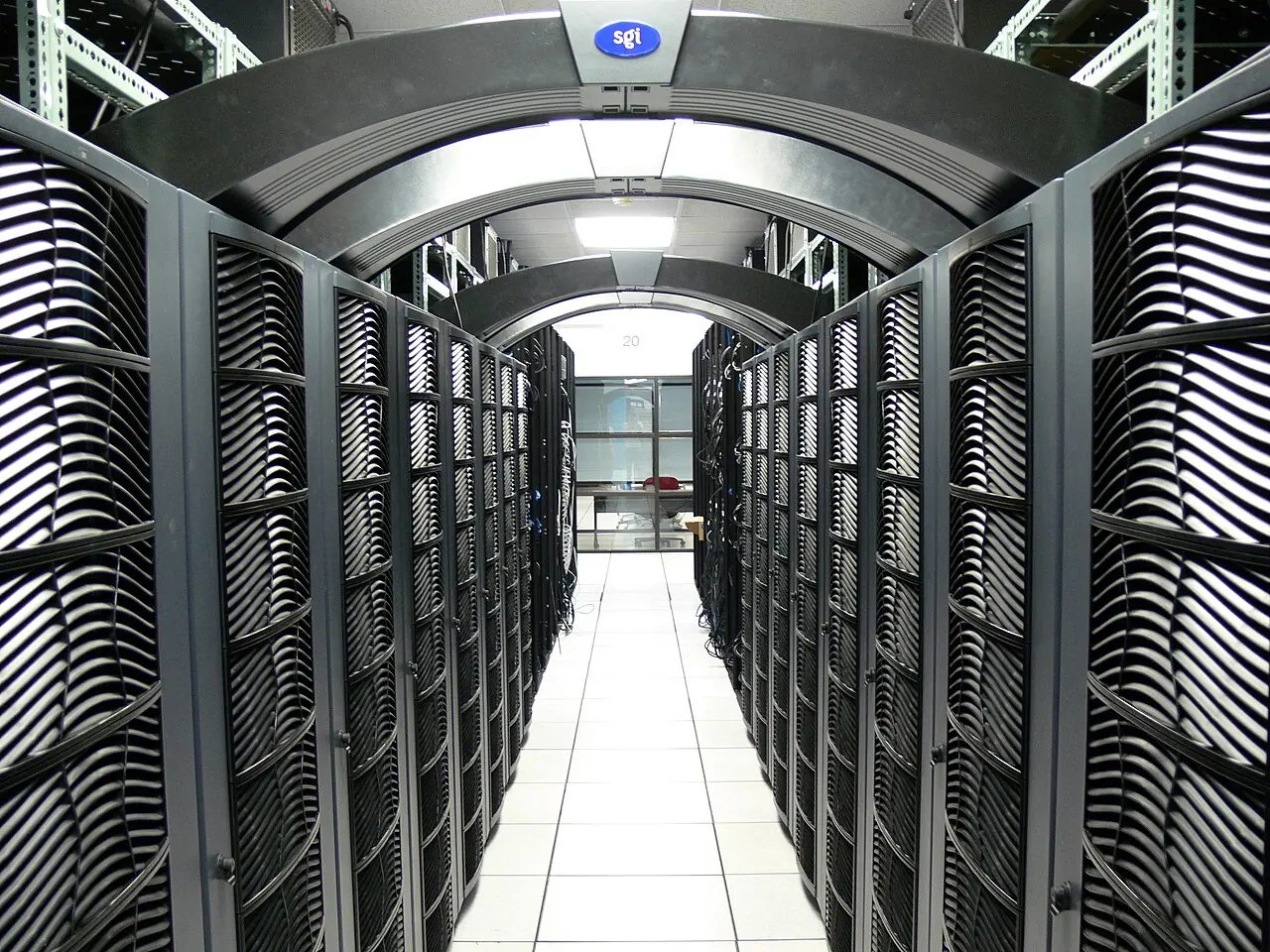
The Electric Reliability Council of Texas board endorsed sweeping Batch Zero rule changes on June 1, 2026. The framework requires data center developers seeking new transmission interconnection to post nonrefundable upfront deposits covering grid upgrade costs, secure site control, and meet milestone tests showing the project is ready to be built. The Texas large-load queue has now swelled to roughly 450 GW of pending interconnection requests, with the Batch Zero tranche carving out the first 100 GW for initial review under the new criteria, per ERCOT board materials [RTO Insider, June 4, 2026; Houston Public Media, June 1, 2026]. The Public Utility Commission of Texas votes on final approval June 18.
What changed is the implicit subsidy. For two years, Texas absorbed the hyperscaler buildout on stranded transmission capacity and let the queue self-sort. The new rules monetize the queue. They convert speculative interconnection requests into capitalized commitments, ration access to existing transmission, and shift the cost of new transmission to the project developer rather than the ratepayer.
What is happening
Roughly 450 GW of large-load requests now sit in the Texas queue, with the first 100 GW eligible for Batch Zero treatment. ERCOT officials said the region could break its power demand record this summer, with peak demand potentially above 92 GW, driven by data center and crypto-mining growth alongside heat [Yahoo News / AP, June 4, 2026]. The Batch Zero filter is designed to identify which of those 100 GW are real and which are placeholder reservations. The remaining 350 GW sits behind it, dependent on transmission that does not yet exist.
The other half of the picture is the input cost. Copper, the conductor underneath every data center transmission upgrade, trades near US$13,800 per tonne on the LME, a record level driven by AI demand and Chilean supply weakness [IEA Commentary, May 2026; Trading Economics LME tracker, June 2026]. Chile’s national production fell 9.04 percent year-on-year in March 2026, according to Cochilco data reported by Reuters on May 12, 2026, and Codelco’s December production overstatement implies 2025 output was the lowest since 1998 [Bloomberg, May 21, 2026]. The pay-to-play deposit Texas now demands is, in part, a function of how much copper-intensive transmission a new gigawatt actually costs in 2026.
Brazil angle
The Texas filter is a competitive opening for Brazil. Scala Data Centers’ AI City in Eldorado do Sul, Rio Grande do Sul, holds a Ministry of Mines and Energy authorization for 5 GW of power connection, with a planned campus capacity of 4.75 GW [Data Centre Magazine, 2026; Intelligent CIO LATAM, 2025]. Phase 1, a US$500 million, 54 MW build, is scheduled to begin construction in late 2026. Scala has committed 500 MW of campus capacity to Brazil’s National Data Center Policy (PNDC), the federal program for sovereign data capacity, which draws on the September 2025 executive order targeting up to R$2 trillion (about US$377 billion) in digital infrastructure investment over the next decade [Global Data Center Hub; Datacenters.com].
The Brazilian pitch is the opposite of the Texas one: abundant renewable power in the Northeast and South, a federal push to build sovereign capacity, and a regulatory environment that subsidizes the buildout rather than pricing it. The constraint is the same constraint Brazil has always carried, downstream processing and the logistics to deliver high-capacity transmission gear at hyperscaler timelines.
US angle
Texas is still the most important hyperscaler buildout geography. The Batch Zero rules do not slow that. They redirect it toward the developers with capital depth (Microsoft, Amazon, Meta, Google, Oracle) and away from speculative or undercapitalized entrants. Expect consolidation. Expect a second derivative: copper-intensive transmission spend continues, supporting the AI Power side of the TAI composite, even if hyperscaler announcements slow at the margin. The Sierra Club and other Texas ratepayer advocates have called the rules necessary to protect non-data center consumers from cost shift [Sierra Club Texas, March 2026], which gives the PUCT political cover to approve.
China angle
China is moving in the opposite direction. The Ministry of Industry and Information Technology approved 60 new green-certified data centers in late 2025, qualifying recipients for subsidies, tax breaks, and reward funds up to RMB 1 million, contingent on PUE below 1.3 and renewable obligation compliance [Oxford Institute for Energy Studies, February 2026]. At the same time, Beijing is responding to evidence of overbuild by piloting a cloud capacity reseller model that pools spare data center capacity for national resale [Light Reading, 2025; DCD, 2025].
The contrast frames the policy choice. Texas filters demand by pricing it. China stimulates supply by subsidizing it, then mops up the surplus through a centralized resale mechanism. Brazil is borrowing from the Chinese playbook: federal program, dedicated allocations, renewable power as the attraction.
What it means
The relevant tracker for this story is the spread between SOV50 and SDX. SOV50, the Tantalum concentration exposure index, is up 14.6 percent year to date as the market continues to bid concentration premium into prices for materials with single-country dominance (rare earths, niobium, gallium, cobalt). SDX, the Southern Diversification thesis index, is down 3.9 percent year to date, despite the deepening rationale for diversified supply. The Texas filter, by raising the marginal cost of US-domestic AI buildout, is the kind of catalyst that could begin to close that spread. The desk is watching.
The honest caveat: SDX is a thesis index, not a benchmark, with no backtest validation yet and thin-market proxies on the materials side. The methodology is on /indexes/methodology.
What to watch
- June 18, 2026: PUCT vote on final approval of the ERCOT Batch Zero framework. A delay or material amendment shifts the timing of any spillover effect.
- Late 2026: Scala AI City Phase 1 construction start in Eldorado do Sul. A named hyperscaler offtake would convert the Brazilian pitch into a verified alternative.
- Q3 2026: MIIT next-tranche announcement on green data center certification. Watch whether the program grows despite the reseller pilot signaling overbuild.