SpaceX becomes the fifth hyperscaler. Reflection signs $6.3B. The compute landlord economy is here.
Reflection AI agreed Monday to pay SpaceX $150 million a month for GB300 access at Colossus. With Anthropic at $1.25B per month and Google at $920M, the SpaceX compute backlog clears $80 billion. The materials and power math sits underneath.

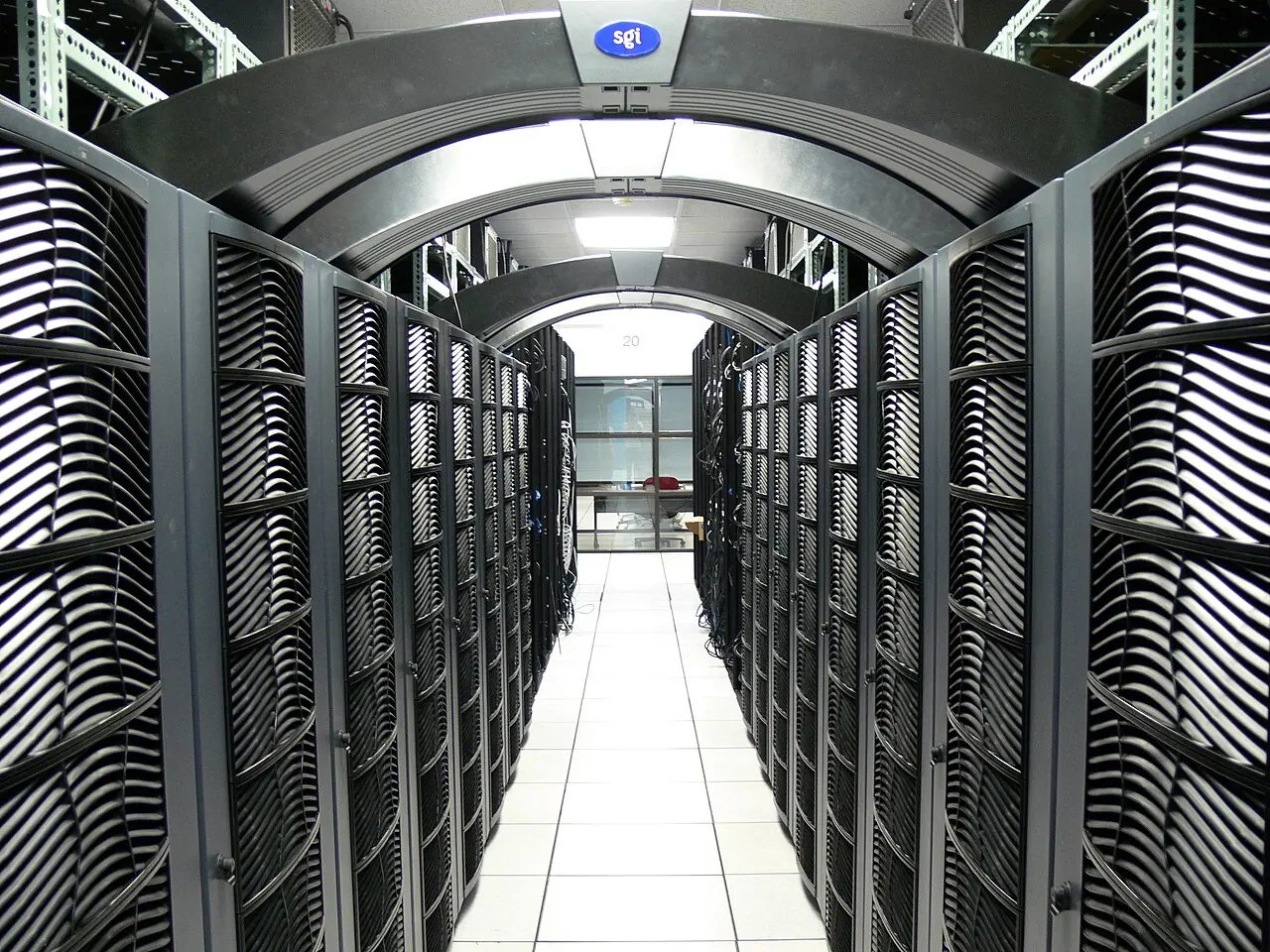
SpaceX disclosed on June 22 that open-source AI startup Reflection has agreed to pay $150 million per month starting July 1, 2026 through 2029 for access to Nvidia GB300 capacity at the Colossus complex, with payments totaling up to $6.3 billion over the full term. Either side may exit on 90 days’ notice after the first three months [CNBC, June 22, 2026; TipRanks, June 22, 2026]. With Anthropic locked in at $1.25 billion per month through May 2029 and Google paying $920 million per month from October 2026 through June 2029, SpaceX has now signed more than $75 billion in compute lease commitments against a single, privately built data center estate. The compute economy is becoming a landlord economy. The materials and power bill underneath it lands in three specific places.
What’s happening
- Reflection–SpaceX: $150 million per month from July 1, 2026 through 2029, up to $6.3 billion total, for Nvidia GB300 capacity at Colossus. 90-day exit window applies after the first three months [CNBC, June 22, 2026; TipRanks, June 22, 2026].
- Anthropic–xAI: $1.25 billion per month for the full output of Colossus 1 in Memphis, more than 300 MW of compute capacity, running to May 2029 [TechCrunch, May 20, 2026; CNBC, May 6, 2026].
- Google–SpaceX: $920 million per month from October 2026 through June 2029 for roughly 110,000 Nvidia GPUs plus CPUs, memory, and related components [TechCrunch, June 5, 2026].
- Reflection was last valued at about $25 billion in talks reported by The Wall Street Journal, after raising $2 billion at $8 billion in October 2025. The company was founded in 2024 by Misha Laskin and Ioannis Antonoglou, both ex-DeepMind, and pitches itself as the American answer to DeepSeek [TechCrunch, October 9, 2025; Turing Post, 2026].
- SpaceX went public on June 12, 2026 at $135 per share with a valuation near $1.77 trillion, raising roughly $75 billion in the largest IPO on record [CNBC, June 3, 2026].
- Colossus 2 in Southaven, Mississippi is targeted at more than 1.1 GW of installed gas generation by Q2 2027 via the xAI–Solaris Energy Infrastructure joint venture (Solaris 50.1 percent, xAI 49.9 percent), built around 35 to 38 MW Titan-350 turbines [Global Energy Monitor, 2026; NextBigFuture, September 2025].
- NAACP and Earthjustice filed a Clean Air Act suit on April 14, 2026 alleging xAI is operating 27 unpermitted methane gas turbines at the Southaven site [Earthjustice, April 14, 2026; SELC, 2026].
Brazil angle
Brazil’s data center buildout is small relative to the Colossus number and the gap is hardening. The Brazilian colocation market is forecast at about $1.72 billion in 2026, growing roughly 22.5 percent year-over-year, with AWS, Google Cloud, and Microsoft Azure operating São Paulo regions and Equinix opening its SP6 facility in Santana de Parnaíba in April 2026 [Brazil Data Center Colocation Q2 2026 Update via Research and Markets, 2026]. The entire Brazilian colocation market in 2026 is smaller than two months of Anthropic’s bill to SpaceX. Brazilian power tariff increases and grid connection delays are extending development timelines in São Paulo [imarcgroup, 2026]. That capacity gap is now a capital gap, and it matters for the materials thesis. The hyperscaler tenant economy is the largest single buyer of niobium ferroalloys (CBMM exclusivity, Carajás-adjacent steel) for gas turbine hot-section parts, of Vale copper cathode for medium-voltage bus, and of helium for the cryogenic stages of next-generation networking. If Brazil is not building hyperscaler-grade single-tenant campuses, the demand pull from this lease economy flows through Brazil’s mineral side without flowing into Brazilian electricity sales. That is the structural Brazilian read on Reflection day: a $6.3 billion lease commitment in Mississippi that draws on Brazilian inputs at the mine gate but books no Brazilian compute revenue.
US angle
SpaceX is now operating as a fifth hyperscaler by economic function if not by name. The three Colossus tenants (Anthropic, Google, Reflection) plus the announced Cursor acquisition concentrate the open-source frontier, Google’s distillation pipeline, and Anthropic’s safety-focused training stack inside one Memphis–Southaven campus. The economic structure is single-site landlord, multi-tenant. That is a different model from the AWS–Azure–GCP buildout of 2015 to 2022. Hyperscaler capex moves to whoever signs the longest power-secured lease. Reflection’s tilt toward open-source models layered with Department of Energy Genesis Mission and Pentagon AI participation gives SpaceX a third revenue type to anchor against: closed-frontier (Anthropic), search and ads infrastructure (Google), and open-source plus government (Reflection) [TechCrunch, October 9, 2025; CNBC, June 22, 2026]. The watt math is the binding constraint. GE Vernova’s Q1 2026 data center equipment orders alone ran $2.4 billion and lead times have stretched past 2029 [GE Vernova Q1 2026 release, April 23, 2026]. Whoever holds delivery slots holds the gateway to this lease economy.
China angle
Reflection’s pitch is built around the gap that DeepSeek opened. DeepSeek R1 in January 2025 and the Moonshot AI Kimi releases through the spring of 2026 made open-source frontier models a category, and Chinese labs effectively own that category outside of Llama and Mistral. Reflection raising $2 billion at $8 billion in October 2025 and approaching $25 billion in mid-2026 reflects Western capital’s bid to put an American flag on the open-weight tier [TechCrunch, October 9, 2025; Turing Post, 2026]. The materials read is parallel. Chinese labs do not have access to GB300 at Reflection scale, but Beijing’s parallel buildout (ByteDance, Tencent, Alibaba) absorbs the share of high-grade graphite, gallium, and germanium that Beijing still exports selectively under the 2024 and 2025 dual-use orders. The Reflection deal is a Western capital answer to DeepSeek at the model layer. At the materials layer, China’s export controls remain the binding constraint Reflection cannot solve from a US campus.
What it means
Three things move at once. First, compute leasing is now an institutional asset class, with more than $75 billion of contracted revenue at one campus, $26 billion annualized when the Anthropic and Google deals reach full ramp. Second, the cluster of tenants signals that the open-source frontier and the closed frontier are now buying from the same physical infrastructure layer, which compresses the moat at the model layer back to power and turbine slot availability. Third, the materials demand pull is becoming concentrated in jurisdictions Brazil does not yet directly serve at the compute end. The Brazilian mine-to-magnet stack feeds this economy at the bottom of the cost curve. The Brazilian compute stack does not feed it at the top.
What to watch
- Whether Reflection ships a frontier open-source model in 2026. The pitch deck depends on it; the company has been in the market for 14 months without a public release [Turing Post, 2026].
- NAACP–Earthjustice Clean Air Act discovery and any EPA enforcement action against Colossus 2’s 27-turbine Southaven setup. A regulatory shock would reset the watt math for new tenants [Earthjustice, April 14, 2026].
- The next SpaceX tenant disclosure. The campus economics favor signing one more multi-billion lease before the GB300 to Blackwell Ultra rollover.
- BNDES, MCTI, or ANATEL announcements on hyperscaler-grade data center incentives in Brazil. The Equinix SP6 step is colocation. A Vale-, Petrobras-, or CTG-anchored single-tenant campus has not yet been announced.
- DOE Genesis Mission award flow. Reflection’s open-source pitch lines up with the Mission’s open-architecture preference and would test whether federal AI procurement reroutes toward open-weight labs.