PJM tells AI data centers to run on diesel as record peak looms
Secretary Wright signed a second Section 202(c) order Tuesday, letting PJM shift 50 MW-plus data centers onto backup generators through July 3. The grid operator forecasts a July 2 peak that would break the 2006 record.

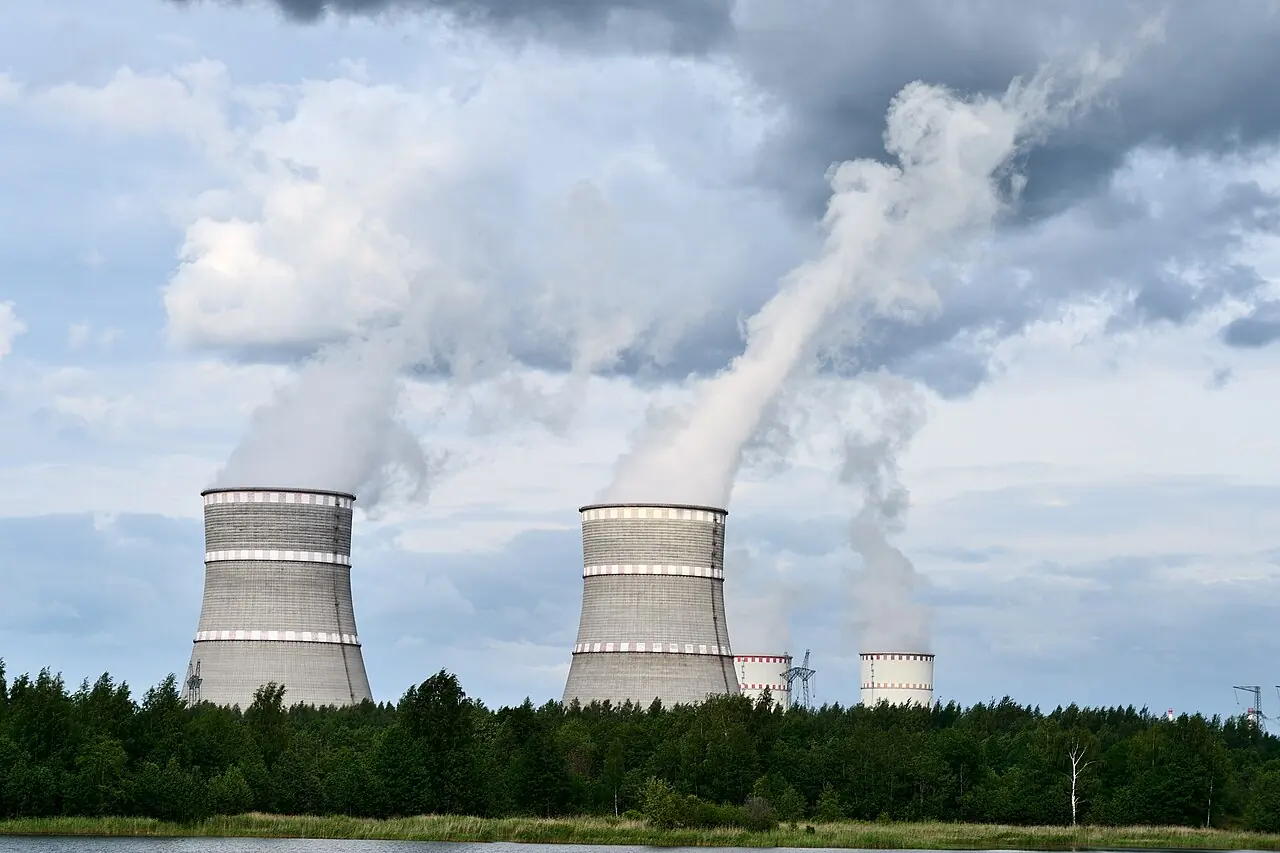
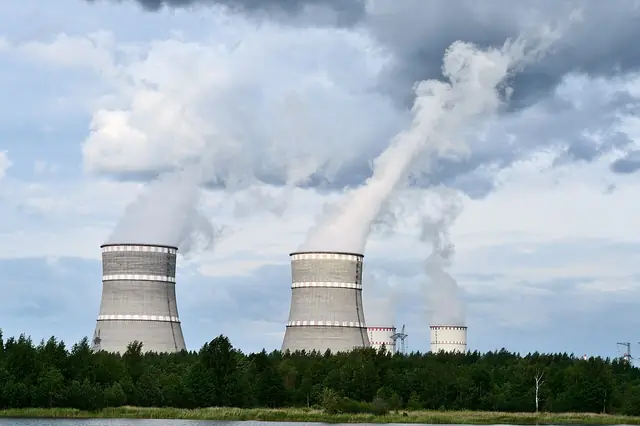
Today the mid-Atlantic’s largest AI campuses run on diesel by federal order. Energy Secretary Chris Wright signed Order 202-26-33 on June 30, authorizing PJM Interconnection to instruct transmission owners to curtail data centers and other large loads with backup generation as a last resort before voltage reduction or load shed [Maryland Matters, June 30 2026]. The threshold is 50 megawatts of peak load at a point of interconnection, a definition PJM designed to sweep in most hyperscaler campuses [Utility Dive, May 19 2026]. Hospitals, 911 call centers, water treatment plants, air traffic control towers and defense facilities are exempt. AI data centers are not [Maryland Matters, June 30 2026].
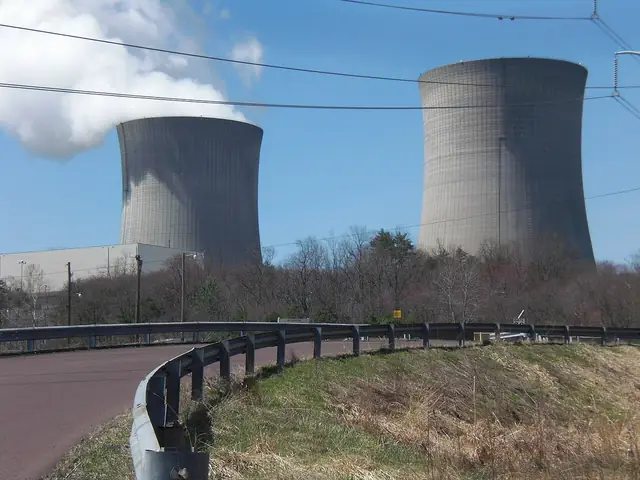
The trigger is a heat dome and PJM’s own math. The grid operator’s June 30 hot weather update projects peak load of 166,304 MW on July 2, above the existing all-time integrated peak of 165,563 MW set in July 2006 [PJM Inside Lines, June 30 2026]. Forecast peaks climb from 150,577 MW on June 30 to 162,102 MW on July 1, then hit the record-breaker July 2 before pulling back to 155,780 MW on July 3 [PJM Inside Lines, June 30 2026]. The National Weather Service is calling highs of 102 to 104 degrees Fahrenheit in Maryland and Virginia Thursday through Saturday [Maryland Matters, June 30 2026]. PJM issued a Maximum Generation Alert, a Load Management Alert, and a Low Voltage Alert for July 1 [PJM Inside Lines, June 30 2026].
What’s happening
- Wright signed two 202(c) orders on June 30. Order 202-26-33 authorizes the backup-generator curtailment. A companion order, 202-26-32, authorizes generators to exceed pollution limits, with PJM officials warning of possible exceedances of sulfur dioxide, nitrogen oxide, carbon monoxide, ammonia and wastewater releases. Both orders expire at 11:59 p.m. on July 3 [Maryland Matters, June 30 2026].
- This is the second such 202(c) backup-generator order for PJM in six weeks. The first, issued May 18 and effective through May 20, followed a PJM application citing less than 5,800 MW of reserves with more than 40 GW of generation offline for spring maintenance [DOE, May 18 2026; Utility Dive, May 19 2026].
- Wright’s June 30 order carries the standing framing: “there are tens of gigawatts of readily available backup generation that have remained largely untapped” [Maryland Matters, June 30 2026, quoting Order 202-26-33]. DOE’s May 18 press release put the national estimate at “more than 35 GW” of unused backup generation [DOE, May 18 2026].
- Eligible backup includes auxiliary and standby diesel, directly-connected generation, and battery storage, whether or not synchronized to the bulk power system [Utility Dive, May 19 2026, quoting DOE order].
Brazil angle
Brazil is not running this playbook because Brazil’s grid is not in the same shape. Industry pipeline estimates run high (Industrial Info cites roughly 13.7 GW of data center capacity in the ONS request pipeline by 2035 with 202 active projects), but ONS-authorized numbers are meaningfully smaller. ONS Executive Director Fábio Côrtes said in April that roughly 7 GW across 34 projects had been formally approved, and the ONS Q1 2026-2030 review counted 22 signed requests with 18 authorized [ONS, April 2026]. The gap between “pipeline” and “authorized” is itself the story: even the smaller, contracted number represents real load Brazil can absorb without a Section 202(c) equivalent, and the larger pipeline number is what hyperscaler capex is chasing. Brazilian hyperscaler siting has been drifting into the Northeast: Voltalia secured 322 MW of grid capacity in Ceará this year specifically to serve data centers [Data Center Dynamics, 2026]. Ceará, Bahia, Rio Grande do Norte and Piauí carry the Brazilian wind base, and national installed wind capacity has passed 30 GW while solar PV has cleared 40 GW [Rio Times, 2026]. The comparison a Brazilian planner should draw is not “our grid is fine and PJM’s is broken.” It is “our grid has slack while PJM’s does not, so hyperscaler capex earmarked for Virginia can be redirected here at zero grid-emergency risk.” Every 202(c) order sharpens that pitch.
US angle
The Trump administration has now written a repeatable federal-power-law recipe: an ISO applies under Section 202(c), DOE signs, data centers move to backup, generators run past emission limits. Section 202(c) was designed for rare grid emergencies. Two orders in six weeks makes it operational infrastructure. The exemption list (hospitals, 911, water, air traffic, defense) explicitly does not include the AI-compute layer, formalizing that hyperscaler load is treated as interruptible for grid-security purposes even as those same campuses are the headline load anchors for new PPAs [Maryland Matters, June 30 2026]. Pennsylvania’s May “first-of-its-kind” large-load model tariff, which forces new interconnecting large loads to pay for the “but for” upgrades their arrival triggers, is the state analog: the regulatory posture is converging on making data centers absorb their own grid stress [Utility Dive, May 18 2026]. FERC Chairman Laura Swett said in May that PJM may be “too big to function” as constituted, and a July FERC conference on PJM governance reform is on the calendar [Utility Dive, May 13 2026].
China angle
China treats dispatchable interruption of data center load as a design feature, not an emergency response. The 2022 East Data, West Computing framework routes AI workloads out of coastal load centers into Zhongwei in Ningxia and Gui’an in Guizhou, where compute is designed to shift to match wind and solar availability rather than force the grid to match compute [OIES, February 2026]. The 15th Five-Year Plan covering 2026 to 2030 locks that model in: data center policy is being written jointly with renewable dispatch policy, and the National Energy Administration is extending hourly green power certificate spot trading to all national computing hubs [Reccessary, 2026]. What PJM has to authorize under an emergency order, China’s State Grid does administratively. The MOFCOM strategic-mineral whistleblower channel that activated July 1 (Announcement No. 26 of 2026, published June 24) is a separate front on the same posture: Beijing systematizes its control levers while Washington relies on emergency-power discretion [Morgan Lewis, July 2026; Geopolitechs, 2026].
What it means
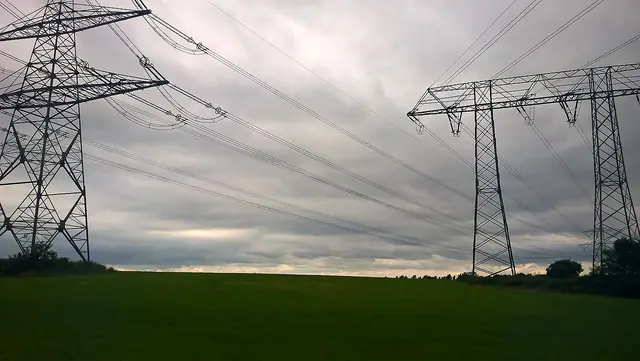
Every 202(c) order is a running advertisement for the copper, transformer, and high-voltage cable buildout the US grid needs and does not have. Large power transformer procurement lead times now run to multiple years, and backup diesel generation, the substitute DOE is leaning on, brings its own emissions math (Order 202-26-32 explicitly authorizes exceedances). The unit economics of hyperscaler siting are shifting. A Northern Virginia campus that can be forced onto diesel for four days in six weeks is not the same asset as a Ceará or Bahia campus that will not be. That is a materials story, a grid-capex story, and a siting story all at once.
What to watch
- Whether PJM actually activates the curtailment on July 2 or holds it in reserve. If activated, the political cost of forced curtailment against named hyperscalers becomes real, not theoretical.
- Whether the July FERC conference on PJM governance produces a large-load tariff standard, and how it interacts with the Pennsylvania model tariff already in the field.
- Whether the Brazilian Ministry of Mines and Energy or ANEEL publishes a data-center-specific interconnection framework in the second half of 2026. A clean framework would let hyperscaler capex commit faster than the current ad hoc concession route allows.