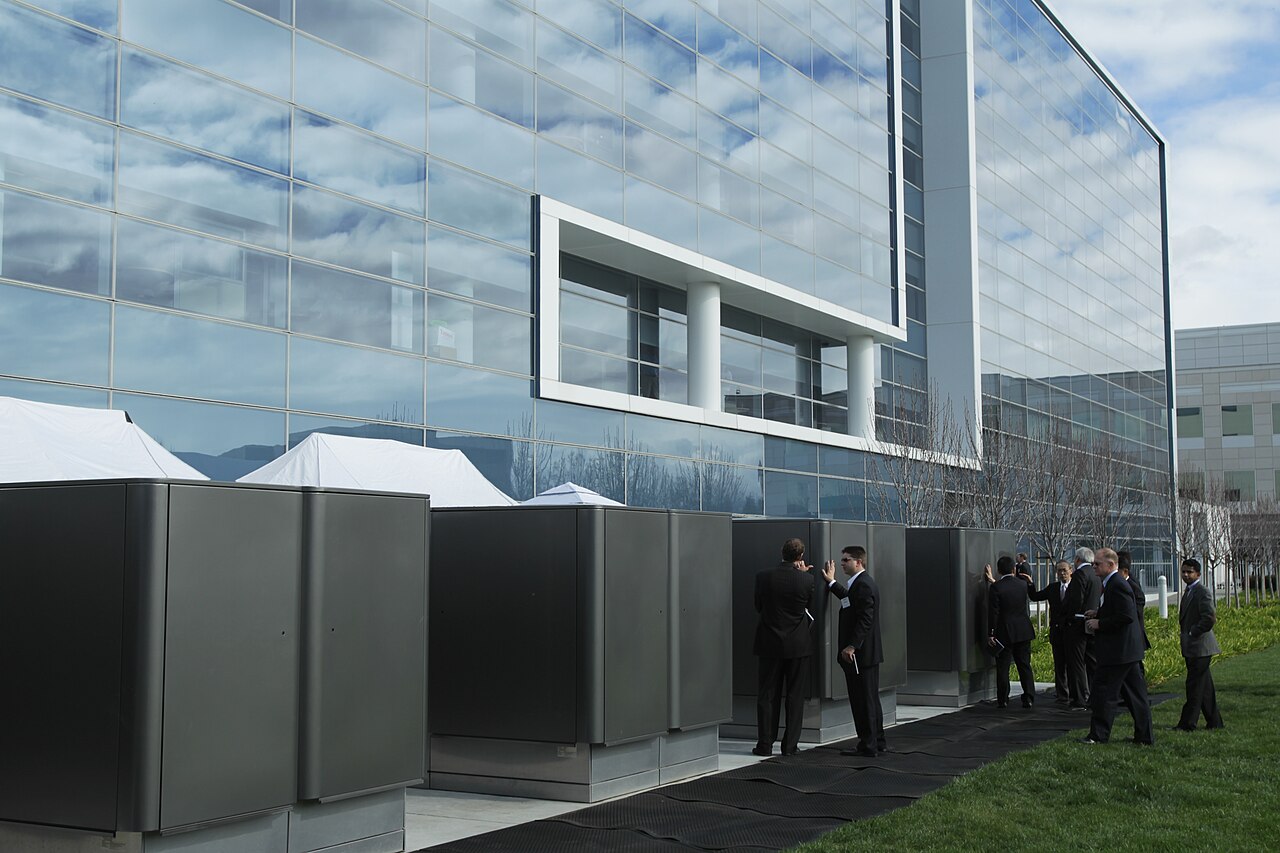
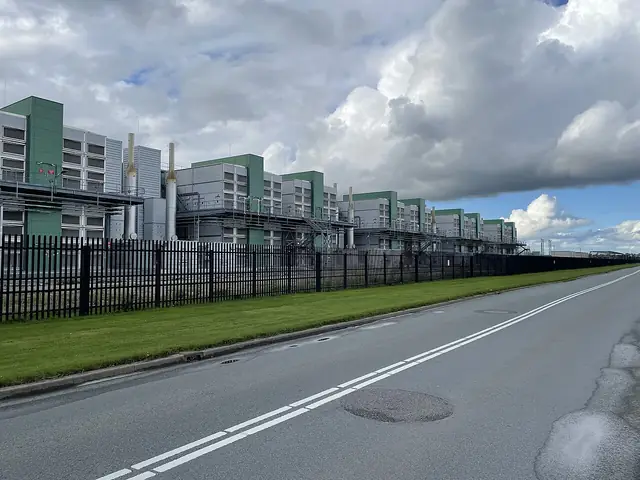
OpenAI's $500B Ohio lease lands on the uranium enrichment site. Piketon's two-tenant problem.
The reported 10 GW campus puts 9.2 GW of new gas on the Portsmouth Gaseous Diffusion site DOE just funded for centrifuge restart. Nvidia guarantees the lease. Brazil's R$15 billion Sovereign Plan was built for moments like this and did not bid.

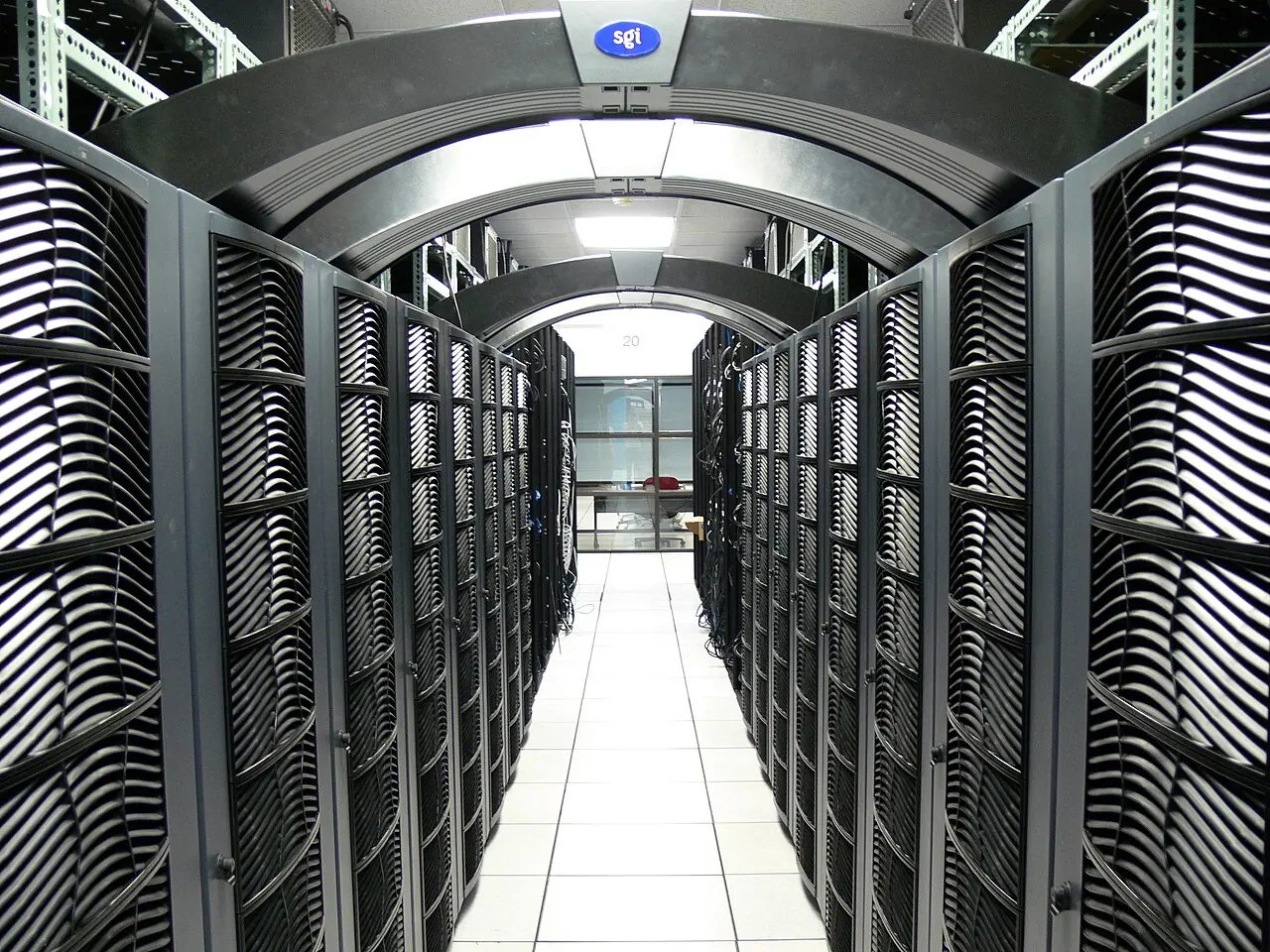
OpenAI is in advanced talks to lease a 10 gigawatt data center campus on federal land in Pike County, Ohio, with Nvidia underwriting both the lease and the developer’s project financing, per The Information’s June 9 report and follow-on coverage in Network World. Total buildout cost at current prices for chips, power, and construction is at least $500 billion. The first 800 megawatt phase is targeted for 2028. The site is the former Portsmouth Gaseous Diffusion Plant, the Cold War uranium enrichment facility where Centrus’s American Centrifuge subsidiary received a $900 million Department of Energy task order in January 2026 to expand for commercial-scale HALEU production, the fuel chain piece Tantalum covered on June 7.
The same federal acreage now carries two AI strategies that compete for the same square mile. One expands HALEU enrichment for the hyperscaler nuclear deals (restarts plus small modular reactor PPAs plus direct partnerships) that Carnegie Endowment research aggregated at roughly 13 gigawatts of nameplate capacity in a June 2 paper. The other puts 9.2 gigawatts of new natural gas generation under a single roof, leased by OpenAI, financed by SoftBank’s SB Energy, guaranteed on Nvidia’s balance sheet. The materials read on the deal is the part that matters for this desk.
What’s happening
The lease structure as reported by The Information and Network World: OpenAI takes 20-year control of the compute equipment, with rent payments beginning at first operations. SB Energy, the SoftBank energy subsidiary, builds the campus and the power. Nvidia, with a market capitalization near $4.9 trillion as of June 10 per MLQ News, guarantees both OpenAI’s lease and SB Energy’s project financing. MLQ characterized the structure as Nvidia’s largest infrastructure guarantee to date. The Information described the campus as the largest single AI infrastructure commitment ever undertaken.
The site partnership was announced earlier. In March 2026 the Department of Energy named SB Energy and AEP Ohio as redevelopment partners for the Portsmouth Gaseous Diffusion Plant. SB Energy committed at least 9.2 gigawatts of natural gas generation plus billions of dollars in transmission infrastructure upgrades, per the Network World summary of the SB Energy and DOE announcements. The DOE did not identify a tenant in March. The Information’s June 9 report supplied the tenant.
The Nvidia letter of intent is a parallel structure, not duplicative. Nvidia announced in September 2025 a partnership to deploy at least 10 gigawatts of Nvidia systems for OpenAI, with up to $100 billion in OpenAI investment unlocked as each gigawatt comes online. The first gigawatt targets second half 2026 on the Vera Rubin platform, per the Nvidia newsroom release MLQ cites. The reported Piketon lease guarantee sits on top of that arrangement, not inside it.
This is the new template. Model developer rents. Hyperscaler bank rolls power. Chipmaker guarantees both. Federal land underneath.
Brazil
Brazil has the minerals. Brazil does not have the federal asset book. The Sovereign Brazil Plan Credit Line that BNDES rolled out at IBRAM in May 2026 is a R$15 billion debt facility for new mine capex, processing equipment, and strategic sector development. The Vale and BNDES anchored R$1 billion critical minerals FIP with Ore Investments and JGP BB Asset began deploying earlier this year, targeting around 20 junior and mid-cap names in rare earths, nickel, and lithium. Both instruments were designed for what an Ohio-style federal-land hyperscaler lease would, in a Brazilian context, demand from the supply side: niobium for grid steel, copper for interconnect, helium for chip fab.
What Brazil cannot do is offer a federal site of comparable strategic gravity to a single hyperscaler. Resende Phase 2, the planned expansion at INB designed to add thirty centrifuge cascades over a decade and reach roughly 500 tonnes of separative work units (SWU) per year by the mid-2030s, providing full coverage of all three Angra reactors per the engineering scope INB contracted Amazul to design, sits on Brazilian fiscal-cycle pace. The U.S. DOE January 2026 $900 million task order to Centrus for Piketon HALEU expansion is the comparator on the U.S. side. Brazil’s instrument is the BNDES Sovereign Plan and the Vale-anchored FIP, neither of which has yet financed a Resende Phase 2 cascade start. The political throughput to deploy them at fuel-chain scale has not been assembled.
A reasonable Brazilian counter is not a Piketon equivalent. It is a niobium-fed grid steel program at Pecém or Suape that anchors a hyperscaler PPA, paired with a Lithium Valley campus power deal. Neither is on the docket as of this writing.
United States
The reported Piketon arrangement is the most explicit example yet of a coming pattern: federal land plus single-tenant hyperscaler plus chipmaker guarantee plus regulated-utility grid investment from AEP Ohio. The 9.2 gigawatts of new natural gas generation is the bottleneck tell. Tantalum covered GE Vernova’s roughly 100 gigawatt order book and the five-to-seven-year lead times on heavy-duty gas turbines on June 11 and June 12. A single 9.2 gigawatt block of new gas generation is a meaningful share of any major OEM’s near-term combustion turbine queue. The build queue does not visibly accommodate that scale without displacement.
The Section 232 metals proclamation Trump signed on June 1 and effective June 8 reduced the tariff on agricultural equipment from 25 to 15 percent, expanded the 15 percent rate to certain mobile industrial equipment from trade-deal countries, and created a 10 percent rate for foreign capital equipment carrying at least 85 percent U.S. melted-and-poured steel or aluminum by weight, per the June 1 White House fact sheet. The fact sheet names Highland Copper, Ivanhoe Electric, Rio Tinto, and Wieland as companies expanding U.S. copper mining, smelting, and fabrication facilities. A reported Commerce Secretary recommendation on refined copper tariffs is the open variable Tantalum is watching. A Piketon-scale 10 gigawatt campus build is materially copper-intensive; desk estimate of the copper bill, given conductor, busbar, transformer, and transmission needs for a single 9.2 gigawatt natural gas plant plus 10 gigawatts of compute load, runs into the low-to-mid hundreds of thousands of tonnes range. Where that copper is sourced and how it is priced changes the project’s all-in cost.
The OpenAI confidential IPO filing reported earlier in the spring is the financing complement. Public market access at OpenAI scale is the only credible way to absorb a 20-year lease on a $500 billion campus without putting it entirely on Nvidia’s balance sheet.
China
On June 9, the same day The Information published the Ohio report, Bloomberg reported that China is preparing roughly 2 trillion yuan, approximately $295 billion, in publicly funded AI data center construction over five years. The plan is led by the National Development and Reform Commission. China Mobile and China Telecom would operate the facilities. At least 80 percent of hardware and software, including AI chips, would come from domestic vendors. Huawei is the named anchor supplier. Nvidia and AMD have little room to participate at that threshold. With grid upgrades folded in, the total could climb to 5 trillion yuan. Private capex from Alibaba and Tencent sits outside the headline number. Bloomberg framed the plan as a component of the broader “Six Networks” program tied to China’s five-year plan through 2030.
The architectural contrast is sharper than the headline gap. Washington routes a $500 billion lease through a single private tenant on federal land, backstopped by a chipmaker. Beijing routes $295 billion through two state telcos on a national grid topology, locked to domestic silicon. Both buildouts compete for the same materials: copper for interconnect, gallium and germanium for the silicon, uranium and gas for the load. SOV50 sat at 118.9 on the desk’s May 22 weekly read with a Herfindahl-Hirschman index of 0.68 on the basket, extreme concentration. China’s lockout posture pressures that number upward. The U.S. federal-land posture pressures it horizontally, toward non-China supply that the SDX index, at 96.1 and down 3.9 percent year to date, is not yet capturing.
What it means
The Piketon report is not a one-off campus announcement. It is the unveiling of a financing template the next ten Stargate-scale deals will copy. Three implications matter for this desk.
First, the materials read is now load-shaped, not infrastructure-shaped. A 10 gigawatt campus on a single federal parcel is a different copper and gas turbine demand profile than ten 1 gigawatt sites distributed across the PJM footprint. The Section 232 copper proclamation, the GE Vernova backlog, and the SB Energy gas commitment will reconcile against each other in ways that price upstream Brazilian and Lithium Triangle copper higher than the median analyst track currently models.
Second, the chipmaker-as-guarantor structure changes who absorbs project risk. Nvidia’s balance sheet now sits between OpenAI’s lease and SB Energy’s debt. That is a Mountain Pass-style sponsor-tenant relationship, transplanted to compute. Investors evaluating downstream U.S. critical minerals projects should expect the next wave of DPA Title III grants and DoE LPO loans to reference this template.
Third, Brazil has the strongest mineral hand in the Western diversification trade and the weakest assembled instrument set to translate that hand into a single named hyperscaler PPA. The Sovereign Plan is necessary but not sufficient. The next move is not another fund. It is a named federal site, a named hyperscaler counterparty, and a named offtake on niobium grid steel or Lithium Valley anode chemistry.
What to watch
The DFS scoping for the Cove Kaz Capital tungsten project in Kazakhstan, which Tantalum covered June 13, begins in second half 2026 and should include APT refining inside Kazakhstan; track whether the Piketon Nvidia-guarantor template is referenced in the financing structure.
The next Commerce Department action on refined copper under Section 232 is the open variable Tantalum is watching; whichever rate emerges moves Piketon’s all-in copper cost by single-digit percentage points on a $500 billion build.
The Brazil Lithium and Critical Minerals Summit in Belo Horizonte on June 17 and 18 is the next test of whether BNDES, Vale, and the Sovereign Plan present a hyperscaler-facing offtake structure or a domestic mining-only narrative.