Two AI data center battery deals in six months. Both end at CBMM in Araxá.
Skeleton's Varkaus factory opened with CBMM oxide inside. Six months later, Nyobolt's $1 billion Series C had CBMM in the round. Brazil's niobium has an AI customer.
The two most visible niobium-to-AI infrastructure deals of the past six months both have the same Brazilian supplier inside them. On November 11, 2025, Skeleton Technologies opened a one-gigawatt-per-year SuperBattery factory in Varkaus, Finland, naming CBMM as the partner supplying the niobium oxide that runs through its cells [Skeleton Technologies press release, November 11, 2025]. Six months later, on May 6, 2026, the Cambridge battery startup Nyobolt closed a $60 million Series C at a $1 billion valuation, led by Symbotic, with CBMM participating alongside IQ Capital, Latitude (Phoenix Court), and Scania Invest [Nyobolt press release, May 6, 2026]. Two distinct anode chemistries, one common input, one common Brazilian source.
What’s happening
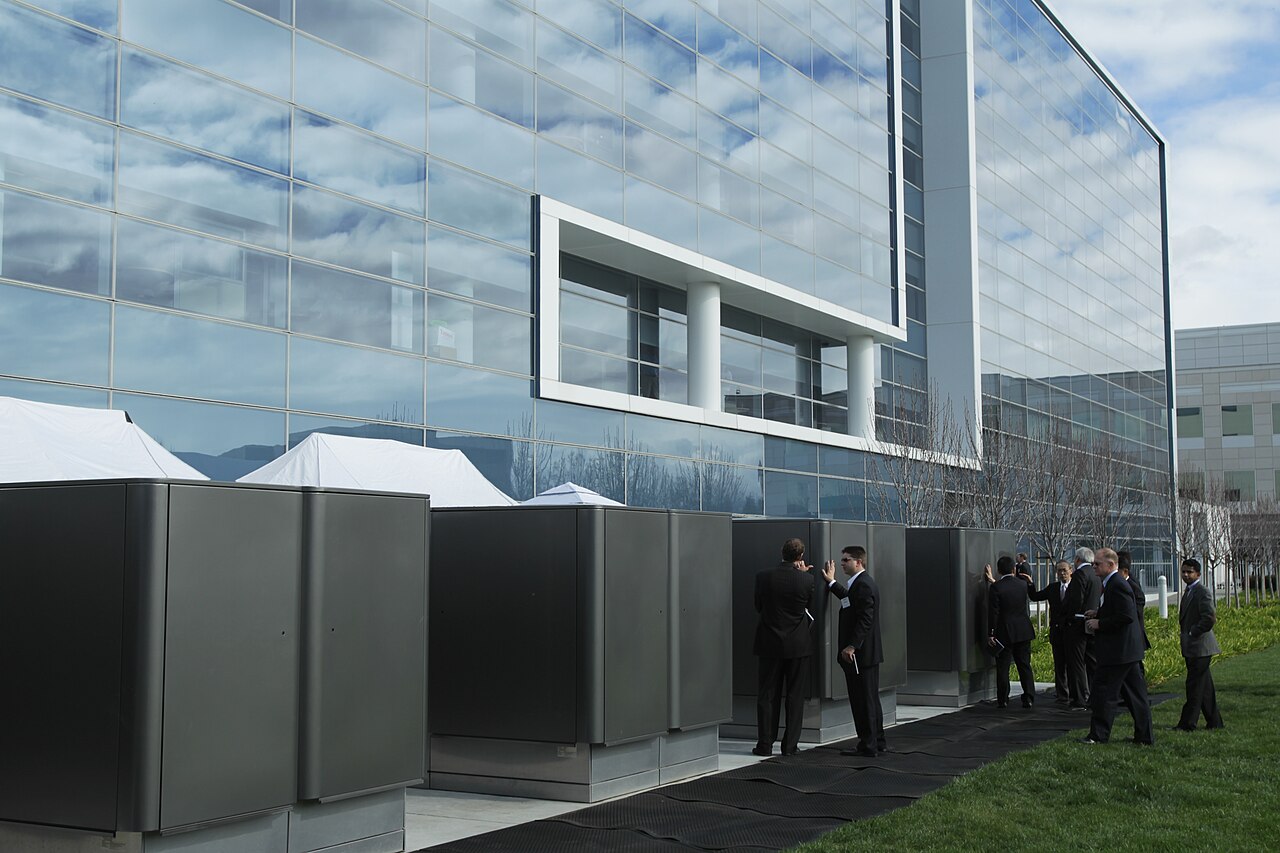
- Skeleton Technologies opened its SuperBattery factory in Varkaus, Finland on November 11, 2025, on a €50 million total investment, with one gigawatt of annual production capacity targeted at AI data centers, grid stability, mobility, and defense. The cells use CBMM’s NBXCELER niobium oxide as the active anode material. Skeleton currently employs more than 65 people in Finland and expects to grow to over 200 in Varkaus by end of 2029 [Skeleton Technologies press release, November 11, 2025].
- In the same release, CBMM CEO Ricardo Lima said: “Niobium plays a key role in shaping a more sustainable future. Our partnership with Skeleton demonstrates how Niobium can make AI infrastructure safer, longer lasting, and more efficient” [Skeleton Technologies press release, November 11, 2025].
- Skeleton’s data center battery backup unit, GrapheneBBU, was launched at the Open Compute Project Global Summit in San Jose in October 2025 in partnership with Taiwan’s Acbel Polytech. GrapheneBBU uses SuperBatteries manufactured in Varkaus [Skeleton Technologies press release, November 11, 2025].
- On May 6, 2026, Nyobolt closed its $60 million Series C at a $1 billion valuation, led by warehouse robotics company Symbotic, with participation from IQ Capital, Latitude (Phoenix Court), Scania Invest, and CBMM. The company stated revenues grew five times year on year and named physical AI applications and AI data center infrastructure as the demand drivers [Nyobolt press release, May 6, 2026].
- For Symbotic’s SymBot autonomous mobile robots, Nyobolt’s cell delivers six times more energy capacity than the ultracapacitors previously used, is 40 percent lighter, and achieves at least ten times the cycle life of traditional lithium-ion, per Nyobolt’s own disclosure [Nyobolt press release, May 6, 2026].
- Nyobolt also signed a Memorandum of Understanding with the Indian state of Rajasthan for over 100 MW of off-grid AI data centers and power management infrastructure, the first publicly named niobium-anode deployment of that scale outside Western markets [Nyobolt press release, May 6, 2026].
- Nyobolt’s underlying anode chemistry is a niobium tungsten oxide whose crystal structure permits roughly one hundred times more lithium-ion mobility than graphite, enabling charge rates that destroy conventional cells [TheNextWeb, May 6, 2026].
Why niobium fits the AI data center backup problem
GPU clusters running large training and inference workloads create instantaneous power demand spikes that conventional grid response cannot smooth and that conventional lithium-ion battery backup struggles to handle without fast-charge degradation. Niobium-oxide based anode chemistries admit lithium ions through surface-level intercalation rather than slow bulk diffusion, which allows fast charging without the lithium plating that shortens cycle life and creates thermal runaway risk in graphite-anode cells. The two companies have arrived at this from different chemistry routes: Skeleton uses niobium pentoxide via CBMM’s NBXCELER line; Nyobolt uses a niobium tungsten oxide anode. The commercial hook is the same: more cycles, faster charge, lower fire risk than the lithium-ion BBU baseline [Skeleton Technologies press release, November 11, 2025; Nyobolt press release, May 6, 2026].
Brazil angle
Brazil holds the overwhelming majority of known global niobium reserves (roughly 16 million tonnes out of a global total above 17 million) and accounted for approximately 92 percent of 2024 global mine production, with CBMM in Araxá the dominant single producer [USGS Mineral Commodity Summaries 2025, Niobium chapter]. Sixty-six percent of US total niobium material imports by content come from Brazil [USGS Mineral Commodity Summaries 2025]. This is the cleanest concentration story in critical minerals outside the China-DRC nexus, and unlike rare earths, neither Washington nor Brussels treats Brazilian concentration as a sovereignty problem. It is the alternative.
CBMM is now visible as more than a supplier. In a 2023 Fastmarkets interview the company’s executive manager for battery products stated a target of 25 percent of revenue from battery raw materials by 2030 and confirmed an $80 million investment in CBMM’s first industrial-scale battery-grade niobium oxide refining plant in Araxá, first production targeted at 3,000 tonnes per year from Q2 2024, with a stated 2030 ambition near 35,000 tonnes per year of battery-grade output compared to roughly 270 tonnes in 2022 [Fastmarkets, September 13, 2023]. The Skeleton offtake and the Nyobolt equity stake are how that strategy now shows up on the AI side of the market. CBMM is not just selling oxide. It is funding the downstream that consumes the oxide.
US angle
The US has not reported significant niobium mine production since 1959, and net import reliance has stayed at 100 percent of apparent consumption across 2020 to 2024 [USGS Mineral Commodity Summaries 2025, Niobium chapter]. The September 2024 US Department of Defense award of $26.4 million to a company in Boyertown, Pennsylvania to establish high-purity niobium oxide production is the closest the US has to a domestic midstream, alongside a separate Nebraska niobium project still working through financing [USGS Mineral Commodity Summaries 2025]. Niobec in Quebec is the only Western producer outside Brazil at scale, accounting for roughly 7 percent of global production. Any forward US niobium-anode capacity will plausibly run on imported feedstock for the foreseeable future. The dependency here is structural, not strategic: there is no Chinese alternative supply to displace.
China angle
Niobium is the unusual critical mineral where China is the dependent party. There is no Chinese domestic niobium project that rivals Araxá in scale or grade, and Beijing has not announced an export-control framework on niobium because the basket is largely outbound for China, not inbound. Chinese battery makers exploring niobium-containing chemistries continue to source the underlying input through Brazilian and Canadian producers. On the rare earth side the November 10, 2026 expiration of China’s October 2025 export-control suspension still hangs over the trade as a hard deadline [Mining Technology, May 2026; see Tantalum, May 28, 2026]. Niobium has no equivalent deadline because there is no equivalent Chinese chokepoint.
What it means
The Tantalum AI Materials Index carries niobium as an editorial proxy because the trade is private and there is no daily spot market. The Skeleton and Nyobolt deals do not change that data hygiene problem, but they tighten the read on what CBMM is doing with its capacity. The Southern Diversification Index, which includes a niobium constituent through the CBMM proxy, sat at 96.1 as of May 22, 2026, down 3.9 percent year to date, even as the operational story builds. TAI and SDX are thematic indexes that apply a documented editorial overlay; naive replication from public feeds alone will diverge. See /indexes/methodology.
What to watch
- CBMM’s next public update on battery-grade niobium oxide volumes. The ramp from the 3,000 tonne first plant toward the stated 35,000 tonne by 2030 ambition is the operational signal that determines whether the Skeleton and Nyobolt offtakes can scale beyond pilot volumes.
- A second DoD niobium midstream award. The September 2024 $26.4 million Pennsylvania grant is the only public US niobium-anode-adjacent allocation the desk could trace. A follow-on in 2026 would signal the DPA Title III pipeline has activated for this material.
- The Rajasthan 100 MW project. Nyobolt’s MOU is the first publicly named niobium-anode deployment at AI data center scale outside Western markets. Execution should be visible by Q1 2027.